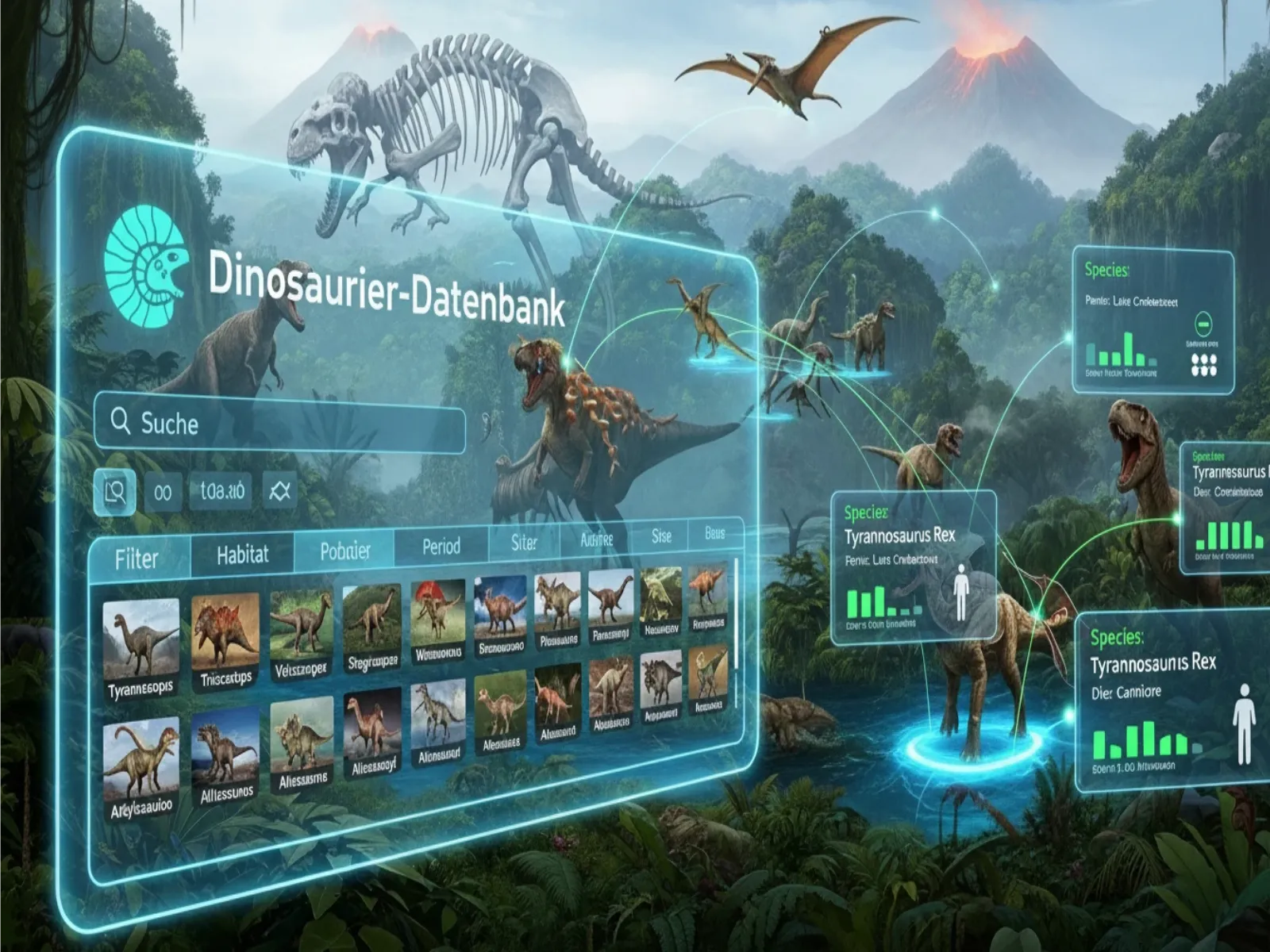
Dinosaur database: 1133 prehistoric animals at a glance
Dinosaur database – all dinosaurs at a glance
Most people only know a handful of dinosaurs by name: Tyrannosaurus rex, Triceratops, maybe Brachiosaurus. But in reality, hundreds, even over a thousand, different dinosaurs have now been described. You can find one on this page interactive Dinosaur database with which you can easily search and filter all these prehistoric giants.
Our dinosaur database is ideal for curious children, adult dinosaur fans, teachers and anyone who wants to search for specific species for presentations, homework or their own projects. You can sort the entries by name, geological era, diet, location and other characteristics to find exactly the dinosaurs that interest you.
The database complements the detailed dinosaur profiles on urzeittiere.net and offers you a quick introduction to the incredible diversity of the dinosaur world. Once you have found an exciting dinosaur, you can then delve deeper into the relevant articles on our site and learn more about its anatomy, lifestyle and special features.
What our dinosaur database can do
Our dinosaur database contains over 1,000 entries and is regularly expanded. Each line represents a scientifically described dinosaur genus with the most important basic information. Depending on how the widget is configured, you may see, among other things, the following information:
- Scientific name of the dinosaur
- Associated geological era (e.g. Triassic, Jurassic, Cretaceous)
- Diet (carnivores, herbivores, omnivores)
- Body shape or rough group (e.g. sauropods, theropods, ornithischians)
- Found continents or countries where fossils were discovered
The database is intended to give you a quick overview and help you recognize connections: Which dinosaurs lived at the same time? Which groups dominated certain regions? What variety of forms existed at a certain time? If you are curious about an entry, you can find further profiles for many species with detailed information, pictures and literature references on urzeittiere.net.
This is the best way to use the filters
So that you don't get lost in the abundance of dinosaurs, you can narrow down the database using various filters. With just a few clicks, over a thousand entries become a handy selection of exactly the dinosaurs that match your question. A possible process could look like this:
- If you want to know if a species is in the database, start by searching for a specific name.
- Choose a geological era to see all the dinosaurs that lived during that time - for example, all dinosaurs from the late Cretaceous period.
- Filter by diet, for example if you only want to see herbivorous dinosaurs or only meat-eating dinosaurs.
- Use the location filter to find all dinosaurs from a specific continent or country, such as “Europe” or “North America.”
An example: If you want to know which herbivorous dinosaurs were discovered in Europe, simply select Diet = Herbivore and Location = Europe. The database will then show you exactly the entries that match these criteria. This way you can ask your own little “research questions” and get a suitable list of dinosaurs straight away.
Examples and further information on urzeittiere.net
The database is the perfect introduction to getting to know new species and discovering exciting finds. If you would like to know more about individual dinosaurs, you can find detailed profiles with lots of additional information at urzeittiere.net.
Some examples of species that you can find in the database and on which we have in-depth articles:
- Apatosaurus – a massive sauropod from the Late Jurassic period, known for its long neck and massive frame.
- Ampelosaurus – an armored sauropod from Europe that provides interesting clues about the dinosaur fauna of the European archipelago.
- Gigantoraptor – an exceptionally large, bird-like theropod with impressive body size and unusual anatomy.
In addition, we offer thematic overview pages on urzeittiere.net, for example on dinosaurs from certain regions or with special characteristics. If you are specifically interested in dinosaurs from Germany, it is worth taking a look at our own overview of finds from Germany. There you can discover which species have also been identified in our homeland and in which geological context they occurred.
Frequently asked questions about the dinosaur database
How many dinosaurs are known so far?
Several hundred genera of dinosaurs have now been scientifically described, and new ones are added every year. Our database represents a large part of this diversity and is continually expanded wherever possible. As research is constantly evolving, new discoveries may be added or old names may be revised.
Can I search for dinosaurs from a specific country?
Yes, in the dinosaur database you can filter the entries by region of discovery. Depending on the widget setting, you can, for example, display all dinosaurs from Europe or North America or search specifically for specific countries. If you are particularly interested in German finds, we also recommend our special page on dinosaurs from Germany, where we present the most important species and locations.
Are all dinosaurs in the database scientifically described?
The database contains scientifically described genera that have been recognized in the specialist literature. You can find detailed profiles for many of these dinosaurs on urzeittiere.net with additional information such as size, habitat, special features and history of discovery. For very rare or fragmentary known species, we deliberately limit ourselves to the most important basic information in order to keep the database clear.
Can I use the data for presentations or school projects?
Yes, the dinosaur database is an excellent starting point for talks, presentations and school projects. You can use the lists to find suitable species and then collect background information in our profiles. For projects where it makes sense, please cite urzeittiere.net as the source so that it remains clear where the information comes from. However, most of the images are protected by copyright and may not be used on other websites or materials.
I have labeled images from Wikipedia according to the requirements.
Conclusion: Discover the diversity of dinosaurs
Our dinosaur database is designed to show you how incredibly diverse the world of dinosaurs really was. Instead of just seeing the “familiar faces” again and again, you can browse specifically by geological era, region or diet and get to know many new species.
Try out the filters, discover new favorite dinosaurs and then use the detailed profiles on urzeittiere.net to delve even deeper into the world of prehistoric animals. If you have ideas or requests for additional functions or focal points, we look forward to hearing from you - so the dinosaur database can get even better over time.