Dilophosaurus

The two-crested lizard
Dilophosaurus wetherilli was a medium-sized carnivorous dinosaur that lived in the Early Jurassic Period, about 193-183 million years ago. It was about 6.3 m long and weighed about 350 kg. Despite its body size, Dilophosaurus had a slender and slightly built body with a large but delicate skull.
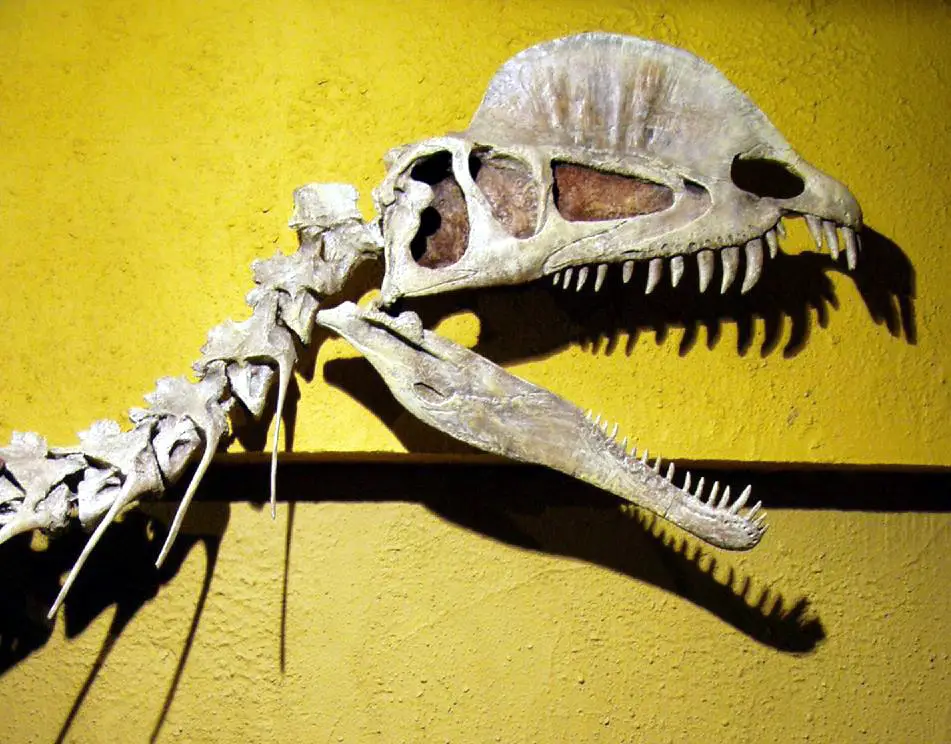
The snout of Dilophosaurus was narrow and was adorned with two elongated, curved crests on the skull. The exact shape of these ridges is unknown, although they may have been enlarged by keratin. His name therefore means German “two-crested lizard”.
The front part of its upper jaw had a downward bend, similar to that of spinosaurs.
The teeth were long, curved, thin and appeared to be compressed laterally; most of them had spikes.
It is thought that Dilophosaurus preferred fish as its primary food source. This is reinforced by the anatomical similarity between its skull and that of fish-eating spinosaurs. Although other evidence suggests that it was a scavenger as well as animals such as lizards, smaller dinosaurs, such as Scutellosaurus, and hunted mammals.
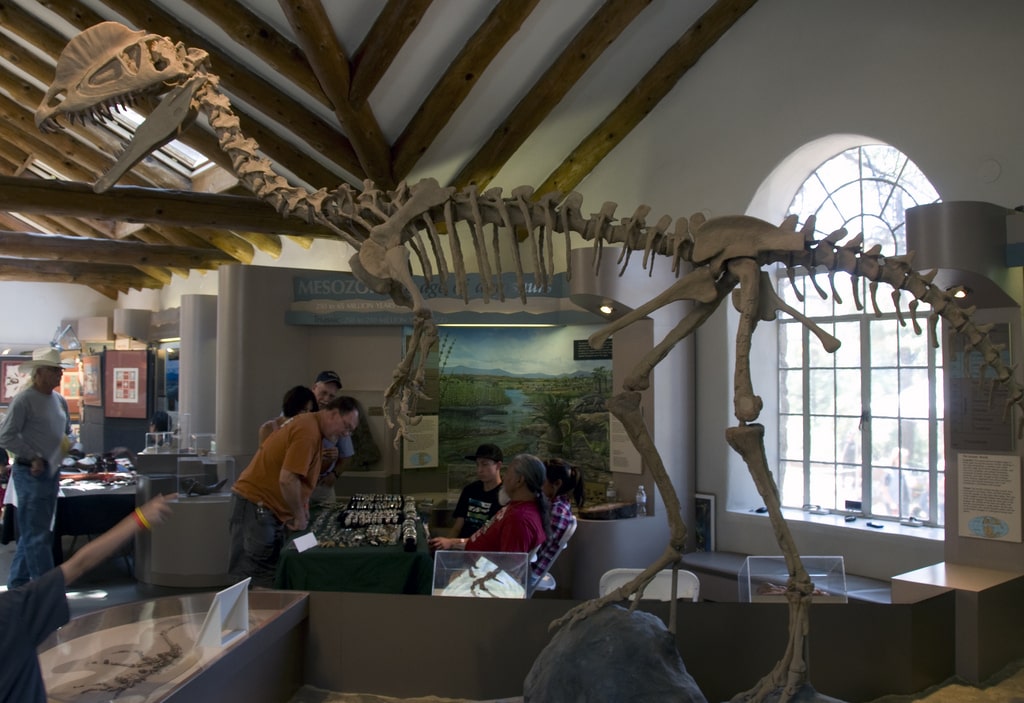
His neck was long with hollow and light cervical vertebrae. The arms of Dilophosaurus were powerful, with a long and slender humerus. He had four fingers on each hand: the first finger was short but well developed and bore a large claw, while the following two fingers were longer and slimmer and had smaller claws. The fourth finger was rudimentary.
He also had massive thigh bones, powerful feet and large claws on his toes.
The predatory dinosaur's fast and agile shape suggests that it used its light body and long hind legs to its advantage. This fast-running dinosaur probably chased its prey at a sprint, so that it could quickly catch up and attack unsuspecting prey. With its sharp claws and teeth, this fast hunter was a fearsome predator.
In summary, Dilophosaurus was a formidable predator that hunted smaller dinosaurs in what is now North America during the Early Jurassic period.
| Profile | Dilophosaurus |
|---|---|
| epoch | Lower Jurassic (Sinemurian) 199.3 million years ago |
| Order | Lizard-pelvis dinosaur (Saurischia) |
| Subordination | Theropoda |
| Family | Dilophosauridae |
| group | |
| genus | Dilophosaurus |
| species | Dilophosaurus wetherilli |
| Height | 2.5 meters |
| length | 6 meters |
| Weight | 500kg |
| Locations | Arizona (USA) |
How did Dilophosaurus kill its prey?
According to the information we have today, the Dilophosaurus moved very quickly.
Since it had a kink in its upper jaw, this suggests that it was able to grab and hold its prey while attacking. This is a similar style to the modern crocodiles we know today.

Could Dilophosaurus spit poison?
Dilophosaurus, plays an important role in the novel DinoPark by Michael Crichton and in the film adaptation Jurassic Park. In the film, Dilophosaurus is depicted as a venom-spitting creature with a distinctive splayed ruff similar to the ruff of today's frilled lizards.
There are for both representations no scientific evidence!
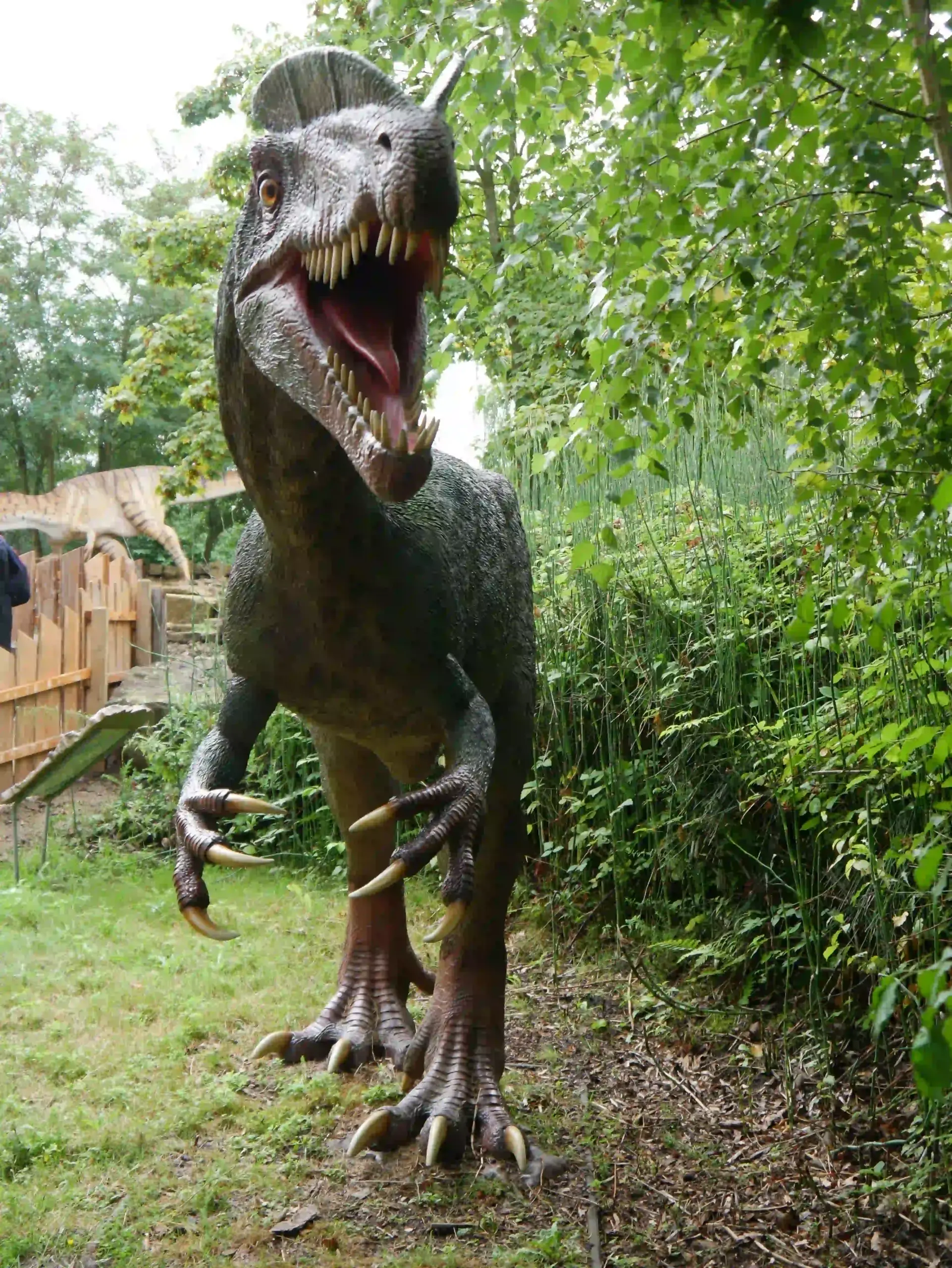
If the dinosaur had a neck frill, evidence of its existence would be found in the fossilized bones. This would manifest itself in the form of a rigid structure that supported the collar or markings on the cervical vertebrae where the muscles attach to perform the deployment of the collar.
In addition, there is a lack of internal openings running along the edge of the skull, indicating blood vessels and ducts that supplied the collar with blood and nutrients.
The discoverer of Dilophosaurus, the deceased Sam Welles, former professor at the University of California Museum of Paleontology says:
"It was pretty exciting to see the Dilophosaurus as an actor in Jurassic Park. It came across very well. The only two things I would question is its ability to spit venom forward. We have no evidence that venom exists..."
Source:
“And there is also a short anterior projection of these vertebrae (or ribs) that would make it impossible for the animal to erect a crest.”
Did Dilophosaurus resemble birds?
While its overall appearance was very similar to a lizard, Dilophosaurus wetherlli actually had many bird-like features.
In fact, the latest evidence suggests that the dinosaur was more bird than lizard. That's because some of its bones have been found to have air pockets that resemble the anatomy of modern birds. These air pockets reduce mass and help birds fly. This new information makes Dilophosaurus even more fascinating.
Although Dilophosaurus was one of the oldest dinosaur species to inhabit the Earth, there isn't much we really know about it. In fact, it is still heavily researched and has been called "The Best Worse-Known Dinosaur."
Image sources: Cover photo: ©urzeittiere.net
Skull: Sebastian Bergmann from Siegburg, Germany, CC BY-SA 2.0 https://creativecommons.org/licenses/by-sa/2.0, via Wikimedia Commons

Size comparison: Matt Martyniuk & Ville Sinkkonen, CC BY 3.0 https://creativecommons.org/licenses/by/3.0, via Wikimedia Commons
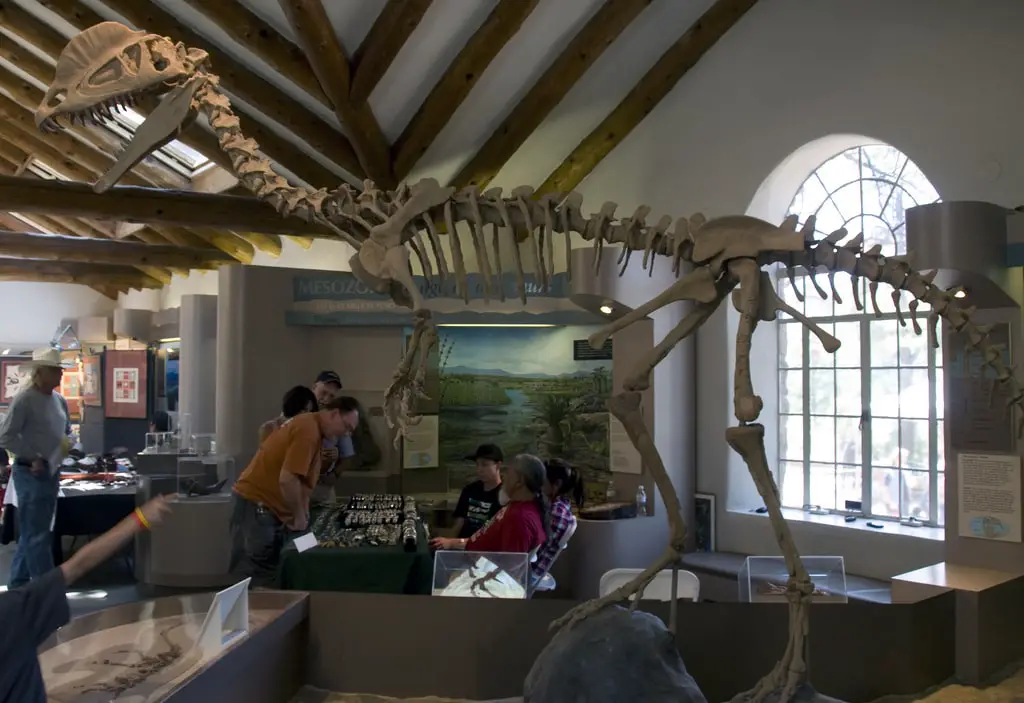
Skeleton: Craig Pemberton, CC BY-SA 2.0 https://creativecommons.org/licenses/by-sa/2.0, via Wikimedia Commons