Nasutoceratops
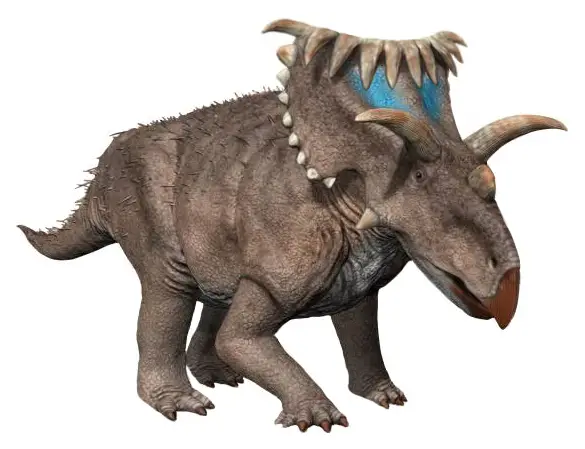
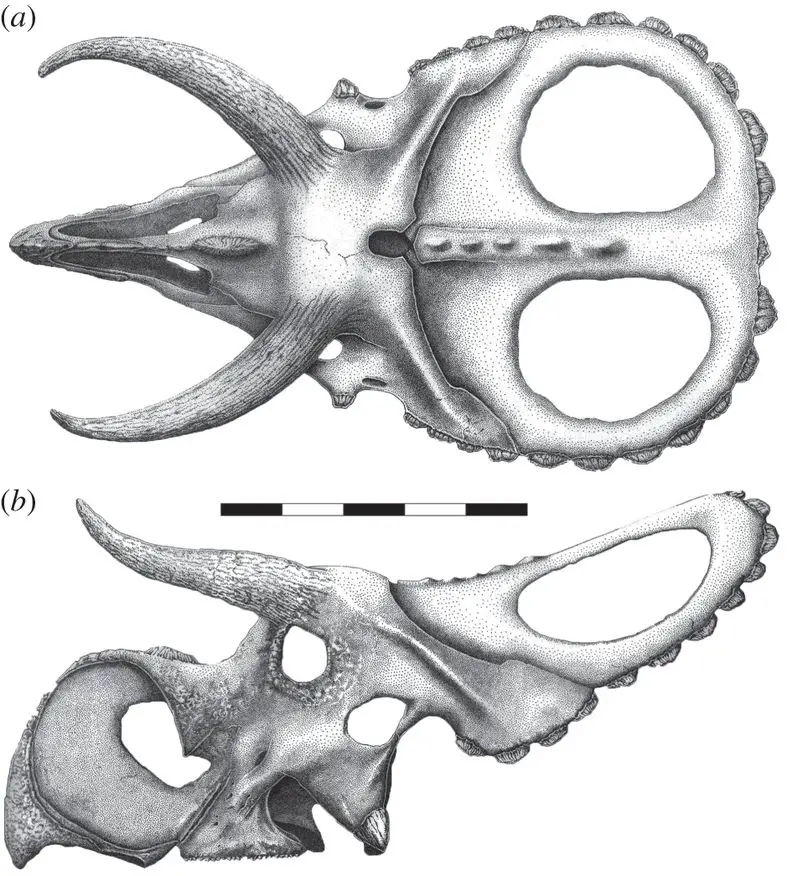
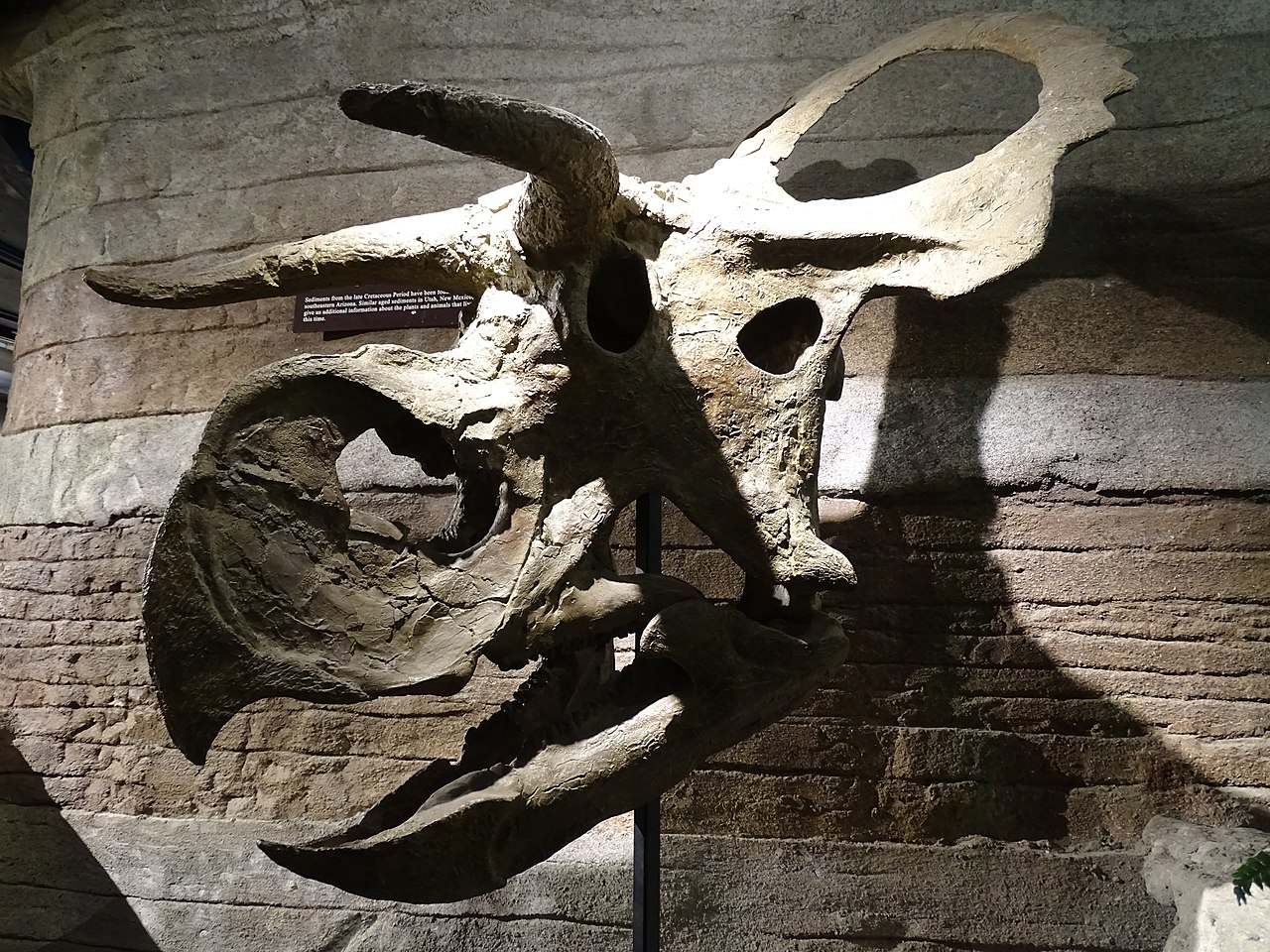
Nasutoceratops titusi was a large, ground-dwelling, four-legged herbivore. It had a short snout and unique rounded horns above its eyes, which have been compared to those of modern cattle. These horns are the longest of any member of the Centrosaurinae clade, reaching almost to the tip of its snout.
The horns on his forehead were more horizontal than most. Nasutoceratops had a short ruff and a short, high snout. The newly discovered species has several unique features, including an oversized nose compared to other members of the family and noticeably long horns.
The holotype UMNH VP 16800, a partially associated, almost complete skull, a coronoid process, a syncervical, three partial anterior dorsal vertebrae, a shoulder girdle, an associated left forelimb, parts of the right forelimb and skin impressions are known from Nasutoceratops.
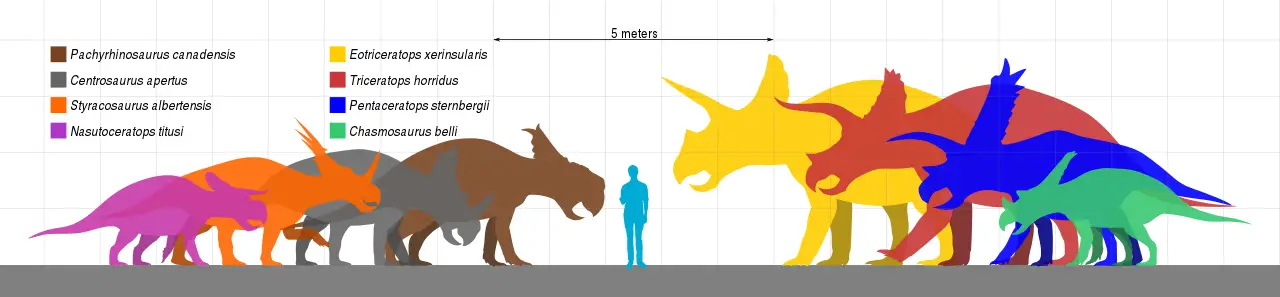
| length | 4.8 meters |
| Weight | 1.3 tons |
| locomotion | Four-legged |
| Food | herbivores |
Nasutoceratops titusi lived in the Kaiparowits Formation in southern Laramidia, Utah. It shared its habitat with other ceratopsian dinosaurs such as Cosmoceratops and Utahceratops as well as with hadrosaurs such as Gryposaurus and Parasaurolophus. Potential predators included theropods such as the troodontid Talos, but especially tyrannosaurs such as Teratophoneus.
Systematics
| Dinosauria |
| Ornithischia |
| Genasauria |
| Neornithischia |
| Cerapoda |
| Marginocephalia |
| Ceratopsia |
| Neoceratopsia |
| Coronosauria |
| Ceratopsoidea |
| Ceratopsidae |
| Centrosaurinae |
| Nasutoceratopsini |
Occurrence in time
| chalk |
| Upper Cretaceous |
| late Campanian |
Happen
| Area | North America |
| country | USA |
| region | Utah |
| formation | Kaiparowits |