
Brontosaurus: The dinosaur that was discovered twice
Few dinosaurs have had such a checkered history as the Brontosaurus. For almost the entire 20th century, experts claimed that this name didn't exist, that it was simply another name for Apatosaurus. Nevertheless, children learned the name Brontosaurus in school, generation after generation. Then, in 2015, came the surprise: a major study proved them right. Brontosaurus is its own genus.
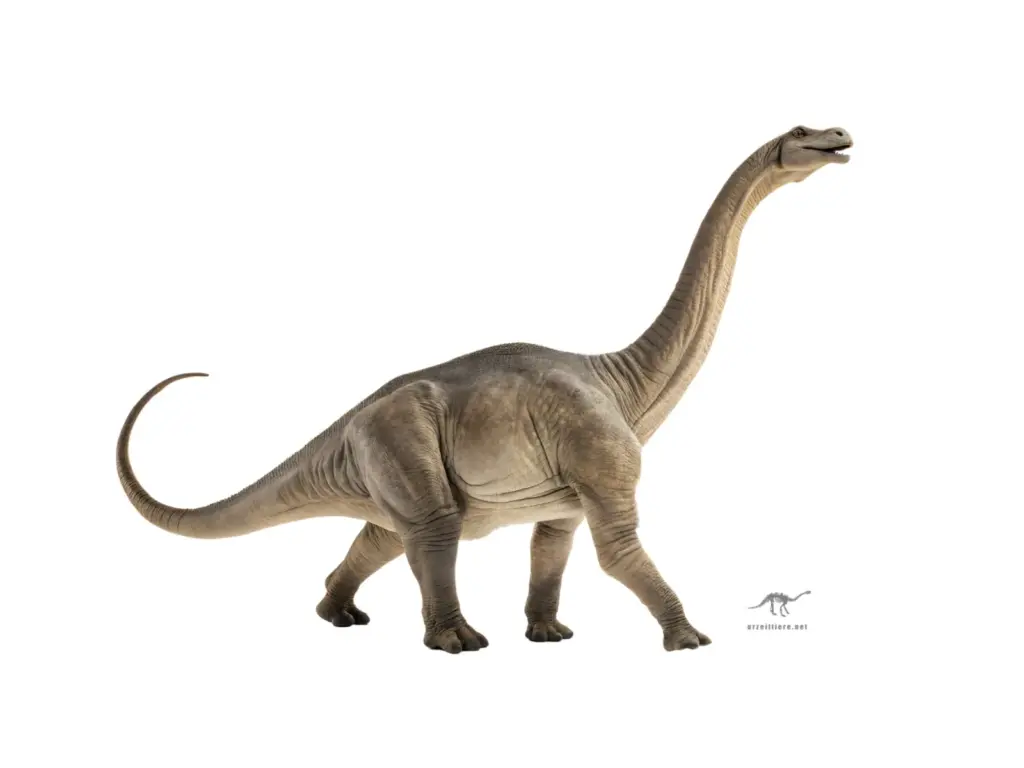
At a glance
| feature | Value |
|---|---|
| length | approx. 22–26 m (values vary depending on the species) |
| Weight | approx. 15–32 t (values vary depending on the species) |
| Location | Morrison Formation, especially Como Bluff in Wyoming, USA |
| age | Late Jurassic, approximately 155–145 million years ago |
| Food | herbivores |
| group | Sauropoda, family Diplodocidae |
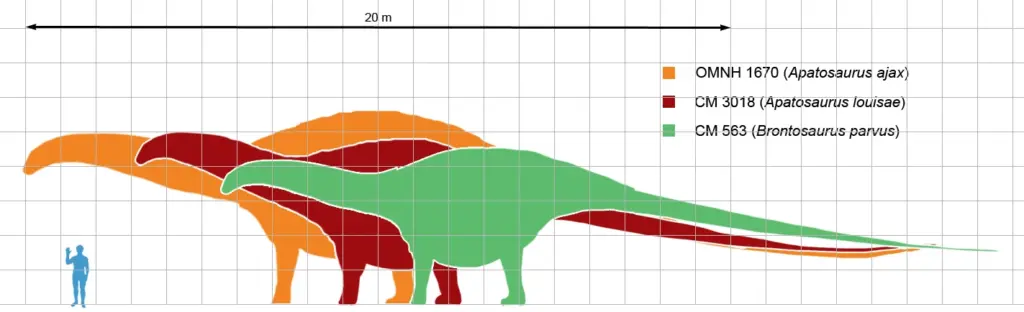
Weighing up to 32 tons, Brontosaurus was as heavy as five large elephants combined. Even the smaller specimens were 22 to 26 meters long. That's as long as two articulated buses end to end. The wide range in size and weight has a simple explanation: the name Brontosaurus currently refers to three different species of varying sizes.
A discovery in the middle of the race for bones
The discovery of the Brontosaurus is owed to a fierce dispute. In the 1870s and 1880s, the so-called "Bone Wars" raged. Two fossil hunters competed to find bones in the western United States. Their names: Othniel Charles Marsh and Edward Drinker Cope. Due to time constraints, both often described their finds rather briefly and hastily.
In 1879, Marsh discovered a skeleton near Como Bluff in Wyoming. He gave it a new name: Brontosaurus excelsus, the "sublime thunder lizard." Two years later, a more detailed description of the nearly complete skeleton followed. Marsh highlighted one feature as particularly important: the sacrum consisted of five vertebrae, fused together. In similar genera, there were at most four.
How the name suddenly disappeared
In 1903, a team led by Elmer Riggs from the Field Museum in Chicago examined a sauropod skeleton. Their conclusion: the previously separate genera were too similar. According to the rules of naming, in such a case the older name takes precedence. Apatosaurus had already been named in 1877, two years before Brontosaurus. Therefore, the younger name disappeared from scientific literature.
Verschwunden war er aber nur dort, nicht aus den Köpfen der Menschen. Der Name Brontosaurus blieb über Jahrzehnte in Schulbüchern und Museen präsent. 1989 brachte die US-Post eine Dinosaurier-Briefmarkenserie heraus. Sie wählte dafür „Brontosaurus“ statt des fachlich korrekten „Apatosaurus“. Das Smithsonian-Museum beschwerte sich öffentlich: „Cartoon-Namen statt wissenschaftliche Namen“, lautete der Vorwurf. Besonders pikant: Die Serie wurde ausgerechnet in Disney World vorgestellt.
2015: The major investigation brings about a change
A doctoral thesis changed everything. Researcher Emanuel Tschopp, at the University of Lisbon, compared all the fossils of the Diplodocidae. He collaborated with Octávio Mateus and Roger Benson from the University of Oxford. They examined 81 individual skeletons – not just individual species. To do this, they analyzed 477 physical characteristics – at the time, one of the largest studies of its kind on sauropods. Tschopp's initial goal wasn't to revive Brontosaurus. He was only interested in the relationships within the Diplodocidae.
Das Ergebnis erschien 2015 im Fachjournal PeerJ und überraschte trotzdem alle. Die Skelette liefen bis dahin als Apatosaurus excelsus. Doch sie unterschieden sich in mindestens zwölf wichtigen Merkmalen von den übrigen Apatosaurus-Arten. So viele Unterschiede findet man sonst nur zwischen längst anerkannten, eigenständigen Gattungen. Ein Beispiel dafür sind Diplodocus und Barosaurus. Ein echter Apatosaurus hatte demnach einen deutlich wuchtigeren Hals als Brontosaurus. Umgekehrt besaß Brontosaurus eigene Merkmale. Dazu zählen eine runde Ausbuchtung am Schulterblatt und andere Maße an einem Knöchelknochen.
The scientific community reacted largely positively. Researcher Paul Upchurch from University College London said he wanted to use the name again from now on. Philip Mannion from Imperial College London also welcomed the comeback. Brontosaurus has a firm place in the public imagination, he said. It's only good that it's back. Other experts urged caution. How many differences are sufficient to classify it as a separate genus is not always clear.
Three species under one name
The 2015 study assigned three species to the revived genus. Two of these had previously been known by their own names:
- Brontosaurus excelsus – the type species. Named in 1879 by Marsh, found at Como Bluff in Wyoming.
- Brontosaurus parvus – previously classified as its own genus Elosaurus, named in 1902.
- Brontosaurus yahnahpin – previously classified as its own genus Eobrontosaurus, named in 1994. According to the study, it is the oldest of the three species.
A body like a walking crane
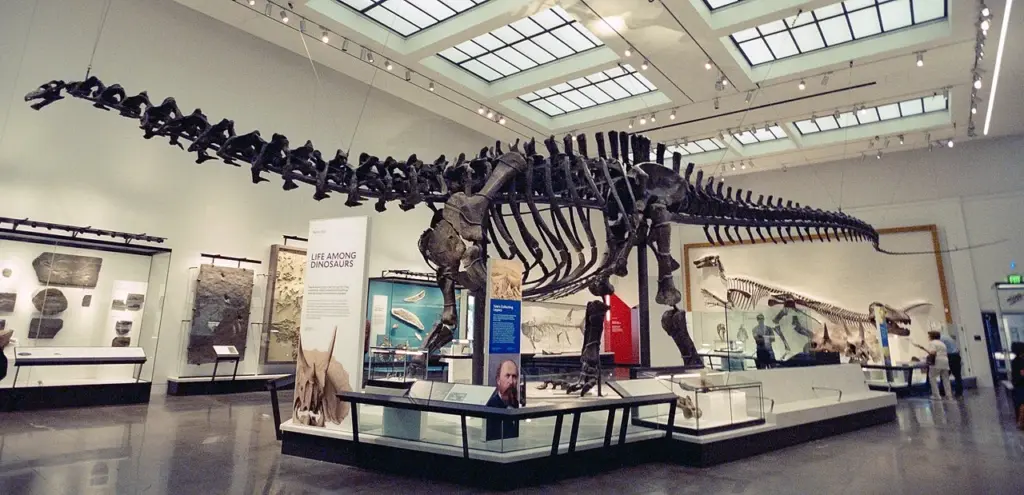
Brontosaurus walked on four legs that resembled pillars. Its neck was extremely long, as was its whip-like tail. To date, no one has found a complete skull of the type species. This illustrates that even well-studied dinosaurs often remain incomplete. The animal could probably raise its tail and swing it sideways. Some researchers suggest it functioned as a whip for defense, but this has not been definitively proven.
Like other sauropods, Brontosaurus likely had air sacs in its vertebrae. This system is similar to that of modern birds. It made breathing easier in such a massive body.
Anyone comparing Brontosaurus and Brachiosaurus will immediately notice the difference in their legs. In Brontosaurus, the front and hind legs were roughly the same length, meaning its back was horizontal. Brachiosaurus, on the other hand, had significantly longer front legs. Its back sloped downwards, similar to a giraffe. The tail was also different: Brontosaurus's was longer and whip-like, while Brachiosaurus's was shorter.
What was on the menu?
Its head was small, tiny in relation to the rest of its body. Despite this, Brontosaurus could eat enormous quantities of plants. The reason: it didn't chew at all. Like a bird, it probably possessed a gizzard. It also swallowed stones that ground up its food. Some researchers suspect even more. The animal may have been able to stand on its hind legs at times. This would have allowed it to reach tall plants. This, too, is unproven – just a theory.
Not a swamp dweller
Diese alte Vorstellung gilt heute als widerlegt: Brontosaurus war ein reines Landtier. Lange hielt sich trotzdem die Idee, Riesensauropoden wie er hätten die meiste Zeit halb im Sumpf verbracht, um ihr Gewicht zu tragen. Sein Körperbau spricht dagegen: die säulenartigen Beine, die Luftsäcke im Skelett. So trug er sein Gewicht an Land – ähnlich wie ein heutiger Elefant.
More information on this topic can be found at urzeittiere.net
Brontosaurus lebte zur gleichen Zeit wie Camptosaurus, in derselben Morrison-Formation. Camptosaurus war aber ein deutlich kleinerer Pflanzenfresser mit ganz anderer Ernährungsstrategie. Ähnlich baute auch Brachiosaurus – allerdings mit deutlich längeren Vorder- als Hinterbeinen, wie weiter oben im Körperbau-Vergleich beschrieben.
Image sources:
Size comparison: Matt Martyniuk, CC BY-SA 4.0, via Wikimedia Commons
Brontosaurus skeleton: Matthew Bellemare, CC BY-SA 2.0, via Wikimedia Commons