
Liliensternus liliensterni
Liliensternus liliensterni is the specific name and the genus name derived from the surname Hugo Rühle von Lilienstern. The man founded a paleontological museum in his castle in Bedheim (Germany) in 1934, where he also exhibited the previously discovered specimens of Liliensternus.
Liliensternus lived almost 210 million years ago. The bipedal animal was medium-sized and lived on the ground. Liliensternus belongs to the order Theropoda and probably had a long tail, similar to that of Dilophosaurus. He is one of the most amazing dinosaurs in the world.
| Profile | Lily star |
|---|---|
| epoch | Upper Triassic (late Norian) 214 to 208.5 million years |
| Order | Lizard-pelvis dinosaur (Saurischia) |
| Subordination | Theropoda |
| Family | Coelophysoidea |
| group | |
| genus | Lily star |
| species | Liliensternus liliensterni |
| Height | 1.5 meters |
| length | 5.15 meters |
| Weight | 127 kg |
| Locations | Germany (Thuringia) |
length
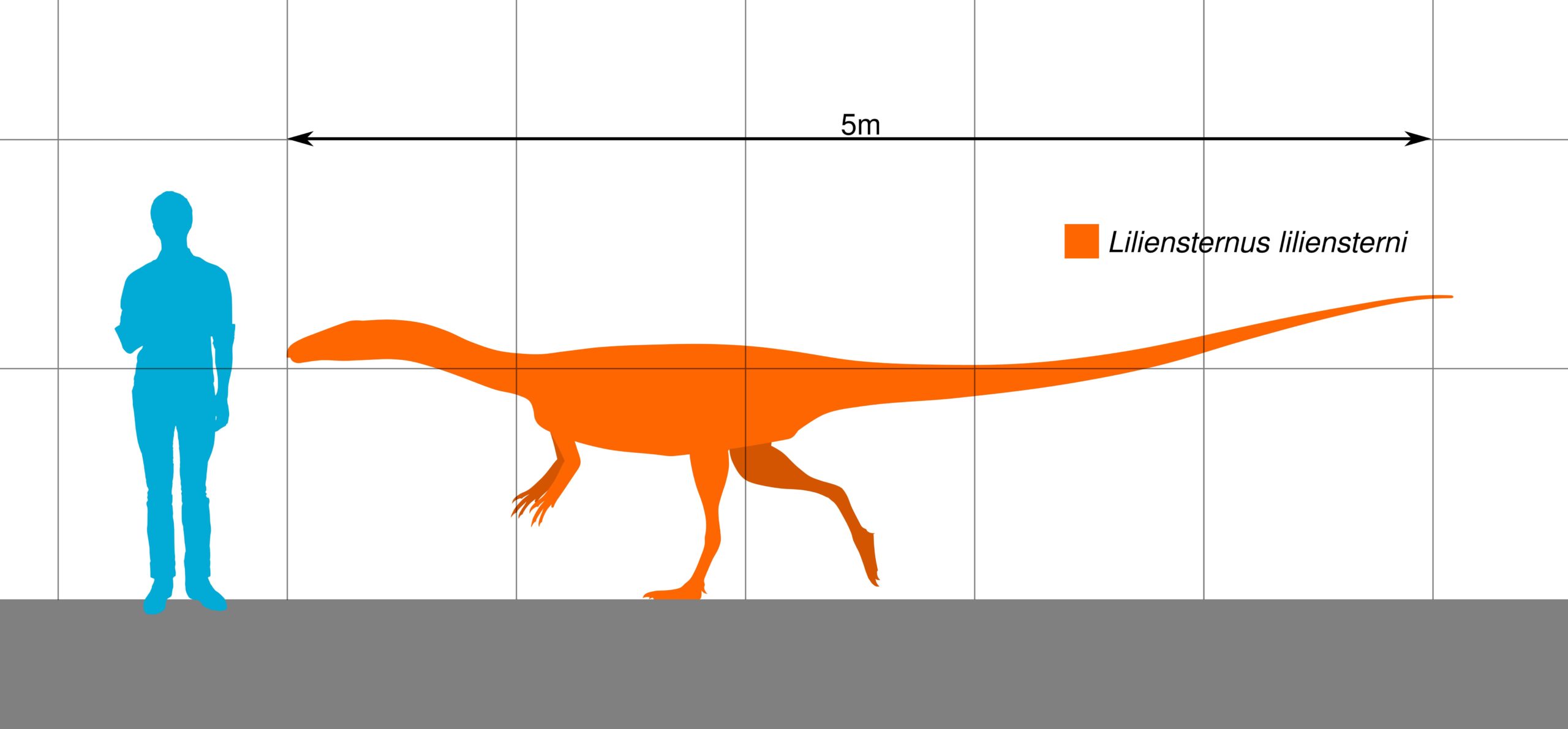
Liliensternus was about 5.15 meters long. Other researchers have estimated its length at 5.2 meters. If you look at the pictures of the dinosaur, you can see its enormous length. Its tibia is 409 millimeters long, slightly shorter than the femur, which is 440 millimeters long.
Weight
While others estimate the average weight of Liliensternus to be 127 kilograms, others suspect that it was at most 200 kilograms.
Two-legged or four-legged
The species Liliensternus was an active biped.
Carnivores or herbivores
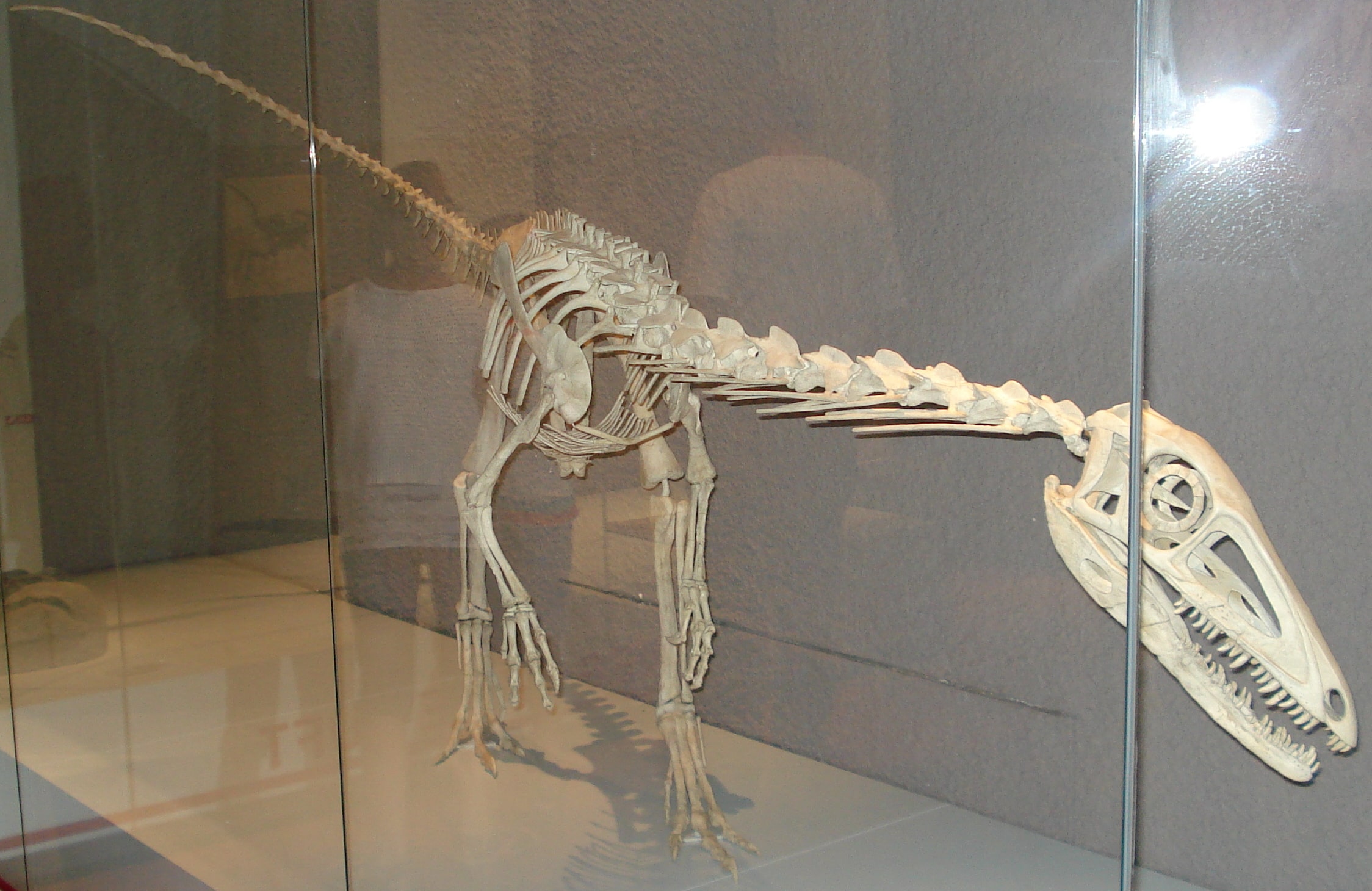
The German lily star was considered the fiercest predator of its time. Hugo Rühle von Lilienstern discovered that the dinosaur was a pure carnivore. Liliensternus preyed on herbivores, including Plateosaurus, which lived in its paleoenvironment. It is assumed that the numerous herbivores, therapsids and reptiles in the floodplains quickly covered the dinosaur's diet during the Triassic period. According to the research, Lliliensternus used its slashing teeth to incapacitate prosauropods. It was also fast enough to catch and feed on avian pelvic dinosaurs (Ornithischia). Scientists classify dinosaurs based on their sharp teeth, claws and strong jaws.
Occurrence in time
Liliensternus liliensterni lived around 201-228 million years ago, in the late Triassic, the Norian. The Norium covers a period of 19.5 million years. During this geological period, the dinosaur genus roamed what is now Germany, feeding on other dinosaurs such as Plateosaurus. Count Hugo Rühle von Lilienstern discovered his fossil remains in 1932/1933 in a marlstone layer that was deposited in the late Triassic.
Where lily star was found
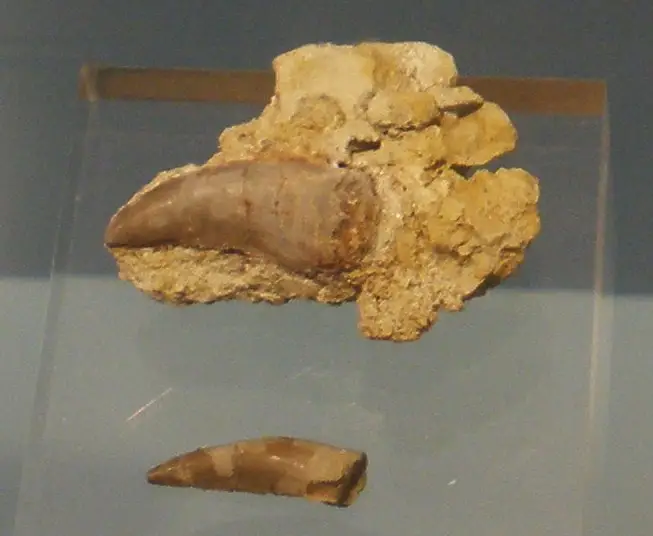
The fossil remains of Liliensternus were discovered in Germany near Großer Gleichberg in the Trossingen Formation. Its fossils were found along with those of Ruehleia, a sauropodomorph dinosaur. Count Hugo Rühle von Lilienstern found the remains in calcareous mudstone (marlstone) that was deposited in the Noric phase. Hugo made the discovery during the winter of 1932/1933. As early as 1834, researchers found the left metatarsal bone of Liliensternus in the sandstone of the Trossingen Formation in Germany. Meyer originally described the metatarsal bone as a hand or foot element, while Friedrich von Huene described it as a pubic bone fragment of Plateosaurus. Moser (2003) identified the material as the proximal metatarsal bone of Liliensternus. A Liliensternus tooth also comes from the Norian and was found in the Löwenstein Formation in 1913. The remains of Liliensternus were brought to the castle of Hugo Rühle von Lilienstern, where he opened a paleontological museum, and remained there until 1969. They were later transferred to their current location, the Natural History Museum Berlin.
Special features
According to Paul, due to its appearance, Liliensternus could be something in between Coelophysis and Dilophosaurus be. Many reconstructions show Liliensternus with a crest resembling a Dilophosaurus, although its skull is not well known. Its ilium (hip bone) is unusually short, like that of Dilophosaurus. Additionally, the genus has five fingers like its contemporaries, with the fourth and fifth fingers being smaller than the others. This feature marks the transition period between the five-fingered theropods of the Late Triassic and the three-fingered theropods of the Jurassic period.
Liliensternus can also be identified by its unique features. It has cervical vertebrae with a broad, rounded edge extending from the posterior end of the diapophysis to the posterior end of the vertebral center. In addition, the infradiapophyseal fossa is less pronounced, and the absence of a horizontal ridge at the base of the cervical vertebrae. Liliensternus liliensterni is one of the largest theropods in Europe. They were predatory dinosaurs; razor-sharp teeth in their fossilized skulls give an idea of how dangerous they were. These teeth and their powerful feet allowed them to hunt and eat larger herbivores.
Image Sources: Cover Image: Authorship has not been stated in a machine-readable form. ArthurWeasley~commonswiki is credited as the author (based on copyright information)., CC BY-SA 3.0 http://creativecommons.org/licenses/by-sa/3.0/, via Wikimedia Commons
Size comparison: Slate Weasel, CC0, via Wikimedia Commons
Skeleton: Ghedoghedo, CC BY-SA 3.0 https://creativecommons.org/licenses/by-sa/3.0, via Wikimedia Commons
Tooth: Ghedoghedo, CC BY-SA 3.0 https://creativecommons.org/licenses/by-sa/3.0, via Wikimedia Commons