
Euplocephalus
Euoplocephalus: The real star behind the Ankylosaurus myth
Many images, numbers, and even toy figures circulate online as "Ankylosaurus"But in reality they show a different animal:" Euoplocephalus tutusMany well-preserved skulls of Euoplocephalus have survived, whereas hardly any of Ankylosaurus itself remains. Therefore, Euoplocephalus is even considered the anatomical model for the entire group of armored dinosaurs.
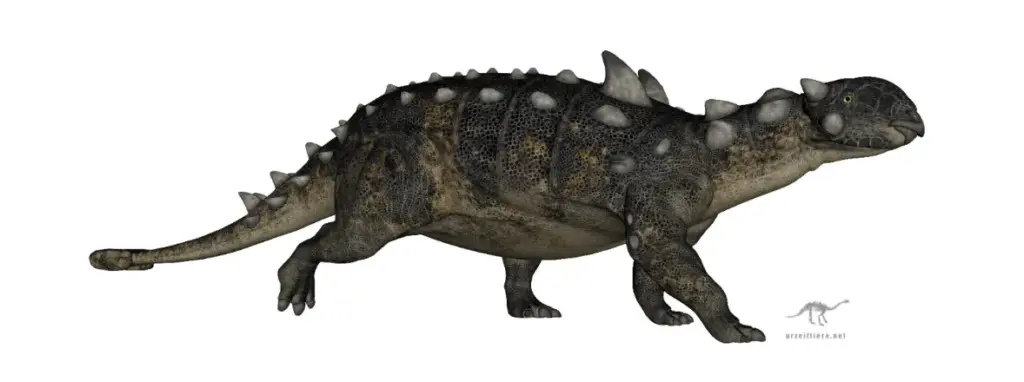
At a glance
| feature | Value |
|---|---|
| length | approx. 5–6 m (largest known individual, no fossil complete enough for a reliable estimate) |
| Weight | Not specifically quantified; secondary circulating value approx. 2 t |
| Location | Lower Dinosaur Park Formation, Alberta, Canada |
| age | Campanian, Upper Cretaceous, approx. 76.5–75 million years ago |
| Food | herbivores |
| Special feature | Anatomical reference taxon of the Ankylosauria; historically containing the most fossil finds of all North American ankylosaurids. |
A name that has already had to change once.
The researcher Lawrence M. Lambe first described the animal in 1902. He called it Stereocephalus tutus, after a piece of skullcap with rib and neck ring. But the name didn't last long: Stereocephaly The name had already been given to a beetle in 1884. Two animal species cannot have the same name. So, in 1910, Lambe coined a new one: Euplocephalus.
The name comes from Greek. EU- means "good", Hoplon means "weapon" or "shield", kephalē It means "head." A more literal translation would be "well-armored head," not "well-armored head," as is often seen. The translation "armored" fits the animal's appearance well, but it doesn't quite capture the meaning. The name is pronounced in German roughly like this: "Eu-o-plo-tsephalus."
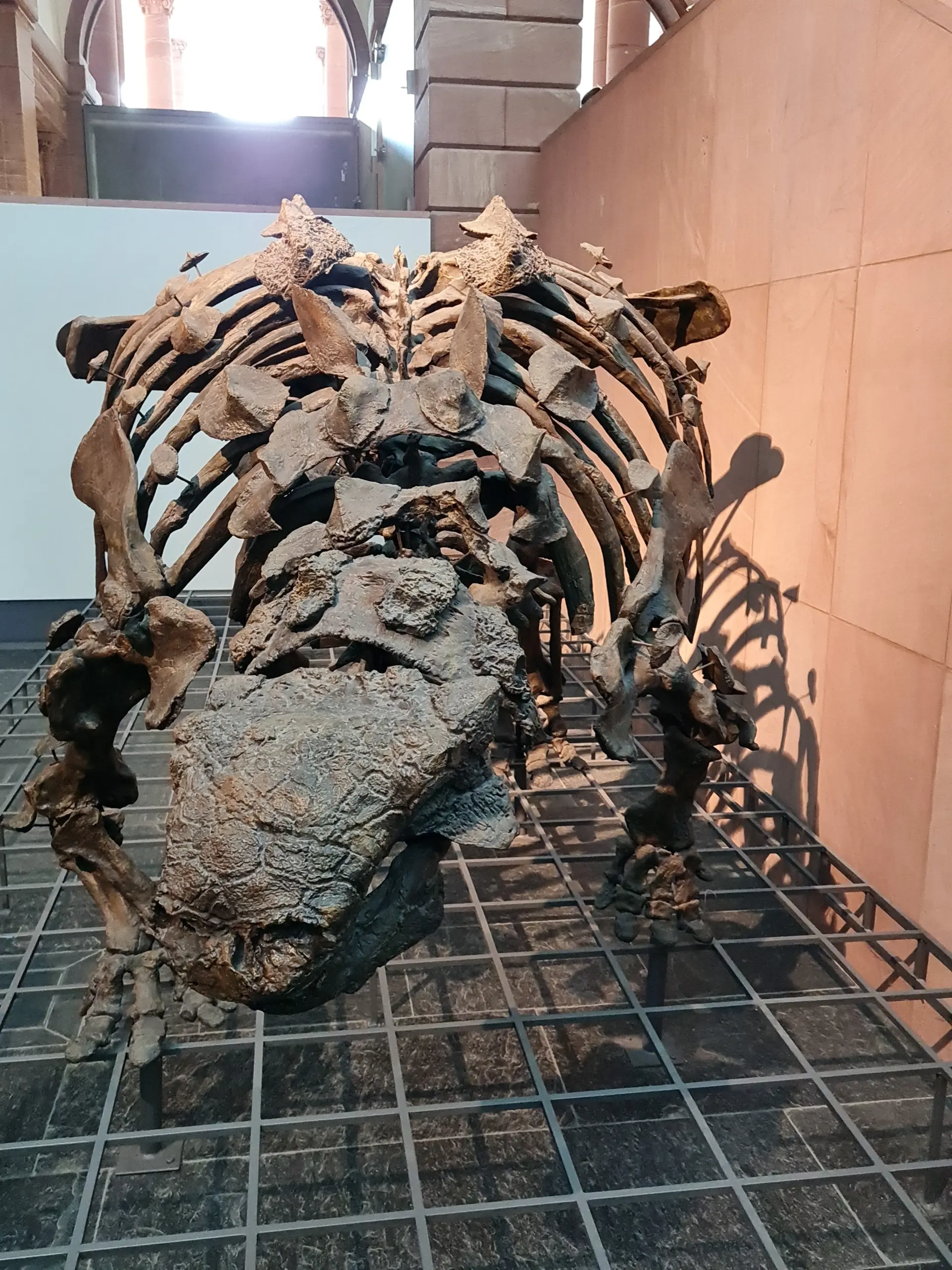
How big was Euoplocephalus really?
At least three different size estimates are circulating online: sometimes 5.5, sometimes 7, sometimes even 8 meters. None of these values can be traced back to a dedicated study on euplocephalus. The only reliable statement is provided by Arbour & Mallon (2017) in the journal FACETSA large individual was therefore probably about 5 to 6 meters long. The authors themselves emphasize that no single fossil is sufficient for a reliable estimate.
The larger figures – around 8 meters and 3 tons – actually belong to Ankylosaurus. In the same study, Arbour and Mallon estimated two Ankylosaurus specimens to be between 6 and almost 10 meters long. These figures are mistakenly attributed to Euoplocephalus in many online sources. This pattern of confusion runs throughout the entire research.
This is how Euoplocephalus was built
Euoplocephalus stood on four short, powerful legs. The front legs were significantly shorter than the hind legs. The body was broad and heavy, similarly proportioned to a rhinoceros or hippopotamus, only armored. In 1982, Kenneth Carpenter estimated the length of a fully grown animal to be over 6 meters. This aligns well with the upper limit of the range given by Arbour & Mallon (2017).
The often-cited weight of around 2 tons corresponds roughly to that of a large male rhinoceros. It originally stems from an estimate by paleontologist Robert Bakker in 1980. Carpenter adopted it in 1982. To date, neither study provides its own detailed and verifiable mass calculation.
More than just plates: the armor in detail
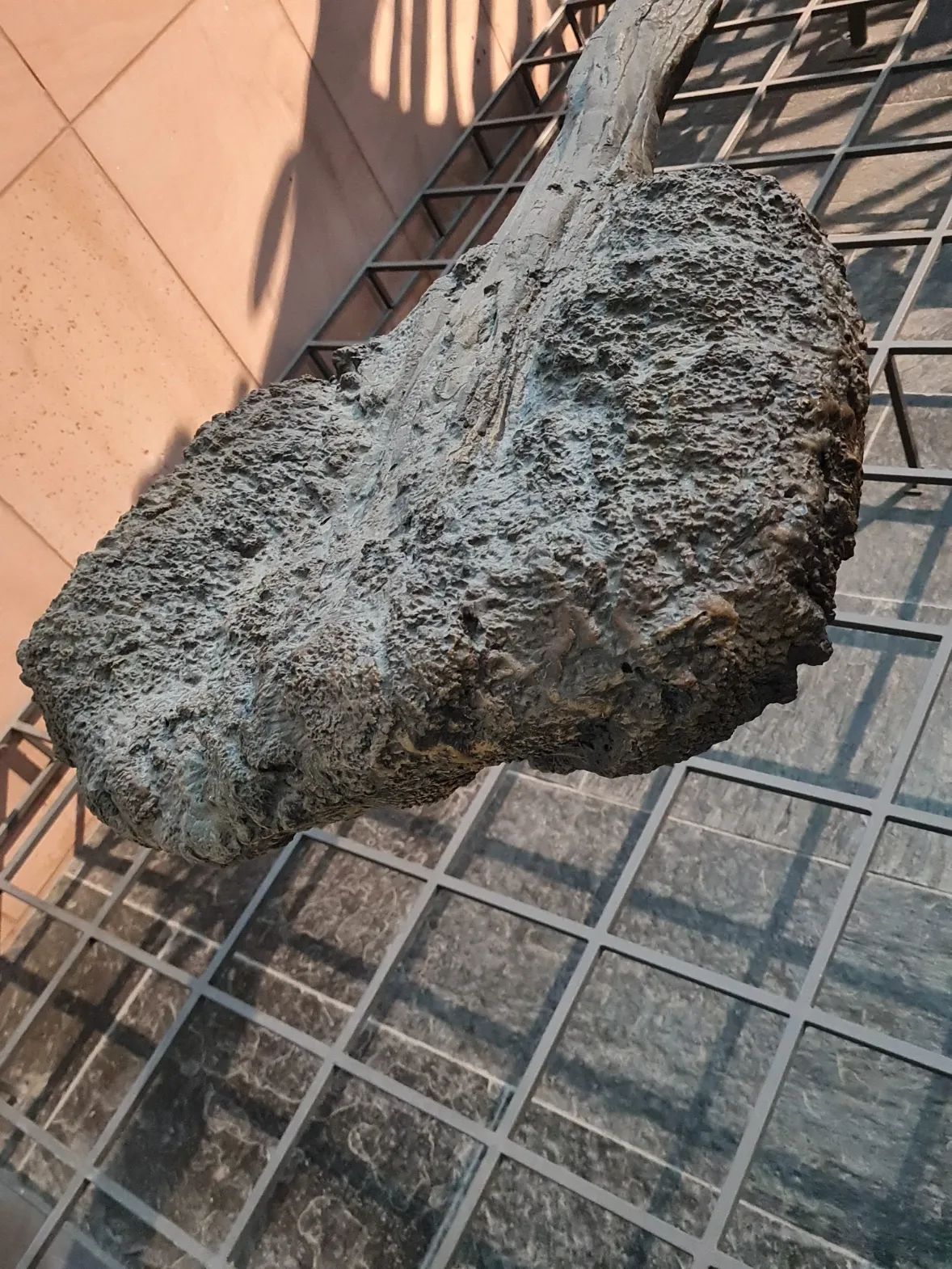
At first glance, the armor appears to be a uniform surface of plates. However, Carpenter's 1982 reconstruction reveals a significantly more intricate system. Tiny bony spheres cover large portions of the neck, torso, and tail. They separate broad transverse bands of larger, polygonal plates. A pair of particularly high, keeled plates sits atop the shoulders, with similar ones following along the center of the back.
This fine articulation allowed the animal freedom of movement despite its heavy armor. Carpenter also suspects the armor had a second function besides pure protection. The plates were richly supplied with blood vessels, similar to the dermal bones of crocodiles. This suggests an additional role in temperature regulation.
One open question: Carpenter's 1982 depiction of tanks is primarily based on two fossils. At the time, they were called "Scolosaurus cutleri" and "Dyoplosaurus acutosquameus“and, based on the knowledge of the time, considered them synonyms of Euoplocephalus.” Arbour & Currie (2013) Both names were later reclassified as separate genera (more on this below). Whether the classic shell reconstruction actually depicts Euoplocephalus in the strict sense or rather its close relatives remains an open question.
The tail club: a weapon prone to breakage
At the end of its tail, Euoplocephalus possessed a club consisting of two parts: a "handle" made of stiffened, fused tail vertebrae, and a "knob" made of greatly enlarged dermal bones. Arbour & Snively (2009) They wanted to know if this club could withstand real combat. Using computed tomography scans of four Euoplocephalus tail clubs, they created digital 3D models, including some made from holographic material. With these, they simulated impacts.
The results are mixed. Clubs with small and medium-sized knobs withstood the calculated impact forces. However, one particularly large club exhibited stress levels that could have led to breakage. The authors cautiously conclude that at least very large clubs posed a certain risk of injury to their user when swung at full force.
The club is also older than previously thought. Arbour & Currie (2015) This is demonstrated using fossils from the Middle Cretaceous period in China. According to this research, the handle and pommel did not develop simultaneously. Early ankylosaurids initially possessed only the stiffened handle. The enlarged pommel was added later, in a second step – at least 40 million years earlier in their evolutionary history than previous studies had assumed.
Euoplocephalus or Ankylosaurus – what is the difference?
At first glance, both appear to be the same dinosaur: heavily armored, quadrupedal, with a tail club. The published characteristics of Euoplocephalus and Ankylosaurus magniventris However, they show clear differences.
| feature | Euplocephalus | Ankylosaurus |
|---|---|---|
| age | approximately 76.5–75 million years | approximately 68–66 million years ago |
| Location | Lower Dinosaur Park Formation, Alberta | Hell Creek and Scollard Formation |
| length | approx. 5–6 m | approx. 6–8 m |
| Nostrils | facing forwards | facing backwards/sideways |
| tail club | The handle swivels form a narrow V (approx. 22–26°) | The handle swivels form a wide U (approx. 60°). |
The two animals lived millions of years apart. And they also differ significantly anatomically, from the shape of their noses to their tail club.
One name for four genera
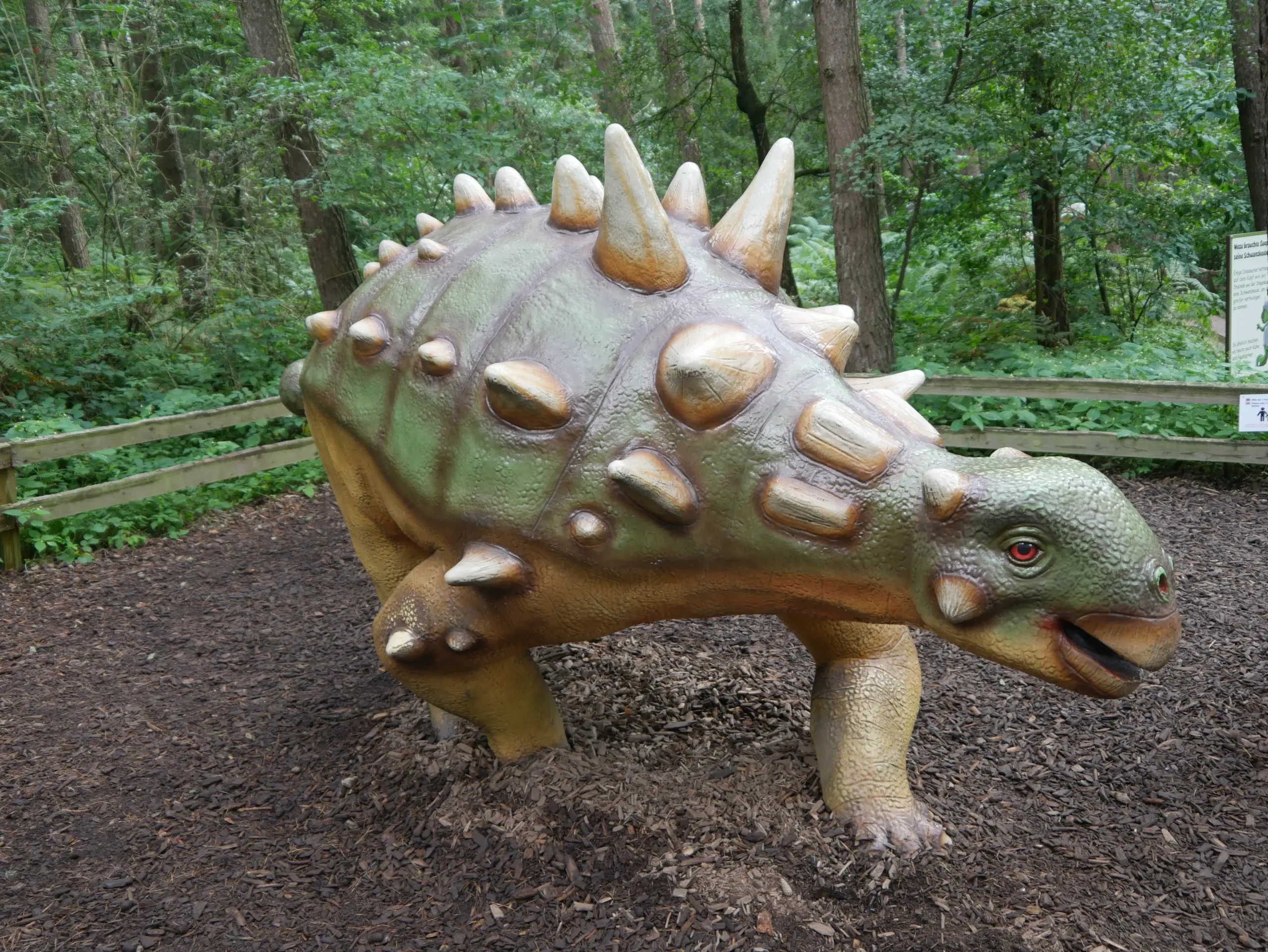
Few other North American ankylosaurids have been attributed with as much fossil material as Euoplocephalus. In 1978, the researcher Walter Coombs combined it into three separate genera: Dyoplosaurus, Scolosaurus and Anodontosaurus. Arbour & Currie (2013) Decades later, they reversed this decision, splitting the broadly defined "Euoplocephalus" once again – into at least four independent genera. Euplocephalus His own exploration remained confined to the lower Dinosaur Park formation.
This division also explains a common error. Older texts often give a time span of 76 to 67 million years for "Euoplocephalus". This has not been the case since 2013 – this broad period is now divided among several genera.
Does Euoplocephalus appear in video games or as a collectible figure?
In the video game Jurassic World Evolution 2 Euoplocephalus is included as a separate, playable species. This is confirmed by the official database of publisher Frontier. However, the animal is absent from the Jurassic Park and Jurassic World films.
A common misconception is that Schleich supposedly has a figure called "Euoplocephalus" in its product line. This is incorrect – there is no official Schleich figure with this name. The genuine collectible figure comes from a different manufacturer, Battat, and was first released in 1998. The confusion likely stems from two reasons. Some online listings mix several brand and animal names. Furthermore, Schleich did indeed release a figure called "Saichania." Anatomically, this figure resembles Euoplocephalus more closely than the actual genus Saichania.
More information on this topic can be found at urzeittiere.net
- Ankylosaurus – the more famous, but significantly less well-documented relative; many popular “Ankylosaurus” illustrations actually depict Euoplocephalus anatomy.