Nigersaurus taqueti – The dinosaur with 500 teeth
The dinosaur with the most teeth was the Nigersaurus taqueti.
Nigersaurus taqueti was an unusual Lower Cretaceous dinosaur with rather bizarre features.
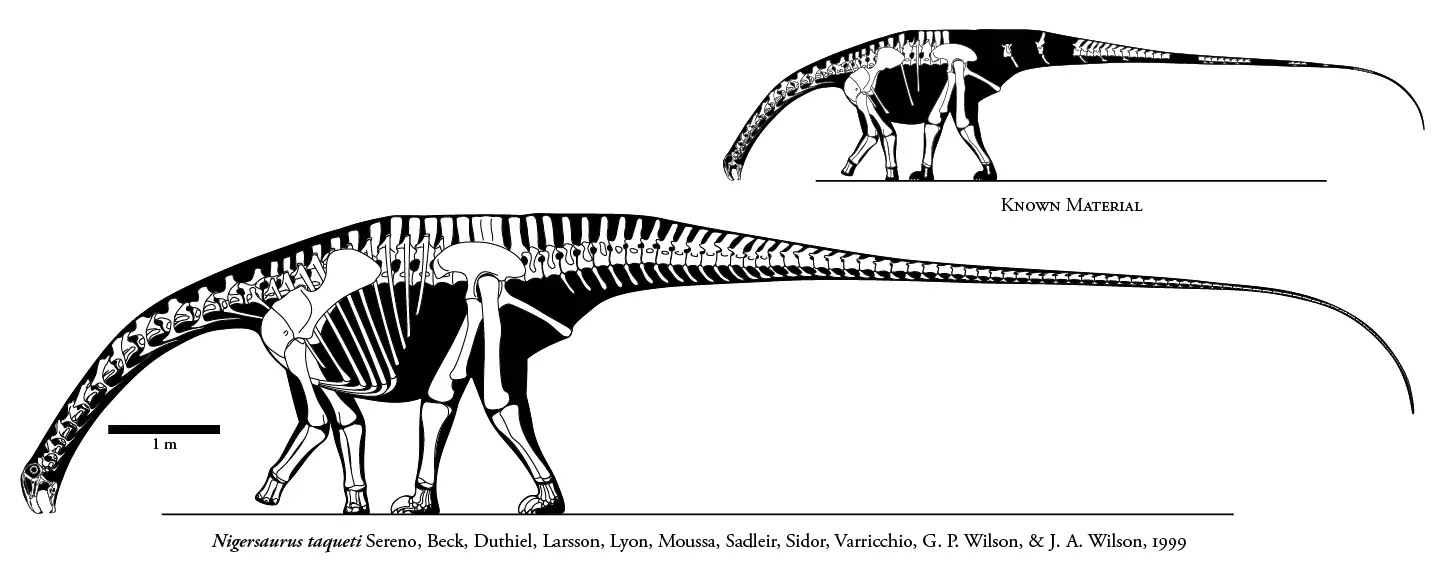
This 10 meter long herbivore became famous for its unusual almost rectangular mouth with dental batteries from 500 teeth.
It is also often referred to as the “lawnmower of the Cretaceous period”. Although this name may not be entirely correct, as there was no grass in the Cretaceous period!
| Profile | Nigersaurus |
|---|---|
| epoch | Early Cretaceous (late Aptian), 123 to 112.9 million years ago |
| Order | Lizard-pelvis dinosaur (Saurischia) |
| Subordination | Sauropods (Sauropoda) |
| Family | Rebbachisauridae |
| group | Diplodocoidea |
| genus | Nigersaurus |
| species | Nigersaurus taqueti |
| Height | 3 meters |
| length | 10 meters |
| Weight | 5 t |
| Locations | Niger (Elrhaz Formation) |
Discovery of Nigersaurus taqueti
In 1976, the French vertebrate paleontologist Philippe Taquet discovered a partial skeleton, which he could not yet assign to a genus at the time.
The majority of the fossil skeletal parts of Nigersaurus were discovered in two excavation expeditions in 1997 and 2000. The Gadoufaoua site is located in the Sahara Desert in the Republic of Niger. Geologically, Gadoufaoua belongs to the Elrhaz Formation, from which fossils of Sarcosuchus, Suchomimus and Ouranosaurus also come.
Distinctive features of Nigersaurus
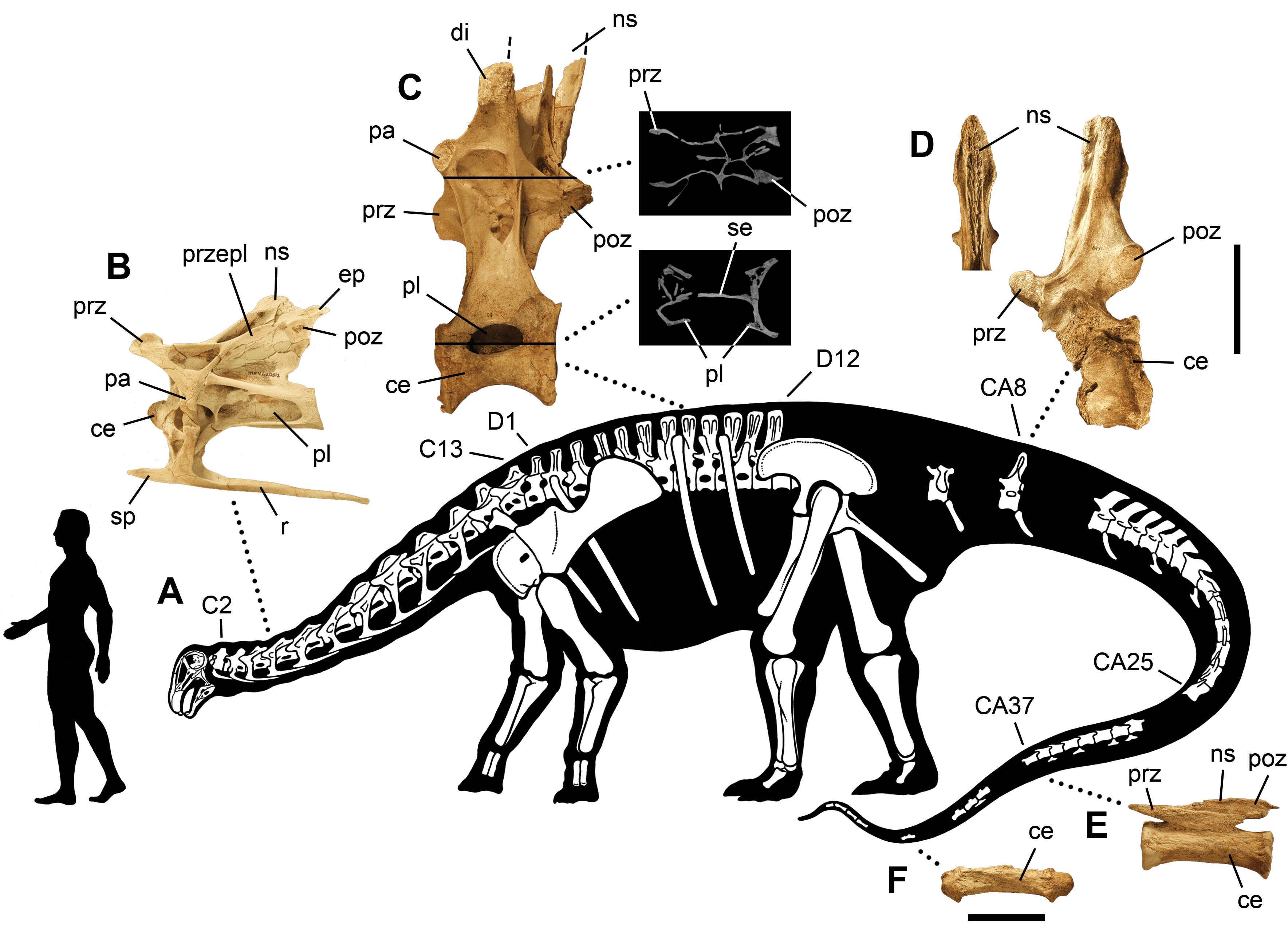
Of all the sauropods ever discovered, Nigersaurus is probably the most unusual. The most extraordinary features are its extremely light skull and the very thin vertebral bodies of the animal, which weighs at least 5 tons.
Its estimated body mass is approximately that of an elephant.
The femur of Nigersaurus was only about 1 meter long. Although Nigersaurus reached a body length of up to 10 meters, it is considered a small sauropod. Its neck is very short compared to other sauropods. He had a total of 13 cervical vertebrae, which together made up only 130% of the length of the entire dorsal spine.
The back and cervical vertebrae consist only of thin bone plates and are immensely hollowed out. This lightweight design is unusual for a herbivorous dinosaur. Only the bones of the legs and the tail vertebrae have a normal bone structure.
Head posture and nutrition
Paul Sereno and co-author Jeffrey Wilson suspect that Nigersaurus was barely able to raise its head higher than back level for long periods of time due to its light, hollow and fragile bone structure. CT scans of its internal hearing (organ of balance) showed that Nigersaurus tilted its skull downwards to 67 degrees.
This downward head posture is almost twice as much as that of Diplodocus.
These facts and the unusual shape of its mouth lead to the assumption that Nigersaurus constantly kept its head close to the ground in order to consume vegetation growing on the ground. Since grasses had not yet developed in the Cretaceous period, it probably ate mainly ferns and horsetails. The anatomy of its masticatory muscles suggests that it was too weak to chew plant material. It probably used its rows of 50 teeth to tear the softer parts of the plants.
This downward head posture is almost twice that of Diplodocus.
These facts and the unusual shape of its mouth lead to the assumption that Nigersaurus constantly kept its head close to the ground in order to consume vegetation growing on the ground. Since grasses had not yet developed in the Cretaceous period, it probably ate mainly ferns and horsetails. The anatomy of its masticatory muscles suggests that it was too weak to chew plant material. It probably used its rows of 50 teeth to tear the softer parts of the plants.
A dinosaur with 500 teeth
Unlike all other herbivores, Nigersaurus had not just a pair of powerful molars, but 50 rows of razor-sharp dinosaur teeth, all lined up close together on the front of its jaws. These rows of teeth formed a pair of sharp scissors 30 centimeters long.
In fact, among the 100 active teeth in each skull were hundreds of replacement teeth, totaling many hundreds of teeth in a single skull.
So overall the skull has up to 500 teeth. Up to 10 replacement teeth were available behind each of the 100 active teeth.
A computer tomography of the skull bones showed that behind each incisor there were up to ten replacement teeth waiting to be used. This is similar to modern sharks.
If a tooth fell out and was immediately replaced with a new one, the replacement was in place immediately. Overall, the Nigersaurus had more than 500 teeth, a record among dinosaurs, with each row being renewed by one tooth every month. Nigersaurus thus boasts the highest tooth replacement rate ever recorded in a dinosaur.
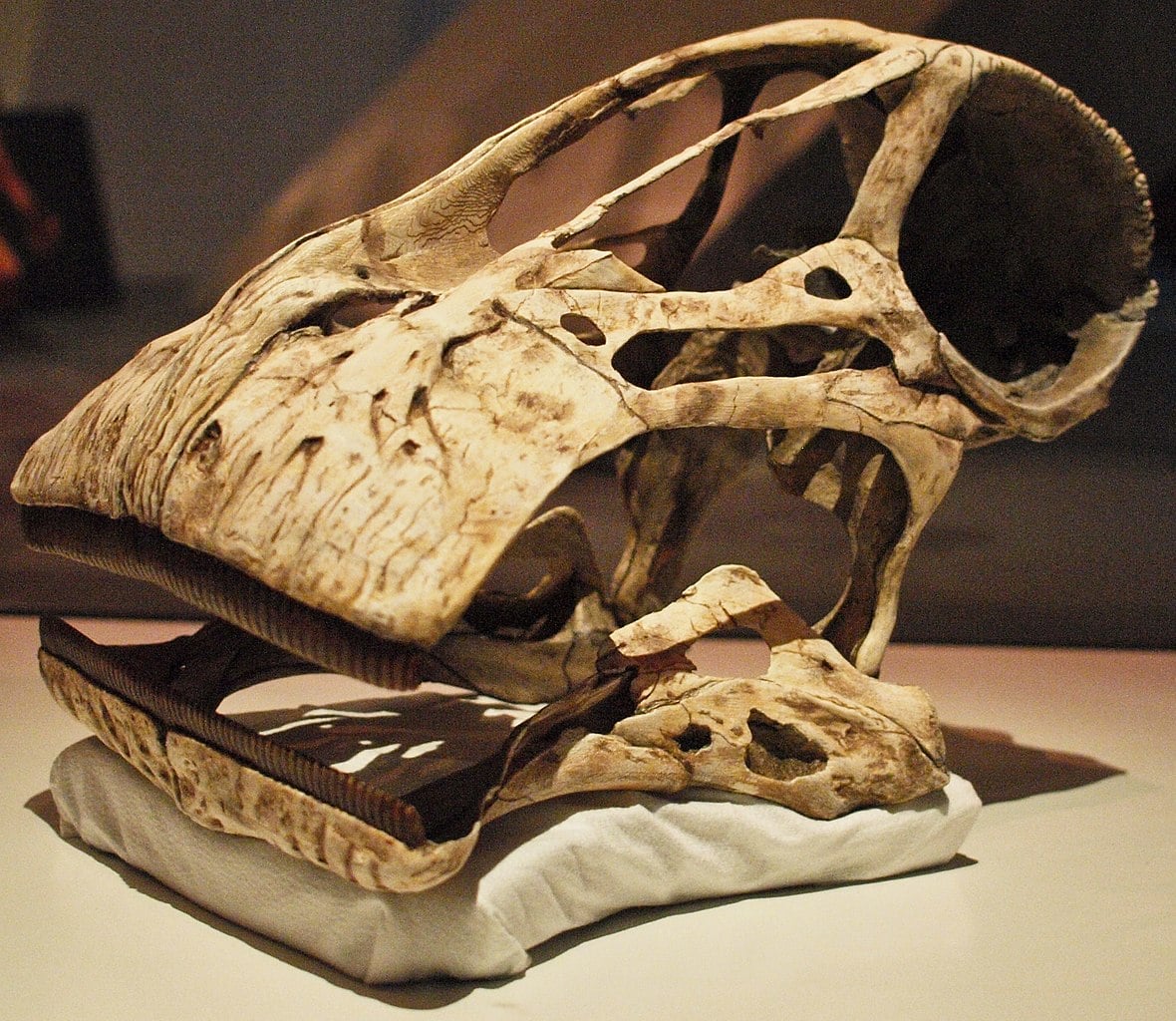
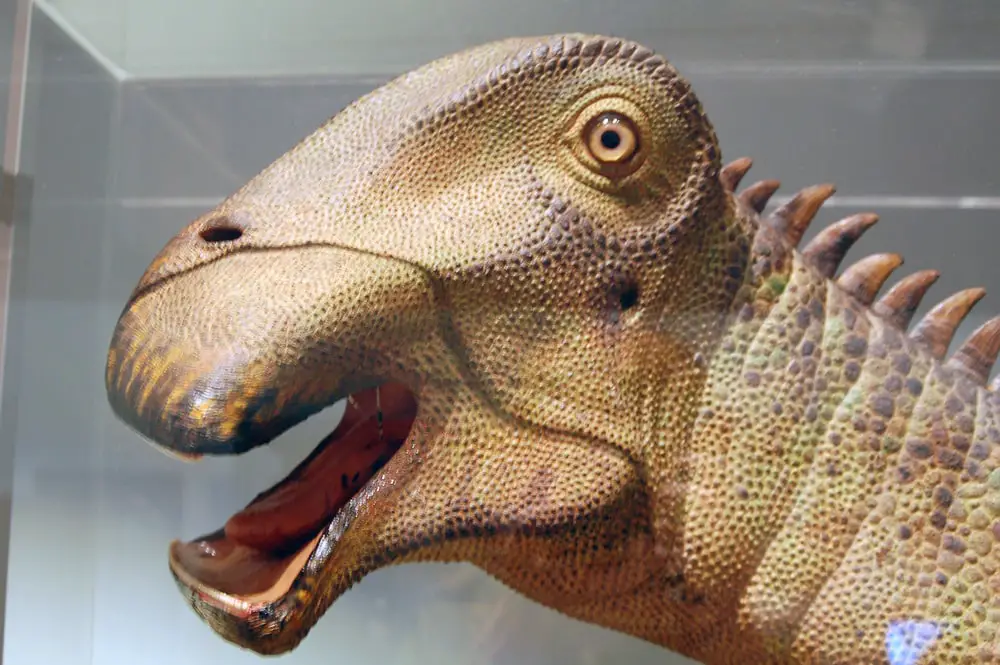
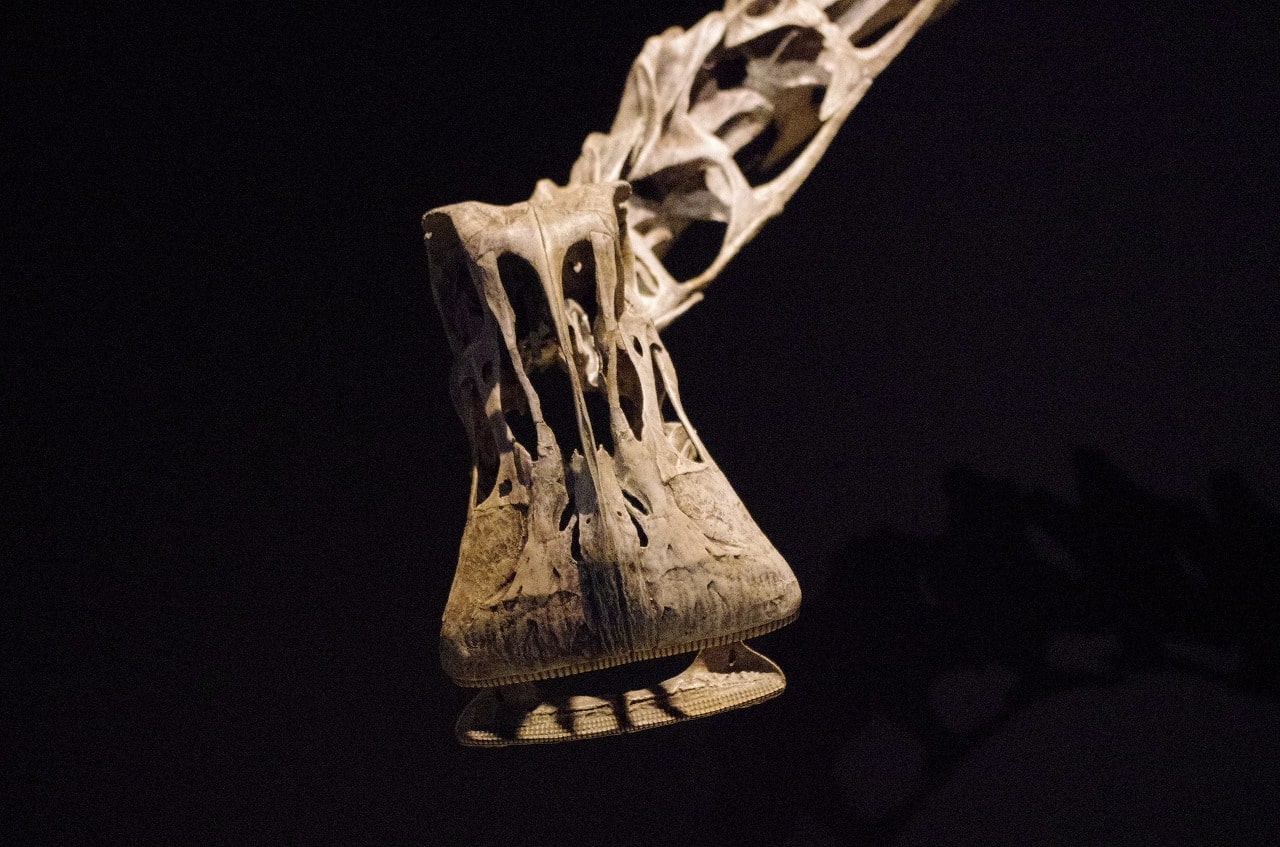
Image sources:
Schädel: CaptMondo, CC BY-SA 3.0
Nigersaurus taqueti skeletal reconstruction: Mike Hanson (Apatomerus), CC BY-SA 3.0
Schädel Frontal: Tomoaki INABA from Ibaraki, Japan, CC BY-SA 2.0
Schädel Modell: Matt Martyniuk (Dinoguy2), CC BY-SA 4.0
Größsenvergleich: Carol Abraczinskas, Paul C. Sereno, Jeffrey A. Wilson, Lawrence M. Witmer, John A. Whitlock, Abdoulaye Maga, Oumarou Ide, Timothy A. Rowe, CC BY 2.5
Gefundene Skelettteile: Mike Hanson (Apatomerus), CC BY-SA 3.0