
Hypsilophodon
Hypsilophodon: Why did so many animals die in the same place?
For over 150 years, the Hypsilophodon Bed remained a mystery. The layer of rock on the Isle of Wight is barely two meters thick. Yet it is full of the bones of a single small dinosaur: Hypsilophodon foxii. For a long time, this was considered evidence of a herd extinction. Drowned in a flood, it was assumed, or trapped in the mud. A 2024 study paints a different picture – considerably less dramatic.
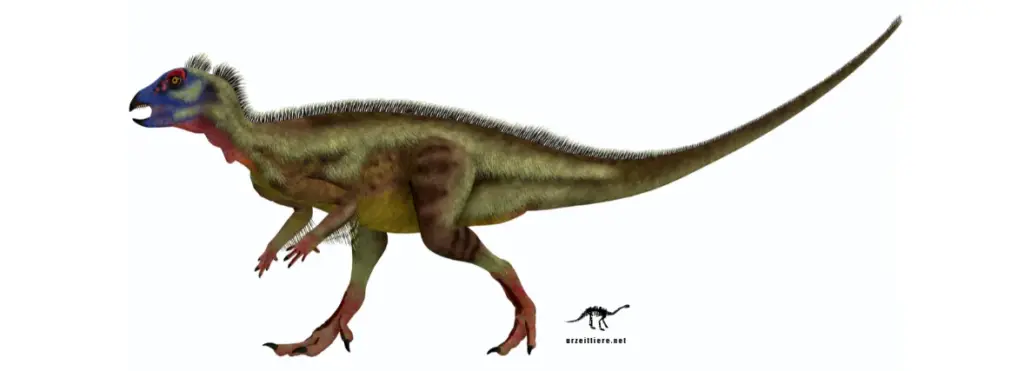
At a glance
| feature | Value |
|---|---|
| Scientific name | Hypsilophodon foxii |
| length | 2.15m |
| Weight | 21kg |
| Location | Isle of Wight, Southern England |
| age | Lower Cretaceous (Barremian), about 125 million years ago |
| Food | herbivores |
| Special feature | one of the most diverse dinosaur fossil strata in Europe |
A sofa shaped like a lizard – but only as heavy as a medium-sized dog. That's the best way to imagine Hypsilophodon. It was a bipedal herbivore, small even compared to other ornithopods. Nevertheless, it is one of the best-studied animals of its group. The reason lies in the geological layer that bears its name.
A find that was initially thought to be a young Iguanodon
In 1849, workers on the Isle of Wight stumbled upon a sandstone block filled with bones. They were initially thought to be those of a young man. Iguanodon —the already known giant from the same formation. In the following years, the collector William Fox gathered further fossils from the same layer. It wasn't until 1869 that Thomas Henry Huxley recognized: This was a completely new species. He named it after its discoverer, Fox.
Did an entire herd die here all at once?
This is precisely what researchers suspected for decades. The layer of rock contains almost exclusively Hypsilophodon bones. Some specimens lie close together on the same slab of stone. The obvious explanation: a herd that drowned together in a flood – or became trapped in the soft mud along the shore.
A study from 2024 contradicts this, published in Journal of the Geological SocietyMarie Marsden and her team re-evaluated the rock strata at the outcrop. They also examined the rock on 57 museum specimens in London. Their findings: The bones are distributed throughout the entire strata, both spatially and chronologically. The strata are just over a kilometer long. This argues against a single cataclysmic event and suggests a gradual accumulation over a longer period.
The preservation of the bones also supports this theory. 85 percent of the skeletons examined are less than one-tenth complete. At the same time, almost 80 percent of the bones show no signs of wear from transport. The animals were therefore hardly carried far by the current. They probably died near the discovery site. Some remained exposed for a while before being covered by sediment.
Why Hypsilophodon in particular – and almost no one else?
The real question remains: Why does the fossil-bearing layer contain hardly any other animals? The study suggests three possible reasons, which are not mutually exclusive. First, a behavioral reason. Hypsilophodon may have frequented the floodplain—perhaps because of a particularly tasty plant. Second, drought: This causes water-dependent animals to die in clusters at the same wetlands. Third, size selection. Footprints in the same layer show that significantly larger dinosaurs also regularly roamed the area. These were probably sauropods, with footprints up to a meter wide. However, no bones of them survived. Their powerful legs likely prevented them from getting stuck, rather than the small, light Hypsilophodon.
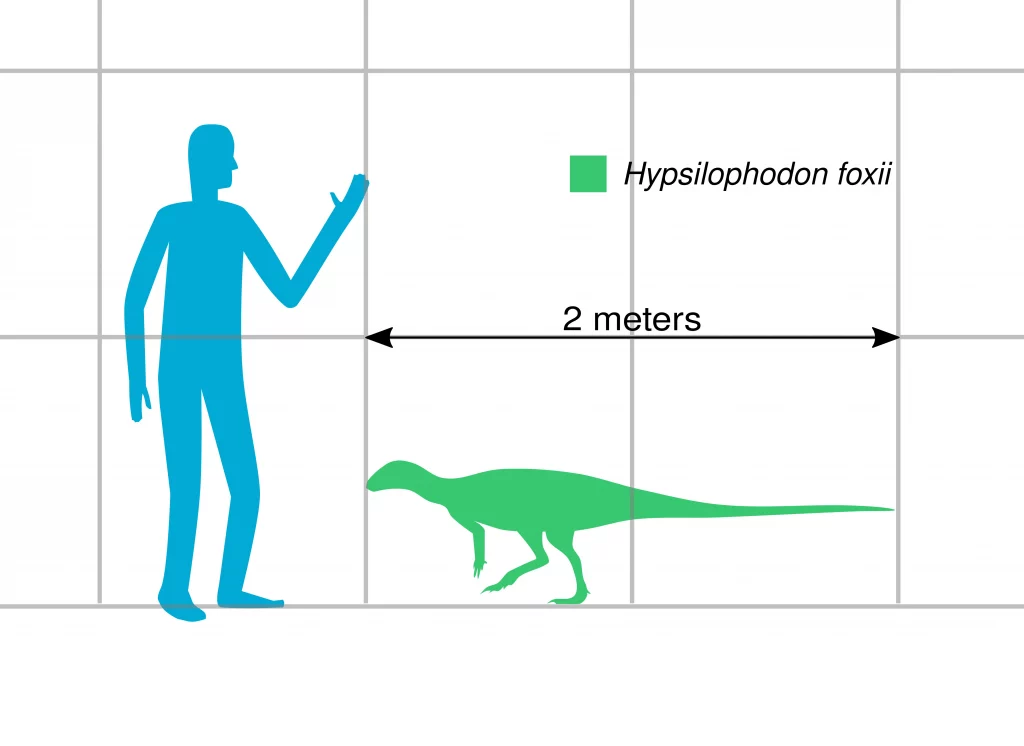
Hypsilophodon
| Getting around: | Two-legged |
| Food: | herbivores |
| Length: | 2.15m |
| Height: | 0.5m |
| Weight: | 21kg |
A landscape in transition – and an archaeological site that is slowly disappearing.
The new study reveals even more: The environment changed over time. A well-aerated river plain gradually became a swamp. Later, this transformed into a mudflat at the edge of a lagoon.
The archaeological site is still exposed today in steep cliffs on the southwest coast of the Isle of Wight. It is steadily shrinking. A comparison of historical maps from 1862 with current photographs shows that the coastline has receded by an average of 73 meters. Around 62,000 square meters of land have already been lost. This likely explains why new finds are less frequent today than in the 19th century. Part of the original strata has since collapsed into the sea.
More information on this topic can be found at urzeittiere.net
- Iguanodon – lived at the same time in the same rock formation on the Isle of Wight, but was a giant compared to the small Hypsilophodon.
- Camptosaurus – a close relative from a larger group, but lived in North America around 20–30 million years earlier.
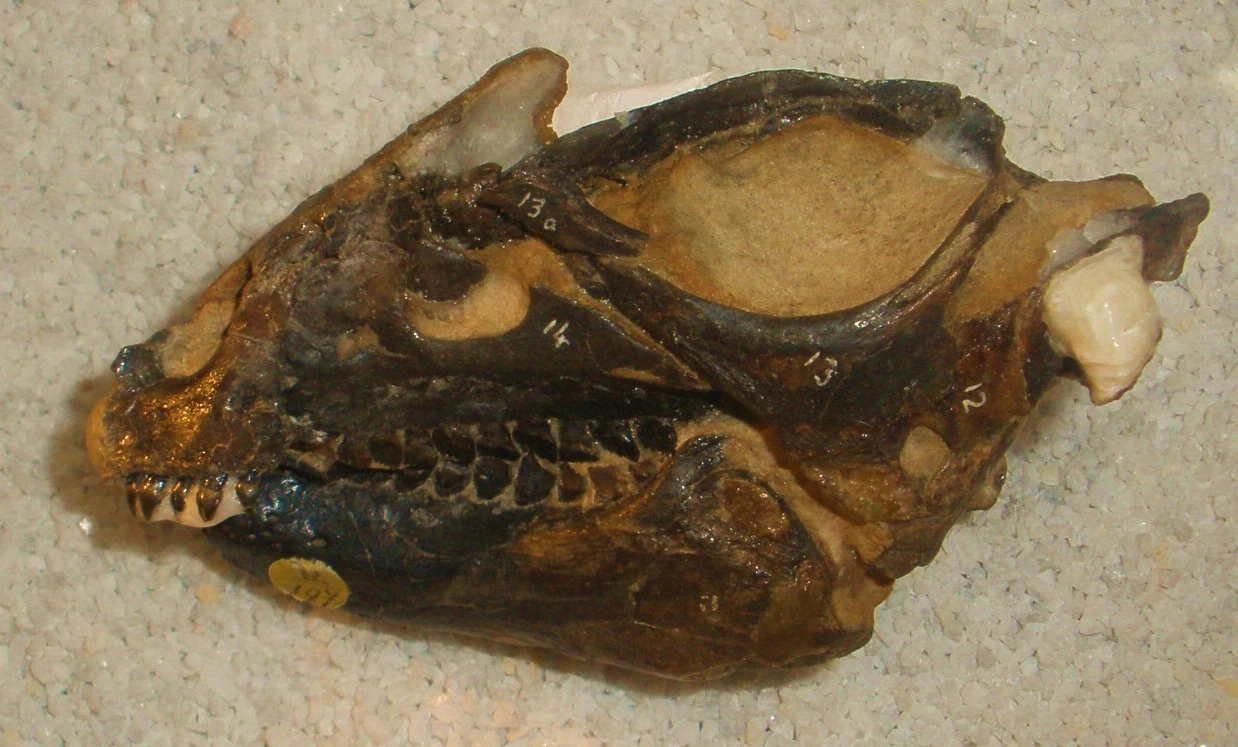
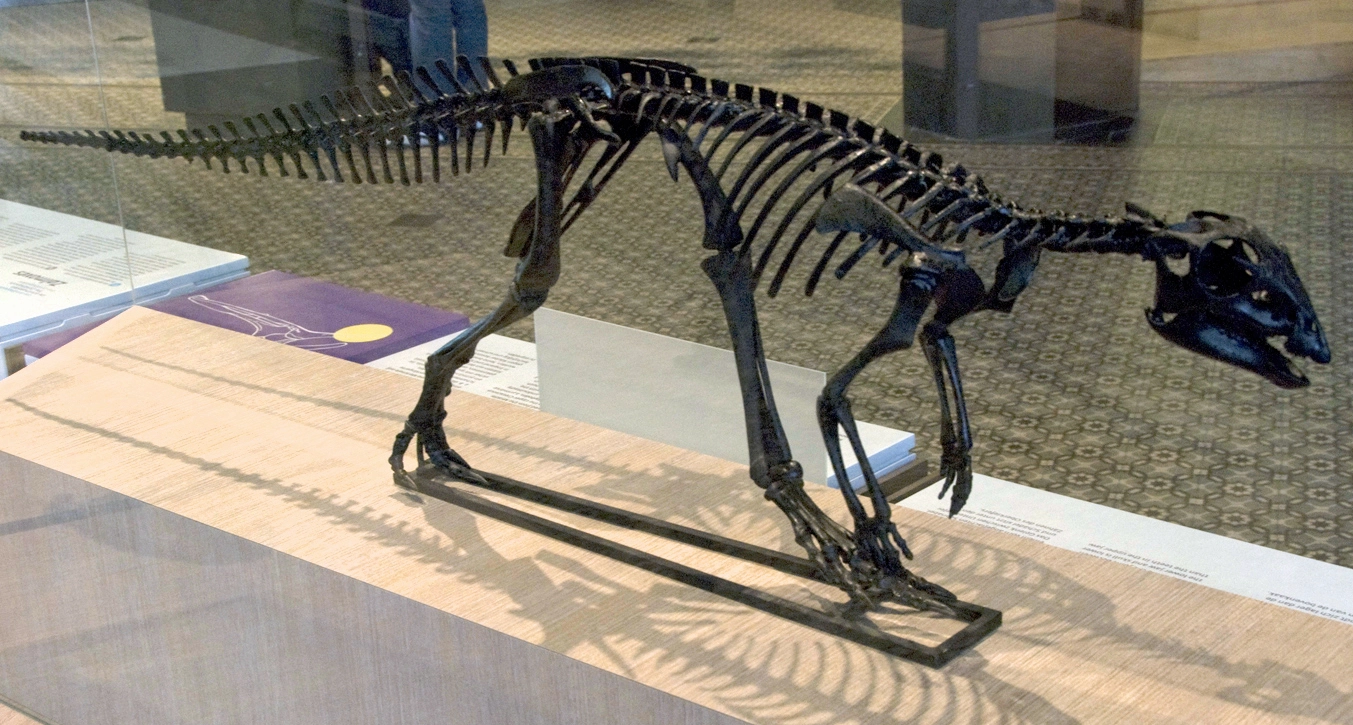
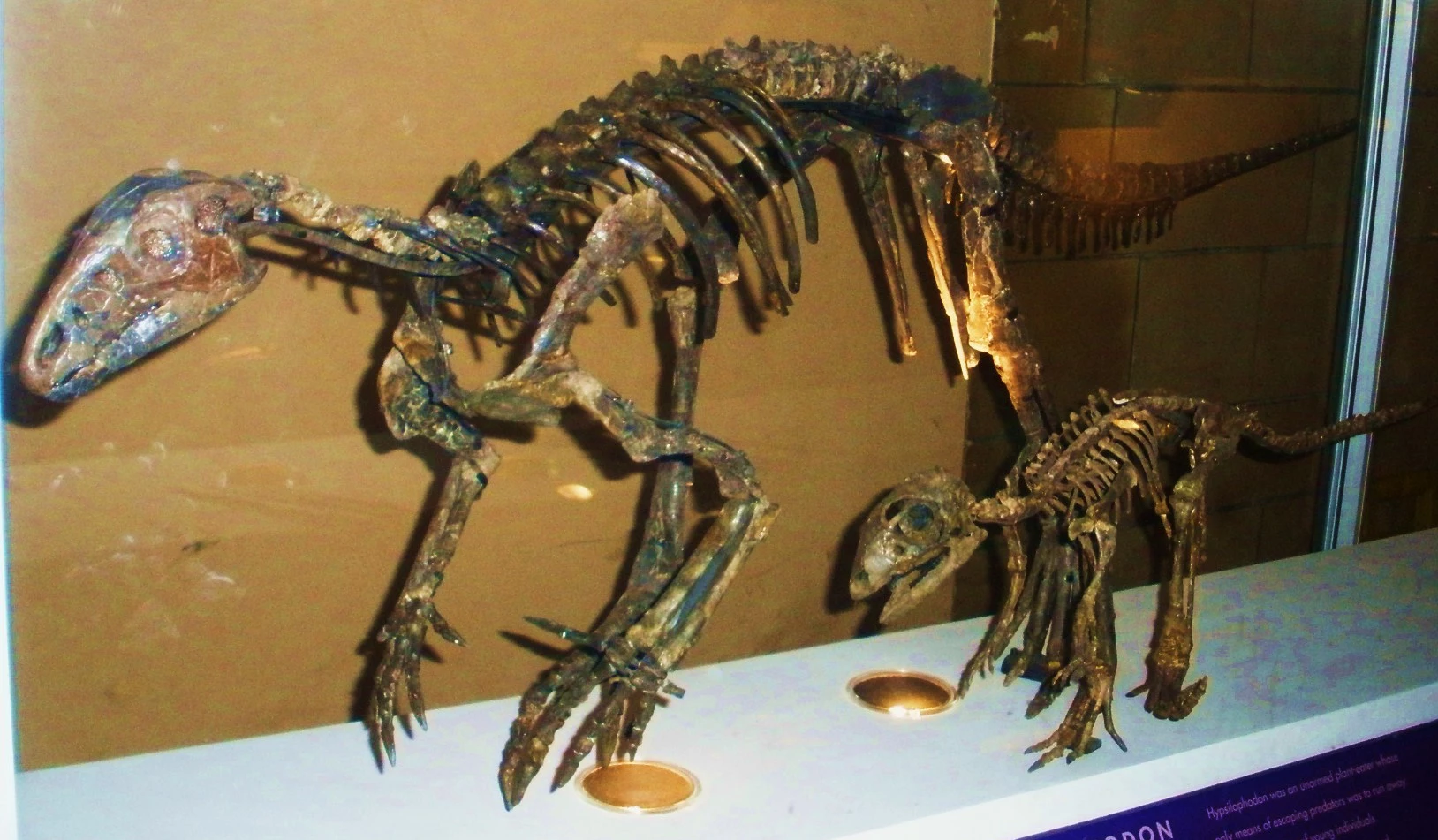
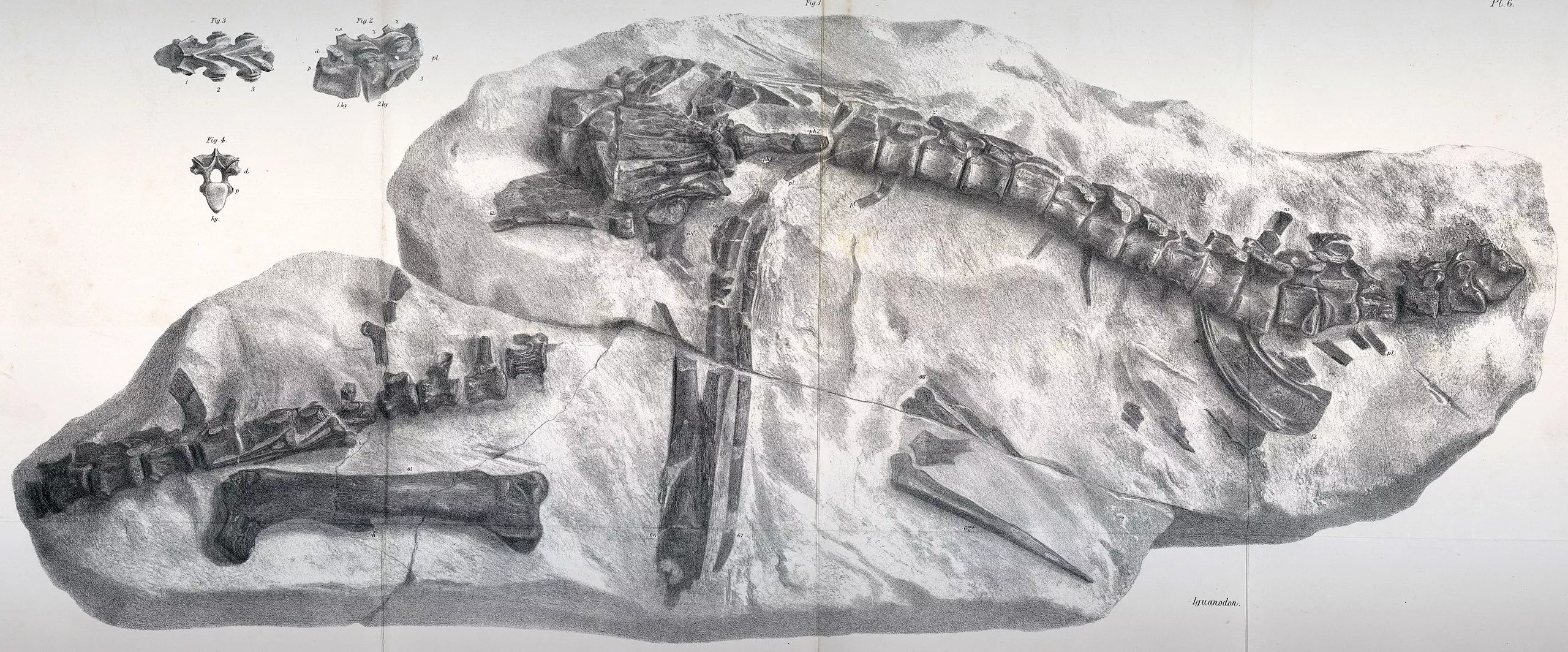
Image sources: Skeletal reconstruction of Hypsilophodon, Brussels: MWAK, Public domain, via Wikimedia Commons
Mantell-Bowerbank block: Jos. Spelled, Public domain, via Wikimedia Commons
Hipsylophodon_foxi_skull: Ghedoghedo, CC BY-SA 3.0
Hypsilophodon_foxi: Ghedoghedo, CC BY-SA 3.0
Size comparison: User:Slate Weasel, Public domain, via Wikimedia Commons