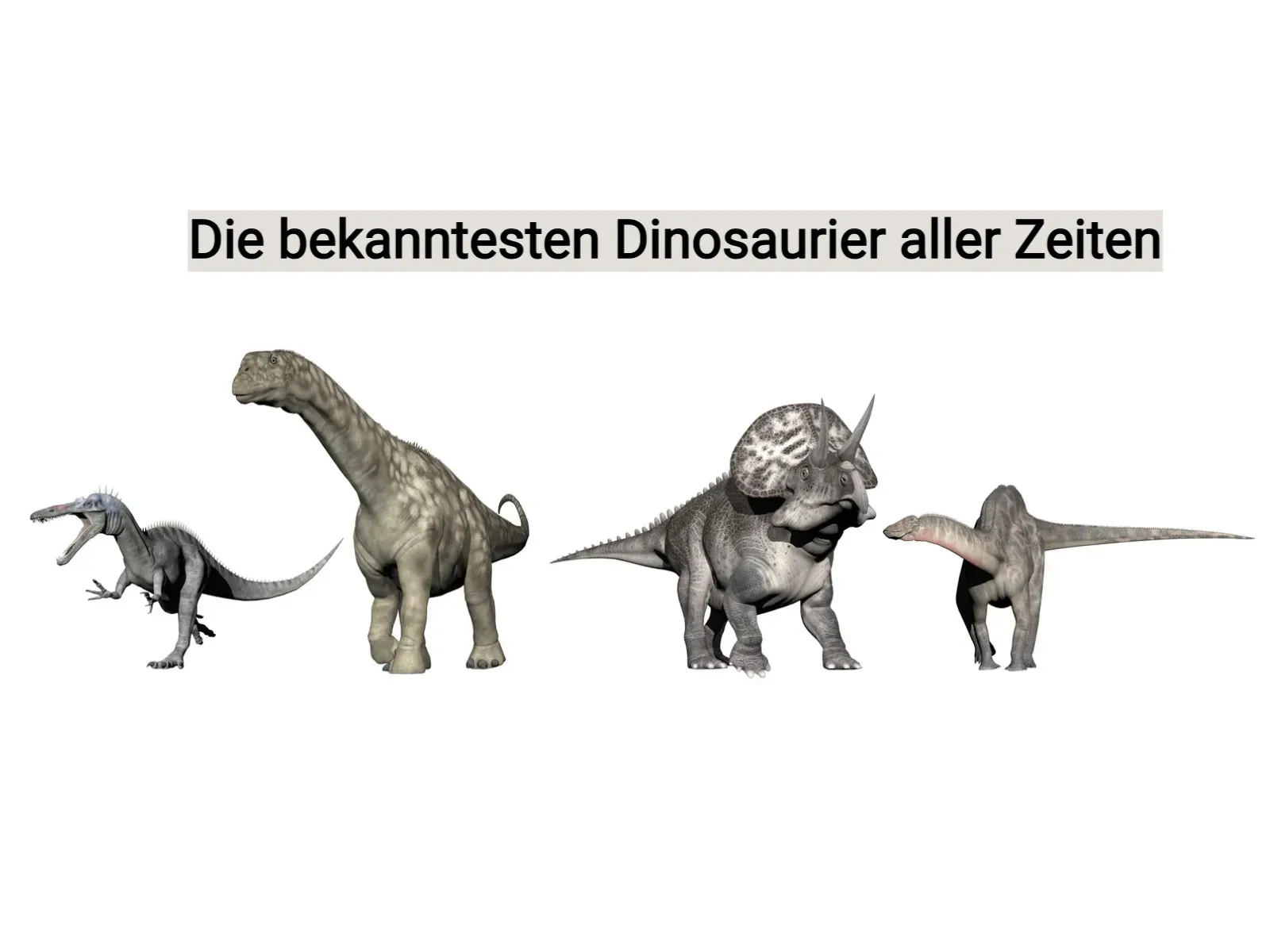
The most famous dinosaurs of all time: Top 15
Dinosaurs have fascinated people of all ages for generations. From the first fossil discovery to the spectacular scenes in Jurassic Park, these prehistoric giants have firmly established a place in our culture. But which dinosaurs are actually the most famous? In this comprehensive ranking, we introduce you to the 15 most famous dinosaur species and explain why they became such prehistoric superstars.
What makes a dinosaur particularly famous?
A dinosaur's fame does not come from scientific significance alone. Rather, various factors come together to make a prehistoric lizard a true star.
Cultural presence through media: Movies like Jurassic Park, documentaries and children's books have brought certain species into the spotlight. The Tyrannosaurus Rex is the best example of this - its fearsome appearance makes it the perfect movie star.
Spectacular fossil finds: Complete skeletons or exceptionally well-preserved fossils attract media attention. “Sue,” the most famous T-Rex fossil, sold at auction for over $8 million and made international headlines.
Unique appearance or behavior: Dinosaurs with striking features are easier to remember. The spines of the Stegosaurus, the long neck of the Brachiosaurus or the sickle-shaped claws of the Velociraptor are visually unforgettable.
Presence in educational institutions: Museums, school books and documentaries contribute significantly to its popularity. Certain species are more frequently exhibited or used as examples, making them more widely known.
Top 15 of the most famous dinosaurs at a glance
Our ranking is based on cultural awareness, media presence and recognition among the public. We take into account both the scientific significance and the influence on popular culture.
The selection includes representatives from all three dinosaur eras: Triassic (252-201 million years), Jurassic (201-145 million years) and Cretaceous (145-66 million years). From tiny predatory dinosaurs to gigantic herbivores, the diversity of the most famous species is impressive.
The top 15: Tyrannosaurus Rex, Velociraptor, Triceratops, Stegosaurus, Brachiosaurus, Diplodocus, Spinosaurus, Allosaurus, Ankylosaurus, Parasaurolophus, Compsognathus, Carnotaurus, Dilophosaurus, Iguanodon and Archeopteryx.
The flesh-eating stars: T-Rex, Velociraptor and Spinosaurus
Tyrannosaurus Rex sits undisputedly at the top of the most famous dinosaurs. With a length of up to 13 meters and a weight of 6-9 tons, it was one of the largest land-living predators of all time. Its teeth, up to 20 centimeters long, and enormous jaw muscles made it a perfect killing machine. The T Rex lived in North America 68-66 million years ago and is well documented by exceptionally complete fossils. He owes his fame not least to his dominant role in Jurassic Park and countless other films.
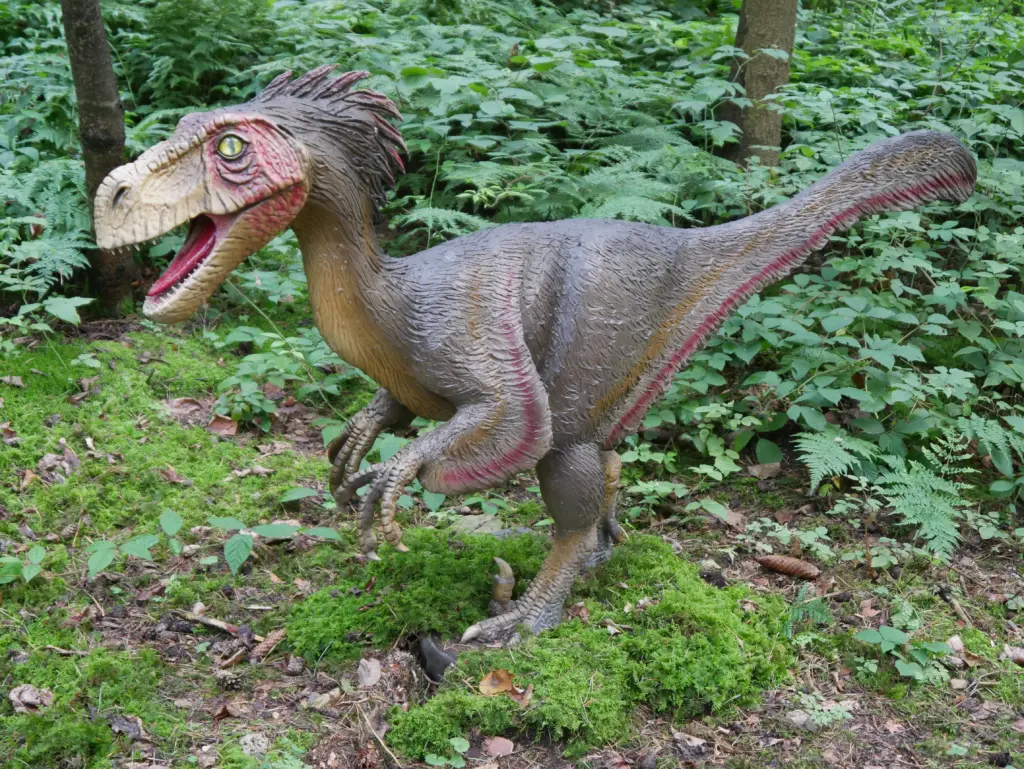
Velociraptor embodies intelligence and deadly elegance. Although he was only 2 meters long and significantly smaller than his film depiction suggests, he was a highly effective hunter. Its famous sickle-shaped claw on its hind feet was 6.5 centimeters long and was used like a stiletto. Latest research confirms that Velociraptors were feathered and hunted in packs. They lived in Mongolia and China 75-71 million years ago.
Spinosaurus revolutionized our image of predatory dinosaurs. At up to 15 meters long, it was possibly the largest meat-eating dinosaur. Its spectacular dorsal fin, which could reach a height of over 1.5 meters, probably served for thermoregulation and as a status symbol. In 2014, new discoveries revealed that Spinosaurus lived semi-aquatically - a unique lifestyle among large theropods. He hunted in the waters of North Africa 112-97 million years ago.
The gentle giants: Brachiosaurus, Diplodocus and other herbivores
Brachiosaurus With its giraffe-like body shape, it shaped the image of the classic dinosaur. Its front legs were longer than its hind legs, allowing the giant, up to 26 meters long, to stretch its head to unimagined heights. Weighing 40-50 tons, it was one of the heaviest land animals in Earth's history. Its high nostrils long led to the assumption that it was an aquatic creature - today we know that they were used for efficient breathing when it was large.
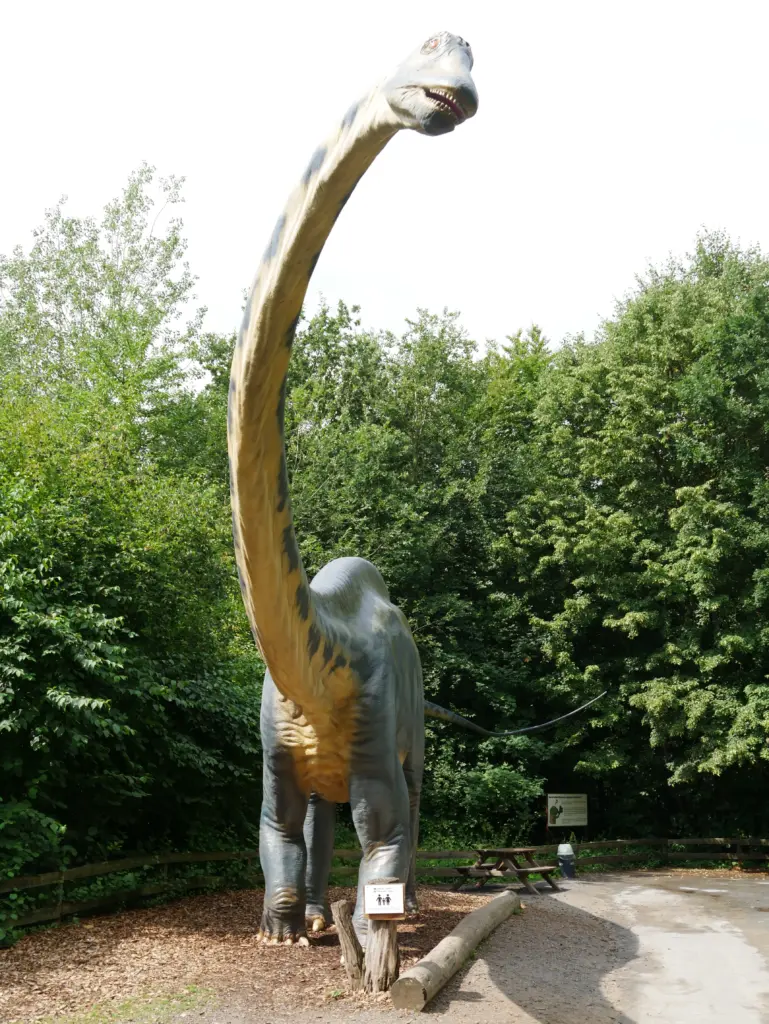
Diplodocus impresses with its extreme proportions: with a length of up to 27 meters, the whip-like tail alone made up half of it. His small head seemed almost lost at the end of the 8 meter long neck. Diplodocus was surprisingly light in construction and weighed “only” 10-16 tons. Computer models show that he could crack his tail like a whip, possibly for communication or defense.
Triceratops combines elegance and defensiveness in his three-horned face. The massive neck shield could be up to 2 meters wide and was used for both protection and display. Weighing 6-12 tons, it was one of the last large herbivores before mass extinction. Its horns were over a meter long and could even be dangerous for a T-Rex.
Stegosaurus has become unforgettable thanks to its characteristic back plates. These could grow up to 60 centimeters high and were used for thermoregulation and visual communication. Its “thagomizer” – a tail with four sharp spikes – was an effective one Weapon against predators. Despite its size of 9 meters Stegosaurus a tiny brain, giving rise to the myth of “stupid dinosaurcontributed.
The pterosaurs and marine iguanas among the celebrities
Pteranodon Dominates the skies of the Cretaceous period as the most famous “pterosaur”. With a wingspan of up to 7 meters, it was a master of thermals. Its characteristic crest was probably used to control flight and choose a partner.
Important scientific note: Pteranodon wasn't technically a dinosaur, but rather belonged to the pterosaurs - a sister group to the dinosaurs. Nevertheless, it is usually considered a dinosaur in pop culture and has achieved great fame through films such as Jurassic Park III.
Plesiosaur represents the “sea monsters” of prehistoric times. With its paddle-shaped fins and long neck, it was reminiscent of descriptions of the Loch Ness Monster. Plesiosarians were not true dinosaurs either, but rather marine reptiles that lived at the same time as the dinosaurs.
The confusion arises because these species existed at the same time as dinosaurs and are often portrayed together in media. For the public, they belong to the “dinosaur universe”, even if they followed different evolutionary paths.
Detailed profiles of the top 5 most famous dinosaurs
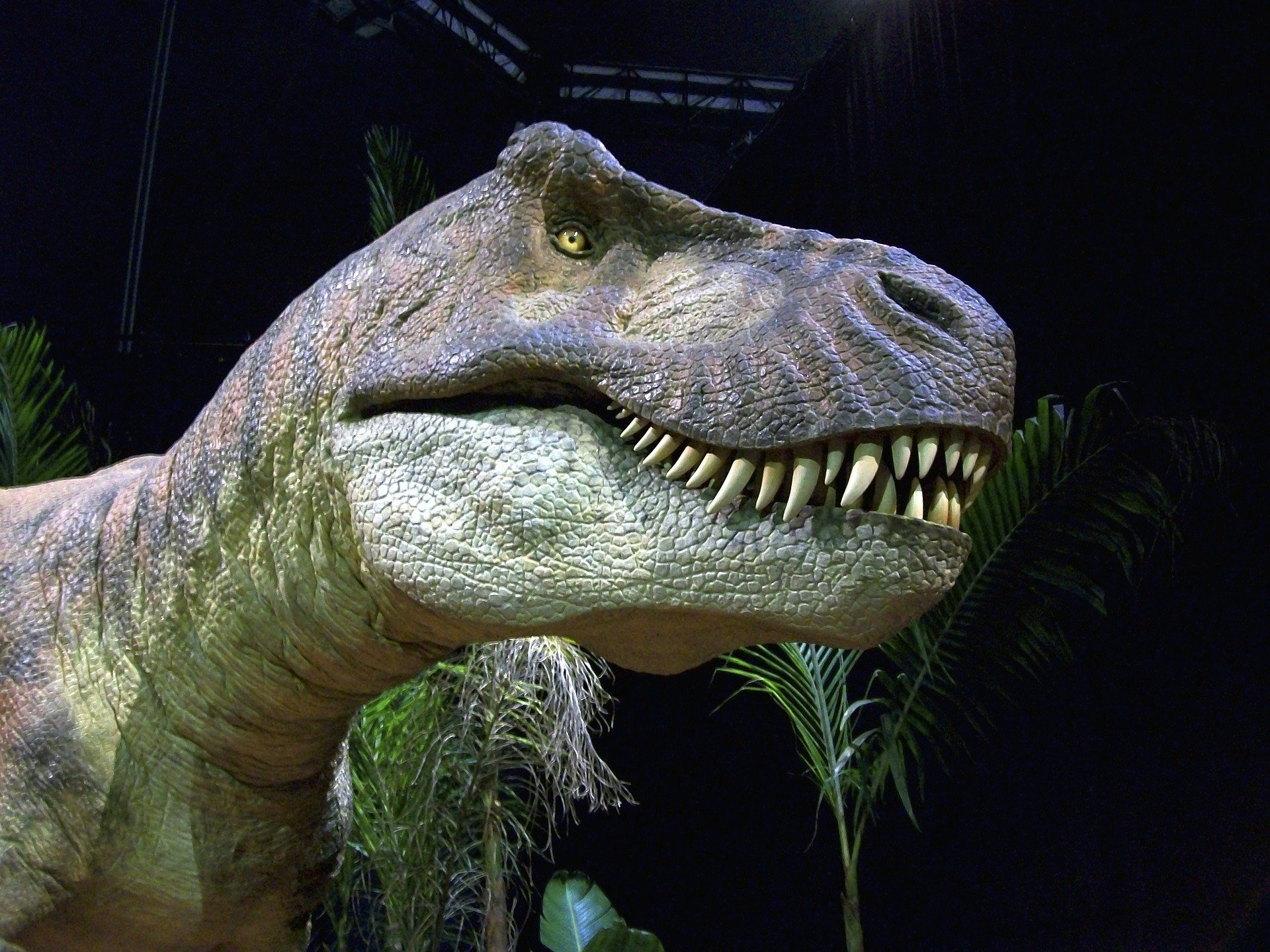
1. Tyrannosaurus Rex
- Lifetime: 68-66 million years (Late Cretaceous)
- Size: 12-13 meters length, 4 meters hip height
- Weight: 6-9 tons
- Spread: Western North America
- Nutrition: Carnivores (scavengers and active hunters)
- Special features: Largest teeth up to 20 cm, bite force of 12,800 kg per cm²
- Hollywood vs. Reality: Couldn't roar like in the movies, but made deep grumbling noises
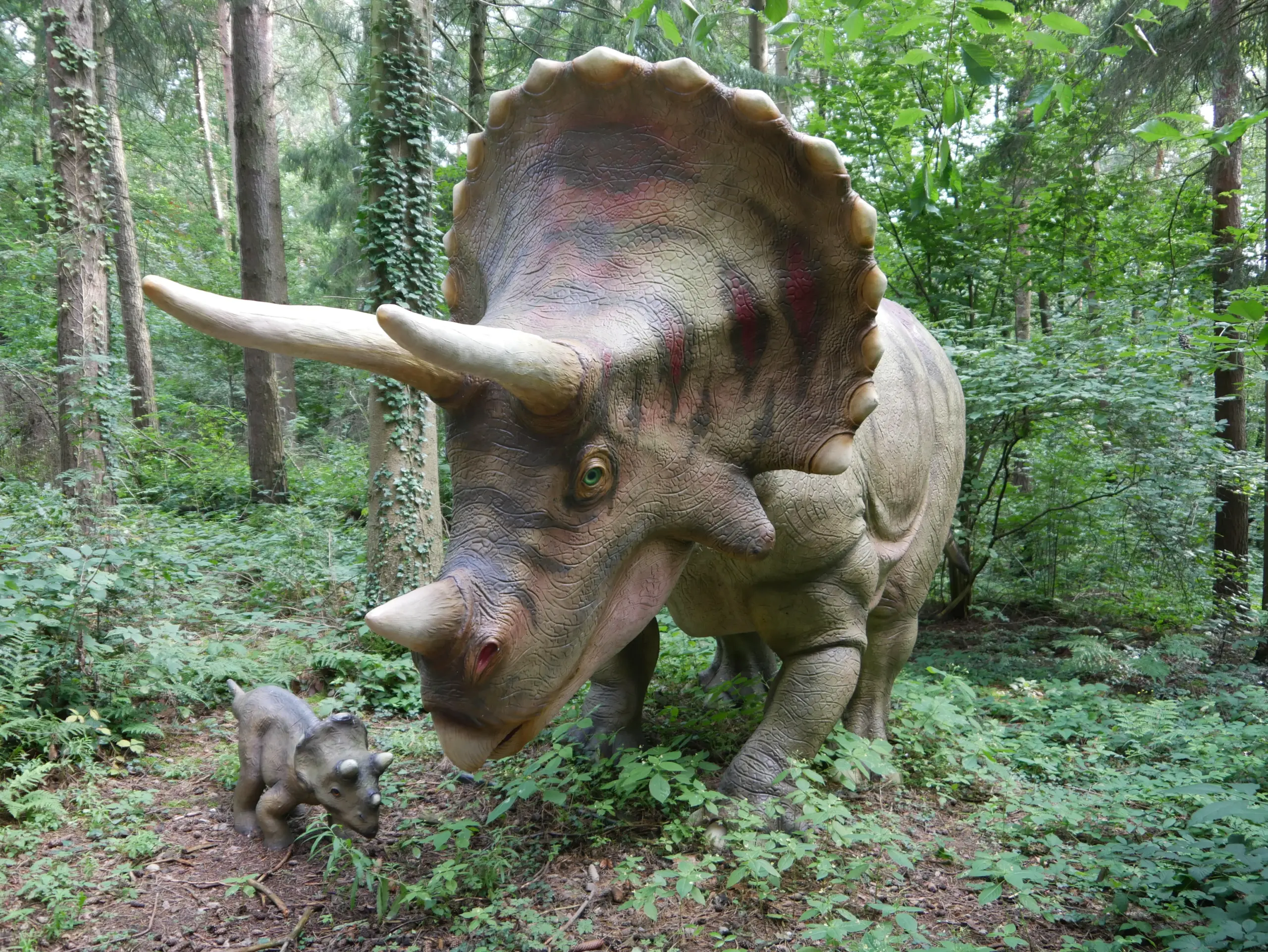
2. Triceratops
- Lifetime: 68-66 million years (Late Cretaceous)
- Size: 8-9 meters long, 3 meters high
- Weight: 6-12 tons
- Spread: North America
- Nutrition: Herbivores (low vegetation)
- Special features: Neck shield up to 2 m wide, horns over 1 m long
- Locations: Over 50 skulls found, mostly in Montana and Wyoming
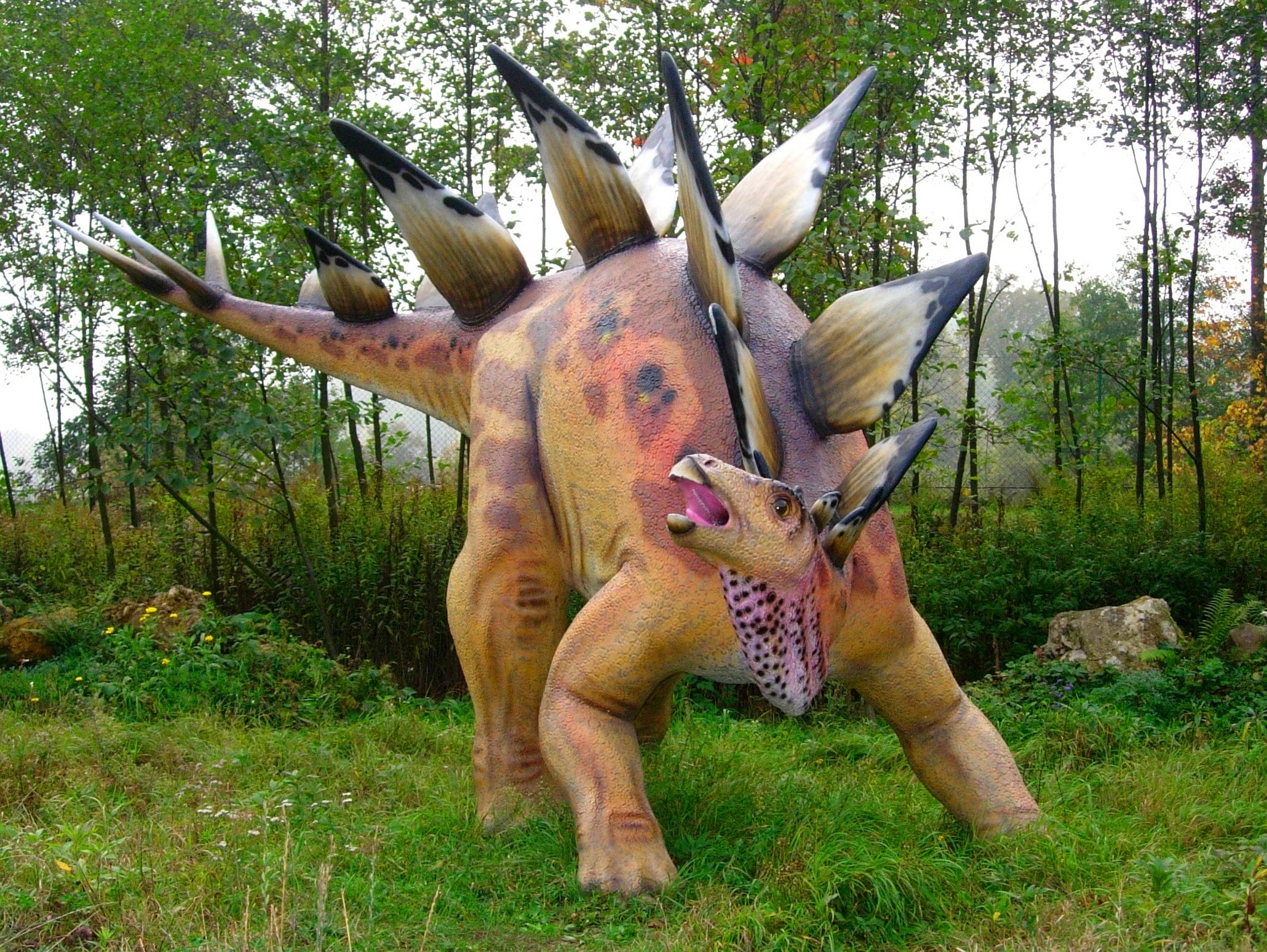
3. Stegosaurus
- Lifetime: 155-145 million years (Upper Jurassic)
- Size: 9 meters long, 4 meters high
- Weight: 2-5 tons
- Spread: Western North America, Portugal
- Nutrition: Herbivores (low ferns and cycads)
- Special features: 17 dorsal plates, 4 tail spines (“Thagomizer”)
- Scientific name: Stegosaurus stenops (“roof lizard with a narrow face”)
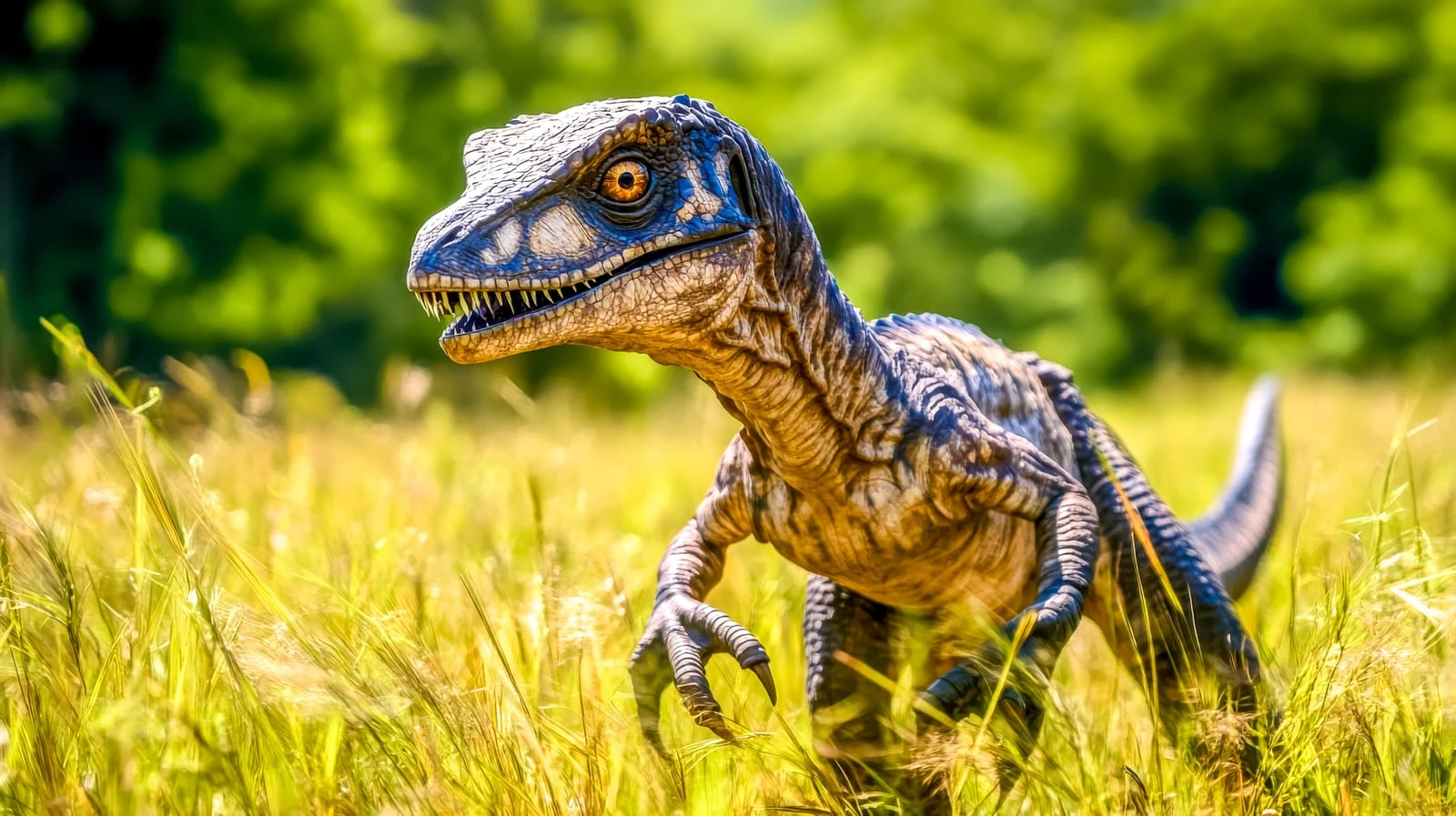
4. Velociraptors
- Lifetime: 75-71 million years (Late Cretaceous)
- Size: 2 meters length, 0.5 meter hip height
- Weight: 15-20 kilograms
- Spread: Mongolia, China
- Nutrition: Carnivores (small to medium sized animals)
- Special features: Sickle claw 6.5 cm, feathered, hunted in a pack
- Most famous find: “Fighting Dinosaurs” – Velociraptor fighting Protoceratops
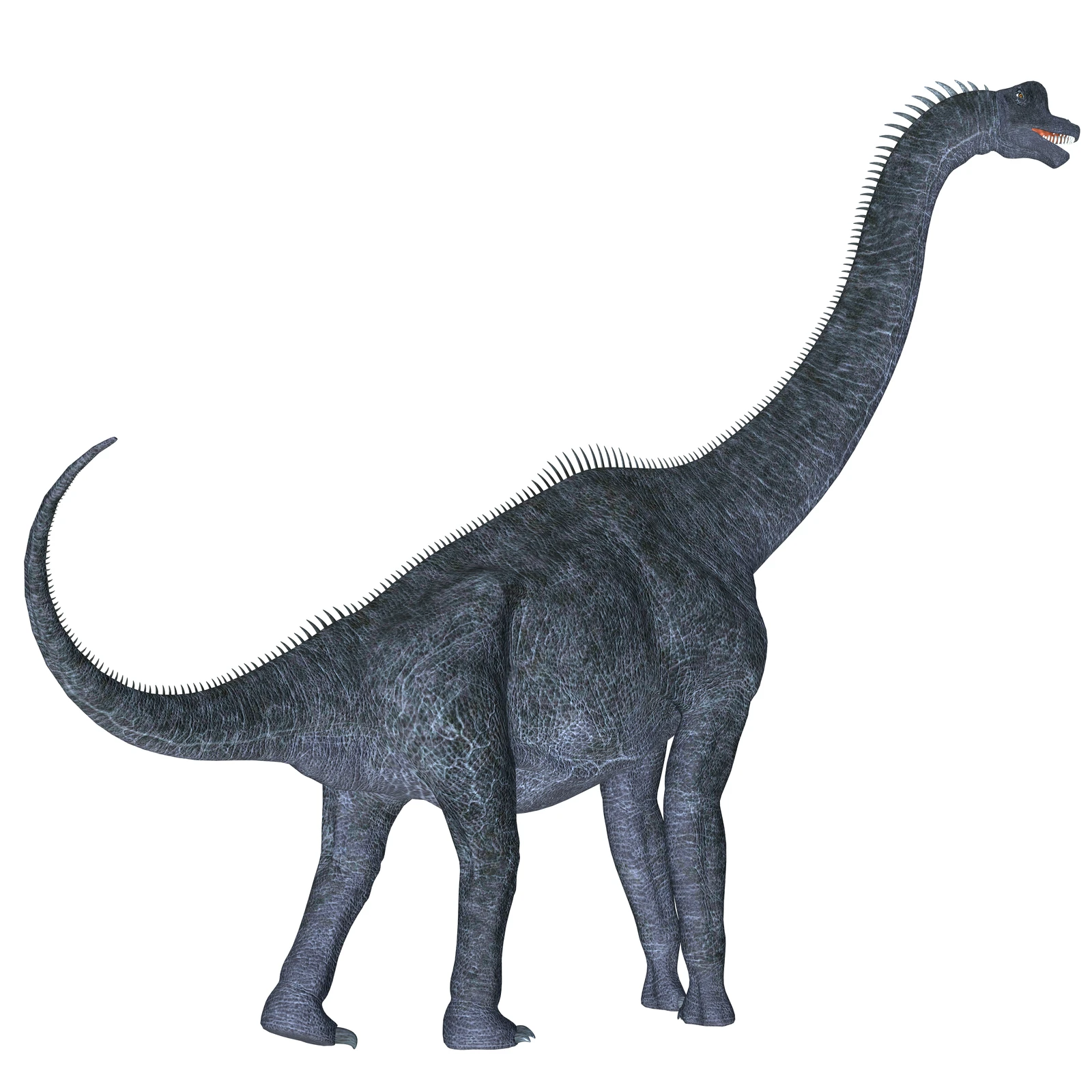
5. Brachiosaurus
- Lifetime: 156-145 million years (Upper Jurassic)
- Size: 20-26 meters long, 12-16 meters high
- Weight: 40-50 tons
- Spread: North America, Africa
- Nutrition: Herbivores (treetops)
- Special features: Front legs longer than hind legs, nostrils on top of head
- Museum: The Berlin Natural History Museum is home to the world's largest assembled dinosaur skeleton
Why these dinosaurs became so famous
The fame of the most famous dinosaurs is not a coincidence, but the result of various cultural and scientific factors reinforcing each other.
Jurassic Park as a turning point: Steven Spielberg's film series catapulted certain species to global fame in 1993. The T-Rex became the ultimate monster, Velociraptor became the intelligent killer, and Brachiosaurus became the majestic giant. These representations shaped an entire generation and turned scientific names into household terms.
Media attention through spectacular finds: “Sue”, the most famous T-Rex fossil, was discovered in 1990 and sparked a real hype. The legal dispute over the fossil and the selling price of $8.3 million made international headlines. The situation was similar with other sensational finds.
Toys and Merchandising: Dinosaur toys have been around since the 1950s, but it wasn't until Jurassic Park that the market exploded. Certain species became standard characters in every dinosaur set, making them familiar to even children.
Easy recognition: The most famous dinosaurs all have striking, distinctive features. The long neck of the Brachiosaurus, the horns of the Triceratops or the back plates of the Stegosaurus are visually memorable and easy to draw - perfect for children's books and learning materials.
Lesser known dinosaurs that deserve to be famous
While the “big names” get all the attention, there are fascinating species that are unfairly left in the shadows.
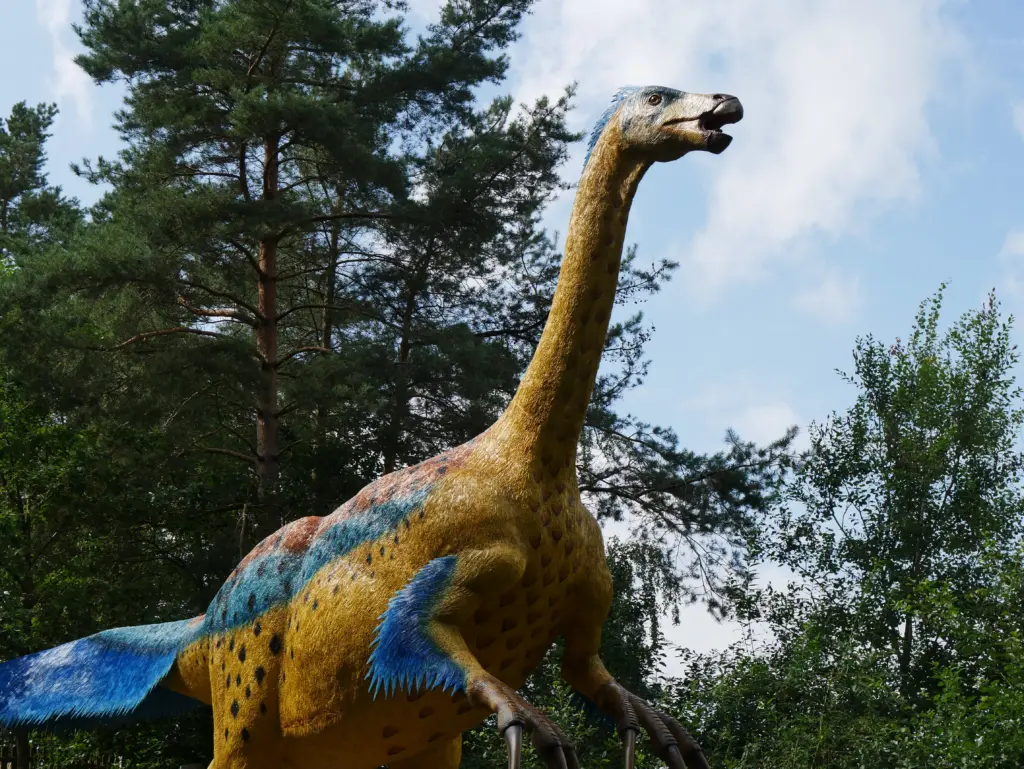
Therizinosaurus was a bizarre giant with meter-long claws that, despite its fearsome weapons, fed on plants. Its claws were used for pulling branches, not for hunting. At 16 meters long, it was one of the largest bipedal dinosaurs.
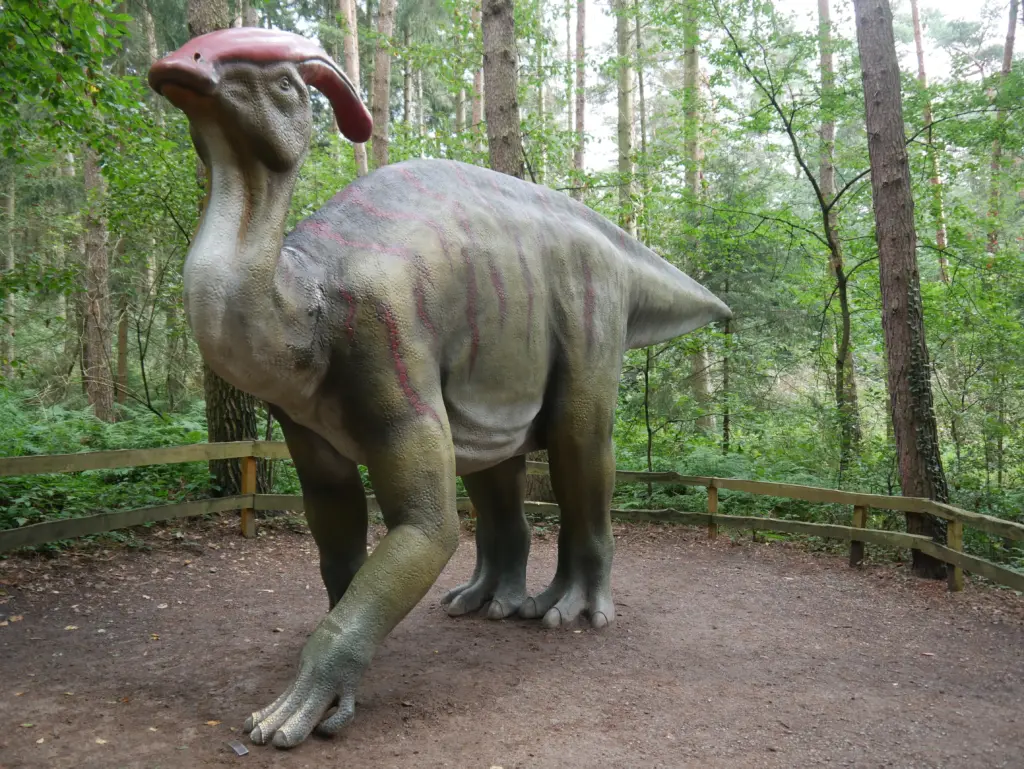
Parasaurolophus had a tubular comb that served as a resonance box for deep, horn-like tones. Scientists were even able to reconstruct the vocalizations - a unique insight into prehistoric communication.
Carnotaurus was the “cheetah” among the large predatory dinosaurs. His tiny arms and the horn-like projections above his eyes made him unmistakable. Computer simulations show that it could reach speeds of up to 50 km/h.
Amargasaurus revolutionized our view of sauropods. Instead of the typical long neck, it had conspicuous sail structures that were probably used for communication and thermoregulation.
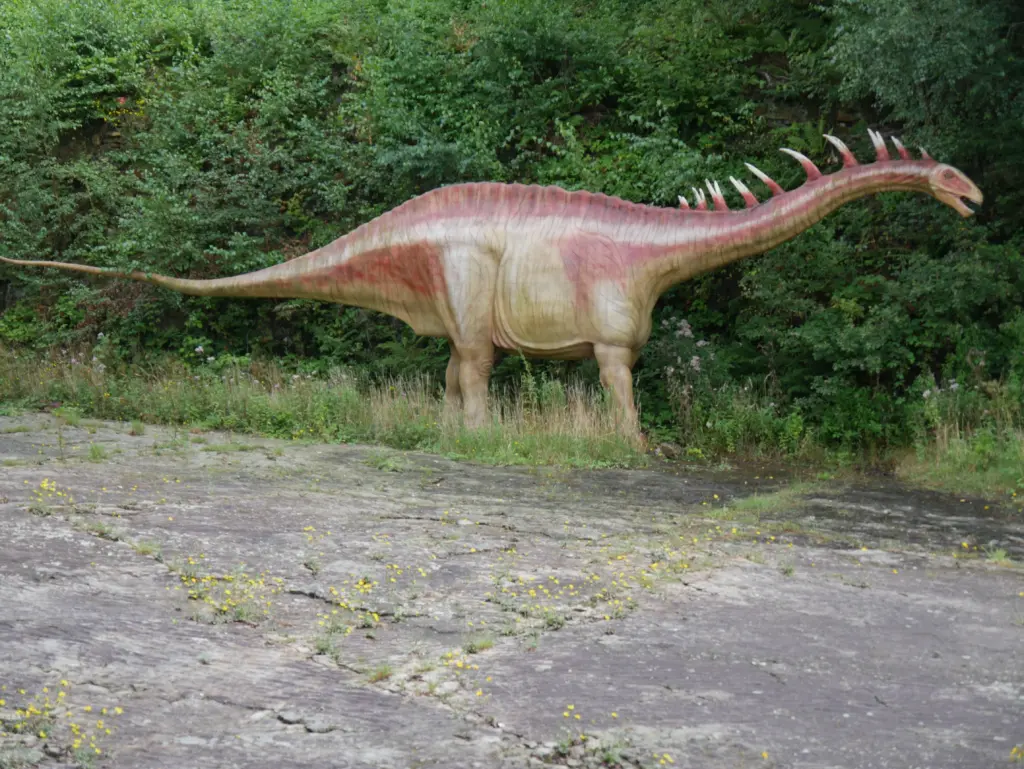
These species show the incredible diversity of dinosaurs beyond the well-known stars. Many fascinating discoveries of the last few decades have not yet made it into popular culture, even though they were scientifically revolutionary.
Conclusion: The fascination of the most famous dinosaurs
The most famous dinosaurs owe their fame to a perfect mix of scientific importance, media presence and visual memorableness. They act as ambassadors for the entire prehistoric world and stimulate interest in paleontology and natural sciences.
Their enduring enthusiasm across all ages shows that dinosaurs are more than extinct reptiles - they are symbols of the infinity of time, the power of evolution and the transience of all life. New research regularly reveals surprising findings about these prehistoric giants and keeps the fascination alive.
