
Haplocheirus
Physical characteristics
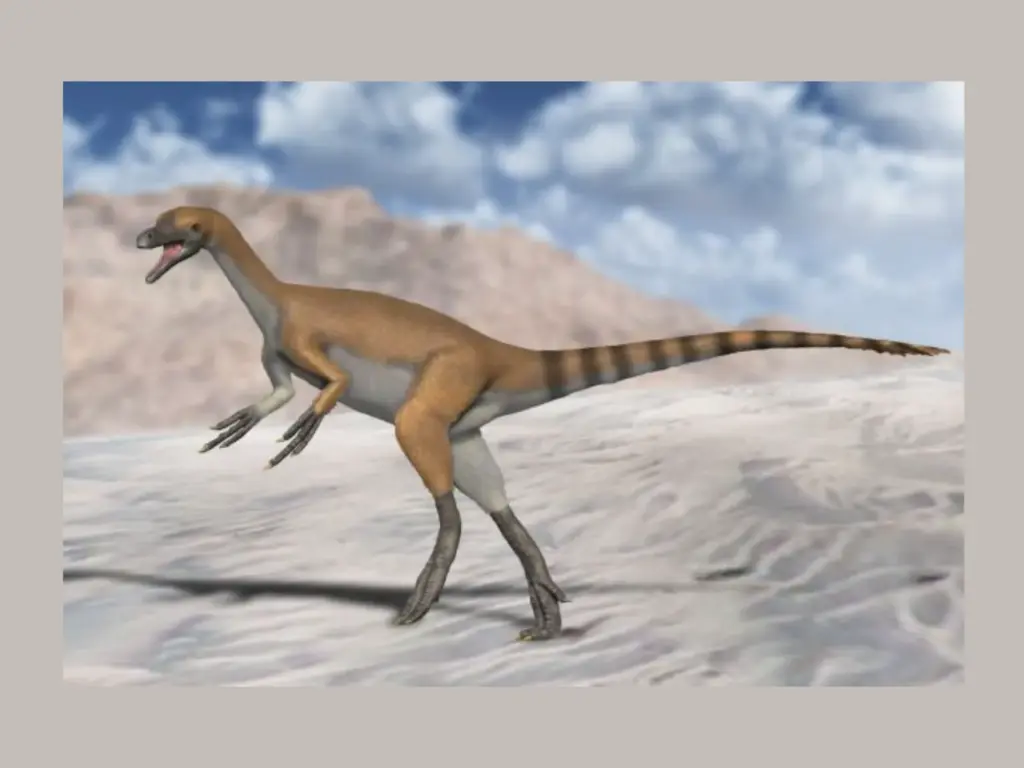
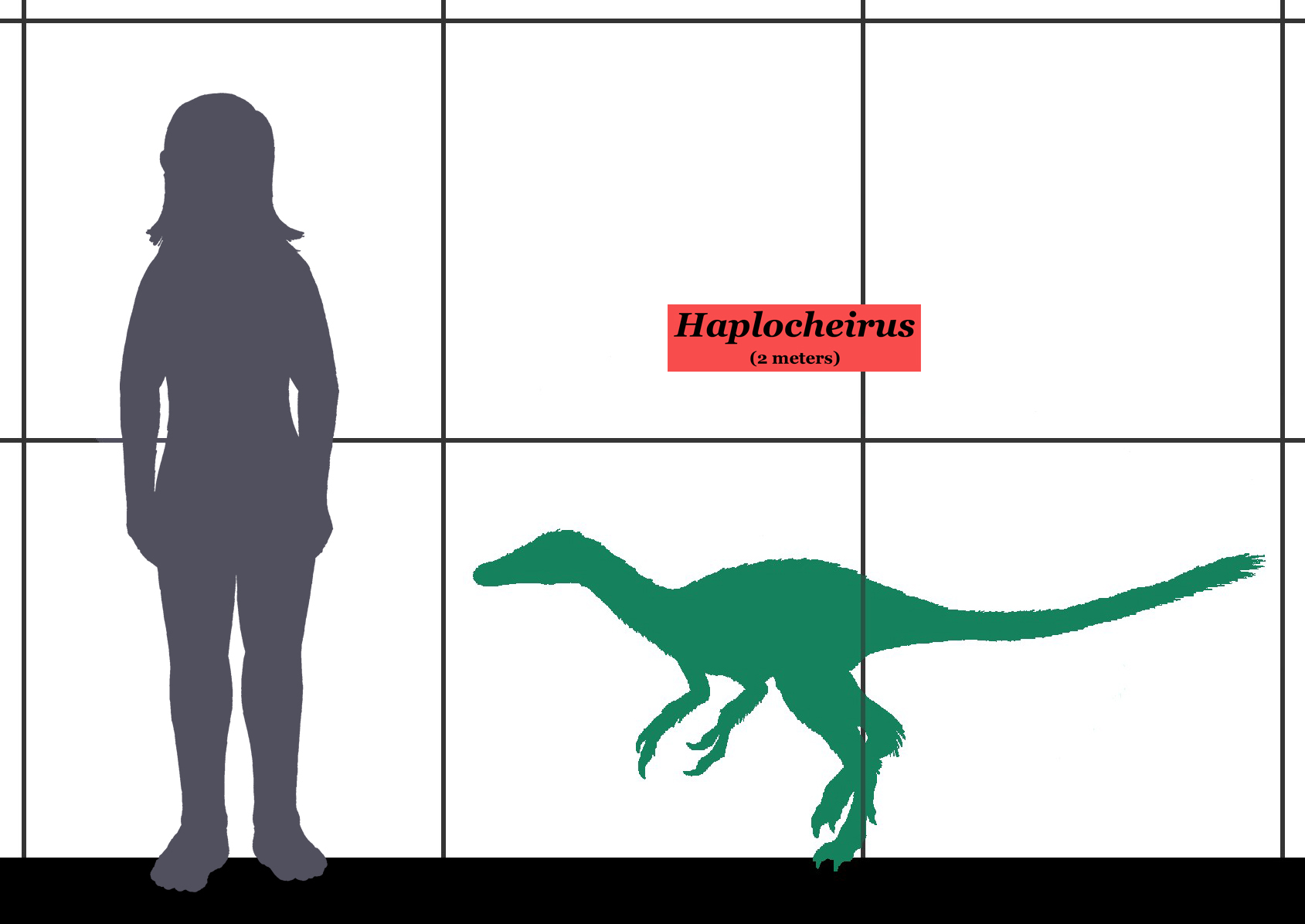
HaplocheirusSollers was a medium-sized theropod that reached a body length of 2 meters and was 60 centimeters high at the hip. The dinosaur weighed about 21 kilograms. Its skull was long and narrow and featured numerous small teeth adapted for hunting.
Body structure and locomotion
The dinosaur moved on two legs, supported by long, powerful hind legs that enabled high running speeds. Unlike later alvarezsauroids, Haplocheirus retained three functional fingers, with one enlarged thumb claw. The powerful forelimbs played an active role in hunting behavior.
Hunting and nutrition
Haplocheirus was a Carnivores, who hunted smaller animals. Its physical adaptations - the narrow skull with many small teeth and the robust forelimbs - made it an effective predator. The combination of speed and grasping ability allowed it to capture and handle prey efficiently.
Age and growth
Analysis of the growth lines in the bones shows that the only known specimen is a Cub who was about four years old at the time of his death. This finding comes from histological studies in which four growth stop lines were identified in the skeleton.
Discovery and timeline
The only known specimen (holotype IVPP V15988) was excavated from the orange mudstone beds of the upper Shishugou Formation in the Wucaiwan area of the Junggar Basin in northwestern China. The dating places this specimen in the early Upper Jurassic period, around 160 million years ago.
Evolutionary significance
As oldest known Alvarezsauroid Haplocheirus is 63 million years ahead of other members of its group. The specimen's complete skeleton, including the skull, reveals the early body plan of alvarezsauroids, before they developed single-fingered hands. This primitive form features three functional fingers, making it the most basal member of the group.
Classification
Haplocheirus belongs to the Alvarezsauroidea, a subgroup of Coelurosauria within the order Theropoda. Its position at the base of the alvarezsauroid family tree makes it an important reference point for understanding the evolution of this group of dinosaurs.
The specimen's state of preservation allows detailed study of the features of early alvarezsauroids, particularly the transition from three-fingered to single-fingered hands in later species.
Haplocheirus
| scientific name | HaplocheirusSollers |
| Estimated size | Length: 2.1 meters Height: 0.70 meters Weight: 15 kilograms |
| geological era | Upper Jurassic |
| Locations | Shishugou |
| Order | Saurischia |
| Subordination | Theropoda |
Physical characteristics
| anatomy | Slender and lightly built, about 2 m long, with a long neck, narrow skull and powerful hind legs |
| Special features | Still three functional fingers (unlike later Alvarezsauroids with only one), with an enlarged thumb claw |
| locomotion | Two-legged |
| Skin texture | Not recorded in fossils; Due to the relationship with other Coelurosauria, a partial plumage is assumed |
| Coloring | Unknown – no fossil evidence of pigmentation available |
discovery
| Explorer | Choiniere et al. |
| Discovery date | 2010 |
| Meaning of the name | “Simple hand, the skillful one” (Greek haplós = simple, kheír = hand; LatinSollers = skillful) |
| Significant fossil finds | Almost complete skeleton with skull. |
In paleontology, the ratio of brain to body size, the so-called Encephalization quotient (EQ), used as a rough guide to relative intelligence.
| Intelligence (EQ) | Not directly measured; As a basal coelurosaur, a moderate EQ, comparable to other small theropods, is assumed |
| Social behavior | Unknown; no evidence of group behavior in the fossil record |
| Predators | Potential predators of the Shishugou Formation: large theropods such as Guanlong or Sinraptor |
Image sources:
Post image: Nobu Tamura (http://spinops.blogspot.com), CC BY-SA 3.0, via Wikimedia Commons