Saurornithoides
Saurornithoides mongoliensis, the “bird-like lizard”
Description
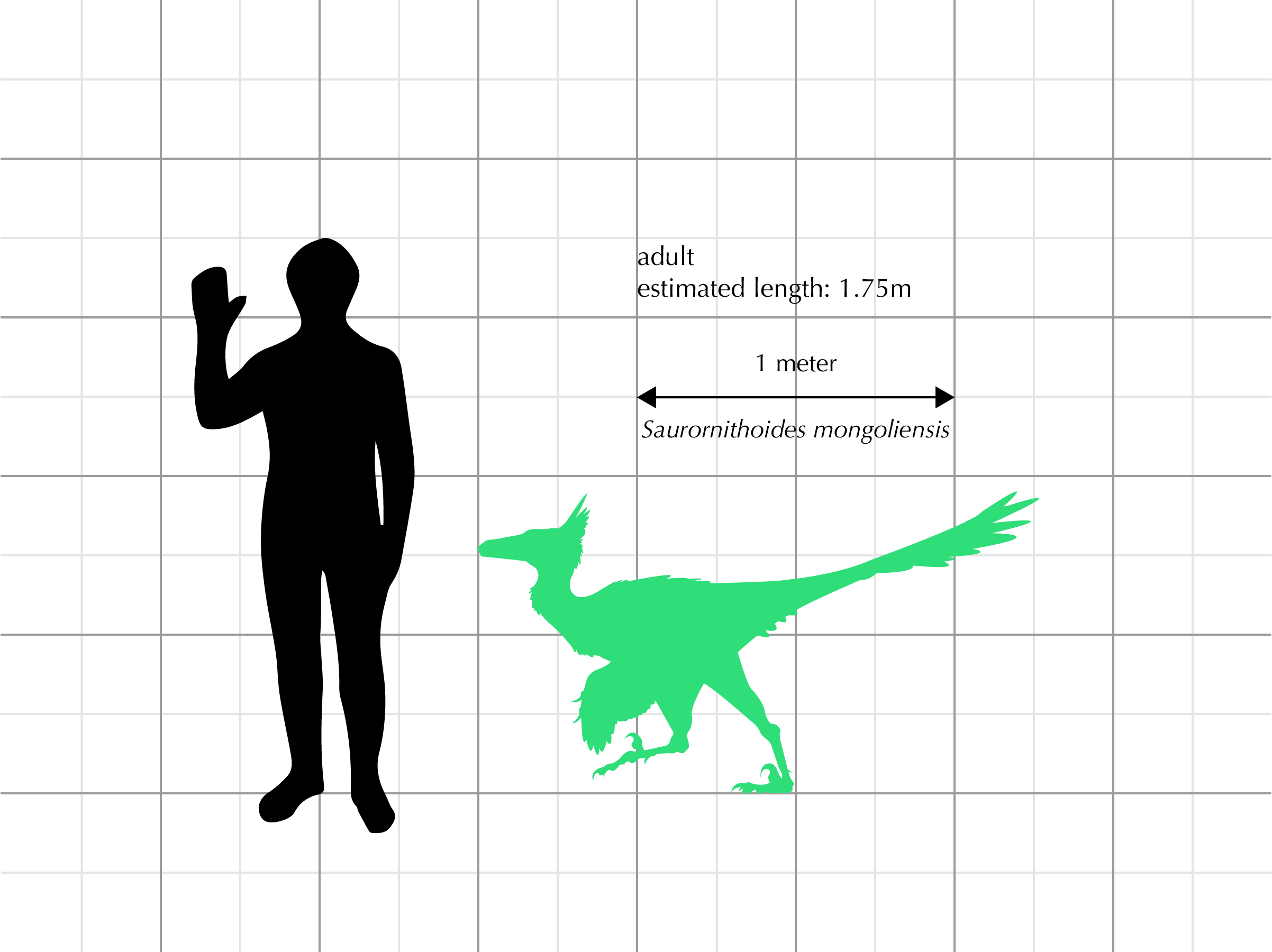
Saurornithoides was a dinosaur that was approximately 2 to 3.5 m long and weighed approximately 35 to 45 kg. Fossils of this dinosaur have been found in Mongolia and Tajikistan. Its name means something like “bird-like lizard”. He lived during the Upper Cretaceous from around 80.6 to 72 million years ago.
Saurornithoides was a long-legged predator that could run quickly on its hind legs and had excellent eyesight and hearing.
This small theropod is a member of the group Troodontidae, a group of small bird-like, graceful dinosaurs from the Maniraptora group (= “hand robbers”). Its closest relative was probably the North American genus Troodon.
| Profile | Saurornithoides |
|---|---|
| epoch | Upper Cretaceous 80.6 to 72 million years ago |
| Order | Lizard-pelvis dinosaur (Saurischia) |
| Subordination | Theropoda |
| Family | Troodontidae |
| group | |
| genus | Saurornithoides |
| species | Saurornithoides mongoliensis (Osborn, 1924) |
| Height | 0.8 meters |
| length | 2 to 3.5 meters |
| Weight | 35 to 45 kg |
| Locations | Mongolia, Tajikistan |
Discovery story
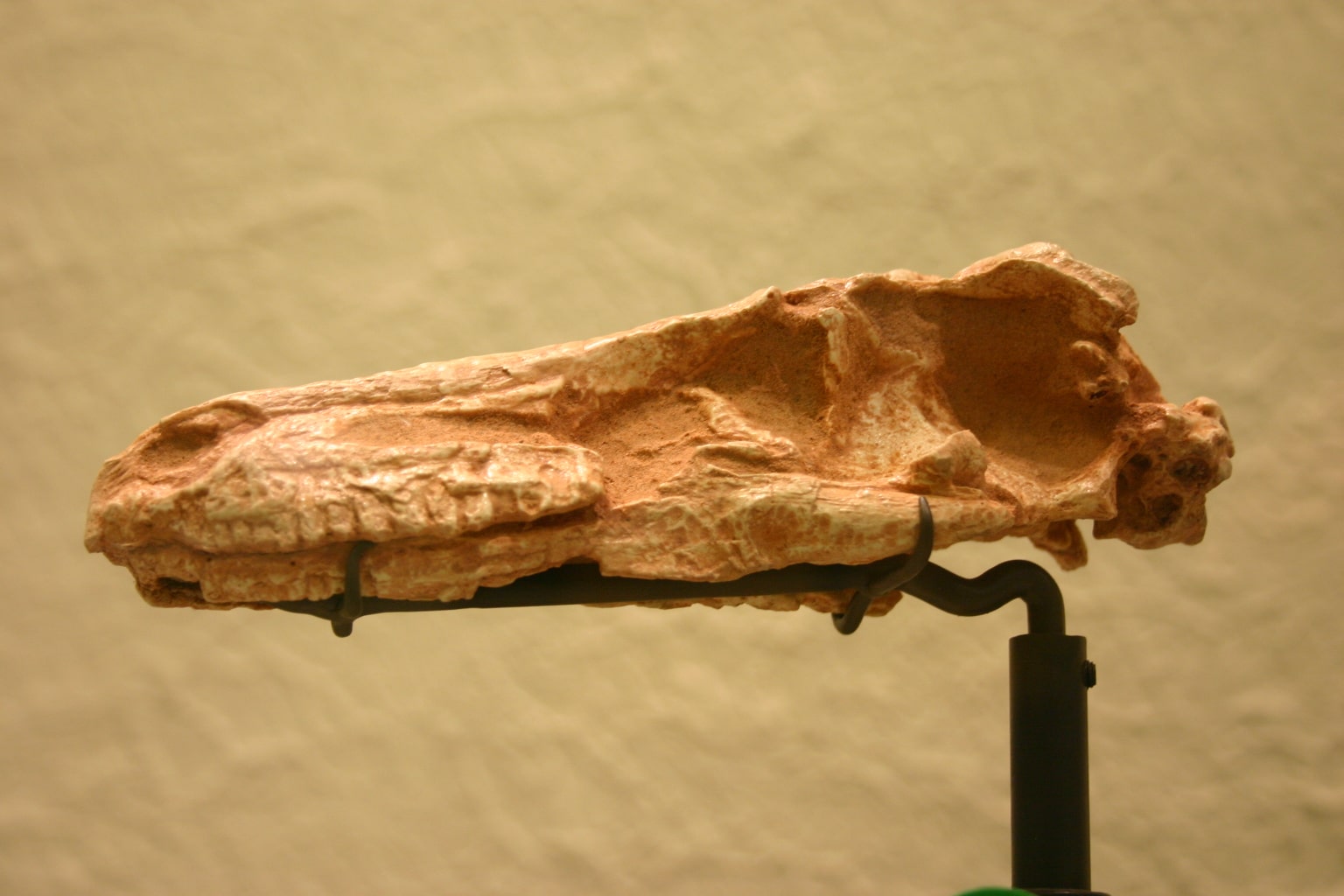
The first fossils of Sauronithoides were discovered by Chih, a Chinese member of the American Museum of Natural History expedition, on July 9, 1923. The area in Mongolia where he found the fossils is near Bayan Dzak (formerly also called Shabarakh Usu) in the Ömnögovi Province and is known as the Djadochta Formation. The incomplete skull recovered there remains the holotype of the species Sauronithoides mongoliensis and is kept at the American Museum of Natural History in New York under the collection number AMNH FR 6516.
Name change: Sauronithoides junior became the new genus Zanabazar
For a long time, Sauronithoides mongoliensis and Sauronithoides junior were considered two species of the same genus. The scientist Rinchen Barsbold described the second species in 1974 based on a skeleton with the specimen number IGM 100/1 and, due to similar characteristics, also assigned it to the genus Sauronithoides.
In 2009, a research team led by Mark Norell (Norell, Makovicky, Bever, Balanoff, Clark, Barsbold, and Rowe) re-examined the genus *Saurornithoides* in a comprehensive review. This revealed that the anatomical evidence was insufficient to definitively classify *S. junior* as belonging to the same genus as *S. mongoliensis*. Therefore, the researchers established a new genus for the second species: *Zanabazar*. Since then, the animal has been known scientifically as *Zanabazar junior*.
The new genus name honors Zanabazar, the first spiritual leader (Bogd Gegen) of Tibetan Buddhism in Mongolia. With an estimated skull length of about 27 centimeters, Zanabazar junior was even one of the largest known troodontids in Asia—significantly larger than its relative, Saurornithoides mongoliensis. Today, therefore, only the type species Saurornithoides mongoliensis is considered valid within the genus Saurornithoides.
Other “species” previously attributed to Saurornithoides also proved to be invalid in the course of research: S. sauvagei (1928) was based on a printing error, S. inequalis (1982) is now considered a synonym of Troodon formosus, S. asiamericanus (1991) later became Troodon asiamericanus, and the supposed species S. isfarensis (2000) turned out to be a fossil of a hadrosaur in 2007.
Recent research: New troodontid relative Harenadraco prima discovered (2024)
There’s also been some activity among Saurornithoides’s close relatives: In July 2024, a team led by Sungjin Lee of Seoul National University described Harenadraco prima—the first known troodontid from the Baruungoyot Formation in Mongolia—in the *Journal of Vertebrate Paleontology*. The fossil (collection number MPC-D 110/119) was discovered as early as 2018 at the Hermiin Tsav site in Ömnögovi Province and consists primarily of pelvic and hind limb bones.
Harenadraco prima, at around one meter in length, was significantly smaller than Sauronithoides and lived approximately 72 to 71 million years ago. Its extremely slender metatarsal skeleton (tarsometatarsus) is striking, suggesting a particularly fast, running-adapted lifestyle – comparable only to the troodontid Philovenator. Phylogenetic analyses classify Harenadraco as an early representative of an otherwise purely Chinese troodontid lineage, and thus as one of the earliest branched lineages within the entire family Troodontidae.
Harenadraco shares the Mongolian habitat and the family Troodontidae with Saurornithoides and Zanabazar, but belongs to its own, more distant branch of the troodontid family tree. The discovery fills a striking gap: until then, not a single troodontid was known from the Baruungoyot Formation – which lies chronologically between the older Djadochta Formation (site of Saurornithoides) and the younger Nemegt Formation (site of Zanabazar).
Newly described: The North American troodontid Dinevenator robustus (2026)
Outside of Mongolia, troodontid research yielded a remarkable find in 2026: Paleontologist Robert M. Sullivan discovered an unusually massive skull bone south of Kirtland in San Juan County (New Mexico, USA) in the summer of 2005. Initially described in 2006 as a new species of the dromaeosaur *Saurornitholestes*, Evans and colleagues assigned the find to the Troodontidae in 2014, but classified it as a nomen dubium – meaning its classification was uncertain. In 2026, Rivera-Sylva and colleagues provisionally assigned it to the genus *Xenovenator*. Only a renewed, detailed examination by Steven E. Jasinski and Robert M. Sullivan in 2026 revealed that the fossil (collection number SMP VP-1955) actually belonged to a previously unknown genus. Dinevenator.
The genus name Dinevenator is derived from "Diné"—the self-designation of the Navajo people, on whose ancestral lands in the American Southwest the fossil was discovered—and the Latin word venator ("hunter"). The species name robustus refers to the strikingly thick, robust skull bones that distinguish this troodontid from its more slender relatives.
The fossil comes from the De na zin Member of the Kirtland Formation in the San Juan Basin and is dated to approximately 73.4 to 73 million years old (late Campanian). With an estimated body length of 2.4 to 3 meters and a weight of 70 to 140 kilograms, it is considered a large fossil. Dinevenator robustus It is among the largest known troodontids. Phylogenetic analyses present it as the earliest representative of its own, "robust" Troodontinae lineage, together with Albertavenator curriei and Xenovenator espinosai – as a sister group to more gracile Troodontinae such as Troodon formosus, Latenivenatrix mcmasterae, and Stenonychosaurus inequalis.
Along with Saurornithoides and Zanabazar, Dinevenator is thus related only through their shared family, Troodontidae: Both Mongolian genera belong to the subfamily Saurornithoidinae, while Dinevenator belongs to a distinct North American lineage of robustly built Troodontinae. However, the discovery impressively demonstrates how differently troodontids evolved on different continents—ranging from slender, large-eyed nocturnal hunters like Saurornithoides to massively built forms like Dinevenator.
What did Saurornithoides eat?
Saurornithoides had a mean skull length of 189 millimeters.
The size of its skull allows us to draw conclusions about its brain development. It had a very large brain in relation to its body size and probably one of the highest encephalization quotients (EQ) of non-birds. It is believed that he had relatively advanced behaviors. In addition, his senses such as hearing and sight were probably very well developed.
Like all troodontids, Saurornithoides had closely spaced teeth in the lower jaw as well as a large number of sharp teeth.
He had a slim build, had sickle claws and gripping hands.
On its hind legs it had a retractable claw on the second toe of each foot. This claw was oversized and curved, similar to that of Velociraptor.
Its eye sockets were large and their position suggests the ability of stereoscopic vision. This enabled him to have efficient depth perception.
He probably had advantageous vision in light and his night vision was also excellent.
This suggests that Saurornithoides preferred a nocturnal lifestyle.
It probably went out at dusk in search of small mammals and reptiles, its priority prey. Dinosaur nestlings and eggs were also probably on his menu.
Special features
Saurornithoides and other troodontids were highly developed at birth and probably required little to no parental care.
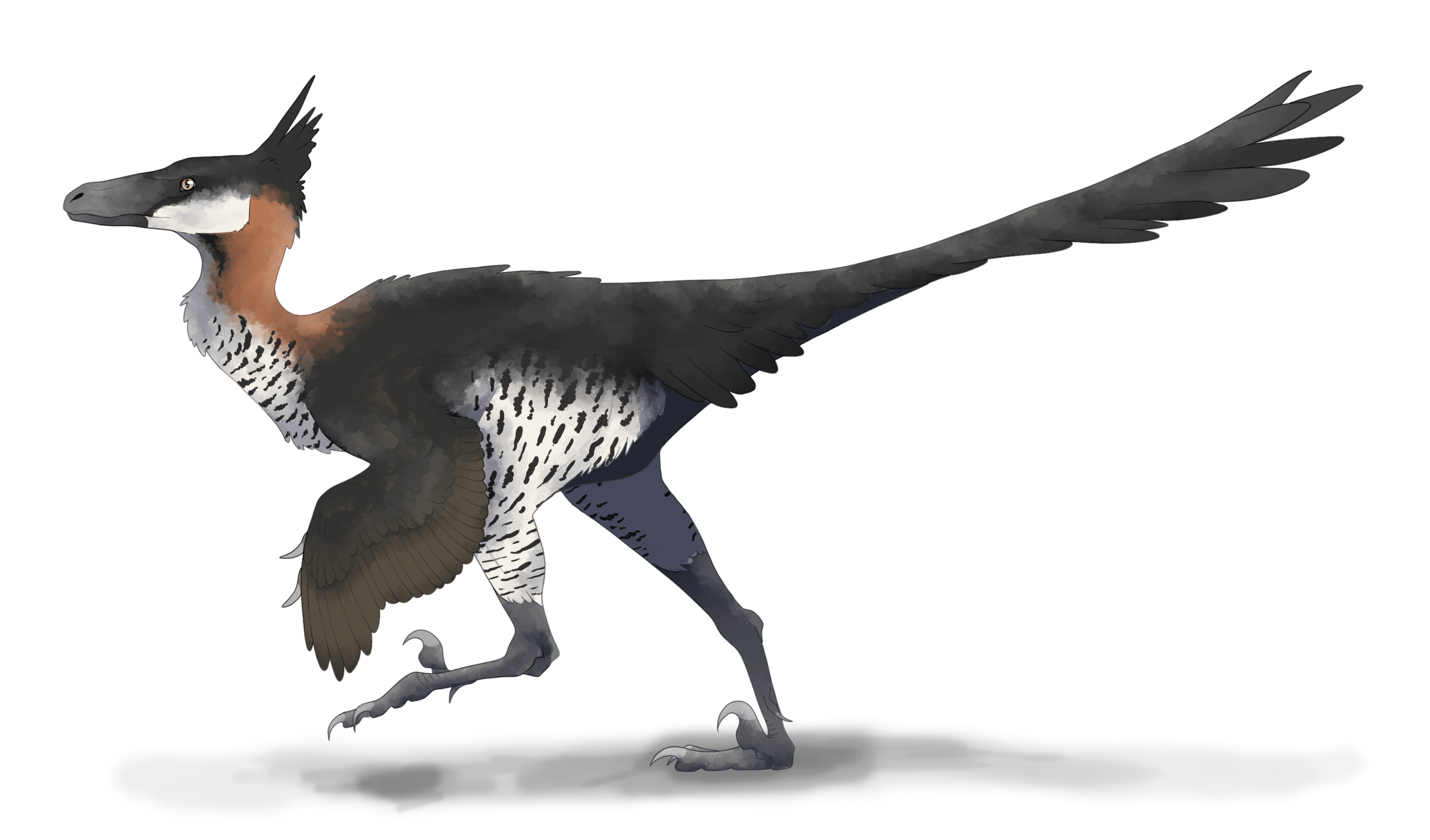
Due to many bird-like features, scientists believe that Saurornithoides was covered in feathers.
Image sources: FunkMonk, CC BY 3.0 https://creativecommons.org/licenses/by/3.0, via Wikimedia Commons
Size comparison: Audrey.m.horn, CC BY-SA 4.0 https://creativecommons.org/licenses/by-sa/4.0, via Wikimedia Commons
Skull: Ryan Somma, CC BY-SA 2.0 https://creativecommons.org/licenses/by-sa/2.0, via Wikimedia Commons
A restoration of Saurornithoides mongoliensis: Audrey.m.horn, CC BY-SA 4.0 https://creativecommons.org/licenses/by-sa/4.0, via Wikimedia Commons
Sources:
Norell, MA, Makovicky, PJ, Bever, GS, Balanoff, AM, Clark, JM, Barsbold, R. & Rowe, T. (2009): A Review of the Mongolian Cretaceous Dinosaur Saurornithoides (Troodontidae, Theropoda). American Museum Novitates, 3654, pp. 1–63. — ResearchGate / Internet Archive
Wikipedia (EN): “Zanabazar junior”
Wikipedia (EN): “Saurornithoides” (Taxonomy section)
Sci.News: “New Bird-Like Dinosaur Unearthed in Mongolia” (General-to-understand summary)
Jasinski, SE & Sullivan, RM (2026): Dinevenator, a New Genus of Troodontid Dinosaur from the Late Cretaceous of New Mexico. Fossil Studies, 4(3), 21. — MDPI