Aragosaurus
Aragosaurus: The sauropod from the early Cretaceous period
Origin and taxonomy
Aragosaurus, meaning "Aragon lizard," is a genus of sauropod dinosaur discovered in the Spanish region of Aragon. It lived during the Early Cretaceous period, approximately 130 to 140 million years ago. It is classified as part of the Macronaria group within the Sauropoda group, and its type species, *Aragosaurus ischiaticus*, is the only species identified so far. Its relationship to Iberian dinosaurs such as... Turiasaurus enables the comparison of anatomical features and the classification of Aragosaurus into sauropod evolution during the transition from Jurassic to Cretaceous.
Macronaria also includes Europasaurus from the Upper Jurassic of Germany, Ampelosaurus from the Upper Cretaceous of southern France and Fusuisaurus from the Lower Cretaceous of China.
Discovery and fossil evidence
The first Aragosaurus fossils were unearthed in the 1950s in the Villar del Arzobispo Formation in Spain and officially described in 1987. These fossils include postcranial remains such as vertebrae and limb bones, which have helped paleontologists reconstruct its anatomy. Although the fossil record is incomplete, the remains suggest a robust and heavily built dinosaur with a long neck and tail.
The discovery of Aragosaurus enables the analysis of sauropod diversity in Europe during the early Cretaceous period.
Physical characteristics
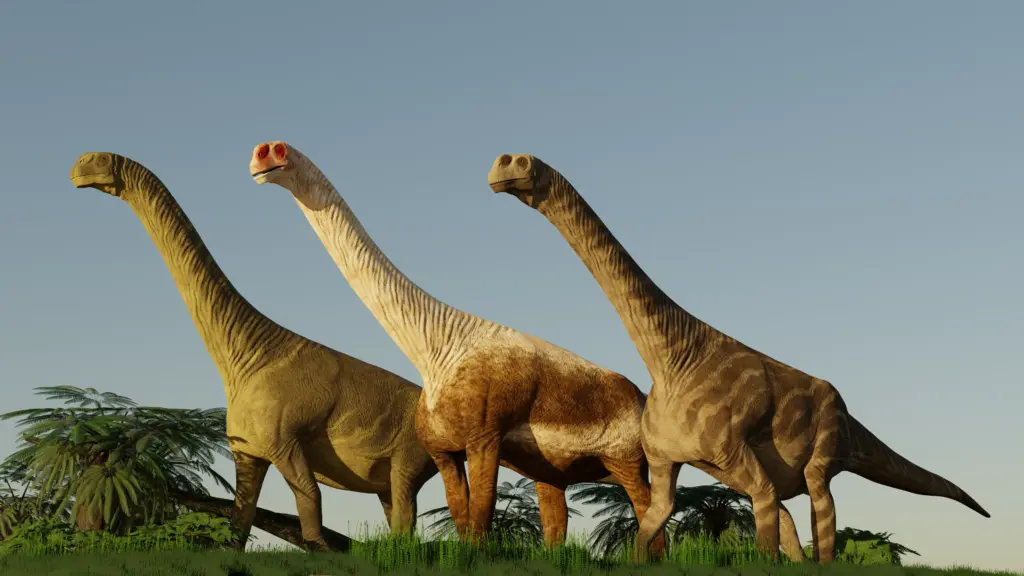
Aragosaurus was a large, quadrupedal herbivore with a long neck and tail. It is estimated to have been between 15 and 25 meters long and weighed around 25 tons. Its body was supported by thick, column-like legs, and its teeth were broad and flat, ideal for crushing tough plant material. The dinosaur's robust build and muscular tail likely contributed to its balance and locomotion, while its long neck allowed it to reach plants high above the ground.
Habitat and environment
During the Early Cretaceous period, the Iberian Peninsula was a warm and humid region covered with lush forests and rich vegetation. Aragosaurus thrived in this environment, feeding on ferns, cycads, and conifers. The rivers and lakes in its habitat created a diverse ecosystem that supported various dinosaur species, including contemporaries such as... Iguanodon and Hypsilophodon. This rich biodiversity illustrates the complex interactions between species during this period.
Diet and eating habits
As a herbivore, Aragosaurus fed primarily on soft leaves, shrubs, and other vegetation. Its long neck allowed it to access food sources inaccessible to smaller herbivores, thus reducing competition. The dinosaur's flat teeth were well-suited for grinding plant material, and it likely spent most of the day foraging. There is evidence that Aragosaurus lived in herds, which provided protection from predators and allowed for efficient foraging.
Evolutionary significance
Aragosaurus represents an important link in the evolutionary history of sauropods. Its long neck and robust limbs... Aragosaurus They show adaptations that enabled them to reach tall vegetation and move across different habitats. By studying Aragosaurus and its relatives, scientists are gaining a deeper understanding of how sauropods evolved and diversified during the Mesozoic Era. The anatomical features of Aragosaurus These illustrate adaptations that enabled sauropods to thrive in diverse environments. Analyzing these traits contributes to the reconstruction of sauropod evolution.
Interactions with contemporaries
Aragosaurus shared its habitat with a variety of other dinosaurs, including Iguanodon, Hypsilophodon, and other sauropods such as Turiasaurus and Losillasaurus. Each species occupied a specific ecological niche, thus reducing competition for resources. For example, while Aragosaurus fed on tall vegetation, smaller dinosaurs like Hypsilophodon grazed in the undergrowth. These interactions illustrate the dynamic and interconnected ecosystems of the Early Cretaceous period.
Cultural significance and representation
Although not as famous as some other dinosaurs, Aragosaurus occupies a special place in Spain's paleontological heritage. Its fossils are displayed in museums, sparking curiosity and interest in prehistoric life. Artists and scientists have brought Aragosaurus to life through reconstructions, making it a popular figure among dinosaur enthusiasts. The analysis of the finds from Aragosaurus expands the database for reconstructing the fauna of the early Cretaceous period on the Iberian Peninsula.
Conclusion
Aragosaurus is a fascinating example of the diversity and complexity of sauropod dinosaurs in the Early Cretaceous period. From its robust anatomy to its lush habitat, this "Lizard of Aragon" a glimpse into a long-vanished world. Its discovery and exploration not only enrich our knowledge of dinosaurs, but also underscores the importance of paleontology for deciphering Earth's history.
Image sources:
Featured image: Ferrutxo, CC BY-SA 4.0, via Wikimedia Commons
Aragosaurus recreation: Ferrutxo, CC BY-SA 4.0, via Wikimedia Commons