Lurdusaurus
Characteristics of Lurdusaurus arenatus
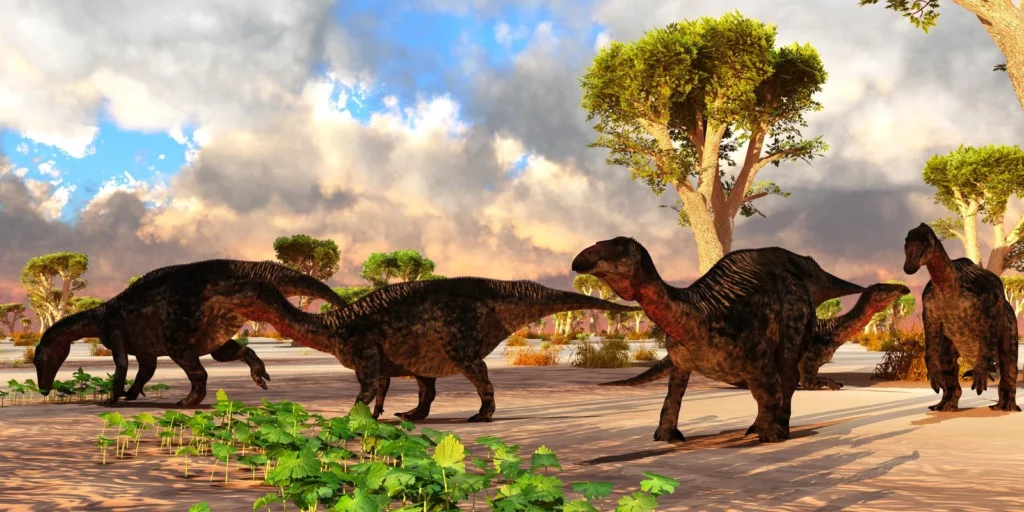
Lurdusaurus stood out among its dinosaur contemporaries for its powerful, barrel-shaped physique. The robust build of this herbivorous dinosaur was a distinctive feature that distinguished it from many other species of its time. Its powerful skeletal structure suggests adaptations that allowed it to effectively process and digest plant material, which formed the basis of its diet.
Lurdusaurus' unique physical characteristics were not limited to its stocky build. Paleontologists have noted that this dinosaur's skeletal structure suggests possible adaptations to a semi-aquatic lifestyle. These adaptations may have allowed Lurdusaurus to thrive in environments near bodies of water, such as. B. rivers in old tropical forests.
The dinosaur's body shape and bone structure suggest that it may have thrived on both land and shallow water, possibly using the aquatic environment for feeding or shelter.
Examination of Lurdusaurus' remains has shown that its powerful stature would have been an advantage in its tropical habitat. Its powerful frame may have helped it move through dense vegetation, while its barrel-shaped midsection may have housed large, efficient digestive organs necessary for processing tough plant material.
There is no clear evidence that Lurdusaurus was actually semi-aquatic, but there are some plausible assumptions and clues
Although there is no clear evidence that Lurdusaurus arenatus semi-aquatic was, some features point to this possibility. The dinosaur's massive, barrel-shaped body and short, powerful limbs resemble those of modern semi-aquatic animals such as hippos. Its low center of gravity, with a belly that was only about 70 cm above the ground, may have been advantageous for an aquatic lifestyle.
Paleontologist Tom Holtz has speculated that Lurdusaurus may have lived a similar lifestyle to today's hippos due to its body shape. The dinosaur's habitat, a forested environment with rivers, suggests it had access to water.
However, it is important to emphasize that these statements are speculative. Without direct fossil evidence, such as B. adaptations to the feet or skin, the exact lifestyle of Lurdusaurus remains uncertain. Further research and fossil discoveries could shed more light on this intriguing hypothesis.
Nutrition
Throughout its existence, Lurdusaurus' diet consisted primarily of plant material. As herbivorous dinosaur This species relied on vegetation as a food source, although the details of its feeding habits remain somewhat unclear to paleontologists.
However, it is likely that Lurdusaurus, like many other herbivorous dinosaurs of its time, consumed a variety of plants that were available in its environment. Although the exact composition of its diet is not fully understood, it can be assumed that Lurdusaurus fed on ferns, cycads, conifers, and other plants that were widespread in the Early Cretaceous.
The dinosaur's physical characteristics, such as its body shape and tooth structure, influenced its feeding habits. It is possible that Lurdusaurus used its beak-like mouth to cut plants and its teeth to process harder plant materials.
As further research continues, scientists may uncover more detailed information about Lurdusaurus' dietary habits and feeding behavior. Future fossil discoveries, particularly those revealing stomach contents or coprolites, could provide valuable insights into the specific plants this herbivore consumed and how its diet may have changed depending on habitat or season.
Fossil evidence
The discovery of the fossil remains of Lurdusaurus has provided paleontologists with valuable insight into the anatomy and ecological niche of this herbivorous dinosaur. Known fossils include a partial skull and postcranial remains, which were crucial in reconstructing the appearance and lifestyle of this ancient creature.
These discoveries have allowed researchers to analyze the dinosaur's skeletal structure, providing clues about its size, posture and possible adaptations. The skull fragment was particularly valuable because it provided information about Lurdusaurus' skull anatomy, dentition, and possible feeding habits.
By examining its teeth and jaw structure, scientists can infer details about the plants it likely consumed. The postcranial (located behind the skull) Remains, which include bones from different parts of the body, have helped paleontologists understand the dinosaur's overall body structure, limb proportions and possible movement patterns.
These fossils have also enabled comparisons with other known Iguanodon dinosaurs, allowing researchers to place Lurdusaurus in its evolutionary context. Although the fossils of Lurdusaurus are not complete, the available evidence has contributed significantly to our understanding of this herbivore and its role in prehistoric ecosystems.
Meaning
The discovery of Lurdusaurus fossils has significantly expanded our understanding of Iguanodon diversity and evolution in Africa during the Cretaceous. This remarkable find has given paleontologists crucial insight into the anatomical adaptations of these large herbivorous dinosaurs in prehistoric African ecosystems.
Lurdusaurus' unique features, such as its reinforced metacarpals and enormous thumb spine, contribute to iguanodont specialization. The dinosaur's characteristic dorsal vertebrae, with their larger vertebral bodies and shorter spinous processes, provide insight into the structural differences between African and European iguanodonts. This comparison helps scientists track evolutionary patterns across continents.
Additionally, the fossil remains of Lurdusaurus have increased our understanding of the diversity of ornithopods in Africa during the Cretaceous. By examining the skull portion and postcranial remains, researchers can piece together a more complete picture of the region's prehistoric fauna.
This information is crucial for reconstructing ancient ecosystems and understanding the biogeography of dinosaurs during this period. Ultimately, Lurdusaurus is a valuable piece in the complex puzzle of dinosaur evolution and adaptation in Africa.
Final note
There is still a lot left to discover. 🙂
Systematics
| Dinosauria |
| Ornithischia |
| Genasauria |
| Neornithischia |
| Cerapoda |
| Ornithopoda |
| Iguanodontia |
| Ankylopollexia |
| Styracosterna |
Occurrence in time
| chalk |
| Lower Cretaceous |
| Aptium-Albium |
Happen
| Area | Africa |
| country | Niger |
| region | Agadez |
| formation | Elrhaz |