Pentaceratops
“Face with Five Horns”
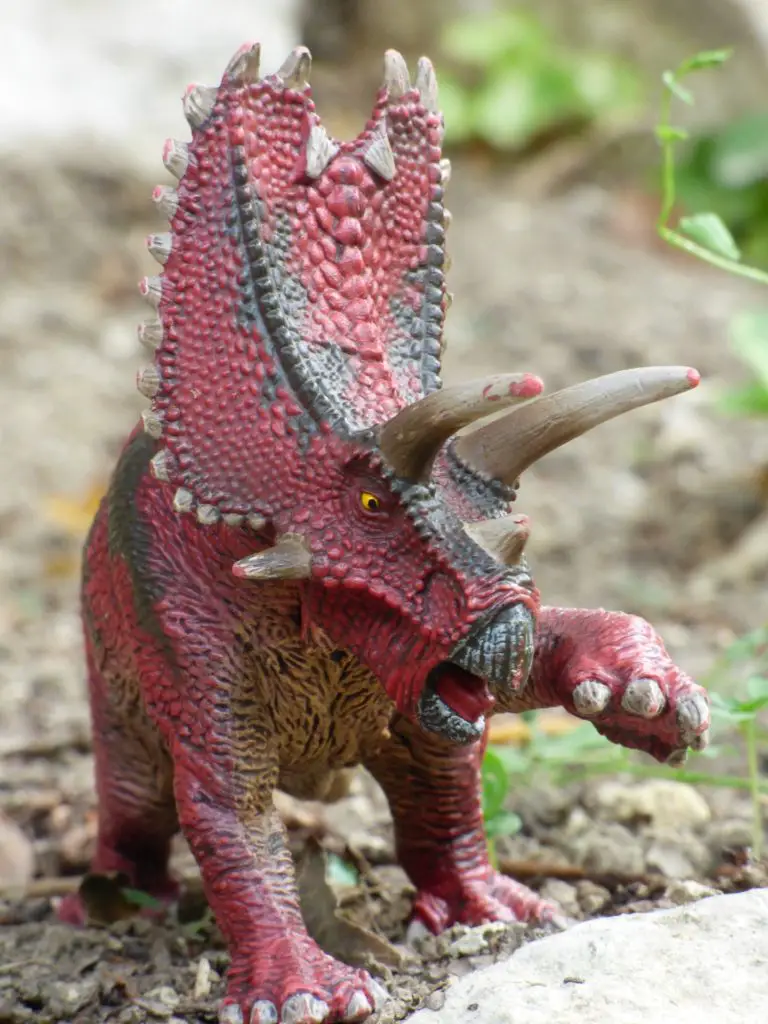
Pentaceratops was a dinosaur that was similar in stature to a rhinoceros (if you ignore its head).
The approximately 6 to 7 m long animal walked on four strong legs.
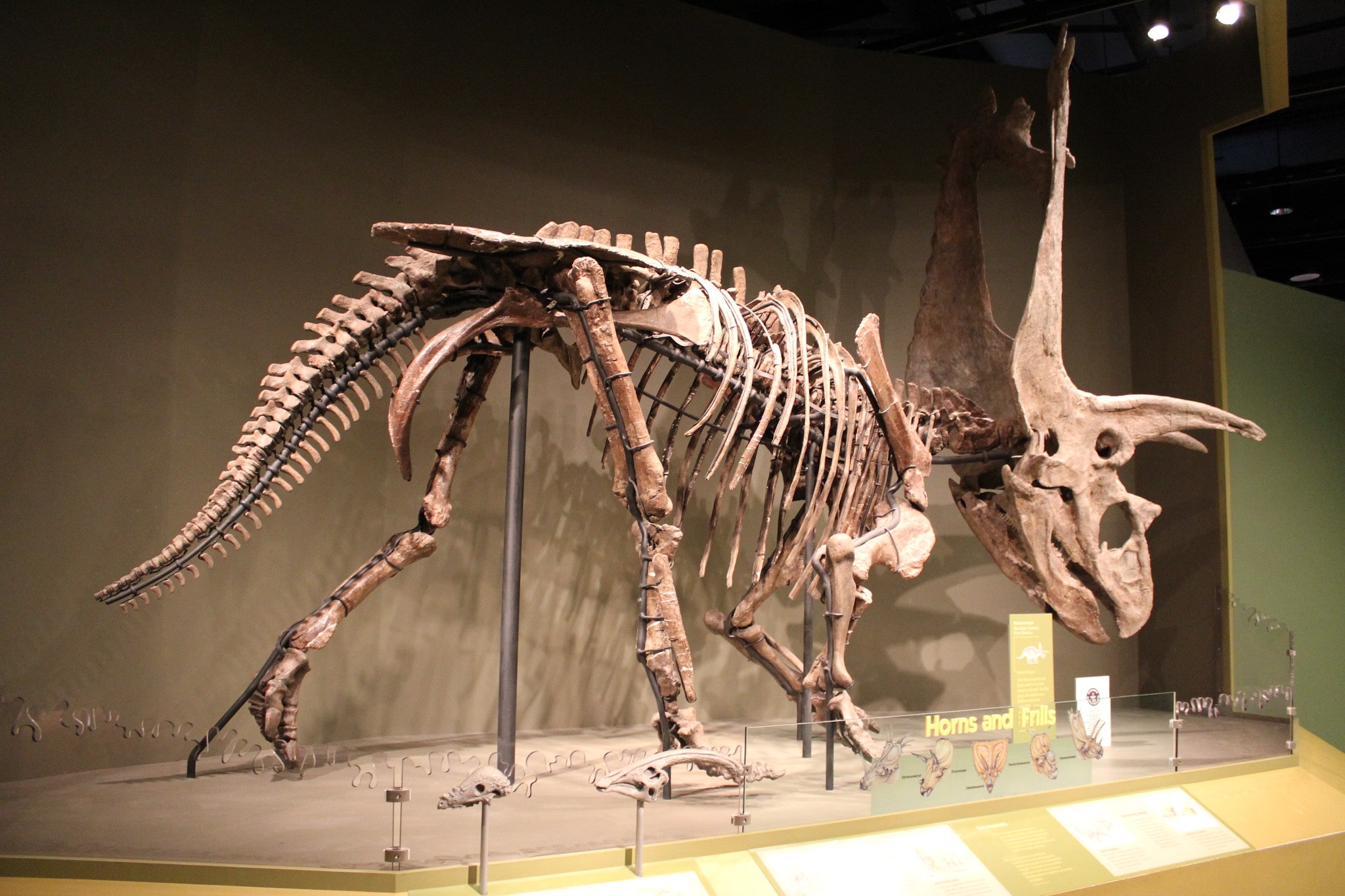
Pentaceratops had what was probably the largest known skull ever found on a land animal. Five long horns protruded from this 3 meter long skull. An upward-pointing horn protruded from its parrot-like beak. Two longer horns, which pointed forward, grew from his brows just above his eyes. He also had two horn-like extensions of his cheekbones (jugal bones), which formed the fourth and fifth horns.
Jugal
(The jugal is a skull bone found in most reptiles, amphibians, and birds.)
Also very impressive was the large bone plate that protruded from the back of his skull (ruff).
| Profile | Pentaceratops |
|---|---|
| epoch | Late Cretaceous (late Campanian to early Maastrichtian) 76–69 million years ago |
| Order | bird-hipped dinosaurs (Ornithischia) |
| Subordination | Ceratopsia |
| Family | Neoceratopsia |
| group | Ceratopsidae |
| genus | Pentaceratops |
| species | Pentaceratops sternbergii Pentaceratops aquilonius |
| Height | 2.5 meters |
| length | 7 – 7.5 meters |
| Weight | 5 tons |
| Locations | North America |
Scientists speculate about the function of the horns and the large bone plate.
They probably offered protection from predators.
They may also have been used in mating rivalries and rituals. Pentaceratops males pushed each other with their horns and collars. Male dogs with specially equipped horns may have been recognized as herd alphas.
Endemism
Endemism is the exclusive occurrence of certain species (animals and plants) in a specific, defined geographical area.
Dinosaurs have been found in the American Southwest that have not yet been discovered further north in the Great Plains.
Therefore, it is believed that these dinosaur lineages had the ability to spread over long distances. Scientists assume that this adaptation to the environmental conditions excluded competing species and only the species mentioned below occurred in this area.
Other dinosaurs found in the Pentaceratops site region included:
- Parasaurolophus cyrtocristatus
- Sphaerotholus (Pachycephalosaurus)
- Nodocephalosaurus (armored dinosaur)
- Bistahieversor (Tyrannosaurus)
Image sources: Nobu Tamura (http://spinops.blogspot.com), CC BY 3.0 https://creativecommons.org/licenses/by/3.0, via Wikimedia Commons
© Kurt McKee; Attribution-ShareAlike 2.0 Generic (CC BY-SA 2.0)