Bonapartenycus
Physical characteristics
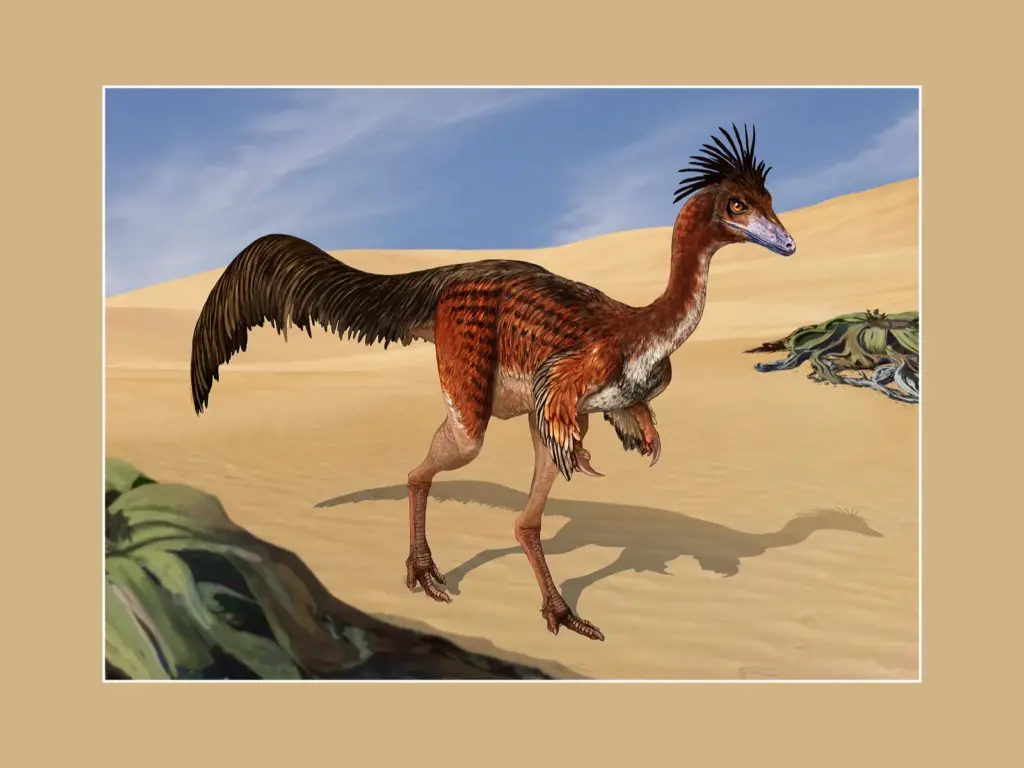
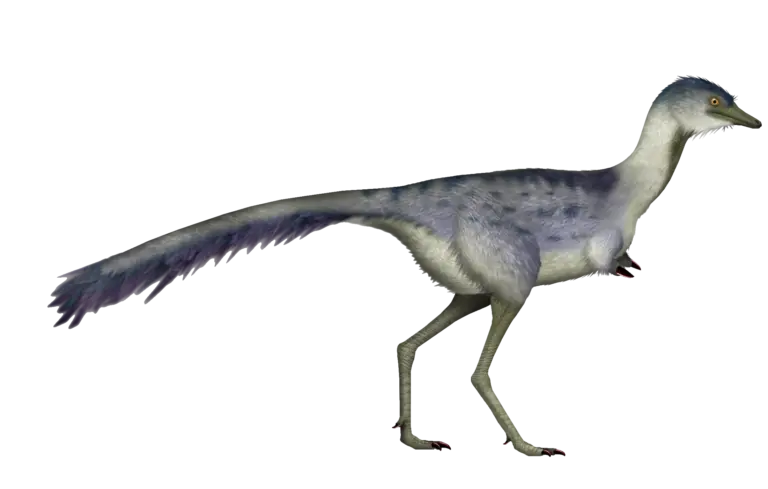
With his size was Bonapartenycus ultimus the giant of his family. This bipedal dinosaur was 2.5 to 3.3 meters long - about the size of a small car - and weighed between 43 and 72 kilograms, similar to an adult human. Unlike its smaller relatives from the Alvarezsauroidea family, this dinosaur evolved unique characteristics to survive. His arms, although short, were equipped with powerful muscles that were perfect for breaking open ant and termite nests, making him a prehistoric exterminator.
Discovery and tragic end
In the harsh landscape of Patagonia, Argentina, paleontologists discovered more than just another dinosaur skeleton. They found a female Bonapartenycus in a state that appears to correspond to her final moments. Two eggs lay near her bones, in a position suggesting they were still in her body when she died. These eggs tell a grim story - they show signs of fungal attack, suggesting the harsh environmental conditions that may have contributed to their deaths.
Name and meaning
The name “Bonapartenykus” honors the Argentine paleontologist José Bonaparte and means translated “Bonaparte’s Claw”. The species name “ultimus” – meaning “the last” – marks this dinosaur's place in time as one of the last members of its family, which lived during the late Cretaceous period, about 70 million years ago.
Scientific value
This discovery provides important details about the reproduction and survival conditions of dinosaurs in the Late Cretaceous. The preserved fungal eggs provide direct evidence of the environmental stresses to which these animals were exposed. The specimen's unique features, including fused shoulder bones and distinctive vertebrae, show how these ant-eating dinosaurs adapted over millions of years.
Bonapartenycus
| scientific name | Bonapartenycus ultimus |
| Estimated size | Length: 2.9 meters Height: 1 meter Weight: 34 kilograms to 74 kg? |
| geological era | Upper Cretaceous |
| Locations | Allen |
| Order | Saurischia |
| Subordination | Theropoda |
Physical characteristics
| anatomy | It was a slender, bipedal bird-like theropod with massively built but greatly shortened forelimbs |
| Special features | It is the largest known alvarezsaurid and has uniquely fused pelvic and shoulder bones |
| locomotion | Two-legged |
| Skin texture | The sources do not contain any information about the condition of the skin. |
| Coloring | There is no information about the color of the animal in the sources. |
discovery
| Explorer | Federico L. Agnolin, Jaime E. Powell, Fernando E. Novas and Martin Kundrát |
| Discovery date | 2012 |
| Meaning of the name | The name means “Bonaparte’s claw” and honors the Argentine paleontologist José F. Bonaparte |
| Significant fossil finds | Partial skeleton without skull, further fragments. |
In paleontology, the ratio of brain to body size, the so-called Encephalization quotient (EQ), used as a rough guide to relative intelligence.
| Intelligence (EQ) | There are no data on the encephalization quotient (EQ) in the sources. |
| Social behavior | The discovery of a skeleton in close proximity to eggs allows conclusions to be drawn about the reproductive behavior of females ready to lay |
| Predators | The sources make no statement about specific predators. |
Image sources:
Featured Image: Abel G. Montes, CC BY 4.0, via Wikimedia Commons
Bonapartenykus: “Bonaparte’s claw” Late Cretaceous, South America: TotalDino, CC BY 4.0, via Wikimedia Commons