Fona herzogae – A new dinosaur from Utah
Details about Fona herzogae:
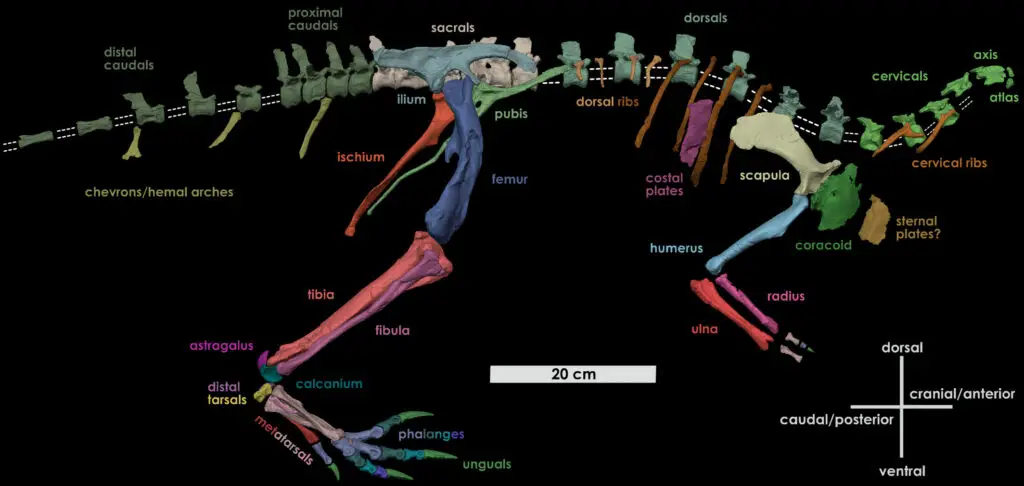
Fona herzogae is a newly identified semi-fossorial (adapted to digging or burrowing) thescelosaurine dinosaur discovered in the Mussentuchit Member of the Cedar Mountain Formation in Utah, dating from the Cenomanian stage. This discovery is of great importance because the species is represented by multiple individuals, making it one of the most extensive skeletal assemblages of a small-statured, early divergent ornithic dinosaur from North America.
Definition of semifossorial
Semifossorial refers to an animal or organism that has adapted to burrowing or digging, but does not spend its entire life underground.
The anatomy of Fona herzogae It exhibits large intraspecific differences, possibly due to ontogenetic changes or sexual dimorphism. The anatomical features of this dinosaur suggest that it led a semi-fossorial lifestyle with Oryctodromeus, another member of the Thescelosaurinae, shared. The phylogenetic analysis shows Fona herzogae as the earliest member of the Thescelosaurinae, which suggests that the Thescelosaurinae were already established in North America during the Cenomanian period.
Implications for future studies:
Paleoecology and behavior:
The discovery of Fona herzogae This discovery underscores the diversity and complexity of mid-Cretaceous ecosystems in North America. Its potentially semi-fossiral lifestyle opens new avenues for studying the behavior and ecological role of early ornithischians. However, the absence of cave structures at the excavation site raises questions about the species' habitat and interactions with other cave-dwelling animals, necessitating further paleoecological studies.
Phylogenetic relationships:
Fona herzogae It provides important data for understanding the evolutionary relationships within the Thescelosaurinae and between Thescelosaurinae and Orodrominae. The anatomical similarities with Oryctodromeus and the unambiguous phylogenetic position of Fona herzogae This suggests differing habitat preferences or competitive exclusion between thescelosaurines and orodromines. This distinction allows for a more comprehensive understanding of the coexistence and evolution of these groups.
The authors suggest that Fona herzogae was semifossorial because it shared a common ecomorphology with Oryctodromeus, a known semifossorial dinosaur.
Ontogenetic and sexual dimorphism studies:
The observed intraspecific variation in Fona herzogae This highlights the importance of considering ontogenetic and sexual dimorphism factors in future research on early divergent ornithischians. Further detailed studies are needed to fully understand the wide range of phenotypes and potential dimorphic traits within the species. These investigations will help distinguish between variations caused by developmental stages and those resulting from sexual dimorphism.
Biogeographical and evolutionary insights:
The presence of Fona herzogae The Mussentuchit discovery supports the hypothesis that Thescelosaurs were present in North America earlier than previously thought. This find significantly contributes to our understanding of the biogeographical distribution and evolutionary history of Thescelosaurinae during the mid-Cretaceous. By demonstrating the early presence and diversification of these dinosaurs, it sheds light on their adaptation strategies and migration patterns during this period.
Source:
Avrahami, H.M., Zanno, LE, Loewen, MA, & Gates, T.A. (2024). A new semi-fossorial thescelosaurine dinosaur from the Cenomanian-age Mussentuchit Member of the Cedar Mountain Formation, Utah. The Anatomical Record.
https://doi.org/10.1002/ar.25505
Image source
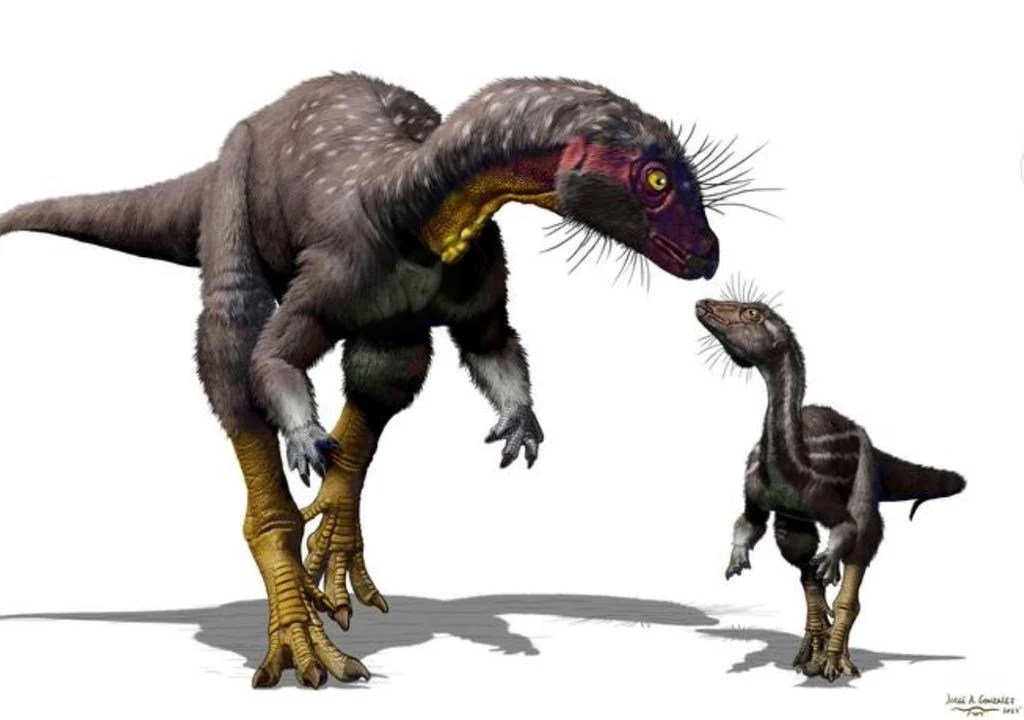
Cover image: Fona herzogae. Credit: Jorge Gonzalez