
Dinosaur with tail club
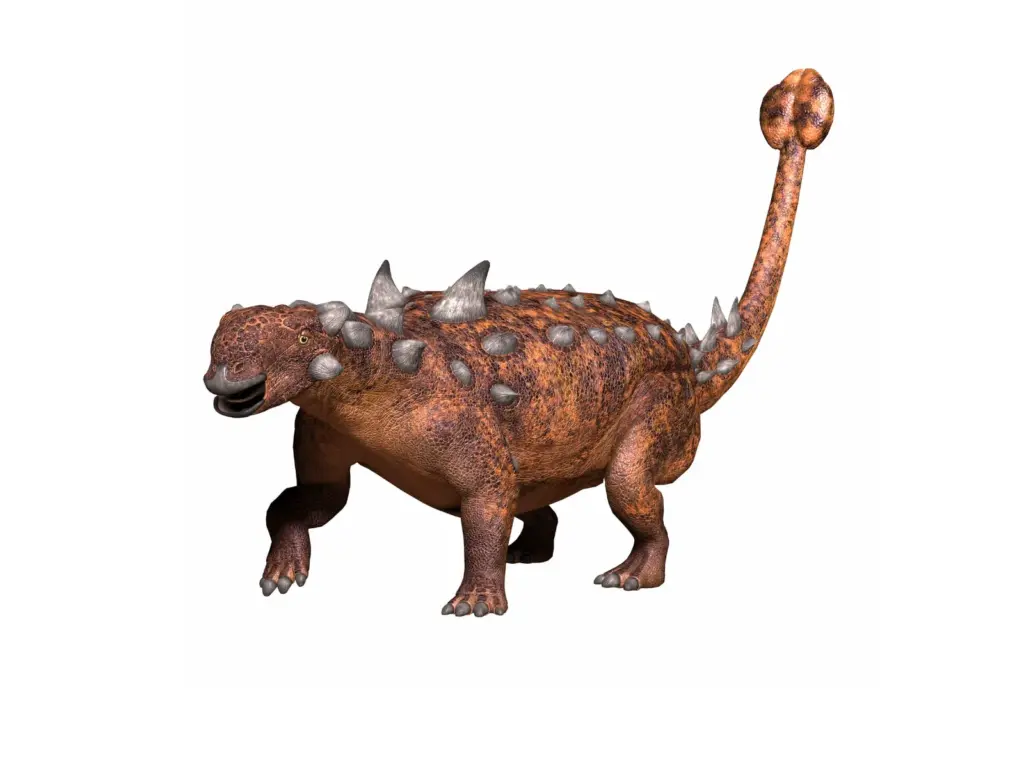
Tail clubs
A weapon for defense?
Large tail clubs could generate enough force to break bones on impact. However, medium and small tail knobs could not do this.
A new study suggests that some dinosaurs may have been more powerful than previously thought. A detailed analysis of an ankylosaur's tail club revealed that it could cause significant damage to predators, despite the relatively small size of the bony club-shaped end of the tail. Some ankylosaurs had very impressive tails, suggesting that their tail clubs were used for defense.
The tail clubs are formed from interlocking vertebrae, which form the so-called handle, and from a more or less large, terminal osteoderm (fused bones) which makes up the club.
Fossil finds from China from the Middle Cretaceous period show that the evolution of tail clubs occurred gradually over a period of 60 million years.
The conclusions that Victoria Megan Arbour
from their 2009 study are the following:
Tail-swinging behavior is possible in ankylosaurs, but it remains unknown whether the tail was used for interspecific defense, intraspecific combat, or both.
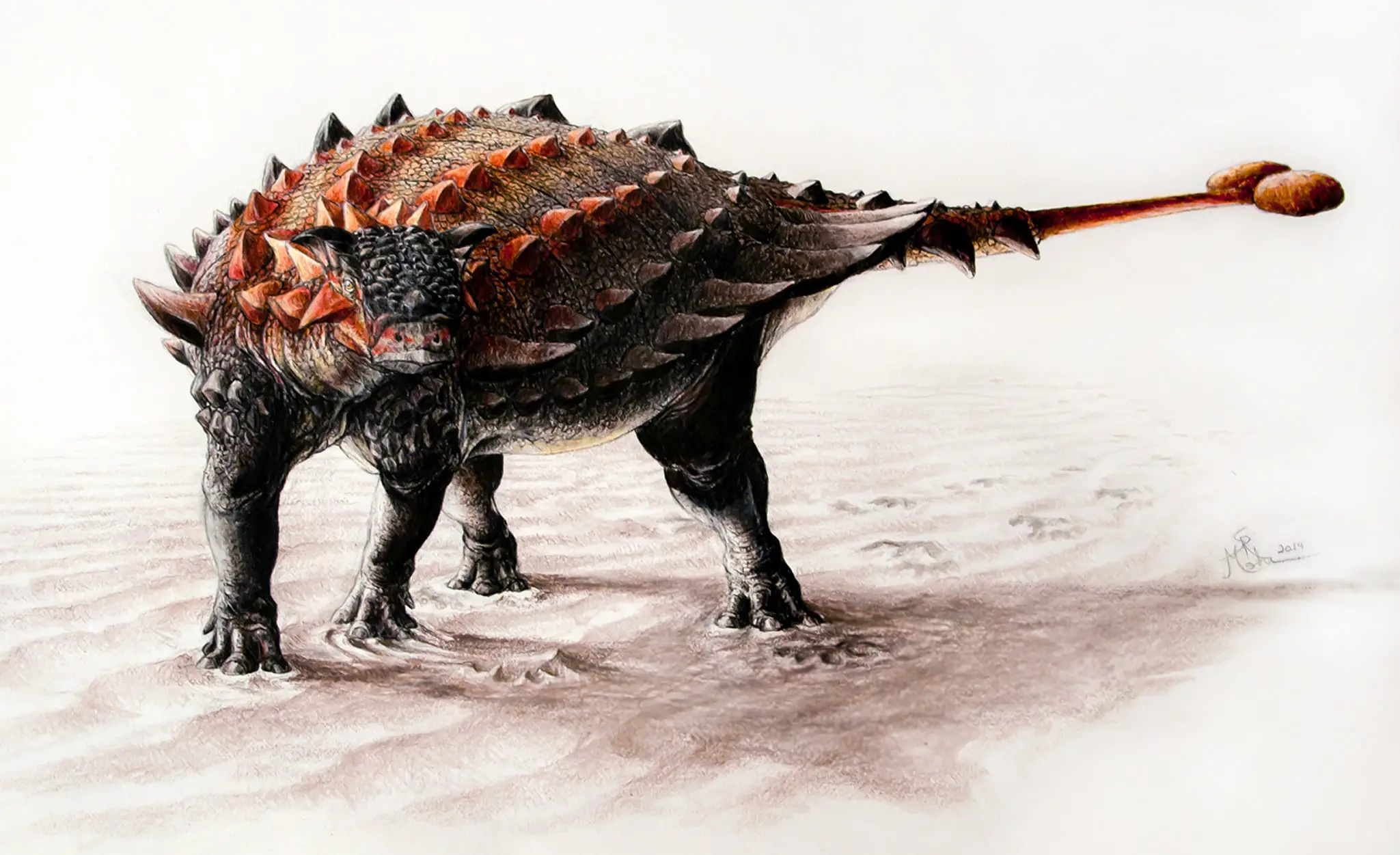
Ziapelta sanjuanensis
Ziapelta sanjuanensis is a recently discovered species of ankylosaur, a herbivorous dinosaur that lived in the Late Cretaceous. The dinosaur's fossilized remains, which include fragments of its skull and several vertebrae, were found in the Kirtland Formation in New Mexico. Ziapelta sanjuanensis is classified as an ankylosaurid dinosaur, meaning its head was protected by bony armor plates and its body was protected by thick, bony scales.
Lived 74.5–72.6 million years ago
It was 4.6 m to 6.1 m long
He was four-footed, with a broad, robust body
Ziapelta's body was protected by osteoderms, scales made of bone that sit within the skin.
Image source: Illustration by Sydney Mohr, CC BY 2.5, via Wikimedia Commons
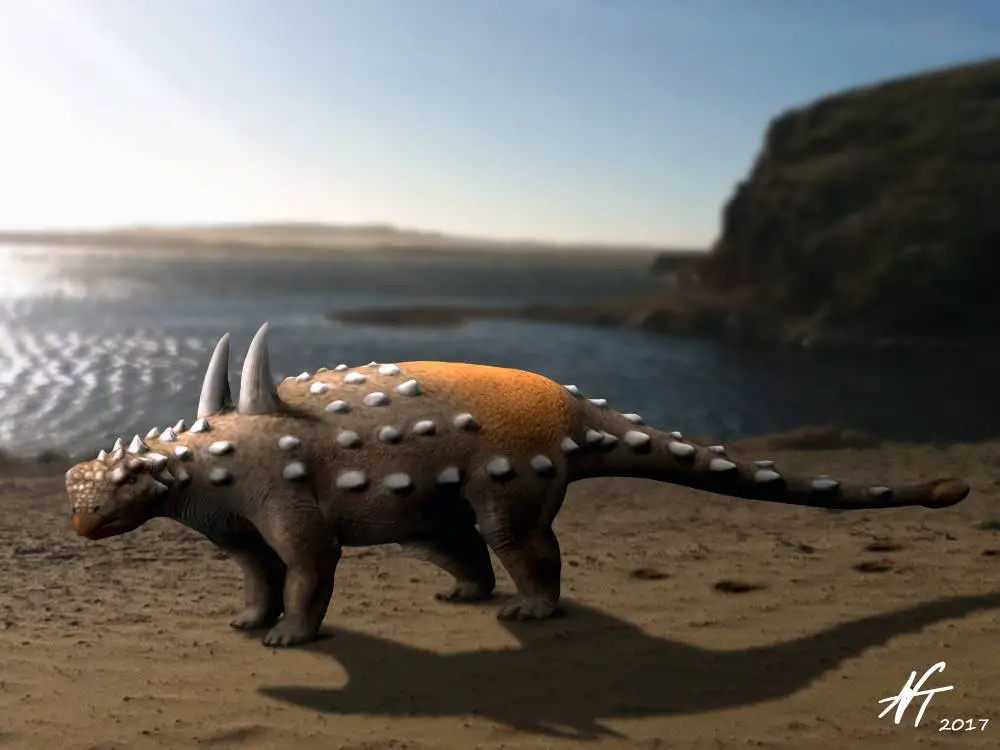
Aletopelta coombsi
Aletopelta coombsi, a species of ankylosaurid dinosaur discovered in the Point Loma Formation near Carlsbad in Southern California. Aletopelta coombsi was four to five meters long and one to two meters tall. The dinosaur's tail and hips are covered with bony plates called osteoderms, which may have served as defense against predators. The appearance of his skull is unknown. The dinosaur's name honors vertebrate paleontologist Walter Preston Coombs, Jr..
Image source: Nobu Tamura (http://spinops.blogspot.ca), CC BY-SA 4.0, via Wikimedia Commons
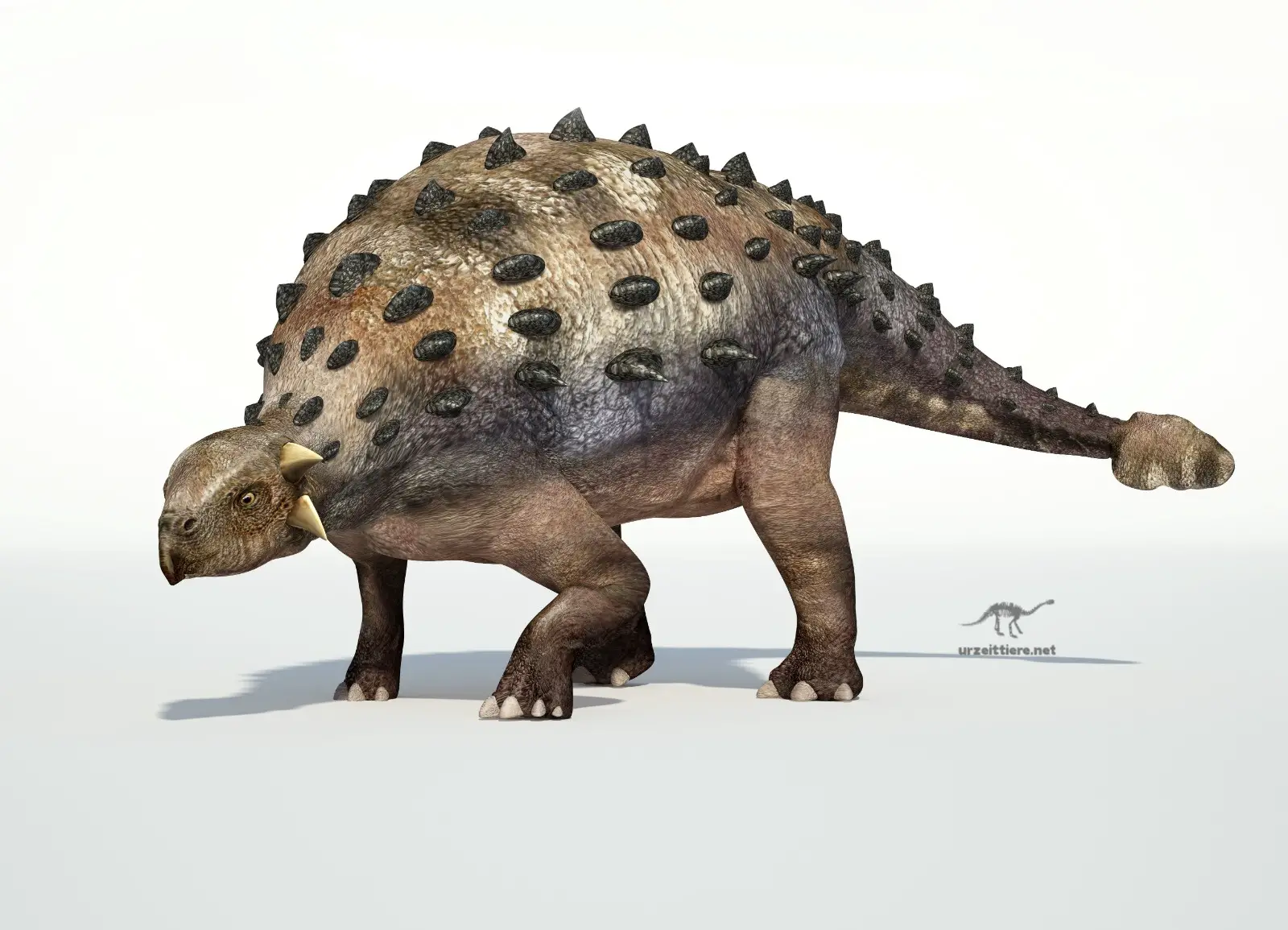
Ankylosaurus magniventris
Ankylosaurus was a genus of armored dinosaurs. It had a large, heavily armored body, a powerful tail, and a prominent club at the end of the tail. It was a herbivore that mainly ate ferns and other plants. A fully grown Ankylosaurus was about 8 to 9 meters long and weighed 3.5 tons. Ankylosaurus was one of the last dinosaur genera to appear before the Great Extinction Event (K-T Event) that wiped out all non-avian dinosaurs. It lived alongside other dinosaurs such as Tyrannosaurus and Triceratops. Ankylosaurus belonged to the family Ankylosauridae, a group of four-legged, armored dinosaurs with massive bony plates (osteoderms).
Its bony tail club was one of the largest known today. Strong tendons were connected to the tail vertebrae and ensured the mobility and power transmission of this club, which could even shatter bones. It was probably used for defense.
He lived 69.9 to 66 million years ago.
It was about 8 to 9 meters long
It was covered in armor plates, or osteoderms, with bony half-rings covering the neck.
Bones in the skull and other parts of the body were fused, increasing their strength.