
Citipati
Citipati osmolskae is a Late Cretaceous oviraptorosaur known for its parrot-like beak and distinctive crest.
By discovering well-preserved nests containing eggs and embryos, he provides valuable insights into the behavior and reproduction of dinosaurs. The new data reveals exciting details about the breeding behavior and family life of dinosaurs.
In addition, the name is Citipati associated with Tibetan Buddhist mythology.
| length | 2.9 meters |
| Weight | 80kg |
| locomotion | Two-legged |
| Food | Carnivores |
Detailed description of Citipati osmolskae
Recent paleontological discoveries have drawn attention to Citipati, an oviraptorid dinosaur from the Late Cretaceous. This dinosaur lived in the Gobi Desert region during the Late Campanian.
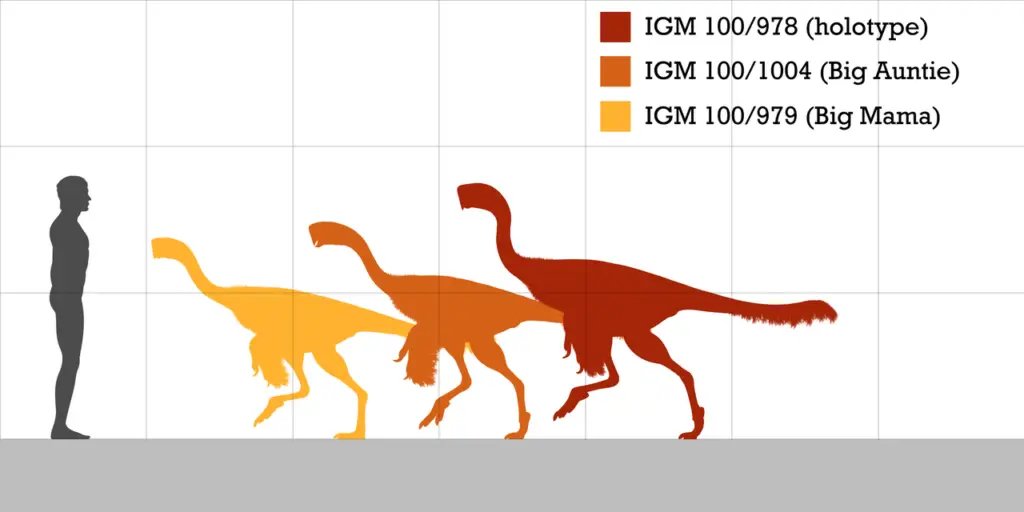
Citipati was medium-sized, between 2.5 and 2.9 meters long and weighed between 75 and 110 kilograms. Its skull was short and heavily pneumatized, with a prominent bony ridge consisting of the premaxilla and nasal bones.
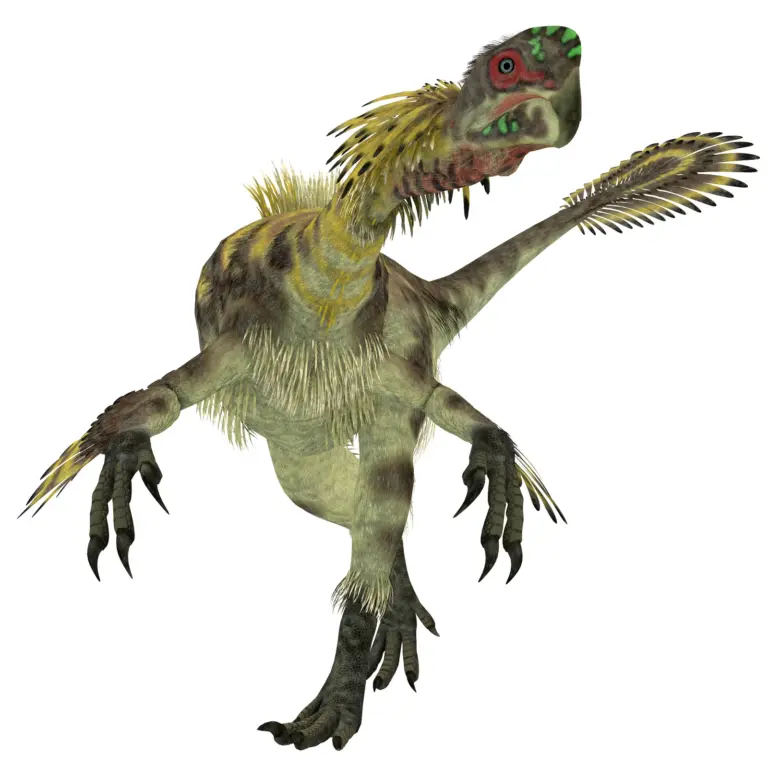
Unlike many other dinosaurs, Citipati had toothless upper and lower jaws that formed a beak similar to that of modern parrots. Its tail ended in a pygostyle, a fusion of the last caudal vertebrae that bore large tail feathers.
The fossils of this omnivorous dinosaur were found in the Djadochta Formation, an area that in Citipati's time had a less arid climate than today's Gobi Desert.
The holotype material, cataloged as IGM 100/978, includes an incomplete skeleton with a well-preserved skull, providing important insights into the anatomy and lifestyle of this oviraptorid.
Discoveries and Fossils
Since the 1990s, paleontologists have discovered significant Citipati fossils in the Djadochta Formation in Mongolia. These finds have provided important insights into the anatomy and behavior of this Oviraptor dinosaur. A well-preserved skull, identified as holotype IGM 100/978, was crucial in defining Citipati's distinctive features.
Of note, a partial skeleton known as “Big Mama” (IGM 100/979) was found in a brooding position over a nest. This specimen has contributed significantly to our understanding of oviraptor breeding behavior and parental care.
Another important discovery is a nest containing eggs and a fossilized embryo (IGM 100/971), which has provided information about Citipati's reproductive strategies and embryonic development.
In addition, researchers have found another breeding specimen, referred to as “Big Auntie” (IGM 100/1004), which provides clues to the species' nesting habits.
Overall, these fossils indicate that Citipati osmolskae exhibited advanced parental care, similar to modern birds. The fact that several dinosaurs have been found on their nests shows us that this species probably practiced protective brood care. This improves our understanding of dinosaur reproductive biology and the evolutionary connections between non-avian dinosaurs and birds.
Nests, eggs and embryos
These dinosaurs built round, mound-shaped nests with eggs arranged in concentric circles, containing up to 22 eggs in three layers. Parents could sit in a central area and exhibit breeding behavior similar to that of modern birds.
Citipati eggs that go to Ootaxon Elongatoolithidae belong, were elongated ovals with a length of about 18 cm and therefore the largest known eggs of the oviraptorids. Recent studies suggest that these eggs were probably blue, resembling features of birds.
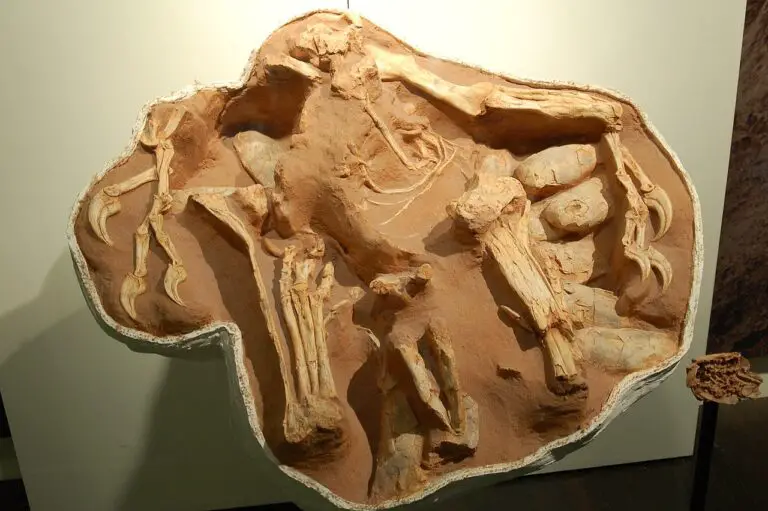
In 1993, the identification of a Citipati embryo in an egg confirmed that these nests belonged to Oviraptors rather than Protoceratops. Several copies, including the well-known one “Big Mama”, were found in positions suggestive of brooding, with arms extended over the eggs.
The long feathers on the arms and tail of the adults probably served to protect the eggs and young from environmental influences. Although many individual Oviraptor nests have been discovered in the Gobi Desert, no evidence of colonies has been found at Citipati, showing us how these animals raised their young.
Paleobiology by Citipati
This oviraptorid dinosaur was probably an omnivore, able to utilize various food sources in its environment.
The discovery of well-preserved nests and specimens in breeding positions has provided significant insights into Citipati's reproductive behavior and suggested that it probably engaged in bird-like brood care. This finding helped correct the outdated view that oviraptorids were primarily egg thieves.
A particularly important discovery is a Citipati skeleton found in a brooding position over a nest of eggs. This evidence suggests that Citipati was probably protecting its own eggs rather than stealing them from other dinosaurs' nests, as was once suspected.
Furthermore, Citipati's close relationship with Anzu wyliei, a species on display at the Carnegie Museum of Natural History, highlights the diversity and complexity within this group of dinosaurs.
Why was Citipati called the “Lord of the Pyre”?
The name “Citipati” for this oviraptorid dinosaur is derived from a combination of paleontological discovery and cultural mythology. It means “Funeral Pyre Lord” in Sanskrit and is based on Tibetan Buddhist folklore, in which Citipati is depicted as a pair of dancing skeletons surrounded by flames. The name combines “citi” (pyre) and “pati” (lord), indicating a connection with the themes of death and rebirth.
The decision to name the dinosaur Citipati was influenced by several factors. The fossils were discovered in Mongolia's Gobi Desert, an area with hot and dry conditions reminiscent of a funeral pyre.
In addition, the well-preserved skeletons, often found along with nests, reminded researchers of the skeletal figures in Buddhist mythology. In this tradition, citipati are seen as protectors of cemeteries, consistent with the nature of petrified remains.
This name combines the scientific significance of the discovery with the cultural and mythological context of the region, giving this oviraptorid dinosaur a distinctive identity.
Recent research suggests that Oviraptorosauria -Eggs were blue!
Recent research has shown that Oviraptor eggs, including those of the species Heyuannia huangi, probably had a bluish-green color.
A 2017 in Peer J published study analyzed fossilized eggshells and found traces of two pigments, Biliverdin and Protoporphyrin, which produce blue and green colors in modern bird eggs. The preservation of these pigments in fossilized eggshells is rare and provides new insights into the appearance of dinosaur eggs.
Although many fossil eggs appear dark due to mineralization, Heyuannia's eggs retained a striking blue coloration. The researchers used chemical analysis and comparisons with modern bird eggs to reconstruct the eggs' color.
The new data supports the hypothesis that dinosaur eggs were pigmented and performed adaptive functions such as camouflage or signaling. The discovery of bluish-green oviraptor eggs provides important information about the reproductive biology of these ancient animals.
Systematics
| Dinosauria |
| Saurischia |
| Eusaurischia |
| Theropoda |
| Neotheropoda |
| Averostra |
| Tetanurae |
| Orionides |
| Avetheropoda |
| Coelurosauria |
| Tyrannoraptora |
| Maniraptoriformes |
| Maniraptora |
| Pennaraptora |
| Oviraptorosauria |
| Caenagnathoidea |
| Oviraptoridae |
Occurrence in time
| chalk |
| Upper Cretaceous |
| late Campanian |
Happen
| Area | Asia |
| country | Mongolia |
| region | Ömnö Gobi |
| formation | Djadochta Formation |
Image sources:
[[File:Citipati IGM 100 979.jpg|Citipati IGM 100 979]]
Size comparison: [[File:Citipati size.png|Citipati size]]