Garudimimus
Garudimimus brevipes – “Imitator of Garuda”
A Garuda is a large bird-like mythical creature from Hindu and Buddhist mythology.
brevipes means something like “short foot”.
As far as paleontologists know, only one fossil of Garudimimus brevipes has been discovered so far. Although it was suspected that some other fossils belonged to this dinosaur, this was not confirmed. Despite the limited number of bones available to us, we have a surprising amount of information about Garudimimus brevipes. This includes both his appearance and a good idea about the life he led.
| Profile | Garudimimus |
|---|---|
| epoch | Upper Cretaceous (Coniacian to Santonian) 89.7 to 83.6 million years ago |
| Order | Lizard-pelvis dinosaur (Saurischia) |
| Subordination | Theropoda |
| Family | Maniraptoriformes |
| group | Coelurosauria |
| genus | Garudimimus |
| species | Garudimimus brevipes |
| Height | 2 meters |
| length | 3.5 – 4 meters |
| Weight | 100 kg |
| Locations | Mongolia |
Description
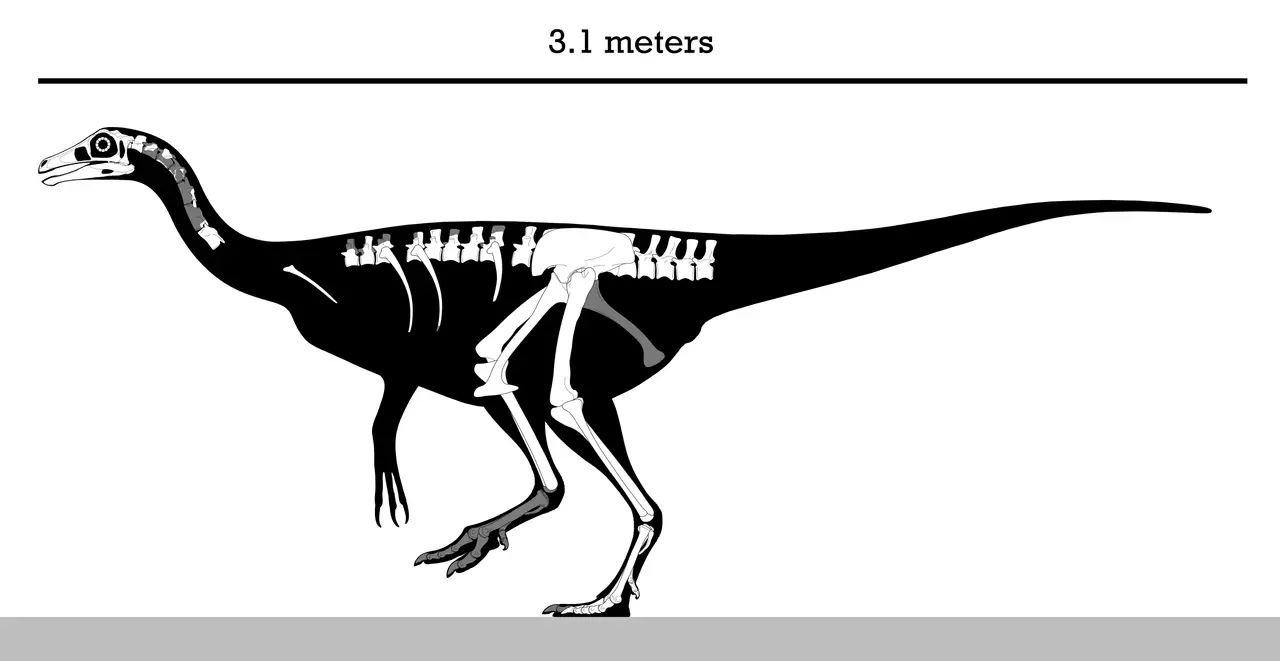
Due to some features found on the bones of the discovered Garudimimus brevipes, most paleontologists believe that we only have the bones of a juvenile dinosaur, i.e. that it had not yet reached its full size. So keep in mind that the information contained here may be slightly smaller than the Garudimimus actually was.
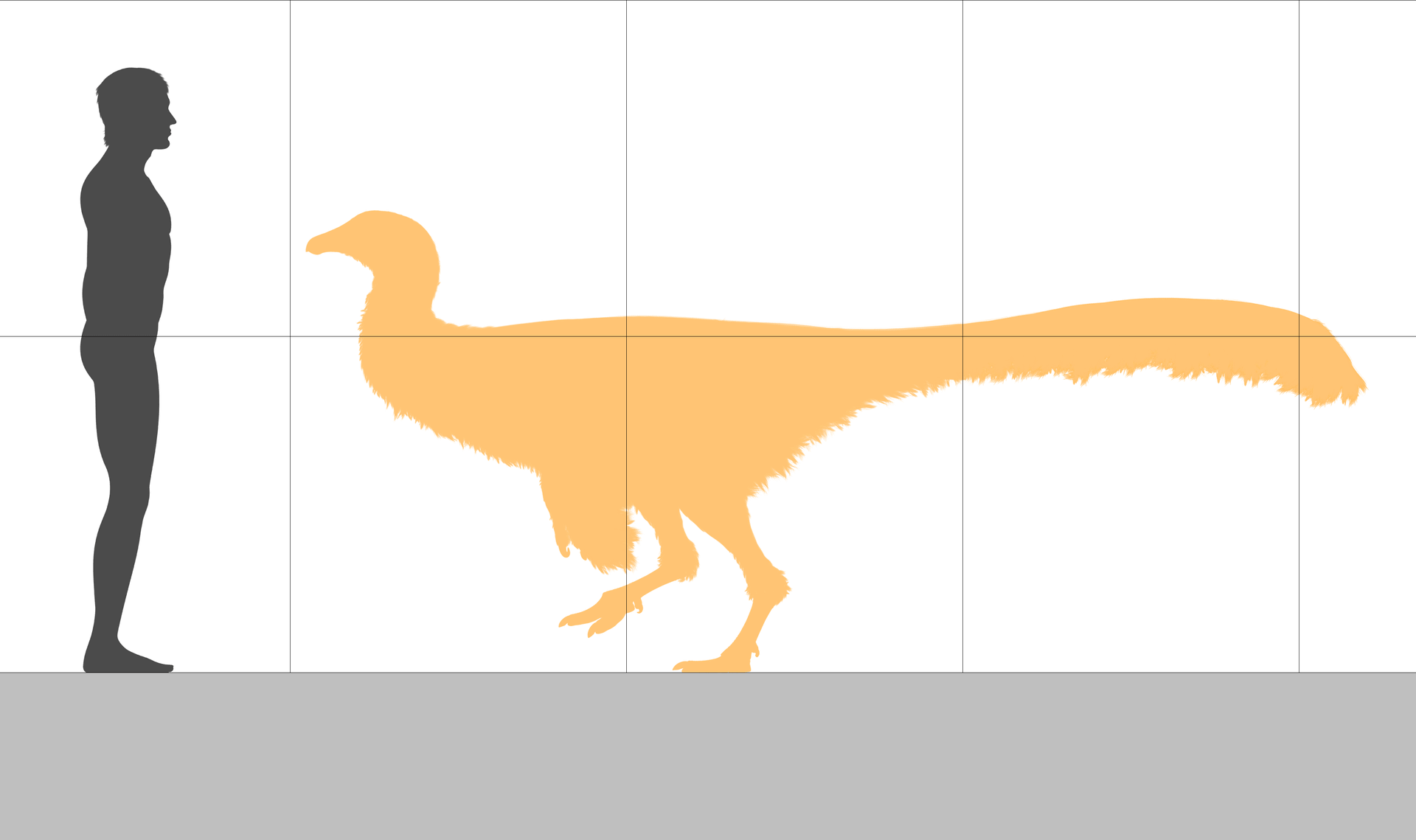
The dinosaur is believed to have been around 3.5 meters long. He weighed about 98 kg. Some paleontologists have speculated that the dinosaur grew up to 4.2 meters long, but this is pure speculation. The skull was quite small compared to the rest of the body.
If the discovered version of the dinosaur had stood, it would have been about shoulder height of an average human.
Garudimumus belongs to a genus of dinosaurs known as ornithomimosaurs, which are theropods.
info
Ornithomimosaurs (“bird-mimicking lizards”) are dinosaurs similar to ratites. In the English-speaking world they are called ostrich dinosaurs (“ostrich dinosaurs”).
Like all theropods, their locomotion was bipedal; they only walked on their hind legs. What sets the ornithomimosaurs apart from other dinosaurs is that they all looked very much like an ostrich. One of the best ways to imagine the Garudimimus brevipes is as a remarkably large ostrich.
Special features
In 2019, scientists Graham M. Hughes and John A. Finarelli analyzed the olfactory bulb ratio of modern birds and some dinosaur species.
They found that Garudimimus brevipes had a rather poor sense of smell.
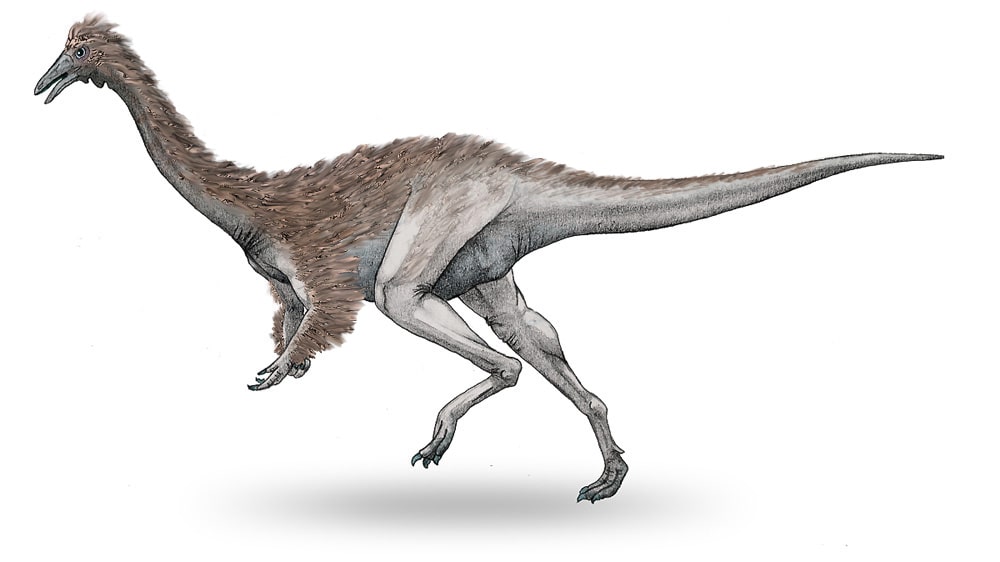
Due to the fact that feather prints were detected in Ornithomimus, it is assumed that Garudimimus developed shaggy feathering.
Ornithomimus wasn't really a dinosaur that could move quickly. The legs were relatively short, and the ankles were not developed for fast locomotion. The pelvis had shorter iliums than those of most other dinosaurs at the time. Its leg muscles were not as strongly developed as those of fast-running ornithomimids.
It has a few other features that set it apart from other dinosaurs in the same group. This includes four toes as opposed to three. They had a more rounded snout and their eyes were larger, perhaps to compensate for their poorer sense of smell.
Nutrition
There has been much debate about what Garudimimus brevipes actually ate.
Some paleontologists believe that Garudimimus was omnivorous, meaning it ate both meat and plant foods. However, it seems that the main consensus at the moment is that the dinosaur was a pure herbivore. Its jaws were toothless and the front parts of the upper and lower jaws were covered by a beak. This beak was so developed that it was well suited to plucking vegetation.
What we do know is that the dinosaur was cathemeral. This means that he was active both during the day and at night.
He probably slept for a short time, went out and ate, and then returned to his roost to sleep again for a short time.
info
Cathemeral species are neither diurnal nor nocturnal, nor do they prefer twilight hours.
Vicinity
Garudimimus brevipes was discovered in Mongolia in the Bayan Shireh Formation. He lived during the Late Cretaceous Period, 89 to 99 million years ago.
While the area in which they lived probably did not receive large amounts of rainfall at certain times of the year, there were lakes and rivers that flowed through the area. This helped ensure that the Garudimimus had plenty of vegetation to eat.
The dinosaur would have lived among many turtles and Therizionosauria, both of which are herbivores. These also suggest that there was a large amount of vegetation growing in the area.
Image sources: Garudimimus_Restoration: By PaleoNeolitic – Own work, CC BY 4.0, https://commons.wikimedia.org/w/index.php?curid=93777894
Size comparison: By PaleoNeolitic – Own work, CC0, https://commons.wikimedia.org/w/index.php?curid=93666674
Garudimimus skeleton reconstruction: PaleoNeolitic, CC BY 4.0 https://creativecommons.org/licenses/by/4.0, via Wikimedia Commons
Garudimimus: CC BY-SA 3.0, https://commons.wikimedia.org/w/index.php?curid=1817567