Rugops
Introduction
When we delve into the fascinating world of dinosaurs, we meet extraordinary and often enigmatic Creatures that enrich our understanding of the prehistoric Earth. One of these remarkable dinosaurs is Rugops primus.
This theropod, whose name means something like “first wrinkled face,” roamed what is now the Sahara around 95 million years ago. At that time, this region was characterized by wide rivers and fertile plains. The discovery of *Rugops primus* has significantly expanded our knowledge of African dinosaurs and revealed important connections between southern landmasses such as Africa, South America and India.
The history of *Rugops primus* began with the paleontologist's research Paul Sereno in the 1990s and early 2000s in Niger. These expeditions not only brought to light the skull of *Rugops primus*, but also raised many new questions about the African environment during the Cretaceous period.
Below we will discuss the classification, discovery and significant insights around *Rugops primus* investigate.
The world of dinosaurs: Rugops primus
Body structure and anatomy
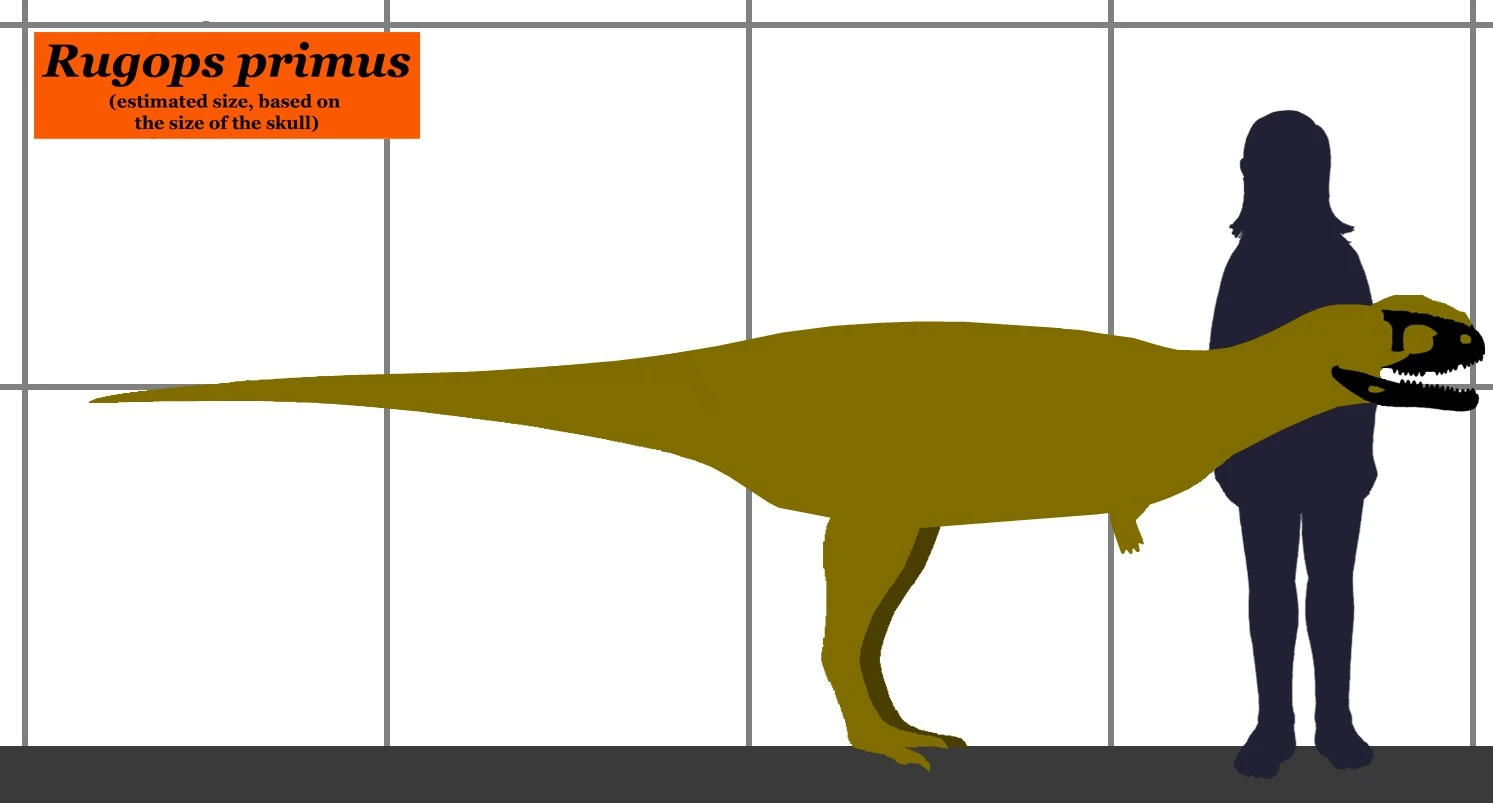
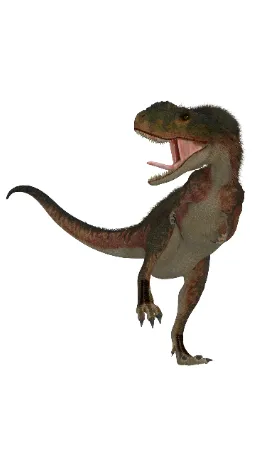
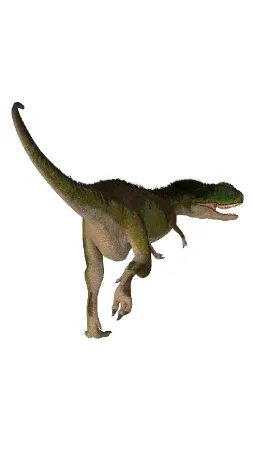
Rugops primus was a medium-sized theropod dinosaur known by some notable features his body structure is characterized. With an estimated length of 4.4 to 5.3 meters and weighing around 410 kilograms, it wasn't the largest among the theropods, but it was certainly one formidable hunter.
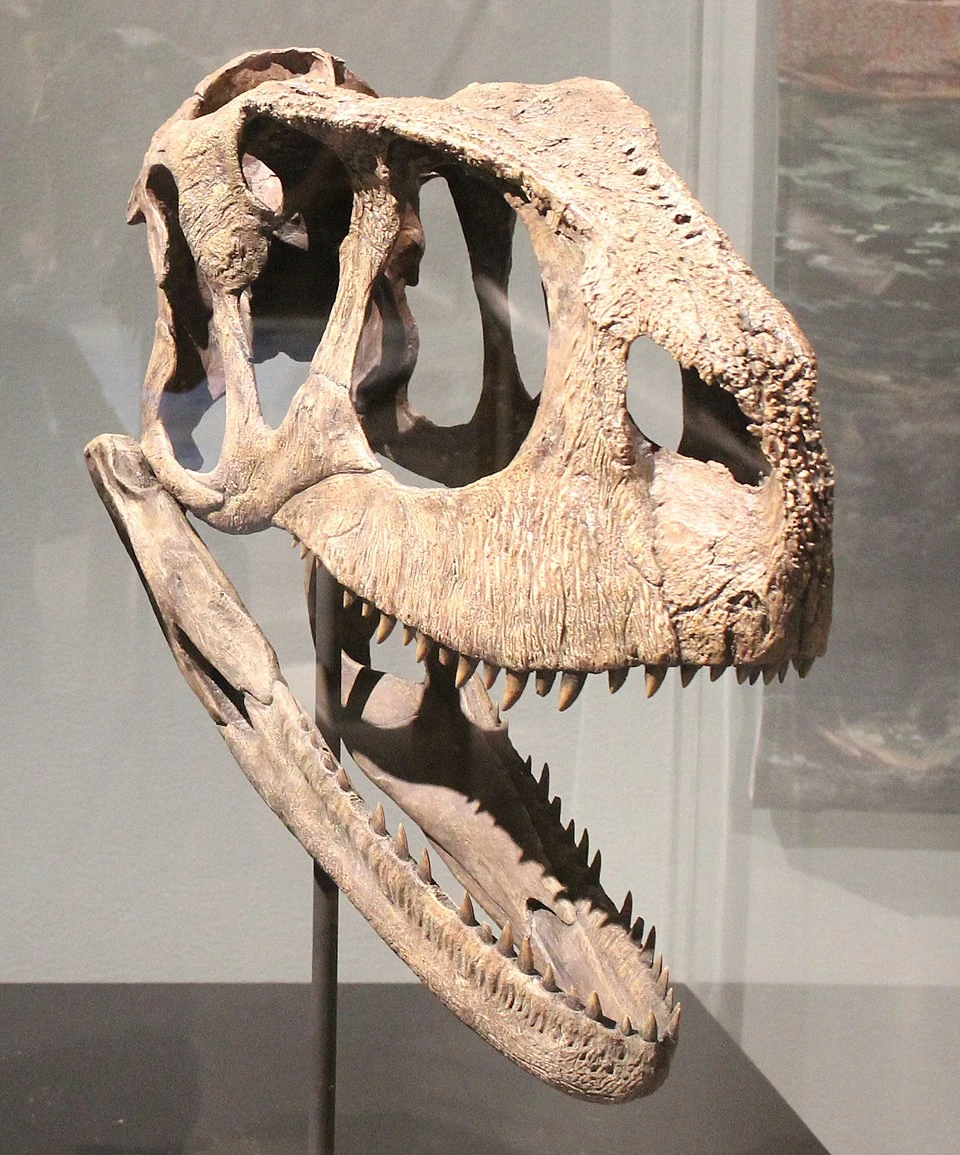
A prominent feature of *Rugops* was its skull, which was decorated with a number of Pits and grooves was covered. A layer of scales or armor-like skin could be the cause of these structures. The skull itself was long and low, with sharp, conical teeth - a clear adaptation to a carnivorous diet.
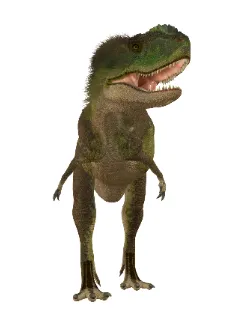
The front limbs of Rugops were relatively short compared to the rear ones, suggesting that it moved primarily on two legs. Its arms were typically three-fingered and short, a feature found in many theropods.
Also interesting is the body, which was covered with a shell made of scales or possibly bone plates. This Armor could have served as protection from enemies or as an adaptation to its environment.
Discovery story
The story behind the discovery of Rugops primus leads to the research of renowned paleontologist Paul Sereno and his team. In 2004, Sereno, Jeffery Wilson and Jack Conrad described Rugops primus from a partially preserved skull discovered in the Echkar Formation in Niger.
This formation, which dates back to the late Cretaceous Age has made a significant contribution to expanding our knowledge of the dinosaur world in Africa. The discovery of Rugops was not only a scientific sensation, but also raised questions about the connection between the southern landmasses, particularly Africa and South America.
The discovery of the dinosaur Rugops supports the hypothesis of a possible Land connection between these continents, which may have been crucial for the migration of dinosaur species.
Habitat and ecology
Rugops primus roamed an environment that was heavily influenced by rivers and coastal areas - a fertile and humid region, which once stood where the Sahara Desert now lies. At the time of this theropod, this region was much more lush and richer in resources, than you can imagine today.
The landscape was criss-crossed by wide rivers and plains that were home to an abundance of plants and animals and provided an ideal habitat. As a carnivore, Rugops probably played an essential role as a predator, feeding on small dinosaurs, other terrestrial vertebrates and possibly also on Carrion fed.
His position in the food chain made him one important figure in ecological balance of his time.
Systematics
Rugops primus belongs to the family Abelisauridae, one theropods Dinosaur group that through their short and robust skull are characterized. This family includes some of the best-known predatory dinosaurs of the Late Cretaceous, such as the famous Carnotaurus and the Majungasaurus.
Within the Abelisauridae becomes Rugops primus as one basal representative viewed. That means he is one of the original and former members of this family. This classification is based on the morphological characteristics of his skull and the remaining skeleton that separates him from the further developed Distinguish abelisaurids.
The systematic classification of Rugops primus within the Theropoda is divided as follows:
- Domain: Eukaryota
- Kingdom: Animalia
- Phylum: Chordata
- Clade: Dinosauria
- Clade: Saurischia
- Clade: Theropoda
- Family: †Abelisauridae
- Gender: †Rugops
- Species: †R. primus
This Classification illustrates the narrowness relationship from Rugops with others theropods Dinosaurs and provides exciting insights into evolutionary Story this fascinating group of animals.
Rugops in research
What Rugops reveals about prehistoric life
The discovery and investigation of the Rugops primus have valuable insights delivered into prehistoric life during the Late Cretaceous. One of the most important aspects is that Paleobiogeography, which is due to the discovery of Rugops and other African dinosaurs like Spinostropheus was revealed. These fossils indicate connections between the southern landmasses at that time, particularly between Africa and South America.
The similarities between the abelisaurids found in Africa and South America suggest that it occurred during the early Late Cretaceous about 95 million years there could have been a land connection between these continents.
Furthermore offers Rugops Insights into the ecology and the Late Cretaceous habitat in Africa. The fact that he lived in a region characterized by rivers and coastal areas shows that these areas were much wetter and more lush than today's Sahara. This knowledge helps researchers climate and to better understand and reconstruct the environmental conditions of the time.
Latest discoveries and theories
In recent years, further research and analysis by Rugops primus new theories and insights produced. An interesting aspect is the interpretation of the striking features on his skull, particularly the Series of seven holes in the snout region.
Paul Sereno and his team suspect that these holes could have been attachment points for some kind of headdress or horns new questions about social and sexual selection in dinosaurs.
In addition, research into... Rugops and other abelisaurids for a reassessment of the Diet habits this dinosaur led. Although it is generally believed that Rugops was a carnivore, the small teeth and short arms suggest that it may have fed more on carrion or small prey. These theories expand our understanding of the Food chains in Late Cretaceous ecosystems.
conclusion
Rugops primus offers a fascinating insight into the diversity and complexity the dinosaur world, particularly in Africa during the Late Cretaceous. Distinguished as a member of the family Abelisauridae Rugops through his unique scaly head surface and armor-covered body.
The discovery in the Echkar Formation in Niger and the Similarities with South American abelisaurids point to one historical Land connection between these continents.
These findings not only expand our understanding of the Paleobiogeography, but also the ecology and the habitat of dinosaurs in Africa. Rugops primus reminds us how much there is still to discover and learn about the prehistoric world. It is an invitation to continue research and to unravel the secrets of the past deeper Understanding our Earth and its fascinating story to win.
Rugops
| scientific name | Rugops primus |
| Estimated size | Length: 4.4 meters Height: Up to 3 meters? Weight: 410 kilograms? |
| geological era | Upper Cretaceous |
| Locations | Echkar |
| Order | Saurischia |
| Subordination | Theropoda |
Physical characteristics
| anatomy | Medium-sized, bipedal carnivore |
| Special features | Row of seven impressions/holes on nasal bone, no horns, armored skin |
| locomotion | Two-legged |
| Skin texture | scaly, armored skin riddled with blood vessels, especially on the head |
| Coloring | Unknown; Possibly conspicuous coloring on the snout due to blood vessels is speculated |
discovery
| Explorer | Sereno, Wilson & Conrad |
| Discovery date | 2004 |
| Meaning of the name | “First Wrinkled Face” – because of the folded, scaly surface of the skull |
| Significant fossil finds | Part of the skull. |
In paleontology, the ratio of brain to body size, the so-called Encephalization quotient (EQ), used as a rough guide to relative intelligence.
| Intelligence (EQ) | Not known; probably in the range of other abelisaurids, so rather low |
| Social behavior | Unknown; probably solitary, possibly scavengers |
| Predators | Not known; larger theropods of the time would be conceivable (e.g. Carcharodontosaurus) |
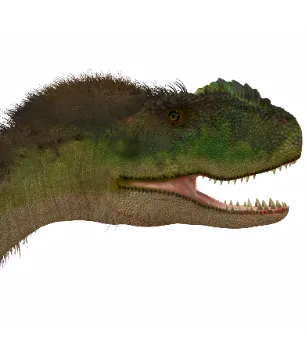
Image sources:
Skull: Ryan Somma from Occoquan, USA, CC BY 2.0, via Wikimedia Commons
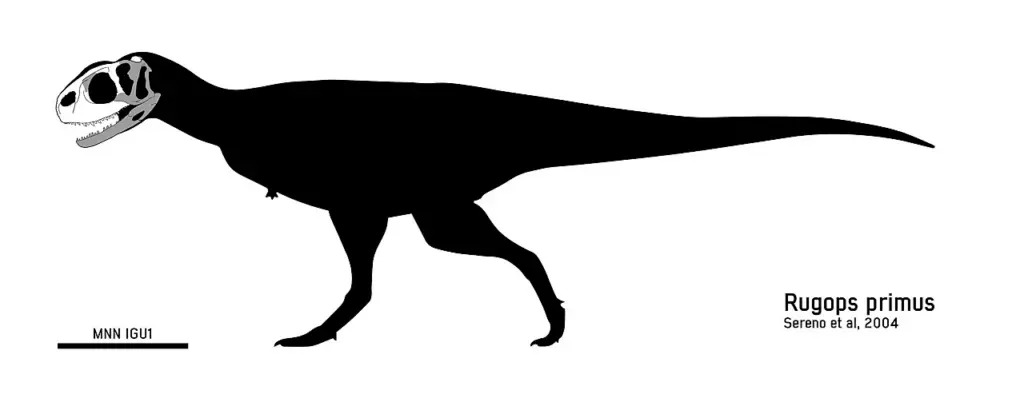
Holotype and only known specimen: MNN IGU1. A partial skull: Crizz30, CC BY-SA 4.0, via Wikimedia Commons