Turiasaurus
Turiasaurus: The giant sauropod from the Upper Jurassic
Turiasaurus riodevensis is one of the largest known dinosaurs from the Upper Jurassic. This colossal sauropod discovered in Spain has changed our understanding of the evolution and distribution of dinosaurs in Europe. In this article, we will examine key aspects of Turiasaurus, including its discovery, physical characteristics, habitat, and importance in paleontology.
Discovery and naming
The story of Turiasaurus begins in the Spanish province of Teruel, more precisely in the city of Riodeva. In 2003, paleontologists uncovered the remains of this massive creature. The genus name “Turiasaurus” is a combination of “Turia,” the ancient Roman name for the Teruel region, and “saurus,” the Greek word for lizard. The species name “riodevensis” honors the town of Riodeva where the fossils were found.
Physical characteristics
Size and weight
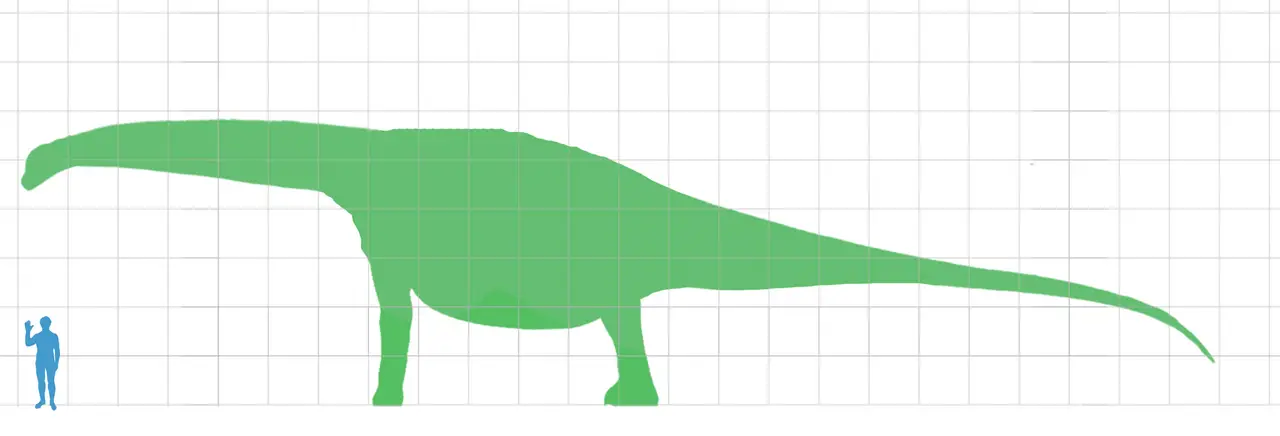
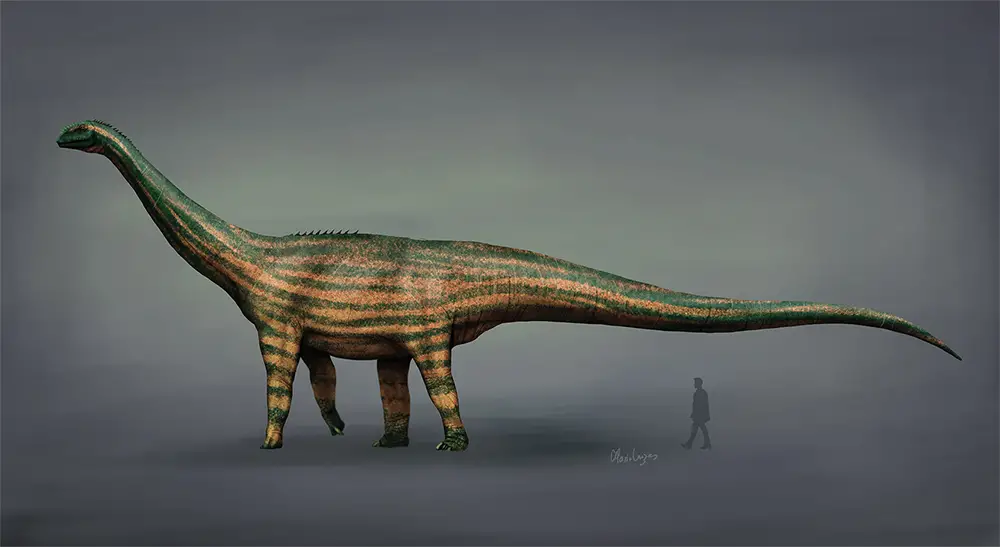
Turiasaurus riodevensis was a true giant among dinosaurs. Initial estimates put it at a length of between 30 and 39 meters. However, more recent studies suggest a range of 21 to 30 meters. His shoulder height was about 10 meters. Its weight is estimated at 30 tons, making it one of the heaviest land animals known.
Turiasaurus riodevensis is the largest dinosaur discovered so far in Europe.
Characteristic skeletal features
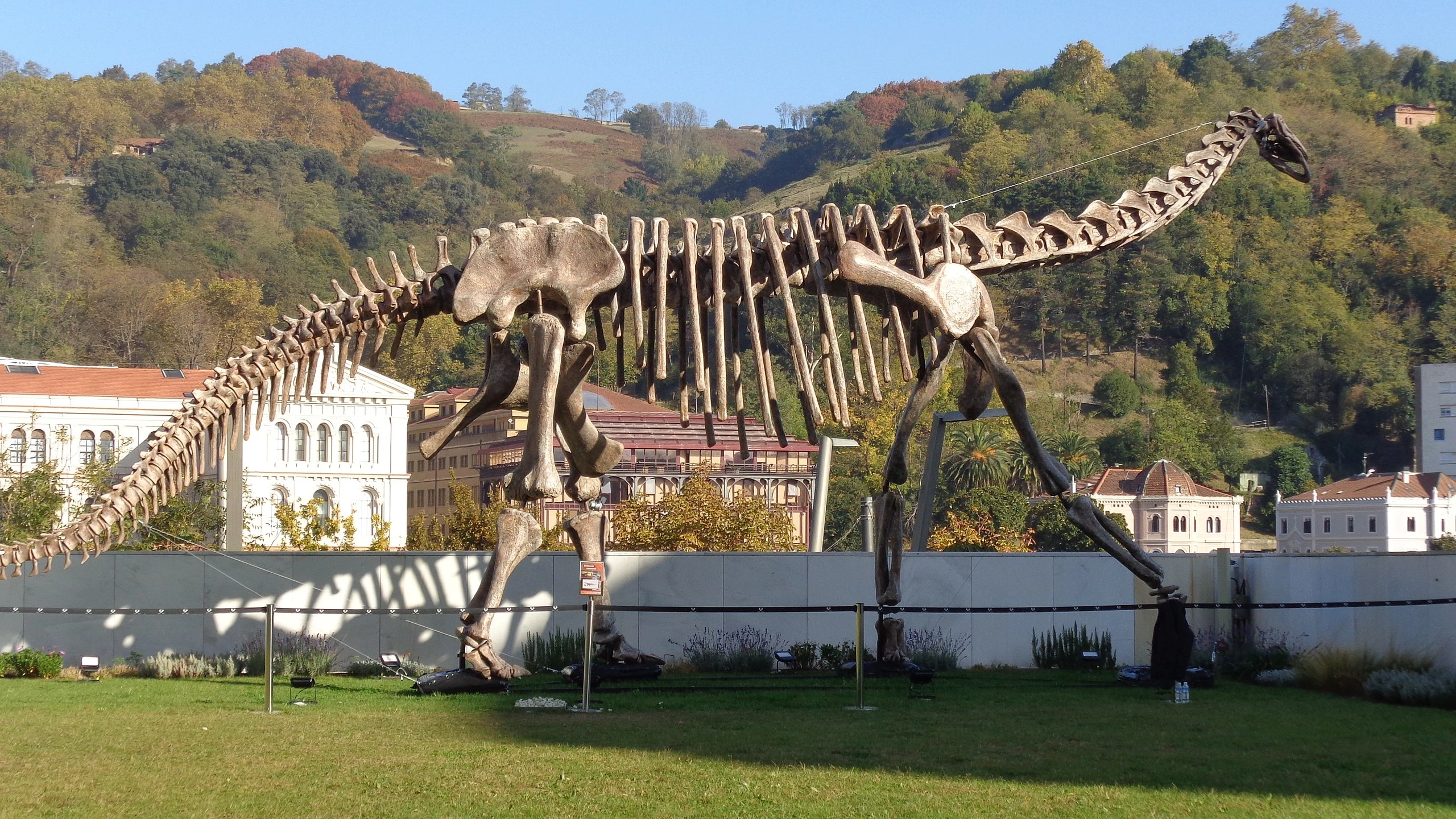
Turiasaurus possessed several unique features that distinguished it from other sauropods. At about 70 centimeters long, its skull was relatively small compared to its body size. This mismatch between head and body size is a common feature in sauropods.
The teeth of Turiasaurus are heart-shaped with wrinkled enamel. This tooth structure indicates specific adaptations to its diet and eating habits. The grooved enamel likely increased the teeth's durability and efficiency in processing plant material.
Skull and teeth
Although small compared to its body, Turiasaurus' skull has complex features. Be heterodontes Dentition includes four different tooth morphologies: anterior, middle and posterior dentaries, Premaxillary- and Maxillary teeth. The dentition consists of four premaxillary and 13 maxillary teeth.
This diversity of tooth types suggests a specialized nutritional strategy. The different tooth shapes likely allowed Turiasaurus to efficiently process different types of plant material. The heterodont dentition indicates the ability to both harvest and chop plants, adapting to the diverse flora of its environment.
Unique anatomical features
Turiasaurus possesses several anatomical features that distinguish it from other sauropods:
1. Teeth: The teeth of Turiasaurus are spoon-shaped, a characteristic it shares with other members of the Turiasauria group. This dental morphology suggests a specialized diet and feeding strategy.
2. Radius: The radius (one of the forearm bones) has a strong bevel at the distal end of its lateral (side) half, a feature that distinguishes Turiasaurus from some other sauropod groups.
3. Vertebral spines: The spinous processes of the vertebrae are deeply forked or cleft, which is a common feature in many sauropods but is particularly pronounced in Turiasaurus.
Classification and evolutionary relationships
Turiasaurus belongs to a group of sauropods called Turiasauria, which also includes other European sauropods such as Losillasaurus and Zby. This group is considered to be outside Neosauropoda, the group that includes more evolved sauropods such as diplodocoids and macronarians.
The discovery of Turiasaurus and its relatives has significant implications for our knowledge of sauropod evolution and biogeography. It is an indication that a diverse group of non-neosauropod eusauropods existed in Europe during the Late Jurassic, challenging previous ideas about the distribution and diversity of sauropods.
Habitat and environment: Where Turiasaurus roamed in the Late Jurassic
During the Late Jurassic, about 150 million years ago, the area where Turiasaurus lived was very different from modern-day Spain. The region was characterized by a warm, humid climate with lush vegetation. The landscape probably consisted of coastal plains, river systems and dense forests.
Paleontological evidence shows that Turiasaurus lived in an environment with diverse flora that included conifers, cycads, and ferns. This lush plant life provided the enormous amounts of food that such a large herbivore needed to survive.
Diet and eating habits
As a sauropod, Turiasaurus was a pure herbivore that fed primarily on organic material. Its spoon-shaped teeth were good for stripping leaves from branches, but not for chewing. The heart-shaped shape and wrinkled enamel increased the teeth's strength and efficiency in processing tough plant material. This tooth structure allowed Turiasaurus to utilize a variety of plant resources in its environment.
Like other sauropods, Turiasaurus likely swallowed its food whole, relying on gastroliths (stomach stones) and a complex digestive system to break down tough plant matter.
As a herbivore, Turiasaurus fed on leaves, stems and roots. Its enormous size and long neck allowed it to reach vegetation up to 6 meters high, making it known as a so-called "Tall tree eaterThis feeding strategy minimized competition with smaller herbivores that grazed the lower vegetation.
The immense size of Turiasaurus implies that it had enormous nutritional requirements. He spent most of his waking hours eating to maintain his massive body.
Importance for paleontology
The discovery and study of Turiasaurus have made several important contributions to paleontology:
1. Diversity of Dinosaurs in Europe: Turiasaurus shows that Europe was home to some of the largest known dinosaurs, challenging the idea that gigantic sauropods were primarily found on other continents.
2. Evolutionary insights: As a member of the Turiasauria group, Turiasaurus provides valuable information about the evolution of sauropods, especially the diversity of non-neosauropod eusauropods.
3. Biogeography: The presence of Turiasaurus and its relatives in Europe offers new perspectives on dinosaur distribution and migration patterns during the Late Jurassic.
4. Paleoecology: Studying Turiasaurus helps paleontologists better understand the Upper Jurassic ecosystems of Europe and how such giant animals fit into their environment.
Ongoing research and future discoveries
Although much has been learned about Turiasaurus since its discovery, many questions still remain unanswered. Paleontologists continue to study the available fossils and search for new specimens. Current research areas include:
1. Growth and Development: Understanding how Turiasaurus grew from hatchling to its enormous adult size.
2. Soft tissue reconstruction: Estimation of muscle mass, skin structure and other soft tissue characteristics based on skeletal findings.
3. Paleobiology: Study of aspects of Turiasaurus biology, such as: B. Metabolism, thermoregulation and life history.
4. Comparative Studies: Examining the relationship of Turiasaurus to other sauropods and what this reveals about sauropod evolution.
conclusion
Turiasaurus riodevensis is a testament to the incredible diversity and scope of dinosaur life in the Late Jurassic. This colossal sauropod not only captures the imagination through its sheer size, but also provides scientific insights into the evolution of dinosaurs, their ecology, and the prehistoric world of Europe. As research continues, Turiasaurus will undoubtedly continue to play a significant role in shaping our understanding of these fascinating creatures that once roamed the Earth.
Systematics
| Dinosauria |
| Saurischia |
| Eusaurischia |
| Sauropodomorpha |
| Plateosauria |
| Massopoda |
| Sauropodiformes |
| Anchisauria |
| Sauropoda |
| Gravisauria |
| Eusauropoda |
| Turiasauria |
Occurrence in time
| Law |
| Upper Jurassic |
| Kimmeridgium - Tithonian |
Happen
| Area | Europe |
| country | Spain |
| region | Aragon |
| formation | Villar del Arzobispo |
Image sources
Featured image: Ferrutxo, CC BY-SA 4.0, via Wikimedia Commons
Size comparison: Matthew Martyniuk, CC BY-SA 4.0, via Wikimedia Commons
Skeleton: Maria Pilar Etxebarria, Public domain, via Wikimedia Commons
Size comparison of Manza: Mario Lanzas, CC BY-SA 4.0, via Wikimedia Commons