
Tyrannotitan
| Tyrannotitan chubutensis | |
|---|---|
| length | 11.6 meters |
| Weight | 6.4 tons |
| locomotion | Two-legged |
| Food | Carnivores |
Tyrannotitan chubutensis was a large theropod dinosaur that lived in South America during the Cretaceous Period.
He belongs to the family of Carcharodontosauridae, which also includes other large carnivorous dinosaurs.
Tyrannotitan had several notable features, such as: B. specialized teeth for meat processing and one pneumatic spine, which helped reduce his body weight.
Although less well-known than Tyrannosaurus rex, Tyrannotitan played a significant role in its ecosystem as an apex predator.
His adaptations highlight his ability to be an efficient hunter in his ancient environment.
Physical characteristics
How big was the Tyrannotitan? Tyrannotitan reached a length of around 11.6 to 12.5 meters and a weight of between 4.8 and 7 tons - making it one of the largest known carcharodontosaurids.
Tyrannotitan is characterized by four main physical characteristics. Its size is remarkable: the theropod reached a length of about 12 meters (40 feet) and weighed between 4.8 and 7 tons. Despite its size, Tyrannotitan had relatively small forelimbs, distinguishing it from other large carnivorous dinosaurs. It was a bipedal creature whose body was supported by strong hind legs.
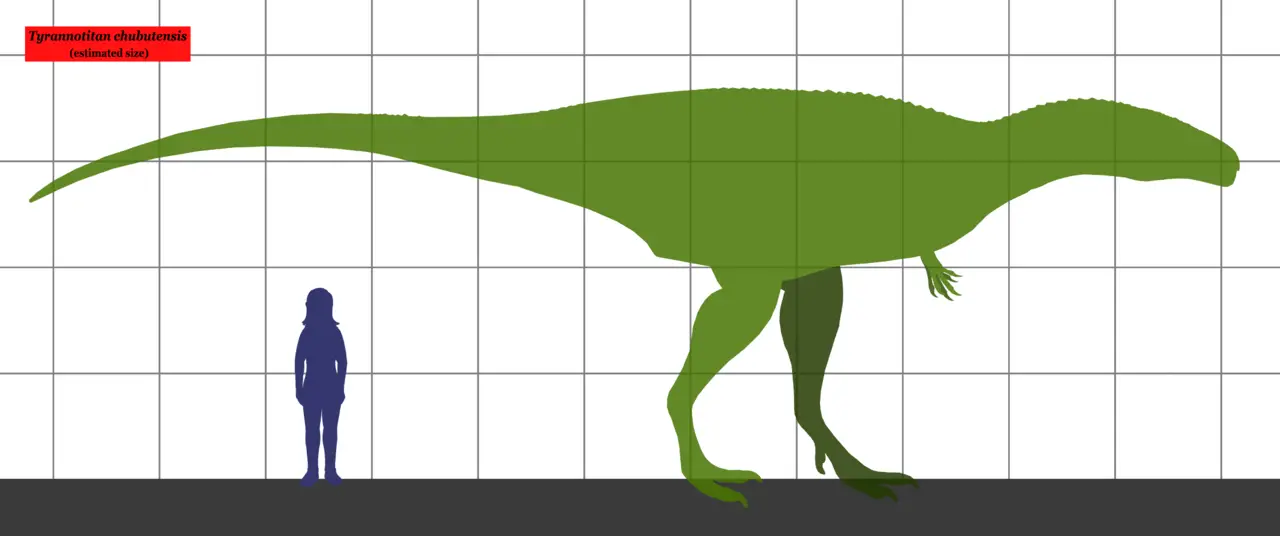
The skeletal structure of Tyrannotitan has distinct features. His spine was pneumatized, i.e. h. it contained air spaces, similar to related species such as Giganotosaurus and Mapusaurus. This adjustment likely helped reduce weight while maintaining strength.
In addition, the caudal vertebrae had high spinous processes that were about twice as high as the vertebral body. These probably supported strong tail muscles, which may have contributed to balance and movement. These features suggest that Tyrannotitan was a well-adapted apex predator in its prehistoric environment.
Pneumatics of Tyrannotitan
Tyrannotitan exhibited significant pneumatics in its skeletal structure, providing valuable information about its biology and evolution.
Like its relatives Giganotosaurus and Mapusaurus, Tyrannotitan had extensive pneumatization in its spine, characterized by air-filled cavities in many bones.
A notable feature of Tyrannotitan is the presence of a pneumatic gap in the anterior sacral area, which interrupts the otherwise continuous pneumatization of the spine. This feature is typical of juvenile animals with underdeveloped skeletal pneumatization, suggesting that the fossils examined either belonged to an immature individual or that Tyrannotitan exhibited some juvenile features in its pneumatization.
The purpose of bone pneumatization in vertebrates is not fully understood, but it is thought to contribute to weight reduction, improvement of respiratory efficiency, and thermoregulation.
In Tyrannotitan, extensive pneumatization may have been an adaptation to its size that helped reduce skeletal weight. This mix of advanced features seen in large theropods and potentially primitive or juvenile features makes Tyrannotitan an interesting subject of study for the evolution of these anatomical features.
Dental features
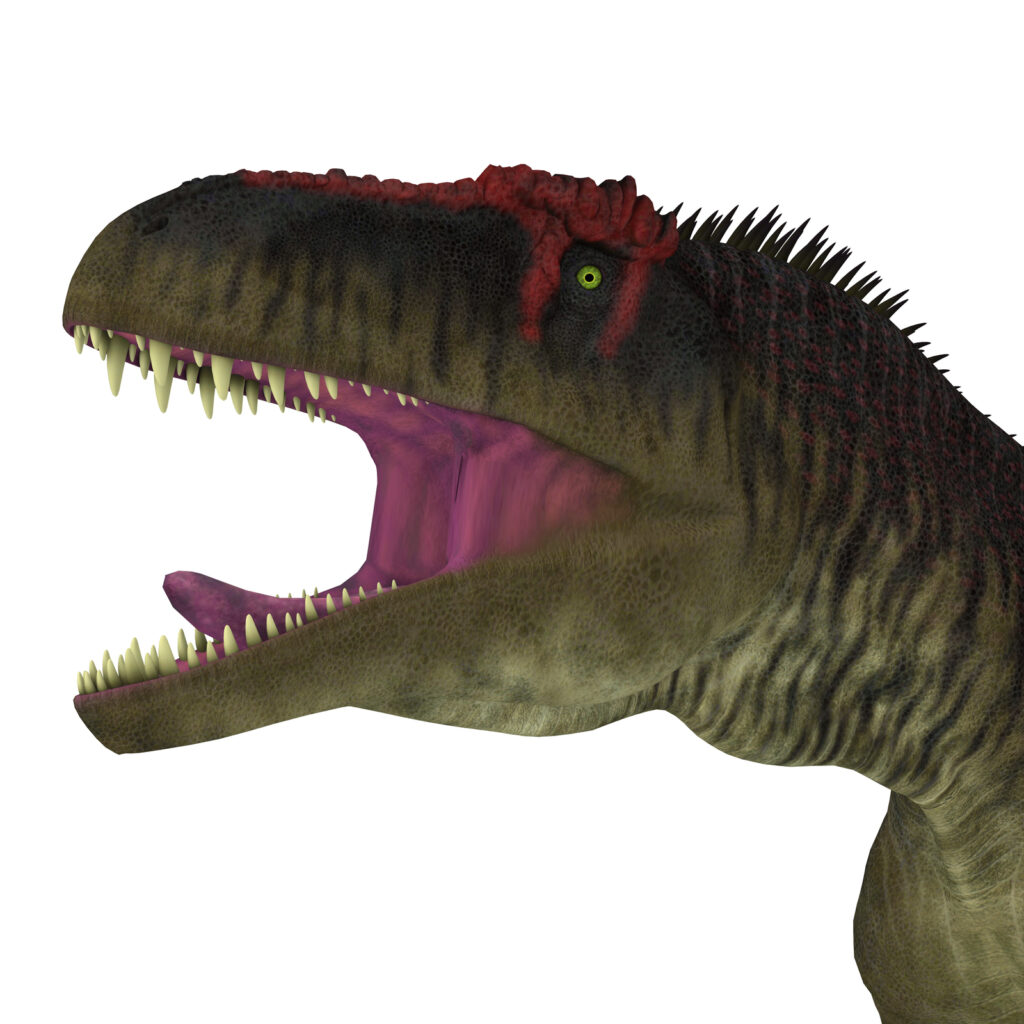
The dental characteristics of Tyrannotitan chubutensis indicate a specialized adaptation to a predator-like diet. A member of the carcharodontosaurid family, Tyrannotitan had teeth with chisel-like shapes, a common feature of its relatives.
These teeth were characterized by a chisel-like enamel surface, a typical texture within this group of theropods. The front and back edges of the teeth were heavily serrated, making them easier to cut through flesh and bone. The tooth crowns were flattened laterally, i.e. h. they were compressed from side to side, increasing their effectiveness at cutting and tearing prey.
These characteristics made Tyrannotitan an effective predator. The chisel-like shape and the laterally flattened crowns allowed for deep, precise cuts, while the serrated edges supported the sawing motion needed to process tough tissues.
The wrinkled enamel surface may have provided additional structural support or helped distribute bite forces. These characteristics highlight Tyrannotitan's role as an apex predator in its ecosystem, with teeth optimized for a meat-based diet.
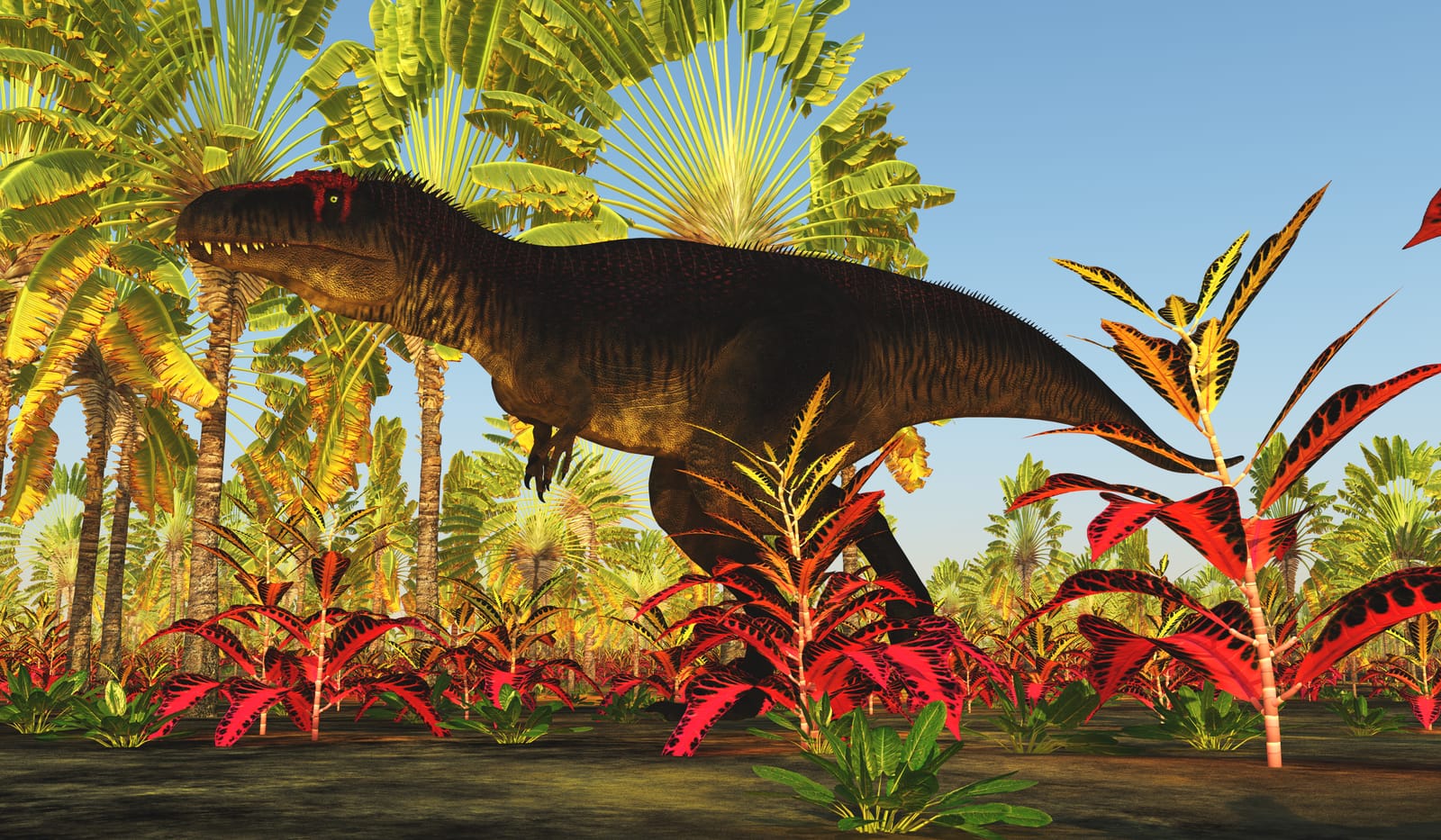
Tyrannotitan chubutensis in comparison: T. rex and Giganotosaurus
Tyrannotitan chubutensis is one of the largest known carnivorous dinosaurs and is regularly comparable in size and weight Tyrannosaurus rex and its South American relative Giganotosaurus.
| feature | Tyrannotitan chubutensis | Tyrannosaurus rex | Giganotosaurus carolinii |
|---|---|---|---|
| length | approx. 11.6-12.5 m | approx. 12-13 m | approx. 12-13 m |
| Weight | approx. 4.8–7 t | approx. 8-9 t | approx. 6-8 t |
| Family | Carcharodontosauridae | Tyrannosauridae | Carcharodontosauridae |
| Habitat | Argentina (Chubut) | North America | Argentina (Neuquen) |
| age | Lower Cretaceous (Aptian/Albian) | Upper Cretaceous (Maastrichtian) | Upper Cretaceous (Cenomanian) |
Unlike Tyrannosaurus rex, which belongs to the family Tyrannosauridae, Tyrannotitan, like Giganotosaurus, is a carcharodontosaurid - both genera are even assigned to the same tribe, the Giganotosaurini. Despite the closer relationship to Giganotosaurus, Tyrannotitan had a stronger and more massive body structure, while T. rex weighed more despite being shorter.
Habitat and behavior
During the Aptiums During the Cretaceous period, Tyrannotitan inhabited regions of what is now Argentina. This large predator lived in an environment that supported a wide variety of plants and animals, including giant sauropods like Patagotitan.
These ecosystems were characterized by interactions between predators and prey, including those involving theropoda. Fossil evidence suggests that Tyrannotitan both hunted and ate carrion.
Tyrannotitan likely employed hunting strategies that targeted the more vulnerable members of sauropod populations, such as: B. Young animals or old animals that had limited mobility or defensive ability. In addition, Tyrannotitan was capable of eating carrion and feeding on the remains of sauropods when they were available. This behavior suggests that Tyrannotitan was adaptable in its approach to obtaining food in its environment.
The discovery of tyrannotitanium in Argentine Aptian deposits provides valuable information about the paleoecology of South America in the Early Cretaceous. As an apex predator, Tyrannotitan would have significantly influenced the structure and composition of local animal communities, affecting prey populations and potentially competing with other large theropods in the region.
Discovery and classification
In 2005, paleontological excavations in Argentina's Chubut province led to a significant find. Fossils discovered at La Juanita Farm near Paso de Indios led researchers to identify a new genus and species of theropod dinosaur. Fernando E. Novas and his team described and named this new species Tyrannotitan chubutensis, which became the type species for the genus Tyrannotitan.
The discovery of Tyrannotitan has provided important insights into the diversity and evolution of large carnivorous dinosaurs in South America during the Cretaceous period.
Taxonomically, Tyrannotitan has been classified within the Giganotosaurini phylum, a group of carcharodontosaurid theropods known for their large size and adaptations to hunting. Tyrannotitan's position within this phylum is considered basal, representing one of the earliest members of this evolutionary lineage.
This classification is important for understanding the phylogenetic relationships and biogeographic distribution of large theropods in Gondwana. The discovery and analysis of Tyrannotitan chubutensis has contributed significantly to paleontologists' knowledge of the diversity and evolutionary history of South American theropods.
Tyrannotitan in video games and pop culture
Tyrannotitan appears less frequently in video games than more well-known relatives such as Giganotosaurus, but still has fans in dinosaur survival communities. In ARK: Survival Evolved Tyrannotitan is not yet a playable or wild creature - players occasionally confuse it with the game's similarly sized Giganotosaurus and Rex variants, which have little in common anatomically with the real Tyrannotitan. Also in the Jurassic Worldfilm series and the associated games, Tyrannotitan has not yet made an appearance, but is often discussed by fans as a possible "new Titan" for future spin-offs when comparisons with real carnivores of its size are sought.
Systematics
| Dinosauria |
| Saurischia |
| Eusaurischia |
| Theropoda |
| Neotheropoda |
| Averostra |
| Tetanurae |
| Orionides |
| Avetheropoda |
| Carnosauria |
| Allosauroidea |
| Allosauria |
| Carcharodontosauria |
| Carcharodontosauridae |
| Carcharodontosaurinae |
| Giganotosaurini |
Occurrence in time
| chalk |
| Lower Cretaceous |
| late Aptian/Albian |
Happen
| Area | South America |
| country | Argentina |
| region | Chubut |
| formation | Cerro Barcino |