
Citipes
Physical characteristics
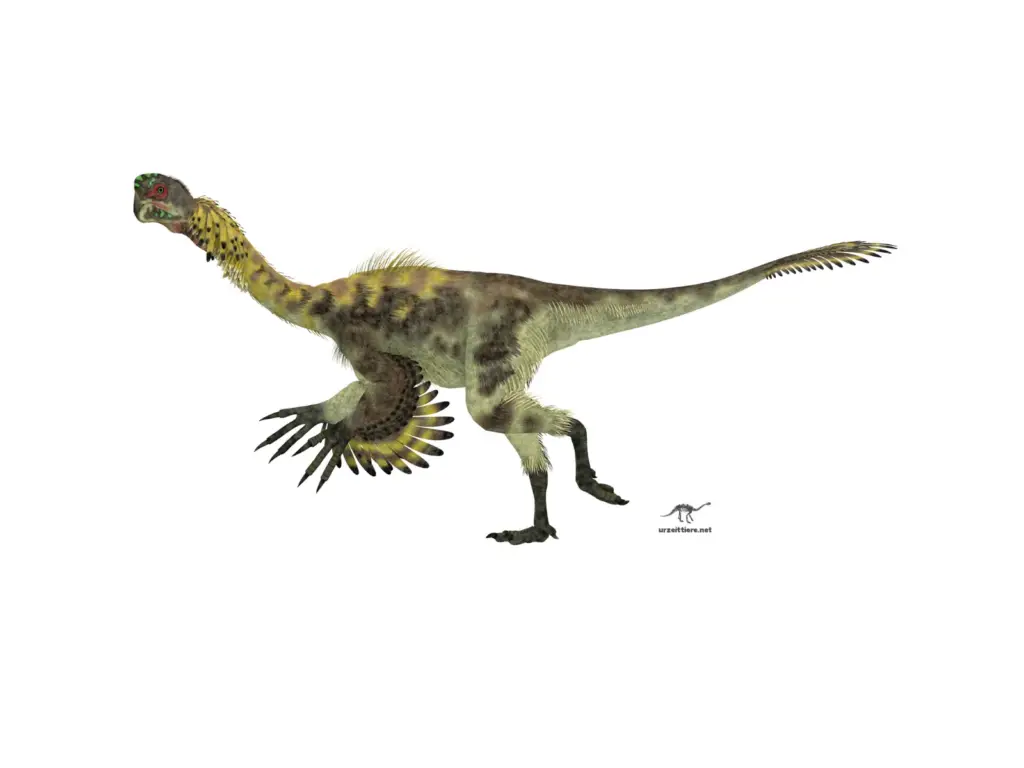
Citipes elegans was a small theropod that reached a body length of 1.1 to 2.1 meters. The dinosaur was 70 to 82 centimeters tall at the hip and weighed between 10 and 32 kilograms.
Locomotion and adaptations
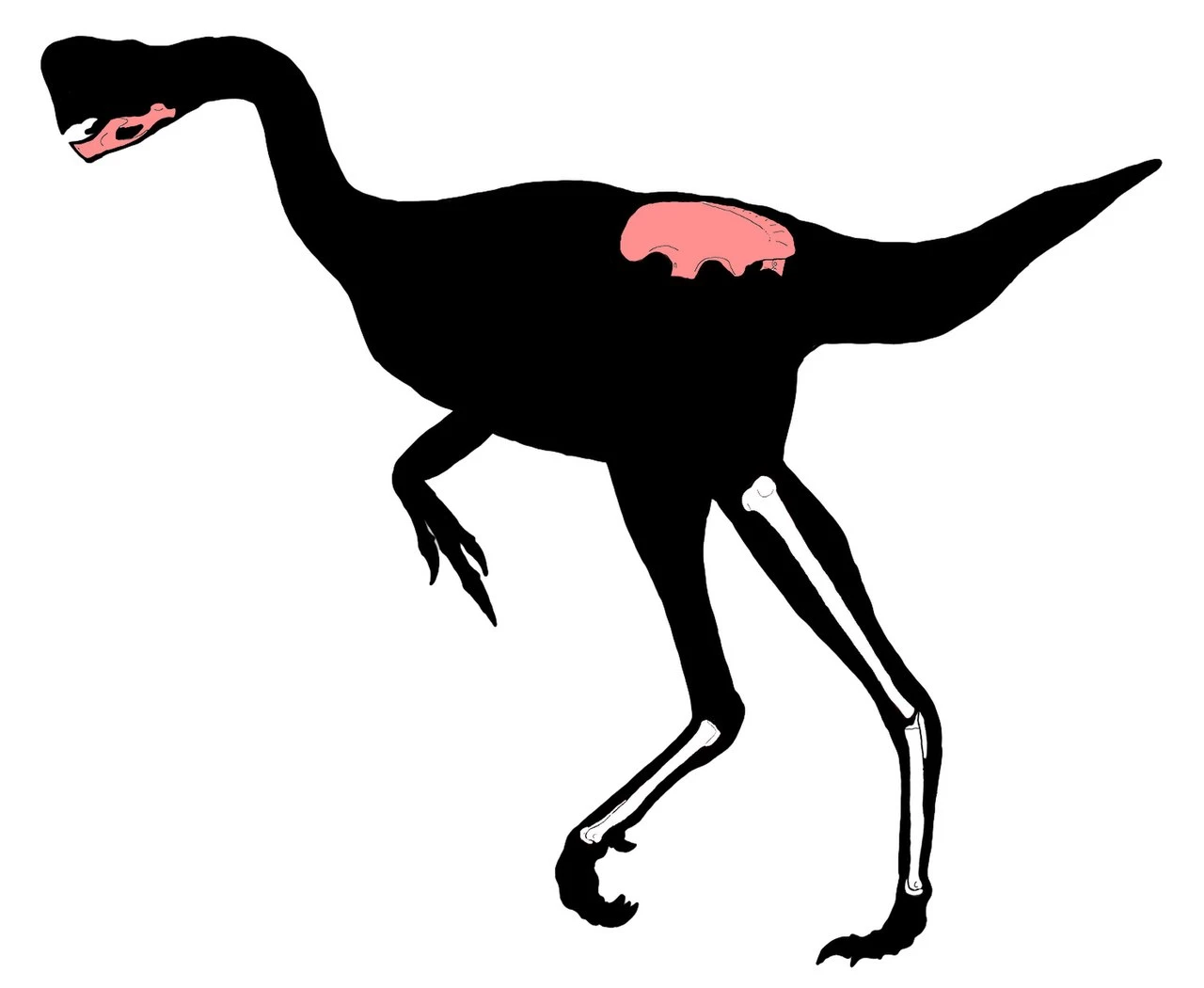
This dinosaur moved on two legs (bipedal locomotion). His feet had distinctive anatomical features that made him well suited for running. These adaptations included fused metatarsal bones (II and IV) in the foot and enlarged muscle attachment points on the iliac crest.
Nutrition
Citipes elegans fed on both plants and animals (omnivorous diet).
Classification
Citipes belongs to the following groups: Discovery and Research The first Citipes fossils were found in 1926 at Sand Creek near the Red Deer River in Alberta, Canada. The original find consisted of three metatarsals. William A. Parks described these fossils in 1933. The classification of Citipes changed several times over the decades as scientists gained new insights into its features. In 2020, Gregory Funston established Citipes as a separate genus after analyzing the structure of bone tissue and morphological characteristics.
- Order: Saurischia – Theropoda
- Superfamily: Oviraptorosauria – Caenagnathoidea
- Family: Caenagnathidae
- Subfamily: Caenagnathinae
Technical information
Original description: Funston, G. F. (2020). Caenagnathids of the Dinosaur Park Formation (Campanian) in Alberta, Canada: anatomy, osteohistology, taxonomy and evolution. Vertebrate Anatomy Morphology Palaeontology, 8, 105–208.
Citipes
| scientific name | Citipes elegans |
| Estimated size | Length: 2.2 meters Height: 70 to 82 centimeters Weight: 40 kilograms |
| geological era | Upper Cretaceous |
| Locations | Dinosaur Park |
| Order | Saurischia |
| Subordination | Theropoda |
Physical characteristics
| anatomy | Bipedal, slender oviraptorosaur; approx. 2.1 m long, weighs up to 40 kg, with a parrot-like beak |
| Special features | Arctometatarsus (tightly fused metatarsals) and specialized toothless beak |
| locomotion | Two-legged |
| Skin texture | Not recorded in fossils; as an oviraptorosaur, probably with feathers |
| Coloring | Scientifically unknown, no fossil evidence of pigmentation |
discovery
| Explorer | Funston |
| Discovery date | 2020 |
| Meaning of the name | Latin: citus = fast, pes = foot – “quick foot” or “light foot” |
| Significant fossil finds | Part of the tarsometatarsus (specialized bone in the lower leg of some dinosaurs), other fragments (several individuals). |
In paleontology, the ratio of brain to body size, the so-called Encephalization quotient (EQ), used as a rough guide to relative intelligence.
| Intelligence (EQ) | Not directly measured; as a small theropod, probably medium EQ, comparable to other oviraptorosaurs |
| Social behavior | Unknown; no fossil finds provide evidence of group or individual behavior |
| Predators | Juvenile Gorgosaurus libratus - a fossil contained remains of two young Citipes in the stomach area |
Image sources:
Post image: SpinoDragon145, CC BY-SA 4.0, via Wikimedia Commons
Skeletal reconstruction of Citipes elegans: Gregory Funston, CC BY 4.0, via Wikimedia Commons