Gnathovorax
Gnathovorax: The oldest known carnivore among the dinosaurs
In 2014, a farmer in southern Brazil discovered a skeleton. It lay almost bone by bone, intact in the rock. With it came to light one of the oldest carnivorous dinosaurs known to us.
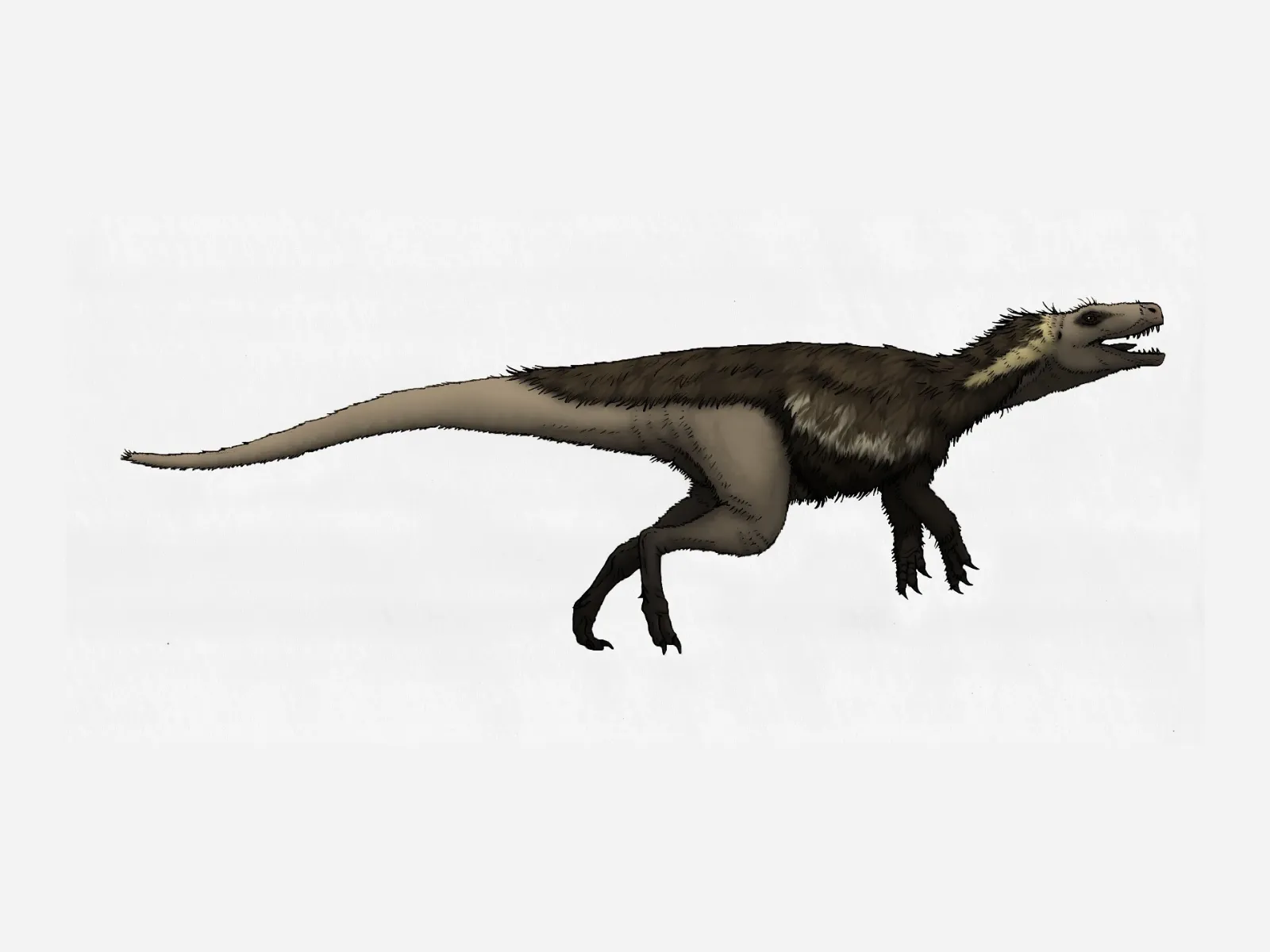
Gnathovorax cabreirai hunted around 165 million years before Tyrannosaurus Rex. Its territory: the floodplains of what is now the Rio Grande do Sul in Brazil. At that time, there were no separate lineages of carnivores and herbivores among the dinosaurs.
At a glance
| feature | Value |
|---|---|
| length | approximately 2.8–3 meters |
| Weight | approx. 70–100 kg (estimate, sources vary) |
| Location | Marchezan site, São João do Polêsine, Rio Grande do Sul (Brazil) |
| age | Upper Triassic, late Carnian, about 233.2 million years ago |
| Food | Carnivore, apex predator |
Nearly three meters long, weighing between 70 and 100 kilograms: that's about the weight of a large, fully grown wolf. But our dinosaur walked on two legs. Its skull was full of predator teeth.
Its name simply means "ravenous jaw". It is composed of two words: Greek gnathos (jaw) and Latin vorax (voracious).
A lion, long before there were lions
In its habitat, Gnathovorax reigned supreme. It played the role that a lion plays in the savanna today: that of the largest and most dangerous predator far and wide. There were no other large carnivores there in its time.
Researcher Rodrigo Temp Müller helped with the initial description. He sums it up like this: In his ecosystem, the animal occupied the exact spot that lions occupy today.
One clarification is still important. Gnathovorax was not a direct ancestor of T-Rex. It belonged to the hererasaurids, one of the oldest groups of dinosaurs.
From this early root, two separate branches later grew. One branch: the carnivorous theropods, which include the T-Rex. The other branch: the long-necked herbivores.
Gnathovorax shows what the very first large predatory dinosaurs looked like, not what a later ancestor of T-Rex looked like.
A skeleton straight out of a storybook
Researcher Sérgio Furtado Cabreira discovered the skeleton in 2014. The site: the Marchezan fossil site. In his honor, the dinosaur bears his species name: cabreirai.
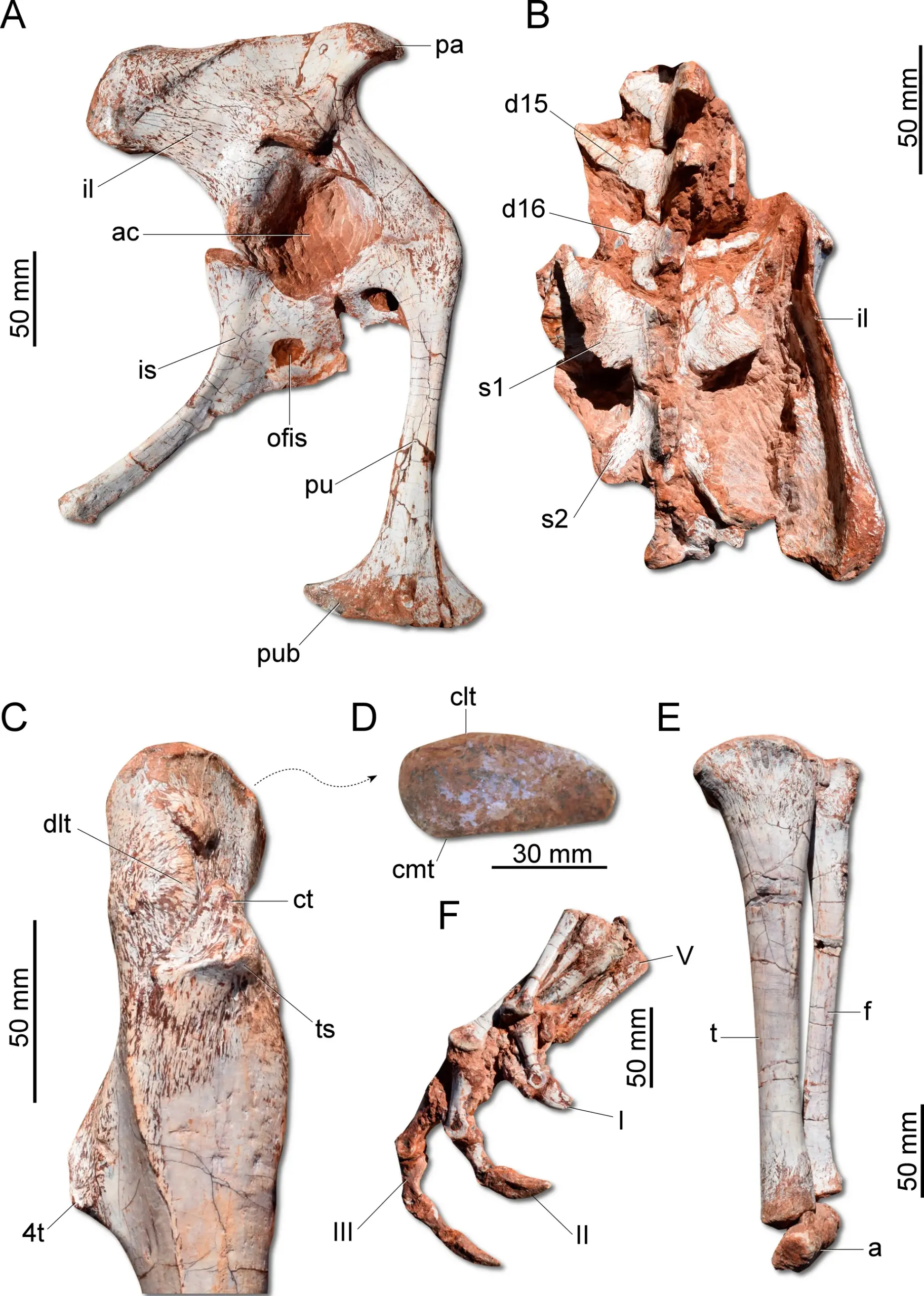
The skeleton is almost complete. Most of the bones are still in their natural position. Only parts of a foreleg are missing, along with the shoulder girdle and a few ribs and vertebrae.
This makes Gnathovorax one of the most complete hererasaurus fossils ever found. This is a true rarity: For this group of dinosaurs, only individual bones are usually known. Only the excellent state of preservation made new insights possible that were previously lacking for other hererasaurus fossils.
What the brain reveals
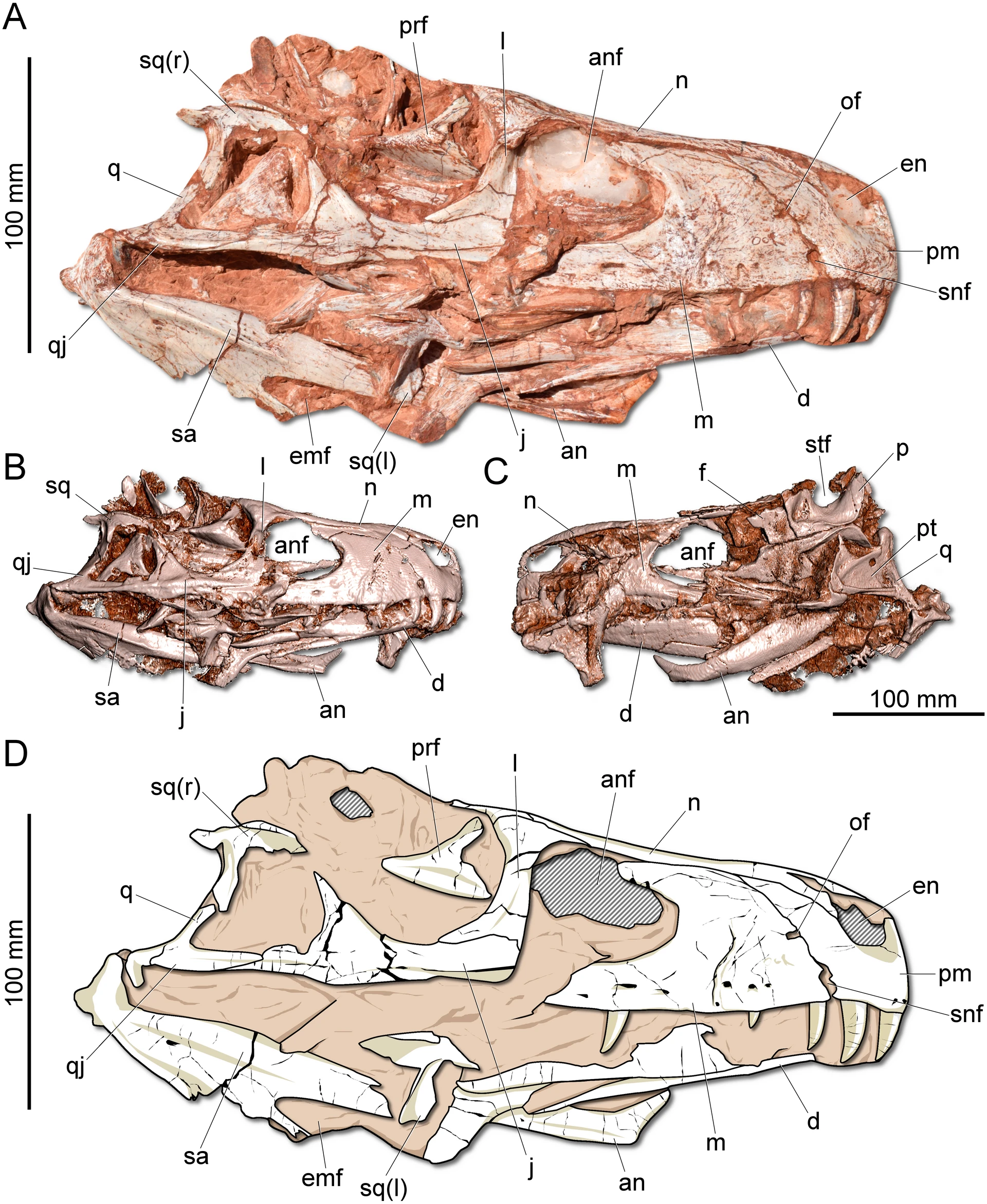
The skullcap was exceptionally well preserved. Researchers used a CT scan to create a digital cast of the brain. One area in the cerebellum stood out: the so-called flocculus. It was unusually large.
In modern animals, this area precisely controls movement and balance. Active hunters usually have a more pronounced development of this area than purely scavengers. This is strong evidence that Gnathovorax actively hunted, rather than simply feeding on carrion.
A pine tree with its own unique character
Gnathovorax is closely related to the Argentinian Herrerasaurus. Nevertheless, there are clear differences. It had three front teeth in its upper jaw, plus 19 further back.
Herrerasaurus had only four teeth at the front. Above a skull opening, Gnathovorax possesses an additional opening. This is not known in any other hererasaurus.
The pelvis also exhibits a distinctive shape. Viewed from the front, one pelvic bone is crescent-shaped. The neck was short, with uniquely shaped vertebrae.
Researchers counted three segments on the fifth toe. Herrerasaurus has a different number. This mix of similarities and differences was crucial: only in this way could Gnathovorax be distinguished as a separate species.
Scars from a rival
A detail on one skull reveals that life wasn't just about hunting. Healed marks from bites or scratches were found, suggesting a fight with another member of the same species.
Was it a territorial fight? A dispute over prey? A clash during mating? The bones alone don't reveal the answer – one thing is clear, though: even among members of the same species, things weren't always peaceful.
Neighbors in the same rock block
The site reveals an entire ecosystem in one fell swoop. Even more was found in the same block of rock: the skull of a cynodont, a primitive mammal relative called Prozostrodon.
In addition, the remains of two rhynchosaurs were found. These were stocky herbivores. In the late Carnian period, they were among the most common land animals.
The area around São João do Polêsine is a boon for research. Hardly any other place yields so many early dinosaur fossils. Staurikosaurus, Saturnalia, and Buriolestes also originate from here – a sign that dinosaurs in this region had already diversified into several dietary types at an early stage.
More information on this topic can be found at urzeittiere.net
- Tyrannosaurus Rex – a top predator that is around 165 million years younger. Not a direct descendant of Gnathovorax, but with a very similar role in its ecosystem.
- Acheroraptor – despite a gap of around 165 million years, surprisingly similar in size and weight to Gnathovorax.
Image sources:
Featured image: Juan(-username-), CC BY-SA 4.0, via Wikimedia Commons
Pelvic girdle and hind limbs: Cristian Pacheco, Rodrigo T. Müller, Max Langer, Flávio A. Pretto, Leonardo Kerber, Sérgio Dias da Silva, CC BY 4.0, via Wikimedia Commons
Skull: Cristian Pacheco, Rodrigo T. Müller, Max Langer, Flávio A. Pretto, Leonardo Kerber, Sérgio Dias da Silva, CC BY 4.0, via Wikimedia Commons