Cetiosaurus
Cetiosaurus: The “whale lizard” that roamed the earth
Discovery and naming
Cetiosaurus holds a special place in the history of paleontology as it is one of the first sauropod dinosaurs ever discovered. The story of its discovery begins in 1825, when John Kingdon dug up the first fossils in England. However, it wasn't until 1841 that renowned paleontologist Richard Owen officially named and described this magnificent creature. The name “Cetiosaurus” comes from Greek, where “ketos” means whale and “sauros” means lizard, which translates to “whale-lizard.”
Interestingly, Owen initially mistook the Cetiosaurus for a marine animal due to its enormous size. At the time, paleontologists could hardly imagine that such a large creature could live on land. This misunderstanding led to the name “whale lizard,” reflecting the belief that it was an aquatic animal comparable in size to whales. This error in classification is understandable since Cetiosaurus was the first of its kind to be discovered and there were no other known land animals of comparable size at the time.
Since its initial discovery, Cetiosaurus fossils have been found in various locations. In England, significant finds were made in Oxfordshire, including in a quarry near Abingdon, and in 1968 a notable find was made in a quarry near Rutland. Outside the UK, fossils have also been unearthed in France, Spain and Morocco, expanding our understanding of the distribution of this prehistoric giant.
Taxonomy and classification
Cetiosaurus belongs to the sauropod group, a group of long-necked, herbivorous dinosaurs that include some of the largest land animals to ever live on Earth. More specifically, it is assigned to the family Cetiosauridae, which includes several related genera of early sauropods.
The type species of this genus is Cetiosaurus oxoniensis, which serves as a reference point for identifying and classifying other Cetiosaurus specimens. However, over the years, paleontologists have also identified other subspecies, including C. brevis, C. mogrebiensis and C. philippsii. Each of these subspecies contributes to our understanding of the diversity within the genus Cetiosaurus and helps paint a more complete picture of these ancient creatures.
It is worth noting that the taxonomy of Cetiosaurus and its relatives has been the subject of revisions and debates among paleontologists. For example, the closely related Cetiosauriscus, once considered a species of Cetiosaurus, was later reclassified as a separate genus. This ongoing refinement of the classification reflects the dynamic nature of paleontological research and the ongoing efforts to accurately place these prehistoric animals within the broader context of dinosaur evolution.
Timeline and habitat
Cetiosaurus roamed the Earth during the Middle Jurassic, about 171.6 to 125.5 million years ago. This era was characterized by warm climates and lush vegetation, which provided an ideal environment for large herbivorous dinosaurs such as Cetiosaurus.
The fossil record suggests that Cetiosaurus was relatively widespread in what is now Europe and North Africa. As previously mentioned, fossils have been discovered in the United Kingdom, France, Spain and Morocco. This distribution suggests that Cetiosaurus was adapted to diverse environments within the warm, humid climate of the Jurassic period.
The habitats in which Cetiosaurus lived were likely diverse and included areas near rivers, lakes, or swamps. These environments provided the lush vegetation necessary to support such large herbivores. The presence of water sources was crucial not only for hydration but possibly also for temperature regulation of these massive animals.
It is important to note that at the time of Cetiosaurus the continents were still separating from the supercontinent Pangea. This ongoing geological change would have influenced the distribution and evolution of dinosaurs such as Cetiosaurus, potentially contributing to the development of distinct populations or subspecies in different regions.
Physical characteristics
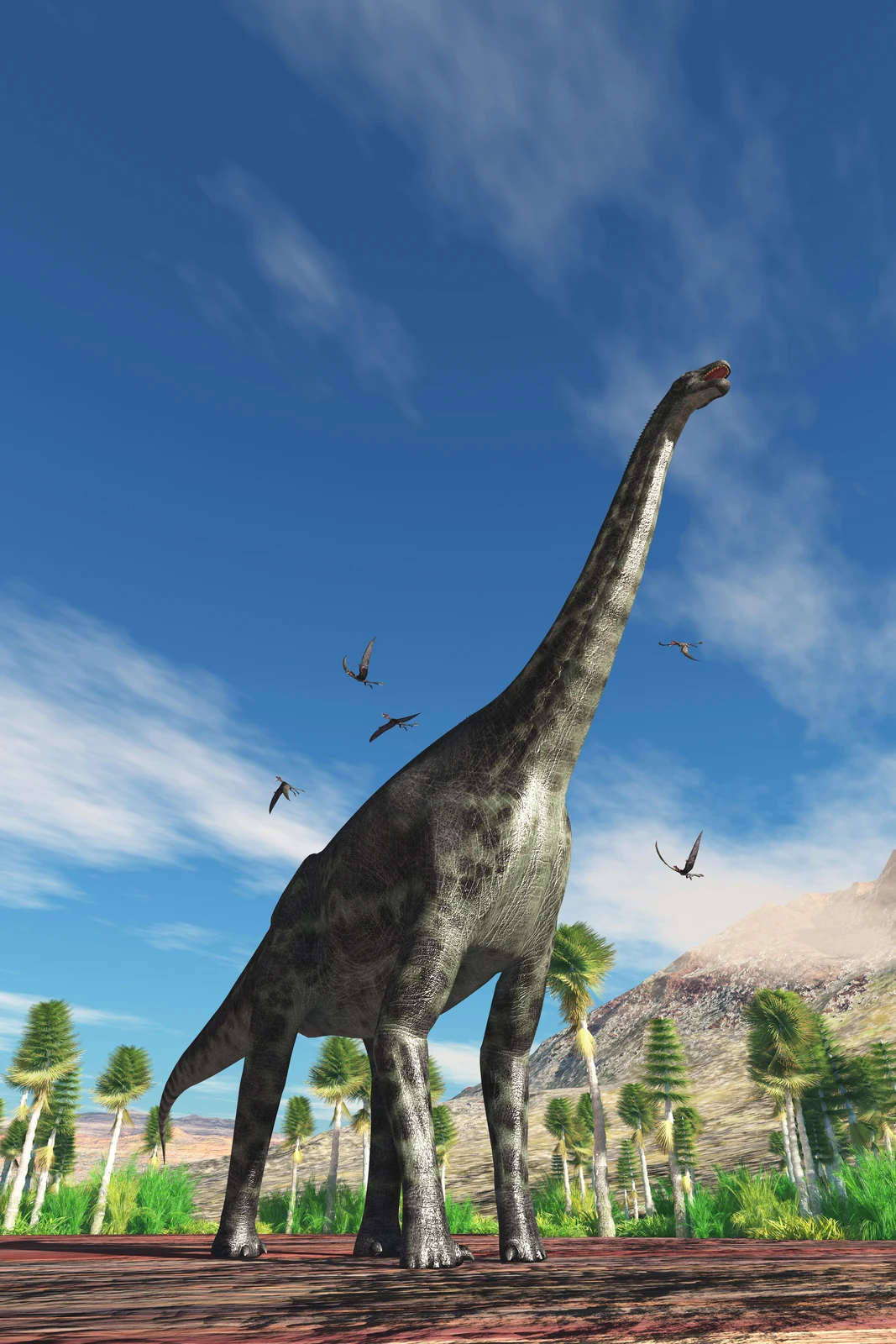
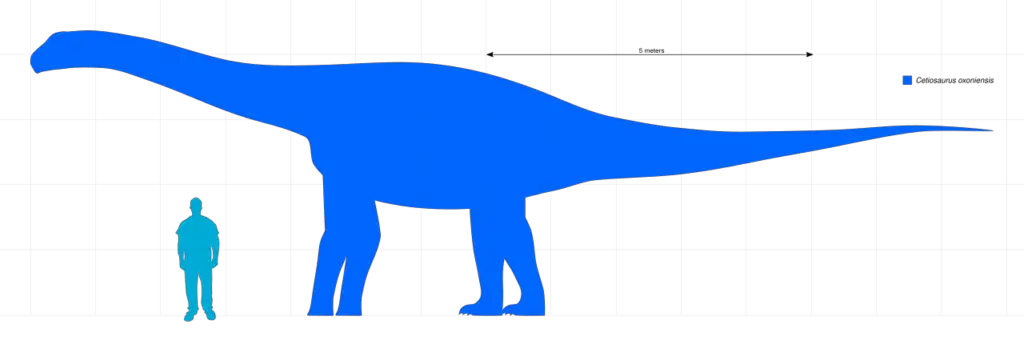
Cetiosaurus was a truly impressive animal, displaying many of the features that later became typical of sauropods. This dinosaur was between 15.8 and 18.0 meters long and about 3.6 to 4.5 meters high at the shoulder. Despite its enormous size, Cetiosaurus was smaller than many of its later sauropod relatives. Its weight is estimated at about 12 US tons (10 metric tons), which made it a heavyweight of its time, although not as massive as some of the titanosaurs that evolved later.
One of the most striking features of Cetiosaurus was its long neck and tail, a typical feature of sauropods. These adaptations allowed Cetiosaurus to reach vegetation at different heights and may have helped it maintain balance. The dinosaur's limbs were columnar, an essential adaptation to support its enormous body weight. Interestingly, Cetiosaurus had equal forearm and upper arm length, a feature that distinguishes it from some other sauropods.
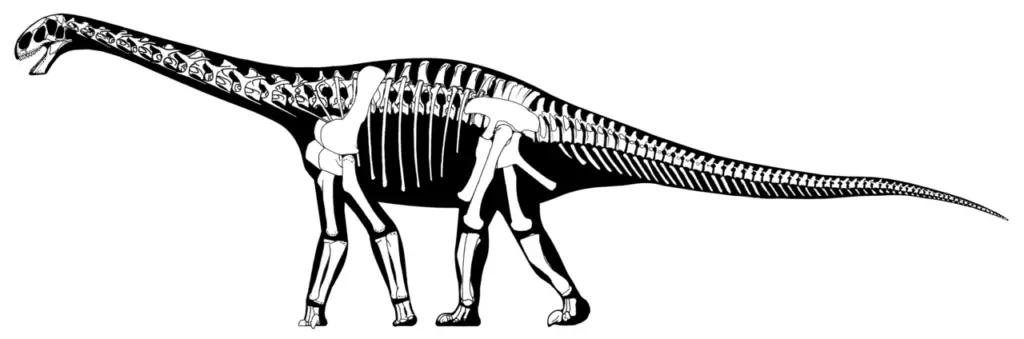
A unique aspect of Cetiosaurus' anatomy was its vertebral structure. Unlike later sauropods, which developed cavities in their bones (a trait known as pneumaticity) to reduce weight, Cetiosaurus had solid vertebrae. This characteristic suggests that Cetiosaurus represents a more primitive stage in sauropod evolution, retaining features that would be modified in its descendants.
The skull of Cetiosaurus, like many sauropods, was relatively small compared to its body size. Although complete skull fossils are rare, it is believed that Cetiosaurus had a broad, blunt snout with tenon-like teeth that was ideal for tearing apart vegetation.
Diet and behavior
As a member of the sauropod group, Cetiosaurus was undoubtedly a herbivore. Its long neck was adaptively important to its feeding strategy, allowing it to browse vegetation at different elevations. This ability to access different levels of plant life gave Cetiosaurus a significant advantage, allowing it to exploit food sources that might have been out of reach of other herbivores of its time.
Cetiosaurus' diet likely consisted of a variety of plant materials available during the Middle Jurassic. These may have included ferns, cycads, conifers, and other gymnosperms that were widespread during this period. Cetiosaurus's cone-like teeth were good for stripping leaves from branches, but not for chewing, indicating that, like other sauropods, it swallowed its food whole for further processing in its gut.
Interestingly, some paleontologists suggest that Cetiosaurus, like other sauropods, may have used gastroliths (stomach stones) to aid in digestion. These stones that the dinosaur swallowed helped to break down plant material in its stomach, compensating for the lack of chewing teeth.
As far as behavior is concerned, much remains speculative due to the limited fossil finds. Because of its enormous size, Cetiosaurus was probably a slow-moving animal. He may have lived alone or in small groups, although there is no clear evidence of social behavior. The energy requirements of such a large animal suggest that it must have spent much of its time eating to fuel its enormous body.
Paleoenvironment
During the Middle Jurassic, when Cetiosaurus lived, Earth's climate was significantly warmer than today, there were no polar ice caps, and sea levels were higher. This created a greenhouse effect that produced lush, diverse vegetation across much of the planet, providing abundant food for herbivorous dinosaurs such as Cetiosaurus.
The habitats in which Cetiosaurus lived were probably diverse, but generally characterized by lush vegetation. Fossil evidence suggests that these dinosaurs lived in areas that included river systems, lake shores, and possibly coastal regions. These habitats not only provided the necessary vegetation for food, but also water sources that were vital for such large animals.
The Middle Jurassic flora was dominated by gymnosperms, including conifers, cycads and ginkgos. Ferns and horsetails were also common, especially in wetter areas. This diverse plant life formed layered forests and open woodlands that provided a variety of food options for Cetiosaurus and other herbivores.
The fauna that coexisted with Cetiosaurus included other species of dinosaurs, early mammals, and various reptiles. Potential predators of young or weakened Cetiosaurus specimens may have included large theropod dinosaurs, although adult Cetiosaurus, with their enormous size, had few natural predators.
Understanding the paleoenvironment of Cetiosaurus not only helps us reconstruct its lifestyle, but also provides valuable insights into the broader ecosystem of the Middle Jurassic period, a crucial time in the evolution of dinosaurs and other prehistoric life forms.
Importance in paleontology
Cetiosaurus holds a special place in paleontology as it is one of the earliest sauropods discovered. Its importance goes beyond its impressive size and unique features and plays a crucial role in shaping our understanding of dinosaur evolution, particularly the development of sauropods.
As one of the first scientifically described sauropods, Cetiosaurus provided paleontologists with valuable insights into early sauropod evolution.
His discovery challenged original ideas about the diversity and distribution of large dinosaurs and paved the way for future discoveries and research in the field.
The study of Cetiosaurus was of particular importance to British paleontology. The numerous fossil discoveries across England have not only contributed to our understanding of this specific genus, but have also helped to reconstruct the overall picture of the dinosaur fauna in what is now the United Kingdom during the Middle Jurassic period.
Furthermore, the initial misidentification of Cetiosaurus as a marine animal highlights the challenges early paleontologists faced in interpreting fossil evidence. This case is a valuable lesson in the importance of careful analysis and the willingness to revise theories based on new evidence - principles that remain crucial in modern paleontology.
Ongoing research on Cetiosaurus continues to produce new findings. For example, studies of its bone structure and growth patterns help scientists understand how these massive animals evolved and how their anatomy evolved to support their immense size. Such research not only expands our knowledge of Cetiosaurus, but also contributes to our broader understanding of sauropod biology and evolution.
Comparison with other sauropods
Although undoubtedly a giant by today's standards, Cetiosaurus was actually smaller than many of the sauropods that later evolved in the Jurassic and Cretaceous periods. This relative size difference provides an interesting perspective on sauropod evolution and shows how these dinosaurs grew larger over time.
One of the most striking differences between Cetiosaurus and later sauropods lies in its bone structure. Cetiosaurus lacked the cavities in its bones (pneumaticity) that were characteristic of more advanced sauropods. In later sauropods, this feature is thought to have helped reduce the overall weight of their massive bodies while maintaining their strength. The massive bones of Cetiosaurus suggest that it represents a more primitive stage in sauropod evolution.
The neck of Cetiosaurus was long, but not as elongated as that of later sauropods such as Brachiosaurus or Diplodocus. This suggests an evolutionary trend toward increasingly longer necks in the sauropod lineage, perhaps as an adaptation to reach taller vegetation or to cool their large bodies more efficiently.
Another interesting point of comparison is the equal length of the forearm and upper arm in Cetiosaurus, a feature not found in all sauropods. This characteristic may have influenced its posture and movement in a way that differs from that of other sauropod species.
Despite these differences, Cetiosaurus shared many basic characteristics with its later relatives, including its quadrupedal stance, long neck and tail, and herbivorous diet. These similarities underscore the successful physique that came to define the sauropod group and allowed them to dominate terrestrial ecosystems for millions of years.
Examining these comparisons not only helps us better understand Cetiosaurus, but also provides valuable insight into the evolutionary history of sauropods as a whole, demonstrating the diversity and adaptability of these remarkable dinosaurs.
Systematics
| Dinosauria |
| Saurischia |
| Eusaurischia |
| Sauropodomorpha |
| Plateosauria |
| Massopoda |
| Sauropodiformes |
| Anchisauria |
| Sauropoda |
| Gravisauria |
| Eusauropoda |
Occurrence in time
| Law |
| Middle Jurassic |
| Bajocium - Bathonium |
Happen
| Area | Europe |
| country | United Kingdom |
| region | England |
| formation | Forest Marble, Rutland |
Image sources
Size comparison: User:Slate Weasel, Public domain, via Wikimedia Commons
Skeleton: Jaime A. Headden, CC BY-SA 3.0, via Wikimedia Commons