Deinonychus
Deinonychus: The raptor that triggered the dinosaur renaissance
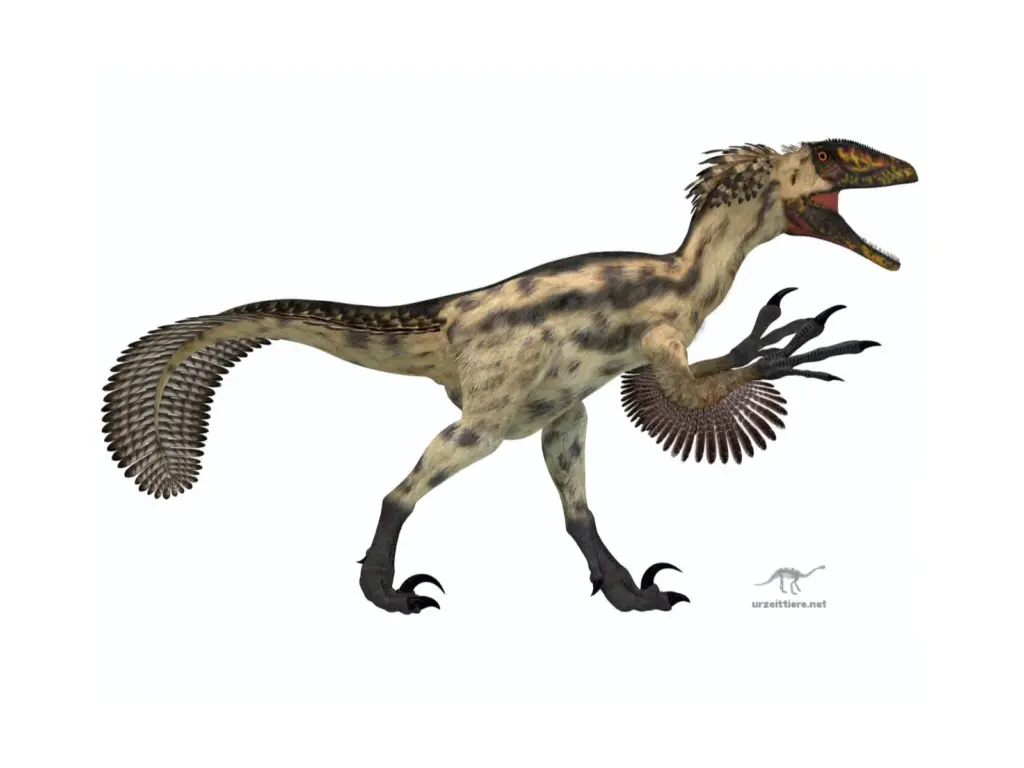
John Ostrom described it in 1969, challenging an old image: that of the sluggish, cold-blooded dinosaur. Deinonychus antirrhopus had a flexible skeleton and a sickle-shaped claw on its foot. It showed clear signs of active hunting. This sparked a wave of interest that went down in history as the "Dinosaur Renaissance." For the first time, dinosaurs were seen as active animals, closely related to birds—no longer just sluggish scenery.
At a glance
| feature | Value |
|---|---|
| length | up to approximately 3 meters |
| Weight | up to approx. 170 kg |
| Location | Cloverly Formation (Montana) and Antlers Formation (Oklahoma), North America |
| age | Early Cretaceous period, approximately 115–108 million years ago |
| Food | Carnivores |
Up to three meters long, up to 170 kilograms in weight. That's as much as two adults combined. Despite this, its build was slender and agile, not a heavyweight. It belongs to the family of dromaeosaurids, the "raptors." The later-living Acheroraptor also belongs to this family.
The star of the dinosaur renaissance
Ostrom discovered the first fossils in the Cloverly Formation in Montana. Later finds came from the Antlers Formation in Oklahoma. Before 1969, dinosaurs were considered clumsy and cold-blooded. But the skeleton of Deinonychus didn't fit this image. It was agile, built for hunting. The result: a whole wave of new research, known today as the "Dinosaur Renaissance."
Its name means "terrible claw." It refers to the large sickle-shaped claw on its second toe—the hallmark of all raptors. The species name "antirrhopus" refers to its stiff tail, which served as a balancing pole during quick turns.
Claws like eagle talons
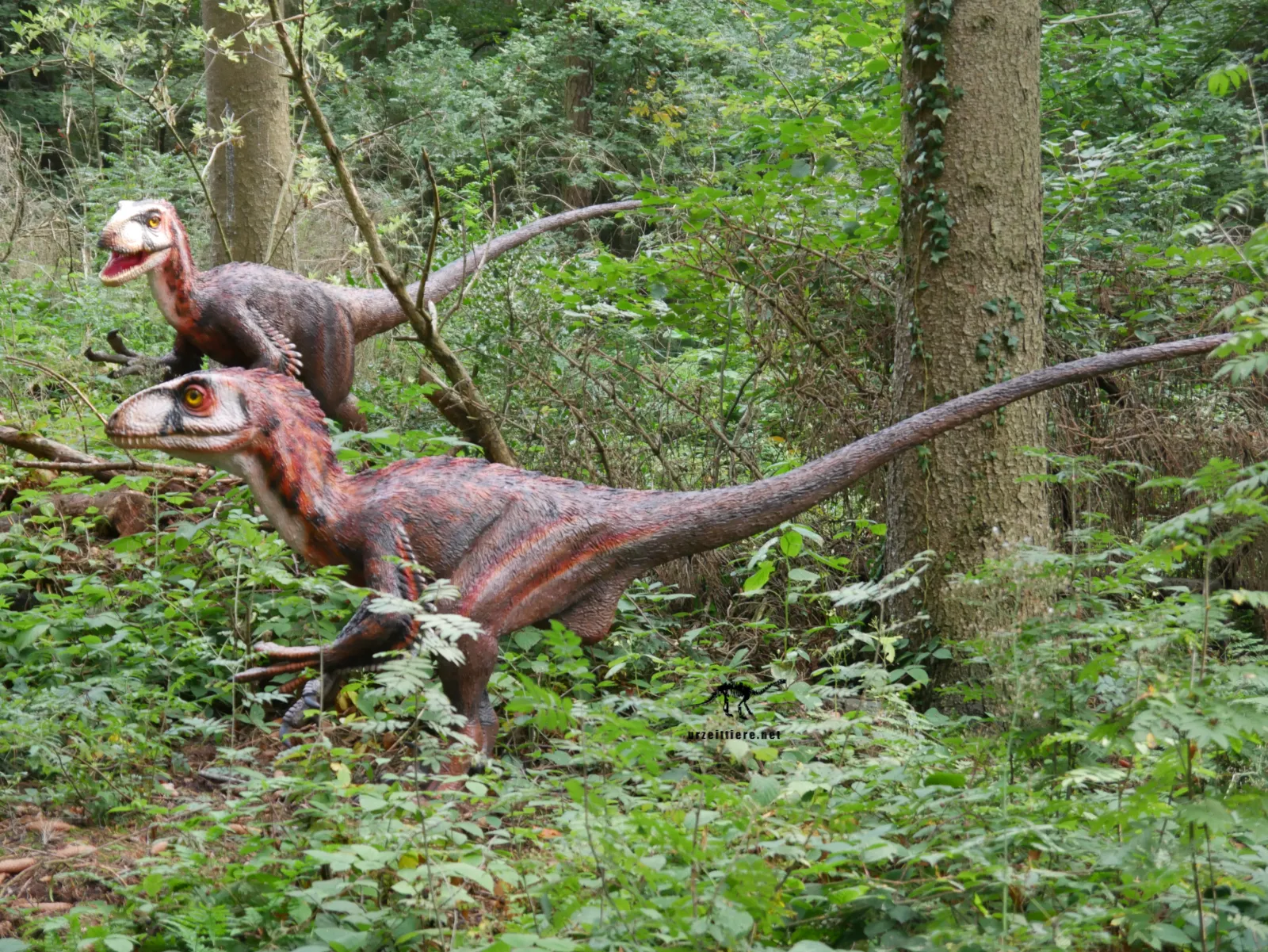
For a long time, the claw was considered solely a weapon for slashing prey. New computer models paint a different picture. Very little force was exerted at the tip of the claw. This argues against a slashing function. It also contradicts the idea that the animal pressed its entire weight into the prey through the claw.
A more likely function is grasping and holding. The claw held smaller animals while the jaw did the work. Researcher Denver Fowler compares this to the talons of hawks and eagles. They grasp and hold, rather than cutting. The shape of the foot also fits this picture: it resembles that of hawks among modern birds.
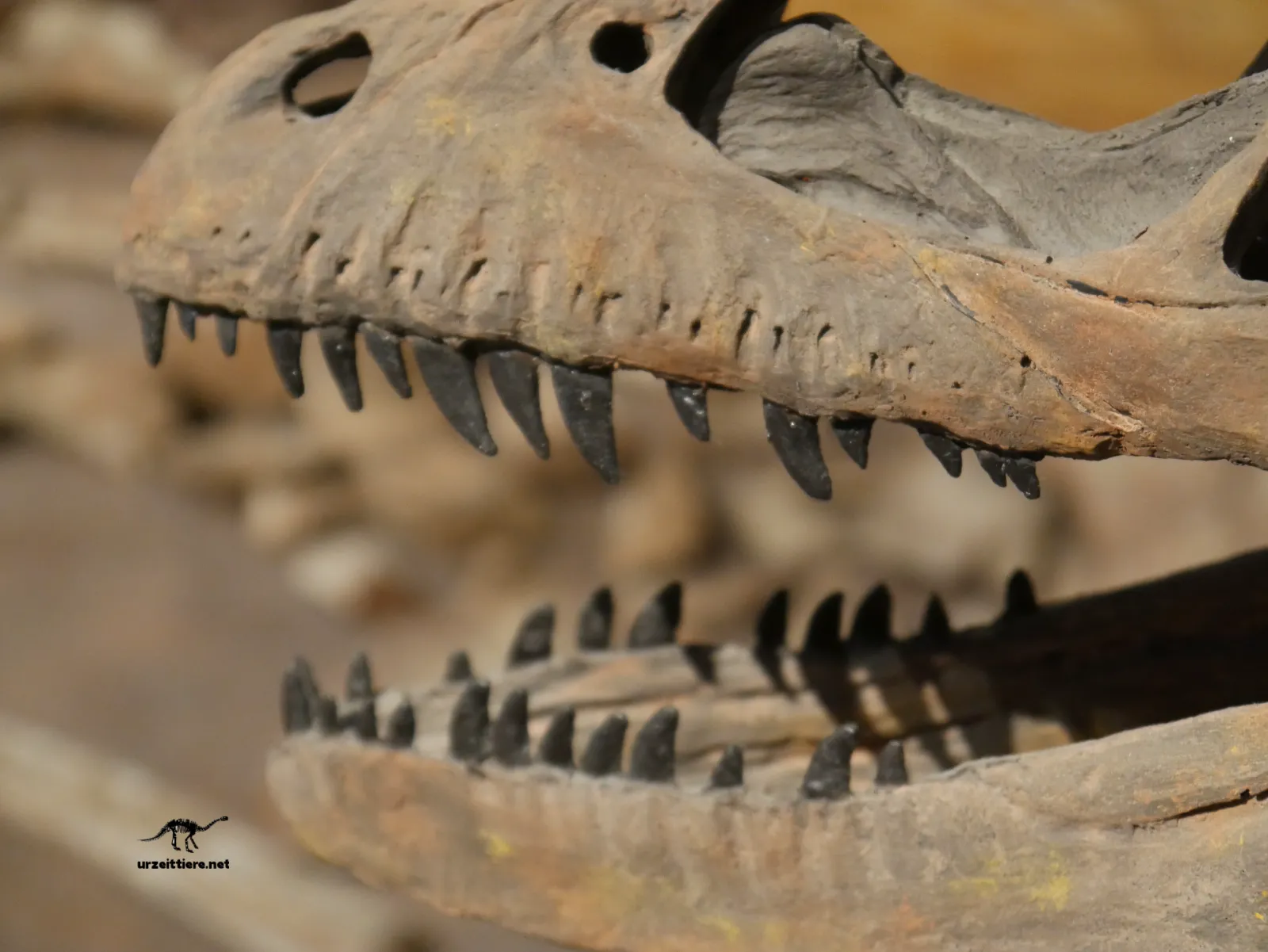
The skull was also built for power: short and high at the snout. It had a more powerful bite than other raptors. A slightly concave skull roof likely provided space for a larger jaw muscle. Nevertheless, the skull was not as robust as that of some relatives. One reason for this could be that Deinonychus scavenged less frequently than other raptors.
The forelegs were capable of many things: grasping with both hands, gripping with one hand, and probably also waving their arms during courtship. However, feathered wings likely prevented the hands from grasping the ground. This task was performed by the jaws and feet.
A link to the bird
Deinonychus occupies a key position in the theropod family tree. It belongs to the Deinonychosauria, a group of dromaeosaurids and troodontids. This group is considered the sister group to birds. Therefore, it is not a direct ancestor, but a close relative on the same branch of the family tree.
CT scans of its upper jaw reveal more details. They classify it as an early representative of the eudromaeosaurs, exhibiting characteristics from two subfamilies of raptors simultaneously. The common ancestor of Deinonychus and modern birds even has its own name: Eumaniraptora.
How closely related he is to other raptors can be seen by looking at his nearest neighbors in the family tree:
| relative | Relationship to Deinonychus | Distinguishing feature |
|---|---|---|
| Velociraptor mongoliensis | Close relative | Different structure of temple, nose and upper jaw |
| Neuquenraptor argentinus | relative from South America | Evidence of the group's worldwide spread |
| Bambiraptor feinbergorum | a relative living at the same time | Opposing fingers, one-handed grip |
| Troodontidae | Sister family | No interdental plates, bird-like teeth |
The most well-known name in this table is probably Velociraptor. This is also due to "Jurassic Park": The film series based its on-screen Velociraptors primarily on Deinonychus, which was significantly better researched at the time of its creation than the actually smaller genus Velociraptor. Nevertheless, anatomically, the two animals exhibit clear differences in their skulls and faces.
Discoveries from distant Patagonia show how widespread this group of animals was at an early stage. They prove that the northern and southern continents were more similar in terms of fauna during the Cretaceous period than previously thought. Deinonychus was therefore not a regional anomaly. It belonged to a globally successful group of animals.
The hunter who (perhaps) did not hunt in a pack
Teeth of Deinonychus are often found alongside skeletons of the herbivore Tenontosaurus tilletti. This reveals a great deal about its diet. In one nearly complete skeleton from the Cloverly Formation, its teeth and gizzard stones were even found right next to it.
Analyses of isotopes in tooth enamel support this connection – and reveal something surprising. Diet changed with age: Young animals apparently ate different, smaller prey than adults. This pattern is more reminiscent of solitary reptiles like the Komodo dragon. Such changes are usually absent in mammals that hunt in teams.
These very findings fueled an early popular notion: Deinonychus as a coordinated pack hunter. This image persists in science and popular culture to this day. However, it is not without its problems. Researchers observe highly coordinated team hunting only extremely rarely in modern crocodiles and birds.
Studies of the dinosaur family tree therefore reach a different conclusion. Pack hunting reminiscent of mammals is unlikely among these dinosaurs. Solitary hunting or loose groups are more probable. At the site where Deinonychus was first discovered, there is even evidence of internal conflict. This is more consistent with a rough social life than a harmonious pack.
Tracks from China provide the best evidence to date of social behavior in this animal group: several tracks running parallel to each other. But Sociability does not automatically mean pack hunting.The two don't necessarily have to be related.
From egg to flight attempt
A partial egg provides rare insights into incubation behavior. It was found directly next to the abdominal ribs of an adult animal with the collection number AMNH 3015. The structure of the eggshell is consistent with a dinosaur origin. An examination of the bones also confirms that the animal was sexually mature.
Even more intriguing is the discovery of a juvenile, number MCZ 8791. It was estimated to be one to two years old. The shape of its forelegs, wrist, and a bony projection at the elbow support a bold hypothesis: young Deinonychus may have been capable of some flight. They apparently lost this ability as adults. This isn't proof, but it's strong evidence.
A pattern also emerges in the growth itself. Studies of the bones show that the rate at which the hind legs grew depended on the mode of locomotion. In smaller relatives of Deinonychus, the first growth slowdown occurred later than in larger species. This demonstrates how closely body size and lifestyle were linked in this group of animals.
An examination of the ankle joints also reveals how Deinonychus walked. In the structure of its hind legs, it resembles other relatives and early birds such as Archaeopteryx. This is particularly evident in the position of the toes and the second claw. Another piece of the puzzle on the long journey from ground predator to bird.
More information on this topic can be found at urzeittiere.net
- Acheroraptor – a relative from the same raptor family that is about 45 million years younger and whose body size is based, among other things, on Deinonychus.