Styracosaurus
Styracosaurus: The horned dinosaur of the Late Cretaceous
Styracosaurus was a species of dinosaur that lived in North America during the Late Cretaceous Period.
This herbivorous dinosaur is known for its distinctive physical features, including a crown of spines and a large nasal horn.
Although these horns suggest defensive potential, they may also have played a role in social interactions and recognition of other species.
Styracosaurus exhibited social behaviors, may have lived in groups, and had specialized adaptations for feeding on vegetation.
These aspects of its biology provide insightful insights into the life and ecology of this dinosaur species.
Introduction
Styracosaurus was one of the most remarkable horned dinosaurs that lived in the Late Cretaceous period, about 75.5 to 75 million years ago.
This ceratopsian lived alongside other notable dinosaurs, including the Nasutoceratops, which was characterized by its large nose and long horns.
Styracosaurus is classified in the ceratopsian group, a category of herbivorous dinosaurs known for their unique skull structures.
The distinctive feature of Styracosaurus is its ornate head decoration, which includes a prominent multi-spine ruff and a distinctive horn configuration.
Fossil evidence confirms that Styracosaurus was a herbivore that used its beak-like mouth to eat tough plant material.
The presence of Styracosaurus in the Late Cretaceous provides an important insight into the diversity and adaptation of horned dinosaurs to their prehistoric environment.
Physical characteristics
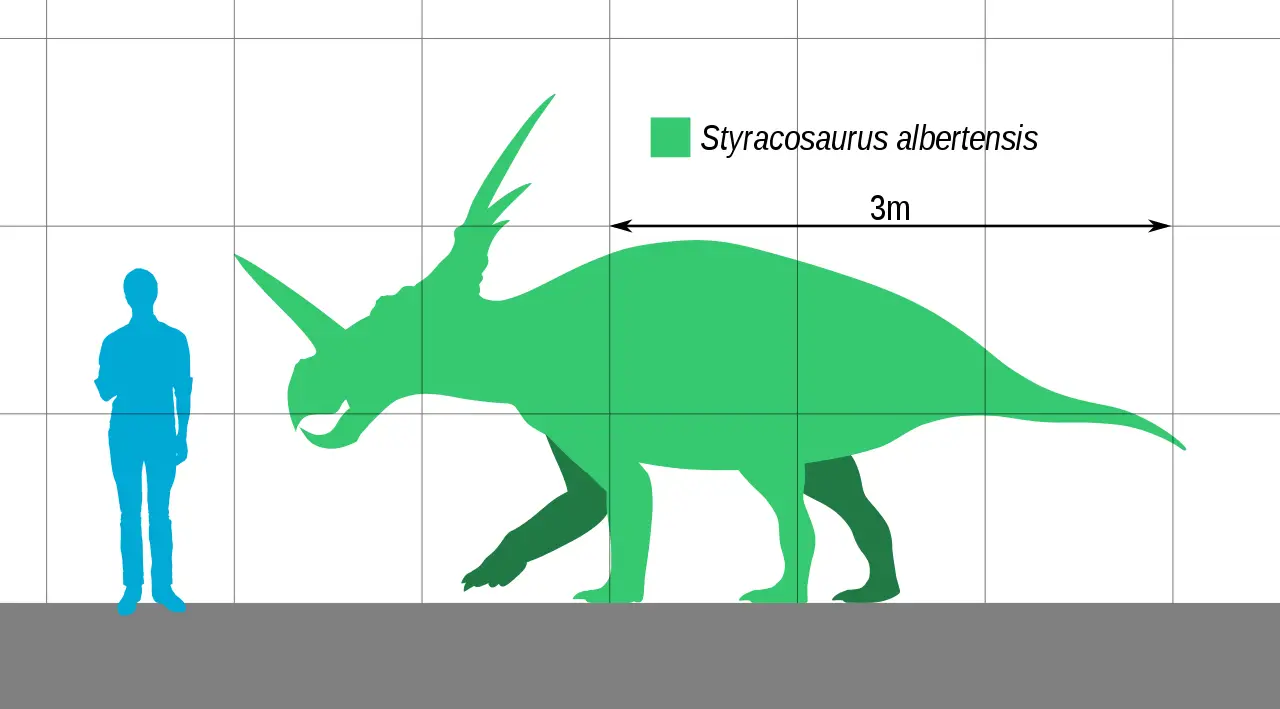
Styracosaurus was a dinosaur with striking body dimensions and distinctive head features. It was about 5.5 meters long and weighed about 2.7 tons, making it one of the larger herbivores of its time.
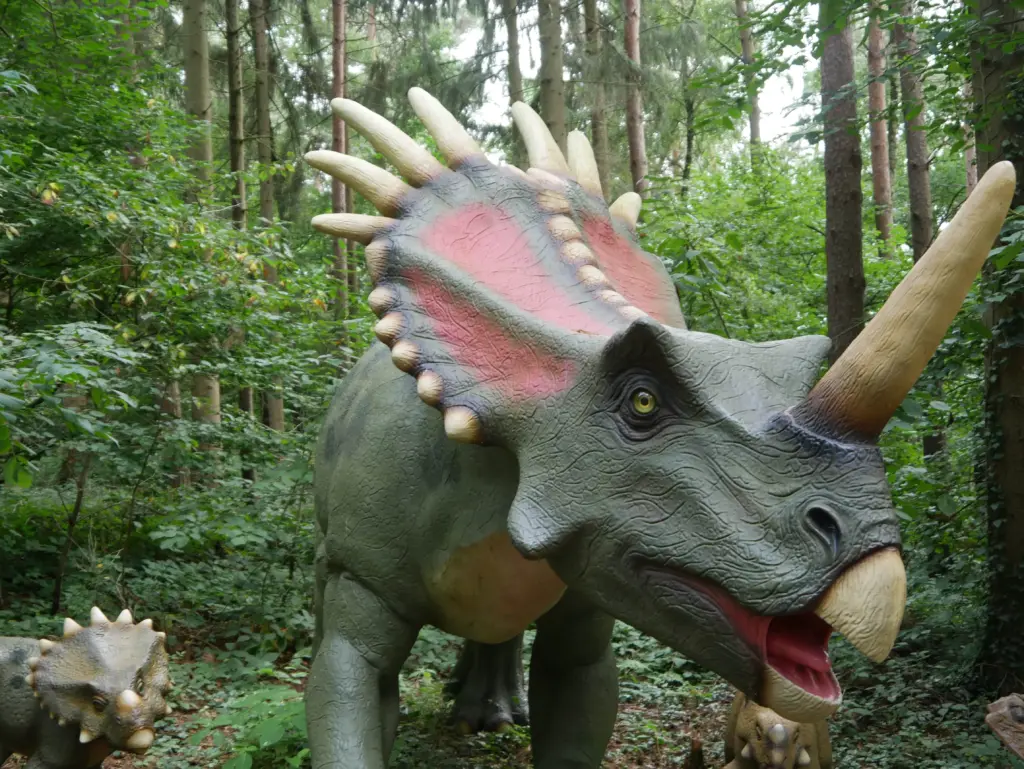
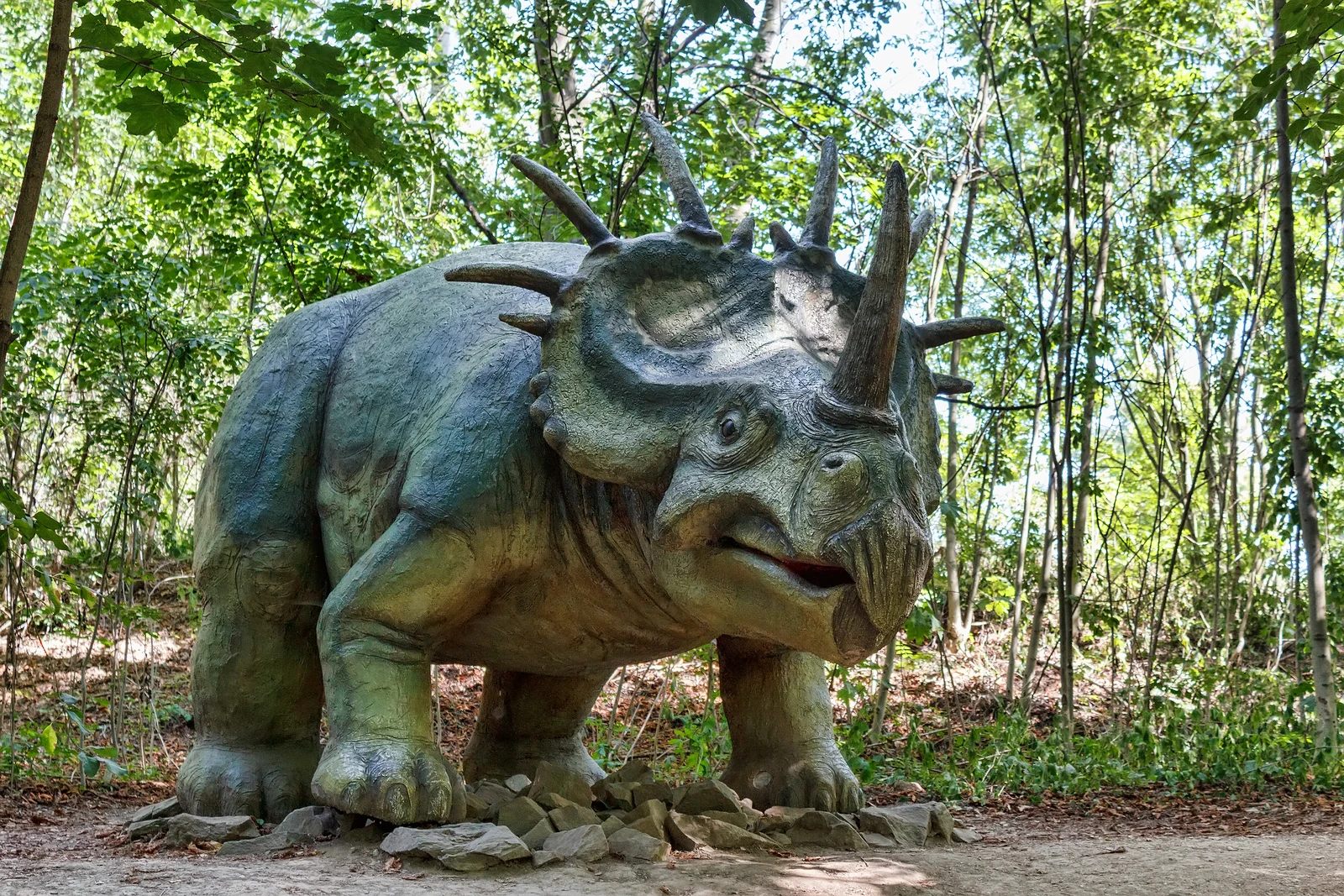
How Pentaceratops Styracosaurus had a large skull with a crest, which probably served functions such as defense and possibly mating rituals. The dinosaur's most striking feature was its cranial structure, which was characterized by a large skull with a prominent single horn on the nose. Its crest was decorated with four to six elongated spines and smaller protuberances. Some of these horns could reach up to 55 centimeters (21.7 inches) in length and provided an effective defense mechanism.
The head decoration likely served purposes such as species recognition and protection from predators. At the front of its skull, Styracosaurus had a parrot-like beak adapted for efficiently tearing down plants.
These defensive features and specialized feeding apparatus made Styracosaurus well suited to survival in the Late Cretaceous ecosystem.
Habitat and distribution
Fossil evidence suggests that Styracosaurus lived primarily in present-day Alberta, Canada, particularly in the Dinosaur Provincial Park area.
During the Late Cretaceous, this region was characterized by coastal plains and extensive floodplains that were very different from the present-day landscape.
Styracosaurus lived alongside a variety of other dinosaur species, including other ceratopsians such as Centrosaurus and Chasmosaurus, as well as Albertosaurus, Parasaurolophus and various ornithomimids and armored dinosaurs.
The climate at this time was warmer than present-day Alberta, with distinct wet and dry seasons and no frost.
The landscape was largely dominated by coniferous forests, with an understory of ferns, tree ferns and flowering plants.
Over time, due to increasing marine influence, the environment became more swampy, creating a dynamic habitat that allowed these horned dinosaurs to adapt and thrive in their environment.
Diet and eating habits
Styracosaurus was a herbivore that fed exclusively on plants and relied on tough vegetation to meet its nutritional needs.
This dinosaur had an efficient feeding mechanism that included a strong beak and specialized shear teeth that could regenerate when worn out. These features were designed to cut through fibrous plant material precisely and powerfully, unlike the grinding dental batteries found in hadrosaurids such as Edmontosaurus.
Styracosaurus likely moved in herds to find areas rich in their preferred plants.
It is thought that they fed on low-growing plants such as palms, cycads and ferns. Their size and distinctive horns may have served to find food by knocking over taller plants, allowing them to reach and consume parts of the plant that other herbivorous dinosaurs may not have been able to process effectively.
Defense mechanisms
In the Cretaceous period, defense mechanisms were crucial to the survival of large dinosaurs such as Styracosaurus. This dinosaur was equipped with significant defensive features, including a set of horns and an elaborate ruff.
These structures were not only decorative but also served important functions. The large nasal horn served as the main weapon against predators and rivals. The ruff, which was characterized by long spikes, appeared menacing to ward off danger.
In addition to defense, these traits were also important for social interactions such as mate choice and individual identification within herds. Styracosaurus also benefited from its considerable size, which gave it additional protection.
Additionally, movement in herds ensured security through collective defense. The different horn and collar schemes of individual animals contributed to species recognition and social organization and played a crucial role not only in defense but also in maintaining social structures within the community.
Reproduction and growth
Due to limited fossil evidence, it is difficult to understand the reproductive and growth patterns of Styracosaurus. However, researchers have identified some key aspects of their reproductive behavior by comparing them with related Ceratopsia species. Styracosaurus probably laid its eggs in nests, and similar to their close relatives, they probably showed significant parental care, protecting and feeding their offspring during the early stages of development.
The purpose of the elaborate ruff in ceratopsians such as Pentaceratops is not fully understood, but similar structures in Styracosaurus may have been used in mating rivalries and rituals.
As for its growth process, scientists have not yet fully determined all aspects of Styracosaurus' maturation. Nevertheless, it is believed that these dinosaurs followed a similar growth pattern to other large herbivorous dinosaurs and experienced rapid growth in their early years. This rapid development would have allowed them to reach adult size relatively quickly.
It has also been proven that the species' distinctive features, such as the ruff and the arrangement of the horns, were not fully developed at birth. Instead, these structures developed gradually as the animal grew and may have served as visual indicators of reproductive readiness and played a crucial role in mate choice.
Discovery and scientific significance
The discovery of Styracosaurus in 1913 was a significant event in paleontology when Lawrence Lambe found the first specimens in Alberta, Canada. The genus name, derived from the Greek word “styrax,” meaning “point,” aptly describes the dinosaur’s spiny ruff, a notable feature for scientific study.
Styracosaurus, as well Nasutoceratops, another ceratopsian known for its distinctive horns, has contributed significantly to improving our understanding of ceratopsian diversity and evolution. Fossils from Alberta deposits have provided important insights into Late Cretaceous ecosystems and the evolution of horned dinosaurs.
Scientists have thoroughly studied the horn arrangement and throat structure of Styracosaurus and discussed their possible roles in species defense, display, and recognition. A notable discovery in 2015 involved a skull with asymmetrical horns, challenging previous assumptions about horn patterns.
This discovery has improved our understanding of individual variation within the genus and led scientists to rethink taxonomic classifications, including the possible inclusion of Rubeosaurus in the genus Styracosaurus. These discoveries continue to shape our understanding of ceratopsian evolution and diversity.
Conclusion
Styracosaurus is known for its distinctive ruff and defensive abilities. Its social behavior provides insight into how this dinosaur adapted to survive in ancient Alberta. Additionally, its significance goes beyond its appearance and provides valuable information about the evolution, behavior, and biodiversity of dinosaurs in prehistoric North America.
Systematics
| Dinosauria |
| Ornithischia |
| Genasauria |
| Neornithischia |
| Cerapoda |
| Marginocephalia |
| Ceratopsia |
| Neoceratopsia |
| Coronosauria |
| Ceratopsoidea |
| Ceratopsidae |
| Centrosaurinae |
| Eucentrosaura |
| Centrosaurini? |
Occurrence in time
| chalk |
| Upper Cretaceous |
| Middle to late Campanian |
Happen
| Area | North America |
| country | Canada |
| region | Alberta |
| formation | Dinosaur Park |
profile
| length | 5.6 meters |
| Weight | 2.1 tons |
| locomotion | Four-legged |
| Food | herbivores |
Bid sources
Size comparison: User:Slate Weasel, Public domain, via Wikimedia Commons