Dilong
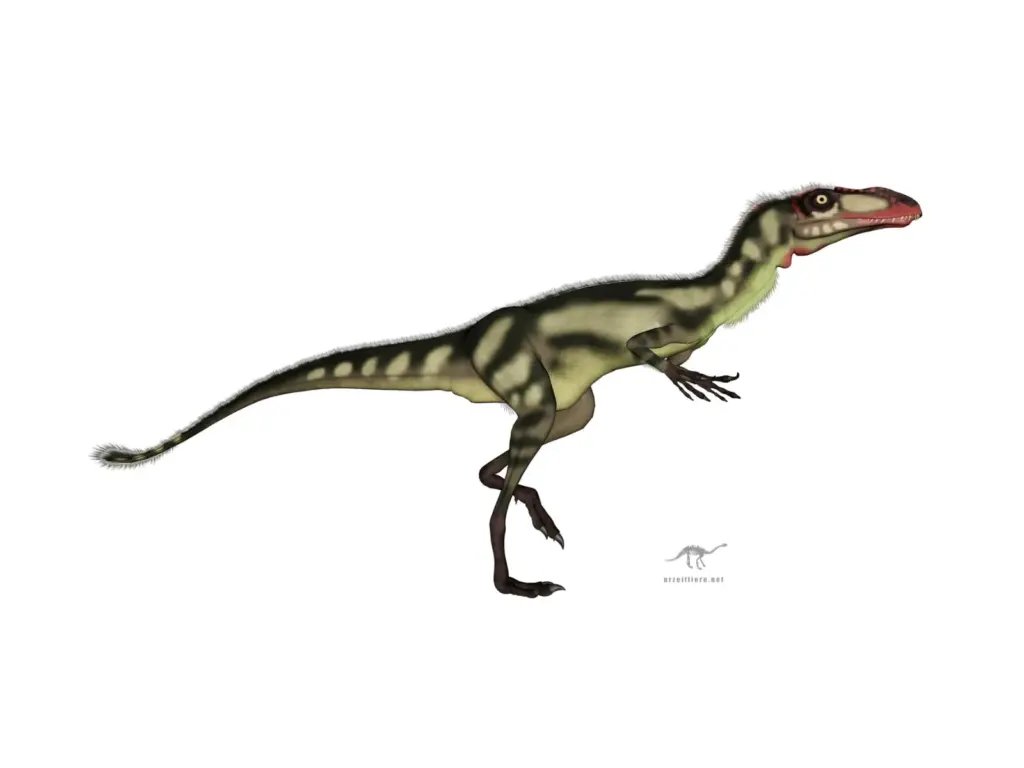
Dilong paradoxus was a small theropod that reached a length of 1.6 to 2.0 meters. Adult specimens weighed between 4 and 6 kilograms. A 1.3 meter long specimen weighed around 6 kilograms.
anatomy
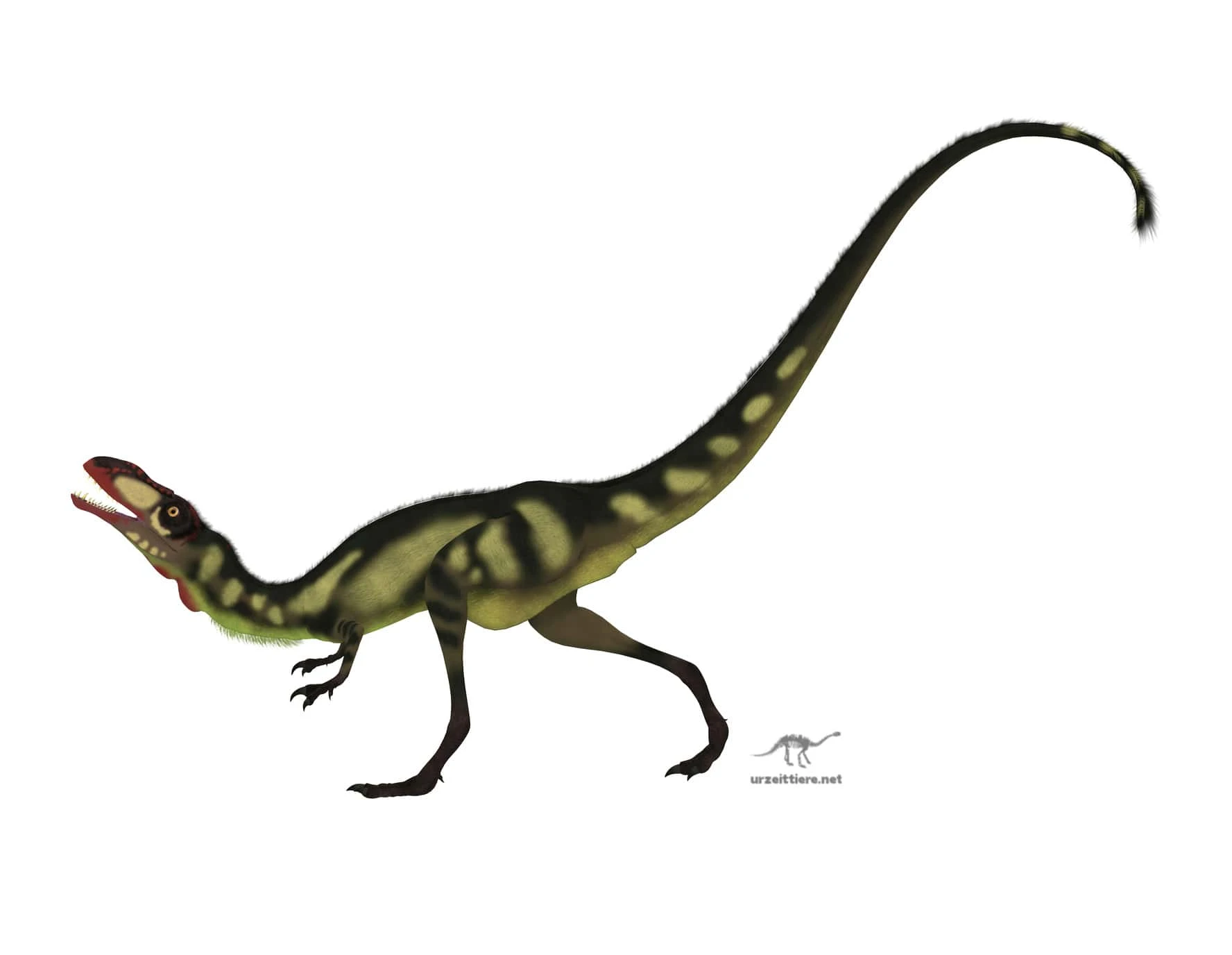
The dinosaur moved on two legs and had relatively long forelimbs with three fingers. His body was slim and designed for mobility.
The skull displayed advanced features of tyrannosaurs, while the three-fingered arms and slender body structure represented more primitive features.
skin and feathers
The body was covered with simple, thread-like primordial feathers. These primordial feathers lacked a central shaft and were preserved in the jaw and tail areas. The structures served for thermoregulation and helped the animal maintain its body temperature.
Hunting and nutrition
Dilong was a carnivorous predator that hunted small prey. His agile physique and well-developed sense of balance - evidenced by brain scans showing an S-shaped brain with a large Flocculus showed – made him an effective hunter.
Discovery and location
The fossils were recovered from the Yixian Formation in western Liaoning Province in northeastern China. Four specimens were found in two depositional areas: three from the Lujiatun beds and one from the Jianshangou beds. These rock layers date from 125.8 to 126 million years ago during the Early Cretaceous Period (Barremian).
Fossilization
The volcanic lake landscape where Dilong lived formed fine ash-mud sediments that preserved extraordinary details, including skin and feather impressions. This excellent quality of preservation allowed paleontologists to demonstrate the presence of primordial feathers in tyrannosauroids for the first time.
Scientific classification
Dilong belongs to the superfamily Tyrannosauroidea and represents a basal tyrannosauroid. Some phylogenetic analyzes suggest that it may belong to the family Proceratosauridae. Its taxonomic classification helps document the evolutionary transition from primitive coelurosaurs to specialized tyrannosaurids such as Tyrannosaurus rex.
Type specimen
The holotype is 1.6 meters long and represents a juvenile. This specimen provided crucial clues for understanding the early evolution of tyrannosauroids and the development of feathers in theropod dinosaurs.
Dilong
| scientific name | Dilong paradoxus |
| Estimated size | Length: 1.8 meters Height: 0.70 meters Weight: 15 kilograms |
| geological era | Lower Cretaceous |
| Locations | Yixian |
| Order | Ornithischia |
| Subordination | Theropoda |
Physical characteristics
| anatomy | Slender, lightly built, bipedal, with relatively long three-fingered forearms |
| Special features | Simple thread-like protofeathers on the jaw and tail – first evidence of fletching in Tyrannosauroidea |
| locomotion | Two-legged |
| Skin texture | Feather-covered with primitive, filamentous protofeathers (without central shaft) |
| Coloring | Unknown; no pigment fossils have been preserved |
discovery
| Explorer | Xu et al. |
| Discovery date | 2004 |
| Meaning of the name | “Emperor Dragon” (dì = ruler, lóng = dragon; paradoxus = paradox/contradictory) |
| Significant fossil finds | Three (or two?) partial skeletons with skulls and one partial skull. |
In paleontology, the ratio of brain to body size, the so-called Encephalization quotient (EQ), used as a rough guide to relative intelligence.
| Intelligence (EQ) | Relatively high for a theropod; Large flocculus in the brain indicates agility and good balance, exact EQ values not published |
| Social behavior | Unknown; No evidence of group or solitary behavior can be derived from the fossils |
| Predators | Probably larger theropods of the Yixian Formation such as Sinraptor or similar predatory dinosaurs |
Image sources:
All images: ©urzeittiere.net