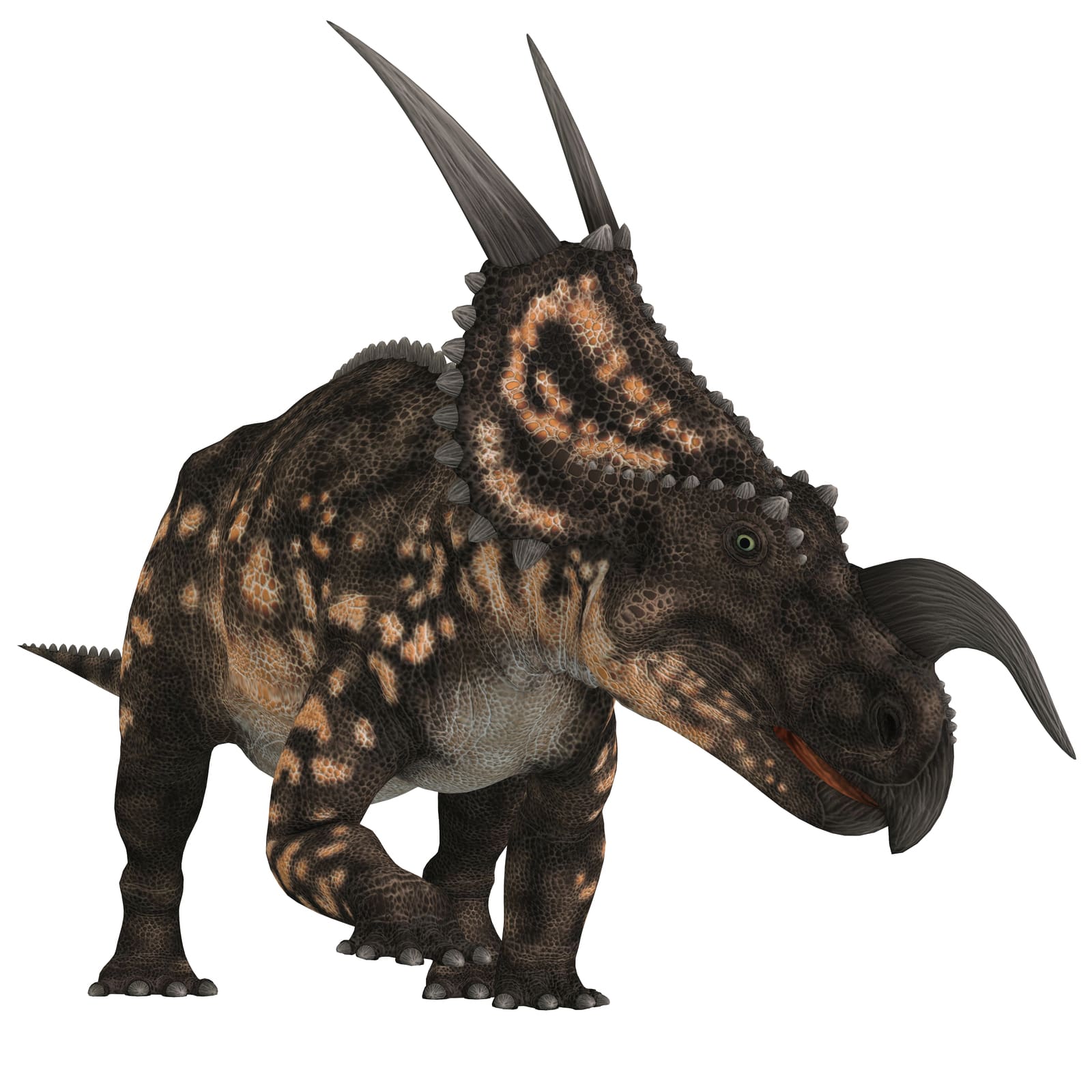
Einiosaurus procurvicornis was a large, herbivorous dinosaur that lived in the Late Cretaceous period, about 76.4-72 million years ago. It belonged to the Ceratopsidae, a group of dinosaurs known for their distinctive neck shields and horns.
Einiosaurus was about the size of a modern elephant, with a body length of about 4.5 meters and a weight of about 1.3 tons. He had a large, triangular head ruff and two long, backward-curving horns on the edge of his neck shield. His body was powerfully built and robust, with a massive, muscular neck and powerful legs. He probably used his neck shield and horns for display and self-defense.
Einiosaurus was a relatively common dinosaur in the Late Cretaceous period of western North America and is known from several well-preserved fossil remains.
length
4.4 meters
Weight
1.1 tons
locomotion
Four-legged
Food
herbivores
Einiosaurus
Systematics
Ornithischia
Occurrence in time
chalk
Happen
Area
country
region
formation
Manage consent
We use cookies to optimize our website and our service.
Functional Always active
Technical storage or access is strictly necessary for the legitimate purpose of enabling the use of a specific service expressly requested by the subscriber or user or for the sole purpose of carrying out the transmission of a message over an electronic communications network.
Preferences
Technical storage or access is necessary for the legitimate purpose of storing preferences not requested by the Subscriber or User.
statistics
Technical storage or access carried out exclusively for statistical purposes.Technical storage or access used exclusively for anonymous statistical purposes. Without a subpoena, the voluntary consent of your Internet service provider, or additional records from third parties, the information stored or accessed for this purpose generally cannot alone be used to identify you.
marketing
Technical storage or access is necessary to create user profiles, to send advertising or to track the user on a website or across multiple websites for similar marketing purposes.