Triceratops
Triceratops: Drei Hörner, ein Rätsel
Ein Nackenschild aus massivem Knochen, drei Hörner und ein Schädel so groß wie ein Kleinwagen: Der Triceratops zählt zu den bekanntesten Pflanzenfressern der Dinosaurier-Geschichte – und war zugleich einer der letzten seiner Art.
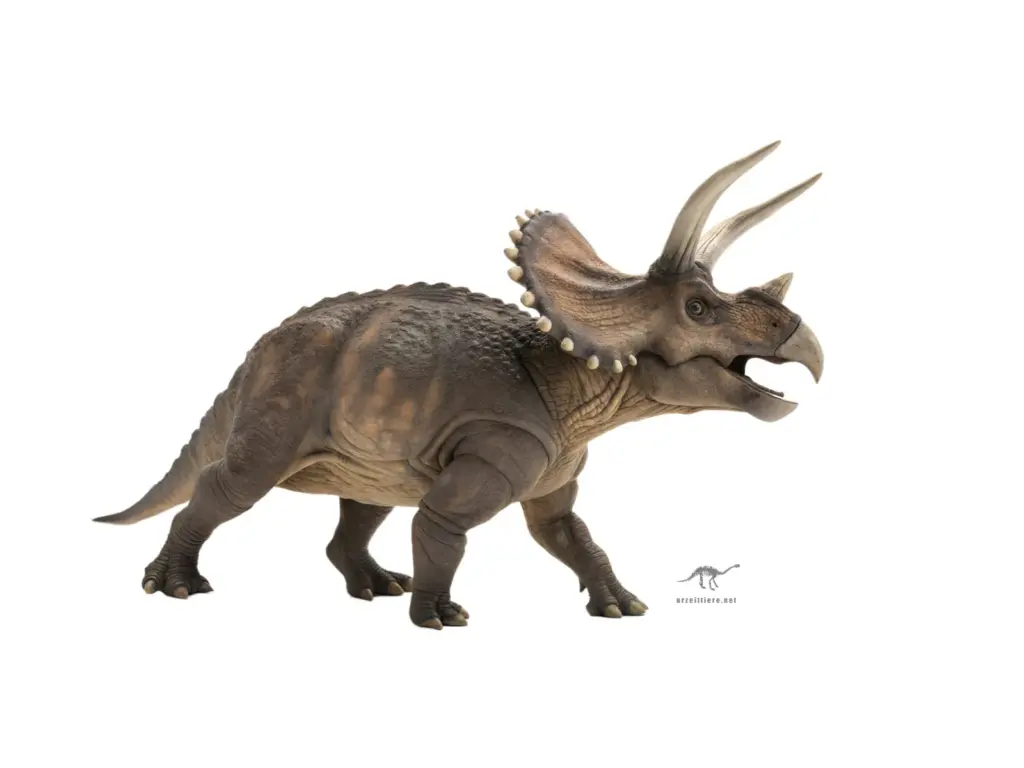
Auf einen Blick
| Merkmal | Wert |
|---|---|
| Länge | bis zu 9 Meter |
| Gewicht | 6–12 Tonnen (Schätzung) |
| Fundort | Nordamerika (v. a. Hell-Creek- und Lance-Formation) |
| Zeitalter | Ende der Oberkreide, Maastrichtium |
| Food | Pflanzenfresser |
| Arten | Triceratops horridus und Triceratops prorsus |
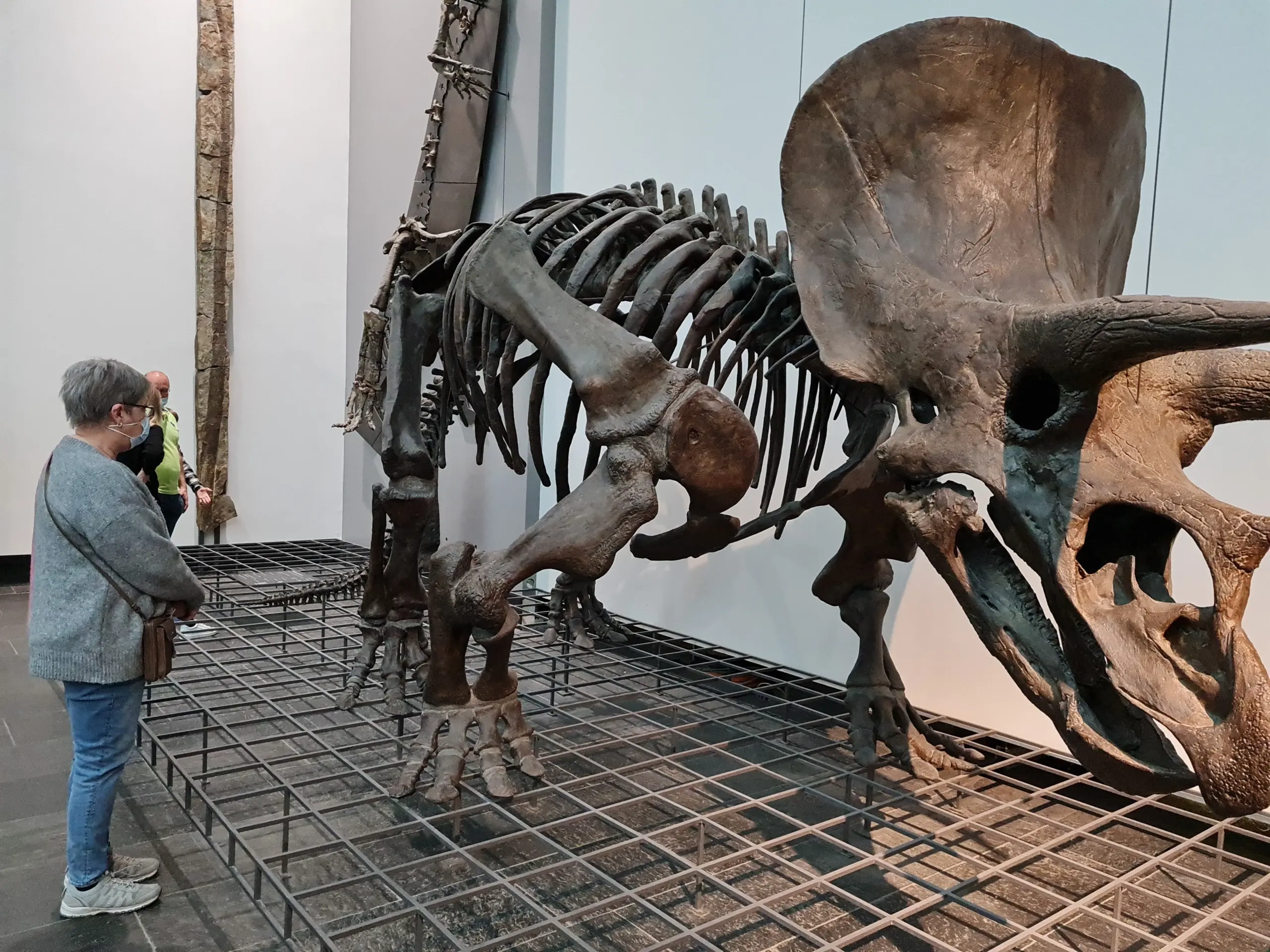
Triceratops gehört zur Gruppe der Ceratopsia, der Horndinosaurier. Er lief auf allen vieren, auf kräftigen, säulenartigen Beinen. Sein Körperbau erinnert an ein heutiges Nashorn – nur deutlich schwerer. Der Kopf machte dabei einen riesigen Teil der Länge aus: Allein der Schädel maß über 2,5 Meter.
Das ist mehr als ein Viertel des ganzen Skeletts. Triceratops lebte am Ende der Oberkreide im heutigen Nordamerika. Zur selben Zeit und in derselben Region lebten auch der Tyrannosaurus rex und der deutlich kleinere Acheroraptor.
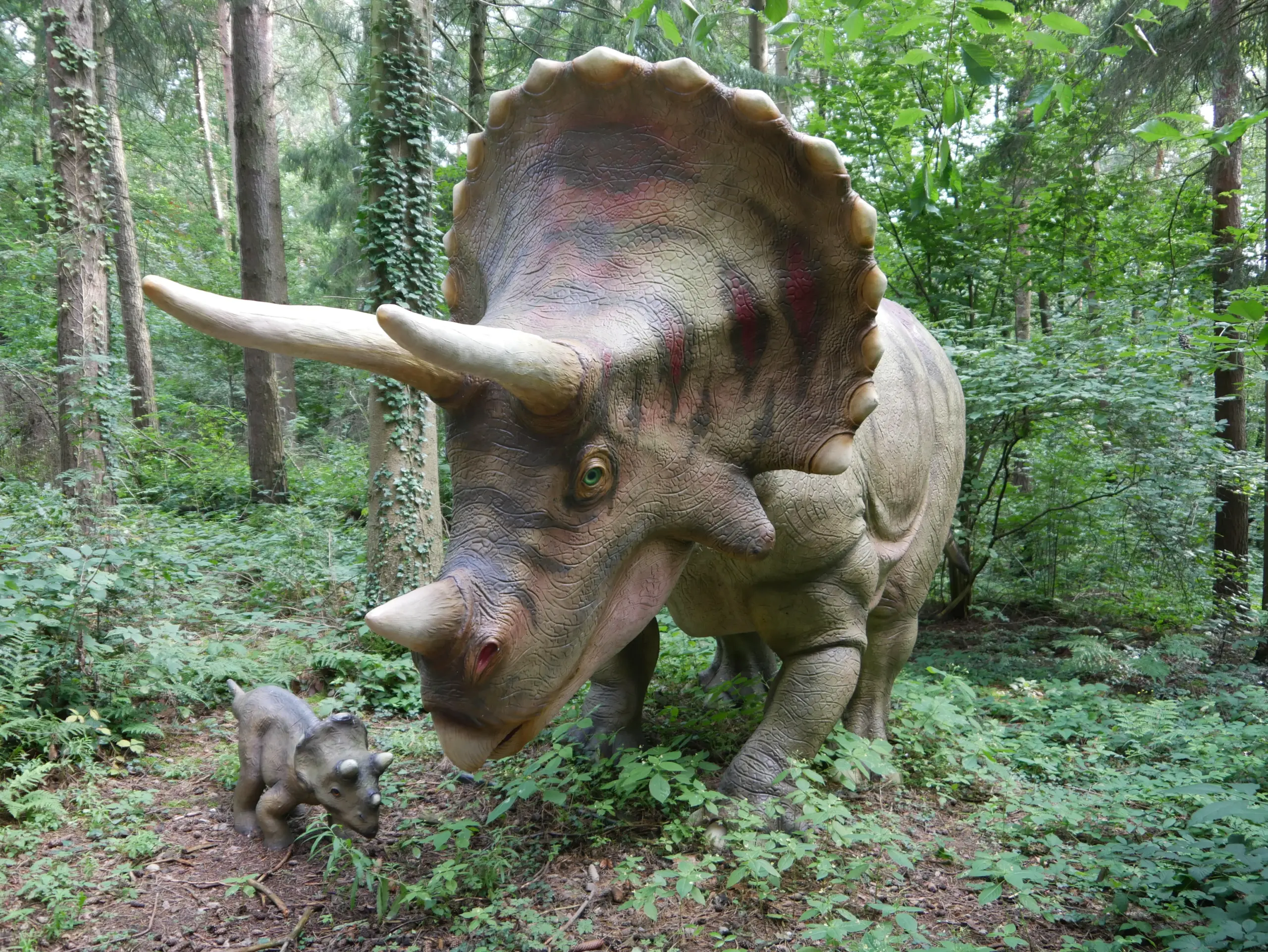
Ein Schädel wie ein Nussknacker
Der Schädel eines Triceratops konnte über 2,5 Meter lang werden – länger als ein Kleinwagen. Ein massiver Knochenschild trug ihn, der sogenannte Frill. Dazu kamen drei Hörner.
Ein kleines, etwa 20 Zentimeter langes Horn saß auf der Nase. Zwei große Hörner über den Augen wurden bis zu einen Meter lang.
Hinter dem Schnabel saß einer der stärksten Kiefer der Dinosaurier-Zeit. Der Unterkiefer wirkte wie ein Hebel. Das zeigt eine biomechanische Analyse aus dem Jahr 1964.
Am Schnabel selbst kam nur ein Teil der Muskelkraft an. Weiter hinten, an den Zähnen, wirkte dank des Hebels bis zum Dreifachen davon.
Waffe, Kühler oder Werbetafel?
Wozu der Nackenschild diente, ist unter Forschenden umstritten. Früher galt er vor allem als Schutzschild gegen Angreifer wie den T-Rex. Heute vermuten viele Forschende eher zwei andere Zwecke: Kühlung des Körpers oder Werbung bei der Partnersuche. Eine endgültige Antwort gibt es bislang nicht.
Neuere Forschung setzt für die Kühlung allerdings eher bei der Nase an als beim Frill. Eine 2026 veröffentlichte Rekonstruktion der Weichteile zeigt gut durchblutete Nasengänge bei Triceratops und seinen Verwandten. Das Blut kühlte sich dort wohl ab, bevor es Gehirn und Augen erreichte. Bei manchen nah verwandten Horndinosauriern fanden Forschende zudem Ansatzstellen für spezielle Riechschwellkörper in der Nase.
Solche Schwellkörper nutzen auch Vögel und Säugetiere zur Kühlung. Bei Triceratops selbst fehlt dieser Nachweis bislang direkt am Knochen. Das Grundprinzip halten Forschende trotzdem für plausibel: Ein großer Kopf braucht eben auch große Kühlflächen.
Kämpften Triceratops wirklich gegeneinander?
Lange galten Verletzungen an Triceratops-Schädeln als Anekdoten. Aufsehenerregende Einzelfunde, aber kein echter Beweis. Eine systematische Studie von 2009 hat das genauer geprüft.
Sie verglich Knochenschäden bei Triceratops mit denen beim verwandten Centrosaurus, der ganz anders geformte Hörner trug. Das Ergebnis: Am seitlichen Teil des Frills war Triceratops deutlich häufiger verletzt als Centrosaurus. An anderen Schädelknochen gab es dagegen keinen Unterschied.
Für die Forschenden passt dieses Muster am besten zu Kämpfen zwischen Artgenossen. Traf ein Horn beim Zusammenstoß auf den Frill des Gegners, zeigte sich das genau an dieser Stelle. Der massive Frill diente demnach der Schau – und schützte zugleich den Nacken vor solchen Treffern.
Ein eindrückliches Beispiel liefert das Skelett „Big John“. Es ist eines der größten bekannten Triceratops-Exemplare aus der Hell-Creek-Formation. Sein rechter Schädelknochen weist ein Loch auf, geformt wie ein Schlüsselloch. Der Rand des Lochs zeigte unter dem Mikroskop frisch gebildeten, heilenden Knochen.
Das schließt aus, dass die Öffnung erst nach dem Tod entstand. Es war eine echte Verletzung, wohl vom Horn eines anderen Triceratops. Das Tier überlebte sie vermutlich noch mindestens ein halbes Jahr.
Ein Riese mit schwacher Nase
Eine CT-Untersuchung zweier Hirnschädel zeichnet ein klares Bild. Triceratops war kein wachsamer, wendiger Jäger. Seine Riechkolben waren im Vergleich zu anderen Dinosauriern klein.
Er roch also vermutlich schlechter als die meisten seiner Zeitgenossen. Auch der Gleichgewichtssinn im Innenohr war weniger fein als bei früheren, wendigeren Horndinosauriern.
Dafür war das Gehör wohl auf tiefe Töne spezialisiert. Aus der Form des Innenohrs errechneten Forschende eine beste Hörfrequenz von rund 290 Hertz. Dieser Bereich eignet sich gut für Rufe über größere Distanzen – ähnlich den tiefen Rufen heutiger Elefanten.
Die Form des Innenohrs verrät zudem eine typische Kopfhaltung: In Alarmstellung zeigte die Schnauze deutlich nach unten. Hörner und Frill wiesen dabei nach vorn, gut sichtbar für Gegner. Der Schnabel zeigte gleichzeitig zum Boden, ideal zum Grasen.
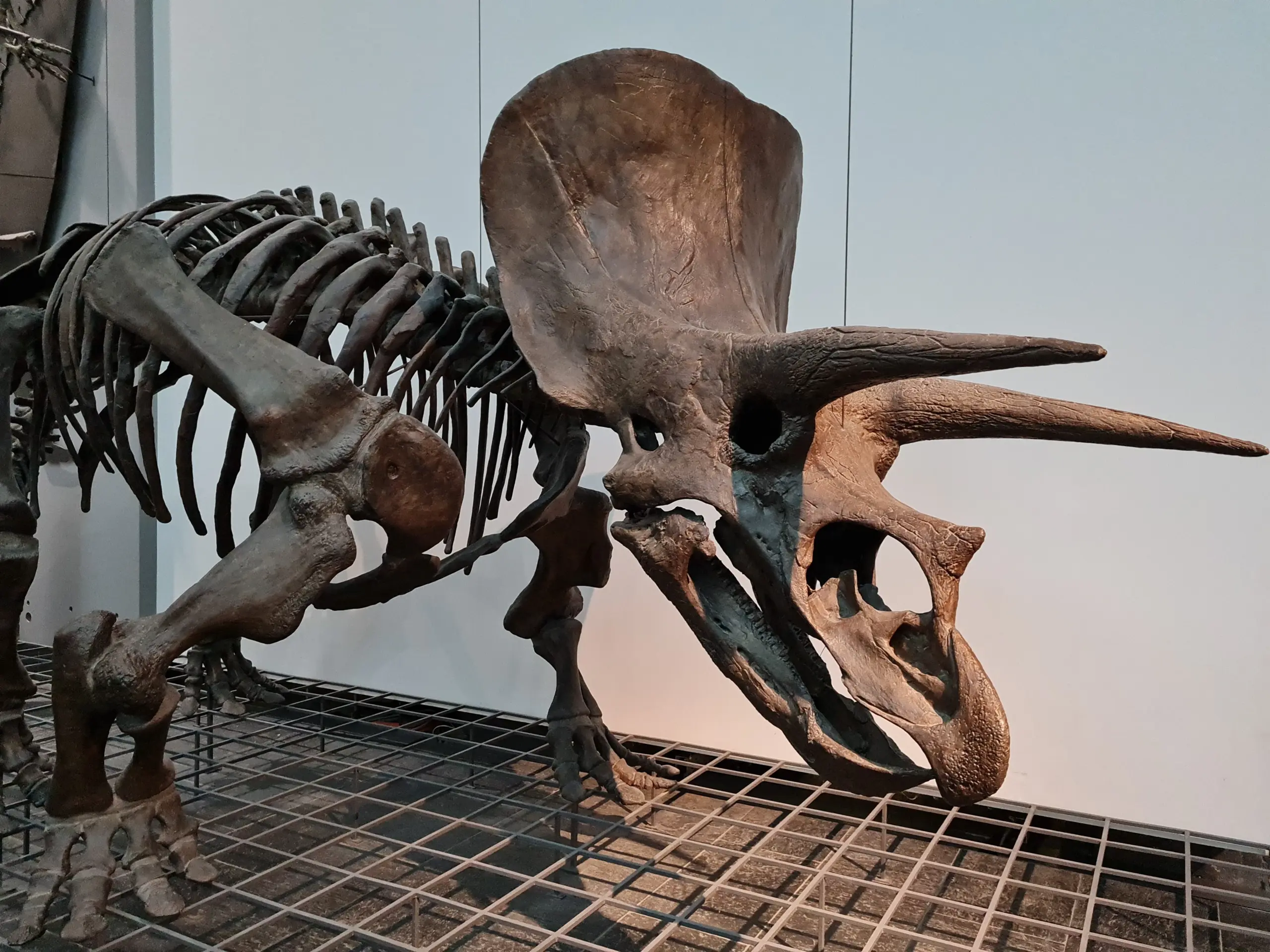
Ein Schnabel für zähe Kost
Als reiner Pflanzenfresser ernährte sich Triceratops von zähen Palmwedeln und Farnen. Sein scharfer, schnabelartiger Mund knickte diese robuste Kost gezielt ab. Das gab ihm einen klaren Vorteil, auch bei besonders zähen Pflanzen.
Zum Zerkleinern reichte der Schnabel allein aber nicht. Dahinter saßen lange Zahnreihen aus dicht gepackten Zähnen. Sie nahmen fast die halbe Kieferlänge ein. Es waren reine Scherklingen, ohne Mahl- oder Quetschfunktion.
Ständig nachwachsende Ersatzzähne hielten diese Reihen scharf. Diese Bauweise passt am besten zu faserigem, zähem Pflanzenmaterial wie Palmen- oder Cycadeenwedeln. Solche Pflanzen gab es in seinem Lebensraum reichlich.
Wie wurde aus einem Dinosaurier ein Bison?
Die Geschichte des Namens Triceratops beginnt mit einer Verwechslung. 1887 erhielt der Paläontologe Othniel Charles Marsh ein Paar fossiler Hornzapfen aus Colorado. Er hielt sie für die Hörner eines riesigen, ausgestorbenen Bisons.
Er nannte sie „Bison alticornis“ – der hochgehörnte Bison. Aus heutiger Sicht wirkt das seltsam. Damals war es aber nachvollziehbar: Isolierte Hörner von Horndinosauriern ähneln Rinderhörnern tatsächlich stark.
1888 erhielt Marsh einen kleineren Hornschädel aus Montana. Die Bison-Deutung geriet ins Wanken. Den entscheidenden Hinweis lieferte 1889 ein vollständigerer Schädel. Marsh nannte ihn „Triceratops horridus“.
Dabei erkannte er: Die alten „Bison“-Hörner gehörten wohl zur selben Gattung. Die vermeintlichen Rinderhörner waren also die Überaugenhörner eines Triceratops. Bestätigt wurde das erst 2003 – über hundert Jahre später. Damals fanden Forschende einen echten Triceratops-Schädel nahe der alten Fundstelle.
War Torosaurus in Wirklichkeit ein ausgewachsener Triceratops?
Eine hartnäckige Streitfrage der Horndinosaurier-Forschung dreht sich um den nah verwandten Torosaurus. Sein Frill ist deutlich länger und hat zwei große, runde Fensteröffnungen. Manche Forschende glauben: Torosaurus ist gar keine eigene Gattung.
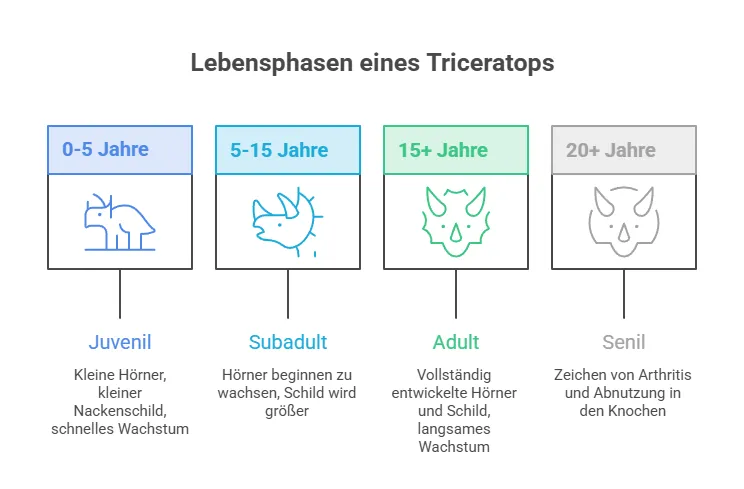
Er ist einfach das ausgewachsene Alterstadium von Triceratops, so eine 2010 vorgestellte Hypothese. Erst im hohen Alter, so die Idee, bilden sich im massiven Frill diese Löcher.
Eine große Studie an über 50 Triceratops-Schädeln aus der Hell-Creek-Formation stützt diese Idee indirekt. Sie zeigt: Die beiden Arten Triceratops horridus und Triceratops prorsus liegen im Gestein sauber getrennt. Dazwischen gibt es Übergangsformen.
Das spricht für eine einzige Linie, die sich über ein bis zwei Millionen Jahre langsam verändert hat. Nicht für zwei getrennte Arten. Ein ähnlicher, stetiger Wandel würde auch erklären, warum Triceratops im Alter zu Torosaurus werden könnte.
Andere Forschende widersprechen deutlich. Eine eigene Untersuchung ordnete Schädel beider Gattungen nach ihrem Alter. Das Ergebnis: Sowohl bei Torosaurus als auch bei Triceratops gab es junge und alte Tiere. Torosaurus war also nicht durchgängig älter.
Auch die Zierknochen am Frillrand passen nicht zusammen. Torosaurus hat zehn oder mehr, Triceratops nur fünf bis sieben. Eine Zwischenstufe fehlt bislang.
Der Streit ist bis heute nicht entschieden. Er zeigt aber, wie schwer es bei Dinosauriern ist, Wachstum von echten Arten zu unterscheiden. Dieses Problem begleitet Triceratops schon seit seiner Erstbeschreibung.
Ursprünglich beschrieben Forschende bis zu 16 verschiedene Triceratops-Arten. Heute gelten davon nur noch ein bis zwei als gültig.
Frequently Asked Questions (FAQ)
What are the special features of a Triceratops? The three large horns (two above the eyes, one on the nose) and the massive neck shield are the most striking features. In addition, there is the parrot-like beak and up to 800 teeth.
What was the Triceratops' natural enemy? The main enemy was Tyrannosaurus rex. Fossil bite marks prove that these two giants actually fought each other.
How many teeth does a Triceratops have? A Triceratops had between 600 and 800 small, sharp teeth, arranged in batteries and constantly growing.
How old could a Triceratops live? Estimated life expectancy is 25-30 years based on bone analysis and growth rings.
How many horns did Triceratops really have? Exactly three horns: two large ones above the eyes (up to over 1 meter long) and a smaller one on the nose (about 60 cm).
What did Triceratops eat? Various plants such as ferns, conifers, cycads and early flowering plants. About 200-400 kg of plant material daily.
Where was Triceratops found? Mainly in the Hell Creek Formation in Montana, North Dakota, South Dakota and Wyoming, as well as in Alberta, Canada.
How fast could a Triceratops run? Due to its massive build, it probably only reached 15-25 km/h - about as fast as a rhinoceros.
Mehr zum Thema auf urzeittiere.net
- Tyrannosaurus rex – fleischfressender Zeitgenosse aus derselben Epoche und Region, mutmaßlicher Gegenspieler.
- Acheroraptor – kleinerer Raptor, ebenfalls aus der Hell-Creek-Formation und derselben Zeit.
- Camptosaurus – ebenfalls Pflanzenfresser, aber rund 80 Millionen Jahre älter und aus dem Jura statt der Kreidezeit.
Triceratops
| scientific name | Triceratops horridus |
| Estimated size | Length: up to 9 meters Height: 2.9 meters Gewicht: 6–12 Tonnen (Schätzung) |
| geological era | Upper Cretaceous |
| Locations | Lance, Laramie, Hell Creek, Denver, Frenchman ?, Scollard ?, Evanston ? |
| Order | Ornithischia |
| Subordination | Neornithischia |
Physical characteristics
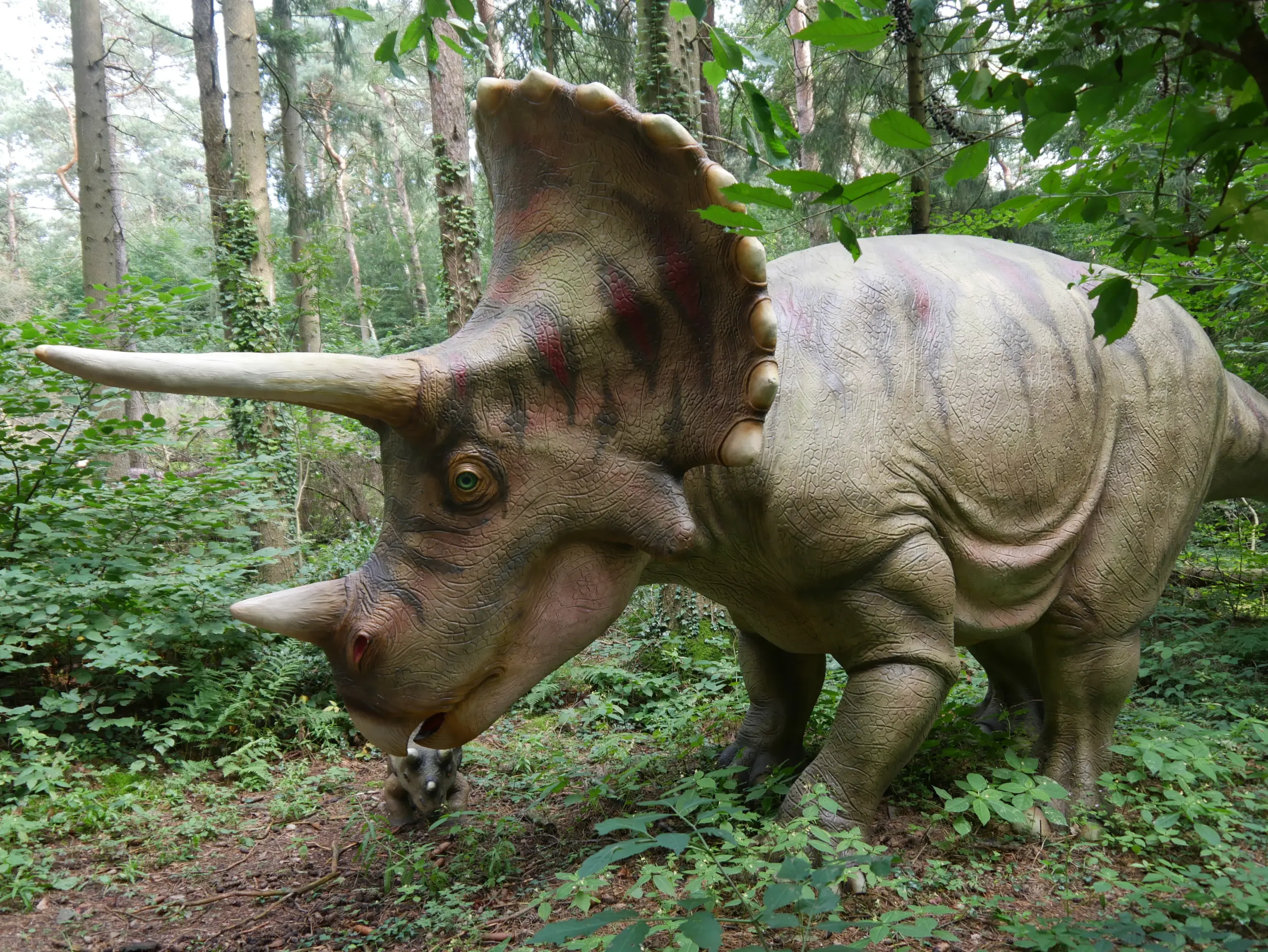
| anatomy | Large, massive, four-legged herbivore with a powerful skull and short tail. |
| Special features | Three horns and a large neck shield. |
| locomotion | Four-legged |
| Skin texture | Probably scaly, reptilian skin. |
| Coloring | Not known for sure; probably more muted camouflage colors. |
discovery
| Explorer | Marsh |
| Discovery date | 1889 |
| Meaning of the name | Three horn face |
| Significant fossil finds | At least several dozen individuals. |
In paleontology, the ratio of brain to body size, the so-called Encephalization quotient (EQ), used as a rough guide to relative intelligence.
| Intelligence (EQ) | Rather low to medium for dinosaurs. |
| Social behavior | Probably partly in groups, but not confirmed with certainty. |
| Predators | Especially large predatory dinosaurs like Tyrannosaurus rex. |