Aardonyx celestae
Aardonyx was a basal sauropodamorph that lived in the Elliott Formation during the Early Jurassic and what is now the Free State, South Africa.
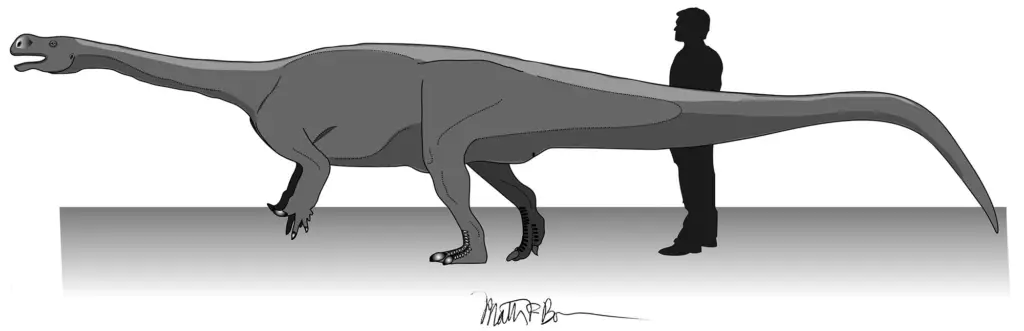
He had a small head, a long neck and tail, and a large body. It was both bipedal and quadrupedal, but mostly moved on two legs. Its arms have features intermediate between prosauropods and sauropods.
It shows that sauropodamorphs had features that eventually made sauropods quadrupeds, and it shows that sauropods walked on quadrupeds much earlier than previously thought. The forelimbs were shorter than the hindlimbs. They make up about 72 percent of the length.
Aardonyx celestae
| Getting around: | biped |
| Food: | herbivores |
| Length: | 8.7 meters |
| Height: | 2 m |
| Weight: | 1.7 t |
Systematics
| Dinosauria |
| Saurischia |
| Eusaurischia |
| Sauropodomorpha |
| Plateosauria |
| Massopoda |
| Sauropodiformes |
| Anchisauria |
Occurrence in time
| chalk |
| 195 Ma |
| Hettangian - Sinemurian |
Happen
| Area | Africa |
| country | South Africa |
| region | Free State |
| formation | Upper Elliot |
However, the forearm bones were interlocked, just like in sauropods, which walked on four legs. The femur was stretched to support the weight, its feet were flat and had large claws. So it had a slower, more powerful gait than other basal sauropodomorphs, and it had short, powerful feet that were more robust than those of more basal sauropodomorphs.
It is related to the closest known group of obligate quadrupedal sauropodomorphs. Aardonyx is much more closely related to the eusauropods than Kholumolumo, which only evolved 50 million years later.
Aardonyx also helped show the transition to sauropods, which grazed in large quantities. He had narrow, v-shaped jaws that were a little different. Later, sauropods had wide, U-shaped jaws that allowed them to take wider bites.
There is no lateral ridge on the back of the dentition, meaning it did not have fleshy cheeks and could open its mouth wider to eat in large quantities. So the beginnings of “mass grazing”.
However, the more evolved sauropodomorph Chinshakiangosaurus had U-shaped jaws and fleshy cheeks, and this could mean that the broad cheekless jaw could have evolved multiple times in sauropods. So this is all based on the assumption that the ridge in the dentition is an attachment point for some kind of cheek muscle, and also on the v-shaped jaws as opposed to the u-shaped jaws.
The only way is Aardonyx celestae. The generic name means in German “Earthclaw“.
It is named for the large, earth-encrusted claws that were among the first dinosaur fossils found. The species name is in honor of Celeste Yates, who prepared much of the fossil material. The species was described by Adam Yates and others in 2010. The holotype includes part of the left upper jaw and there are other specimens containing parts of the skull, vertebrae, ribs and parts of the limbs.
Two specimens were found that were disarticulated and believed to be under 10 years old based on growth rings. The individuals were found together and largely unharmed, so it is possible they drowned in a flash flood.
Aardonyx is estimated to be about seven meters long, although histological analysis suggests the adults may have been larger. Both young animals were probably still growing.
Aardonyx lived in a dry desert with streams and oases.
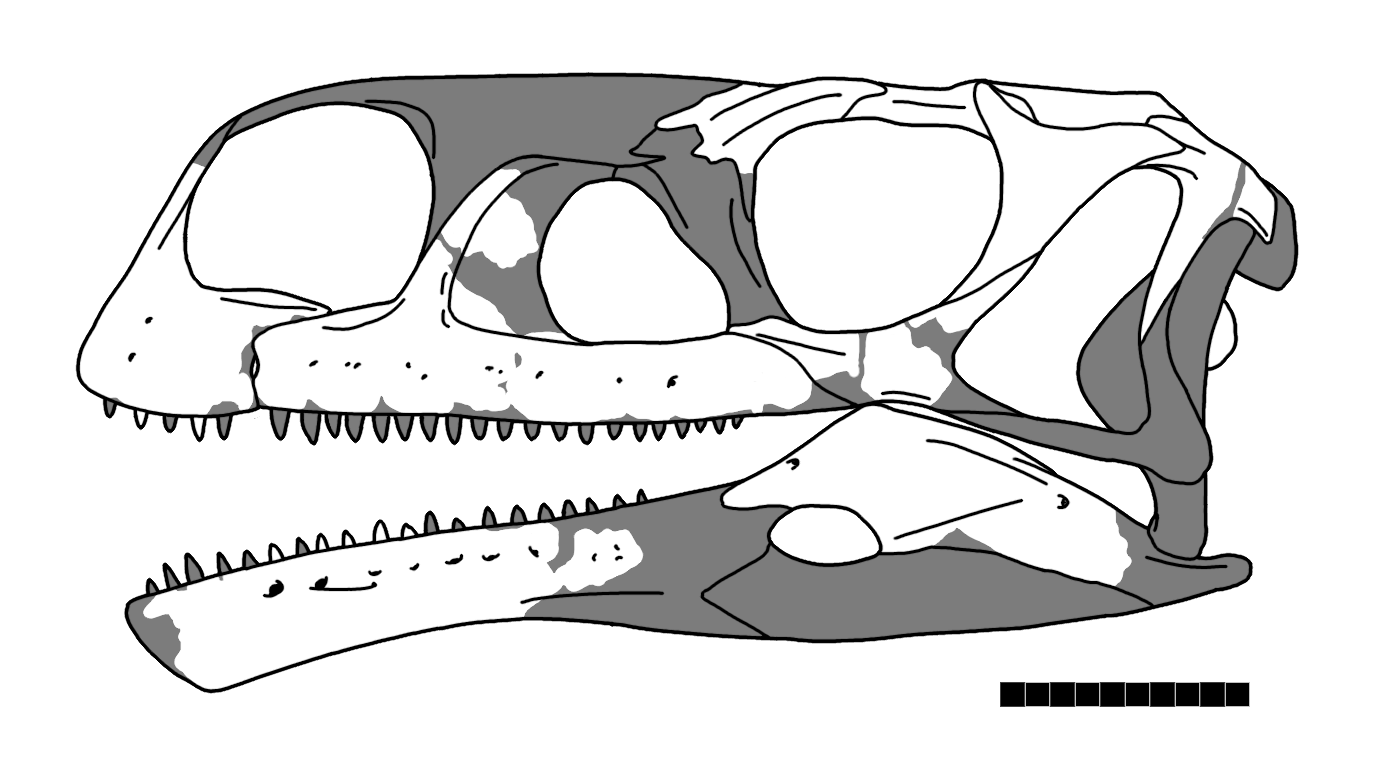
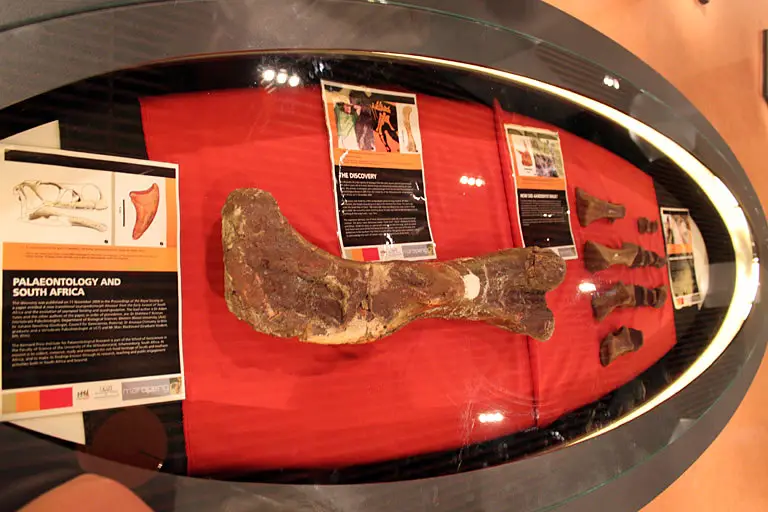
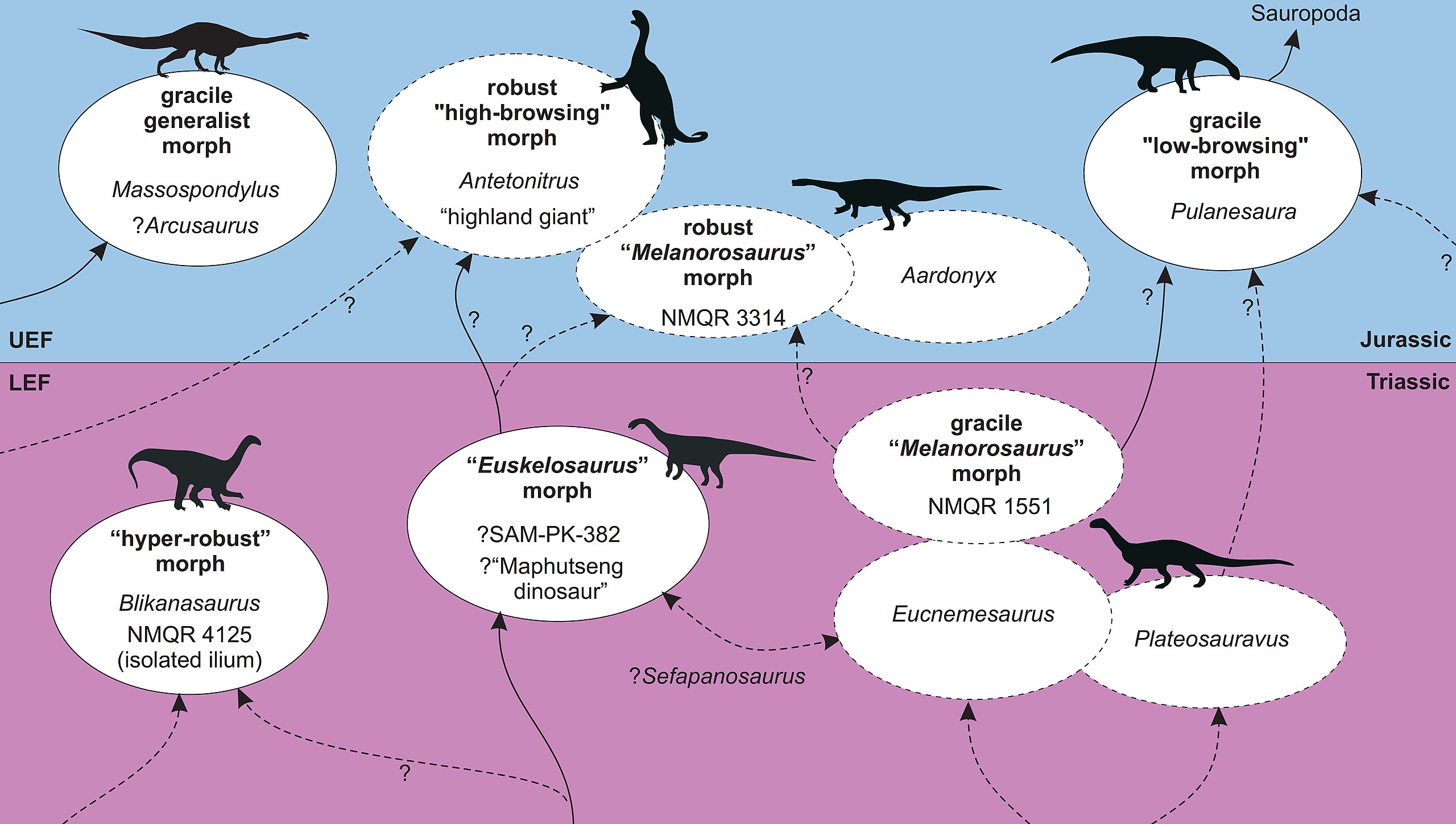
Image sources: Aardonyx by NTamura Creative Commons Attribution-Noncommercial-No Derivative Works 3.0 License
Size comparison: Mbonnan1, Public domain, via Wikimedia Commons
Aardonyx_skull: IJReid, CC BY 4.0 https://creativecommons.org/licenses/by/4.0, via Wikimedia Commons
Fossil: flowcomm
Sauropodomorph fauna of the Elliot Formation: Blair W. McPhee, Emese M. Bordy, Lara Sciscio, and Jonah N. Choiniere, CC BY 4.0 https://creativecommons.org/licenses/by/4.0, via Wikimedia Commons