Carcharodontosaurus
Carcharodontosaurus – The “shark-toothed lizard”
Carcharodontosaurus is one of the most famous large meat-eating dinosaurs. It lived in Africa in the Late Cretaceous and was first discovered and described in North Africa by the French explorers Charles Depéret and J. Savornin (1925).
It was not only one of the largest and heaviest carnivores of its time, but was arguably the largest terrestrial predator ever known. Some experts suggest it may have been at least 10% larger than Giganotosaurus, the largest known carnivorous dinosaur to date.
It was up to 15 meters long and moved on two legs. His arms were short yet strong. Compared to Tyrannosaurus rex, the arms were still longer. It had three fingers on each of its hands with long claws that were used to grip better and perhaps even to kill prey.
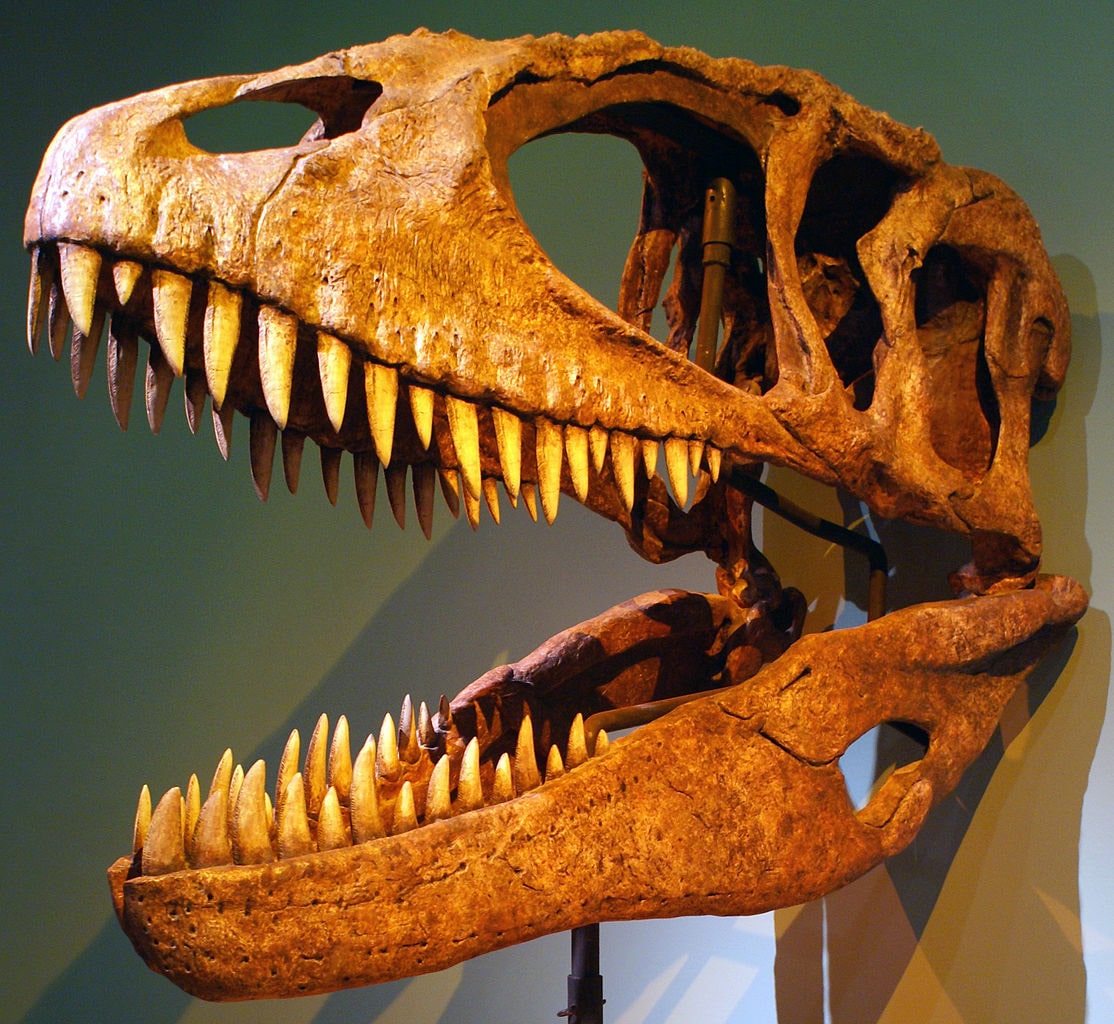
Carcharodontosaurus had a skull that was among the largest of all meat-eating dinosaurs.
His head was almost as long as the height of an average human.
| Profile | Carcharodontosaurus |
|---|---|
| epoch | Upper Cretaceous (Cenomanian) 100.5 to 93.9 million years ago |
| Order | Lizard-pelvis dinosaur (Saurischia) |
| Subordination | Theropoda |
| Family | Allosauroidea |
| group | Carcharodontosauridae |
| genus | Carcharodontosaurus |
| species | C. saharicus, C. iguidensis |
| Height | 5 meters |
| length | 13.7 meters |
| Weight | 5 tons |
| Locations | Africa (Morocco, Egypt, Niger, Algeria, Libya, Tunisia) |
Carcharodontosaurus was a close relative of Giganotosaurus
Carcharodontosaurus was a huge, heavily built theropod dinosaur that roamed the plains of the ancient Northern Hemisphere during the Late Cretaceous Period, about 90 million years ago. This is a time when the supercontinent Pangea was already beginning to break apart, causing sea levels to fall and the world's climate to become warmer and drier. And it was also a time when theropods like Carcharodontosaurus became the dominant large carnivores.
The shark-toothed lizard is a member of the family Allosauroidea and was a close relative of Giganotosaurus and several others. The family is characterized by relatively very large, robust teeth. They had short, broad skulls that were very strong.
In terms of size and weight, it could rival its close relative, the ten-ton Giganotosaurus from South America.
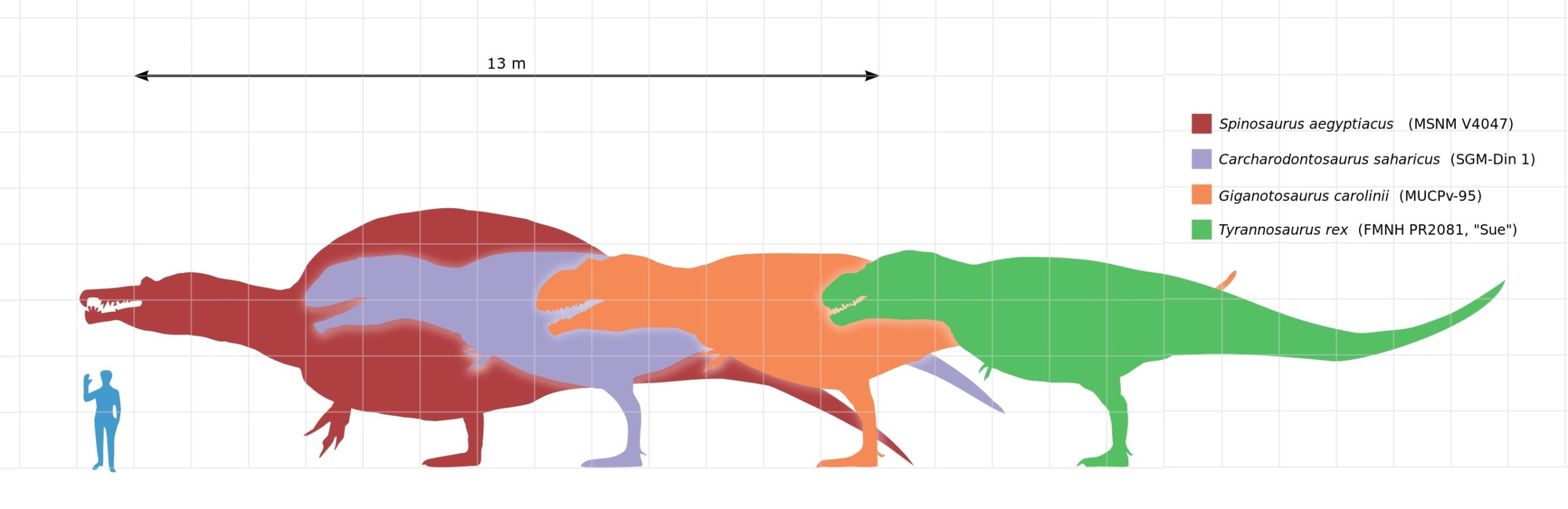
Carcharodontosaurus is sometimes called the “African T. Rex.”
Many people are with that Tyrannosaurus rex familiar, often referred to as the king of the dinosaurs. But Carcharodontosaurus is almost as famous. This dinosaur has similar features to T. rex, but was slightly larger and probably even deadlier. It is often referred to as the African T. rex because of its similarity to Tyrannosaurus Rex.
What does the name Carcharodontosaurus mean?
This dinosaur was named by paleontologist Ernst Stromer von Reichenbach and means “shark-toothed lizard.” Stromer had a penchant for naming dinosaurs after ancient sea monsters and lizards, the latter of which may explain where the "shark" part of the name comes from. They reminded him of the teeth of the shark genus Carcharodon. The “white shark” (Carcharodon carcharias) also belongs to this genus.
What was the bite force of Carcharodontosaurus?
It had serrated teeth on both sides, barely curved and about 9 cm (3.5 inches) long.
Its bite was one of the strongest of any land animal. The force of its bite was at least 12,800 Newtons (3,000 pounds or 1,368 kg), much stronger than some modern predators such as lions and tigers.
This allowed it to be the apex predator of its time, easily preying on herbivores such as the Ouranosaurus.
Spinosaurus fought with Carcharodontosaurus
While the shark-toothed lizard was probably the top predator in its ecosystem, that doesn't mean it didn't have to compete with other top predators.
There has been much speculation over the years as to whether Spinosaurus aegyptiacus ever fought with Carcharodontosaurus saharicus. We know that Spinosaurus lived in North Africa, while Carcharodontosaurus was restricted to Morocco and Algeria. However, there is little doubt that the two titans of the Cretaceous period encountered each other.
Since Spinosaurus was most likely a specialized fish eater, both dinosaurs were not in direct competition with their respective prey. In addition, there is no scientific evidence of conflicts between the two dinosaurs.
Fossils of another competitor for prey were found in the same formations. Sarcosuchus, nicknamed “SuperCroc,” lived at the same time as Carcharodontosaurus.
Image sources: Fred Wierum, CC BY-SA 4.0 https://creativecommons.org/licenses/by-sa/4.0, via Wikimedia Commons
Skull: Franko Fonseca from Redondo Beach, USA, CC BY-SA 2.0 https://creativecommons.org/licenses/by-sa/2.0, via Wikimedia Commons
Size comparison: User:Dinoguy2, vectorized by User:Dinoguy2 and User:Dhatfield, modified by User:Slate Weasel to match existing chart., CC BY-SA 3.0 https://creativecommons.org/licenses/by-sa/3.0, via Wikimedia Commons