Utahraptor
Utahraptor: The giant armored raptor of the Cretaceous period
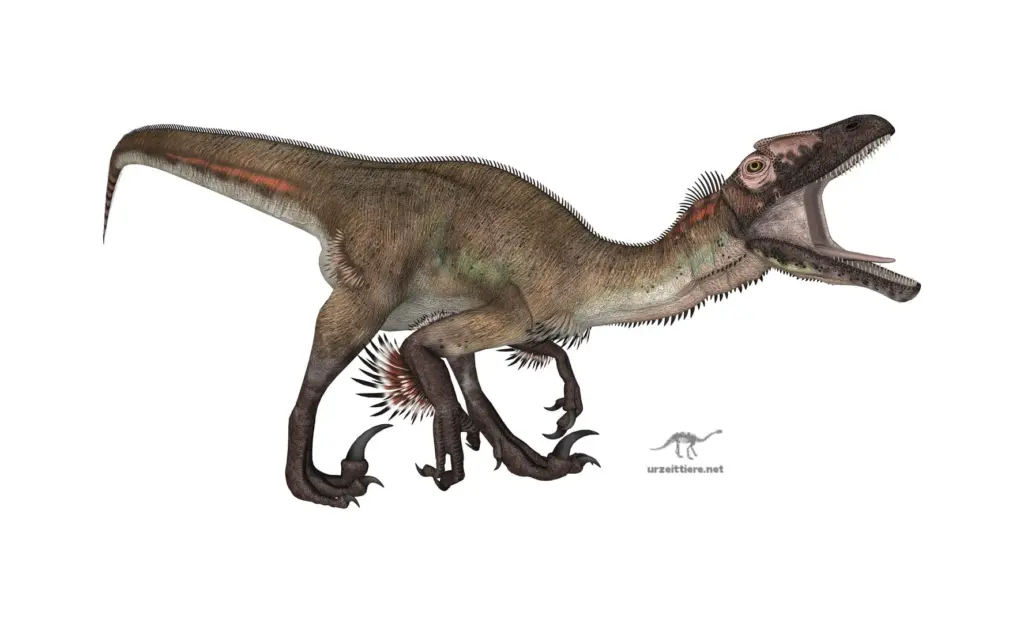
The Utahraptor was the largest known member of the Dromaeosauridae – the family of sleek, feathered carnivores that also includes the more famous Velociraptor. With a length of 5 to 7 meters and a weight of up to a ton, it was anything but the small, agile hunter that many people know from films. His fossils were discovered in the US state of Utah, which gave him both his name and his permanent place in popular culture - from cinema to video games.
Profile: Utahraptor at a glance
| feature | Value |
|---|---|
| Scientific name | Utahraptor ostrommaysi |
| length | approx. 5-7 m |
| Height (hips) | approx. 1.5 m |
| Weight | approx. 300-1,000 kg |
| Nutrition | Carnivore (meat eater) |
| locomotion | Bipedal (bipedal) |
| age | Lower Cretaceous, approx. 135–130 million years |
| Location | Cedar Mountain Formation, Utah (USA) |
Discovery and fossil finds
The genus was described in 1993 by paleontologist James Kirkland and his team. The basis was fossils from the Cedar Mountain Formation in eastern Utah - a rock layer that has preserved numerous important finds from the Lower Cretaceous. The Dalton Wells Quarry, a quarry that is now located in Utahraptor State Park and owes its name to the famous find, was particularly productive. Unlike many other dinosaurs, only fragmentary material is available from Utahraptor - a complete skeleton has not yet been recovered, but the finds are sufficient to demonstrate its enormous dimensions.
Body type, height and weight
The Utahraptor defies any comparison with the smaller raptor species: While a Velociraptor was barely larger than a turkey, the Utahraptor reached a length of up to 7 meters - making it the largest raptor ever discovered. His frame was massive and strong, not slender like most of his relatives. Depending on the study, weight estimates vary between 300 and a good 1,000 kilograms for adult animals, which makes it significantly heavier than all other dromaeosaurids.
The sickle claw: Utahraptor's deadly weapon
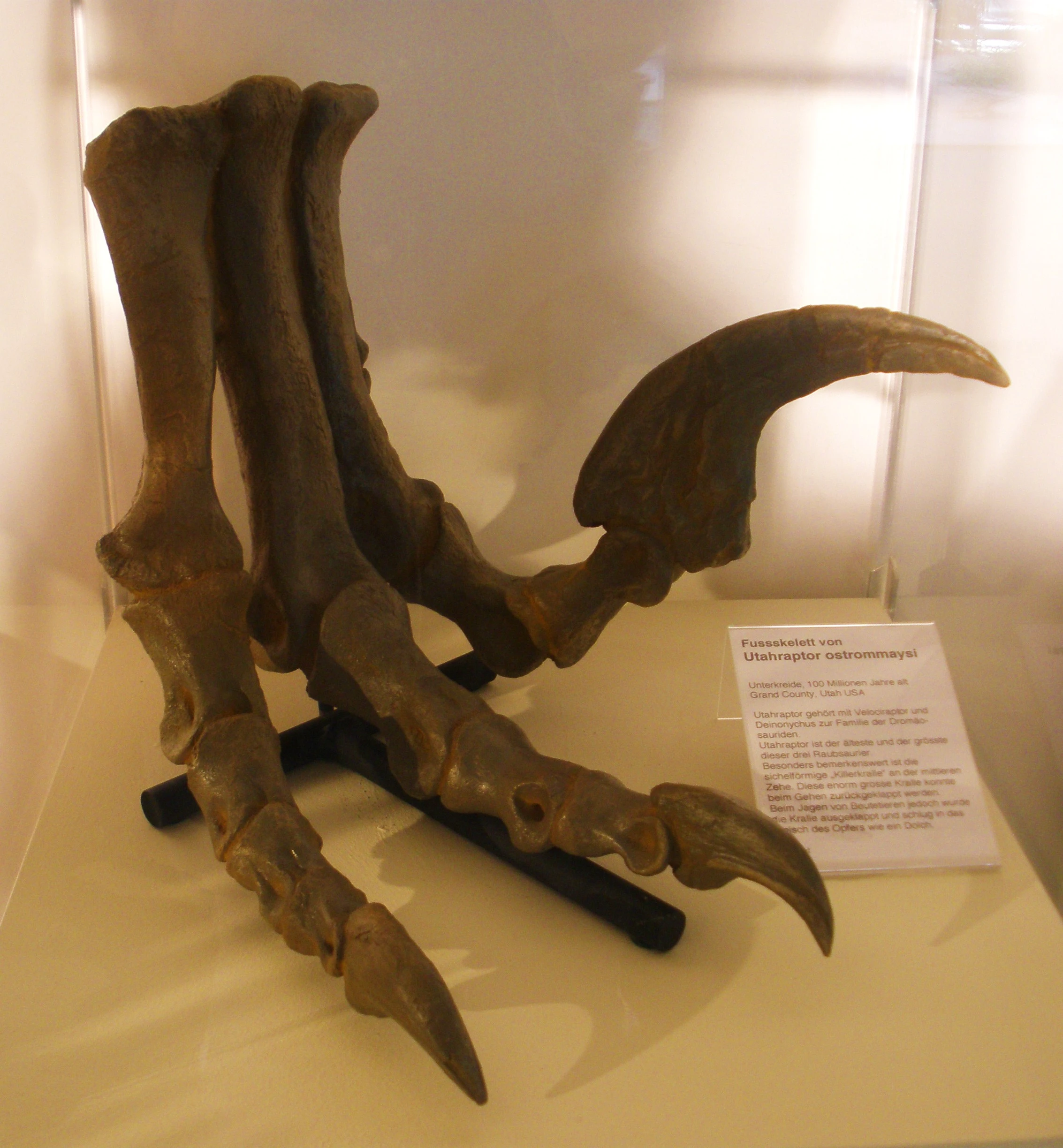
Like all dromaeosaurids, Utahraptor had a greatly enlarged, sickle-shaped claw on the second toe of each hind foot. In his case, this claw reached a length of up to 20 centimeters - the largest known on a raptor. In combination with powerful jaws and sharp, serrated teeth, he probably used them to seriously injure prey with well-aimed kicks.
Feathers and appearance
Although no direct feather prints have been recorded of Utahraptor itself, paleontologists assume, based on close relatives, that it was at least partially feathered. These feathers were probably not used for flight, but rather for isolation, courtship or communication within the species - an image that differs greatly from the scaly film version from Jurassic Park.
Diet and hunting behavior: The ambush hunter
As a carnivore, Utahraptor hunted other inhabitants of its ecosystem, including armored ankylosaurs and herbivorous iguanodontids. The physiology of its legs suggests that it was not a persistent chaser like smaller relatives, but rather attacked from ambush - its massive stature is better suited to short, powerful attacks than long sprints.
Habitat and era
The Utahraptor lived in what is now Utah during the Early Cretaceous, around 135 to 130 million years ago. The Cedar Mountain Formation in which his fossils were found paints a picture of a varied river landscape in which he encountered not only ankylosaurs and iguanodontids but also smaller dinosaurs such as Nedcolbertia.
Utahraptor vs. Velociraptor: The Differences
| feature | Utahraptor | Velociraptor |
|---|---|---|
| length | 5-7m | approx. 2 m |
| Weight | 300-1,000kg | approx. 15-20kg |
| anatomy | massive, powerful | slim, light |
| Hunting strategy | probably ambush | Persecution |
| Habitat | North America (Utah) | Mongolia |
Despite the common part of the name “Raptor” and the close family relationship within the Dromaeosauridae, the two species are hardly more different than possible: the Velociraptor was the agile small hunter, the Utahraptor the heavy giant of its family.
Utahraptor in Jurassic World, Ark and as a toy
The Utahraptor is one of the dinosaurs that became more famous through pop culture than its fragmentary fossil record suggests. In the Jurassic World series he is portrayed as a particularly frightening, oversized raptor. He is also one of the tameable creatures in the survival game Ark: Survival Evolved and is popular with players for his strength and size. There are also high-quality ones for collectors Utahraptor figures, for example from Schleich, which faithfully reproduce the massive physique.
Frequently asked questions about Utahraptor
Related raptor species
Utahraptor was not the only dromaeosaurid of its time. If you are interested in the entire raptor family, you will find further profiles Velociraptor as well as - when available - to Deinonychus and Dakotaraptor, two other North American relatives.
Disclosure: Some of the links on this website are so-called affiliate links. This means that I will receive a commission if you purchase a product through this link. This comes naturally to you no additional costs. I only recommend products that I personally believe in or that I use myself.
Image sources:
Utahraptor sickle claw: Ghedoghedo, CC BY-SA 3.0, via Wikimedia Commons