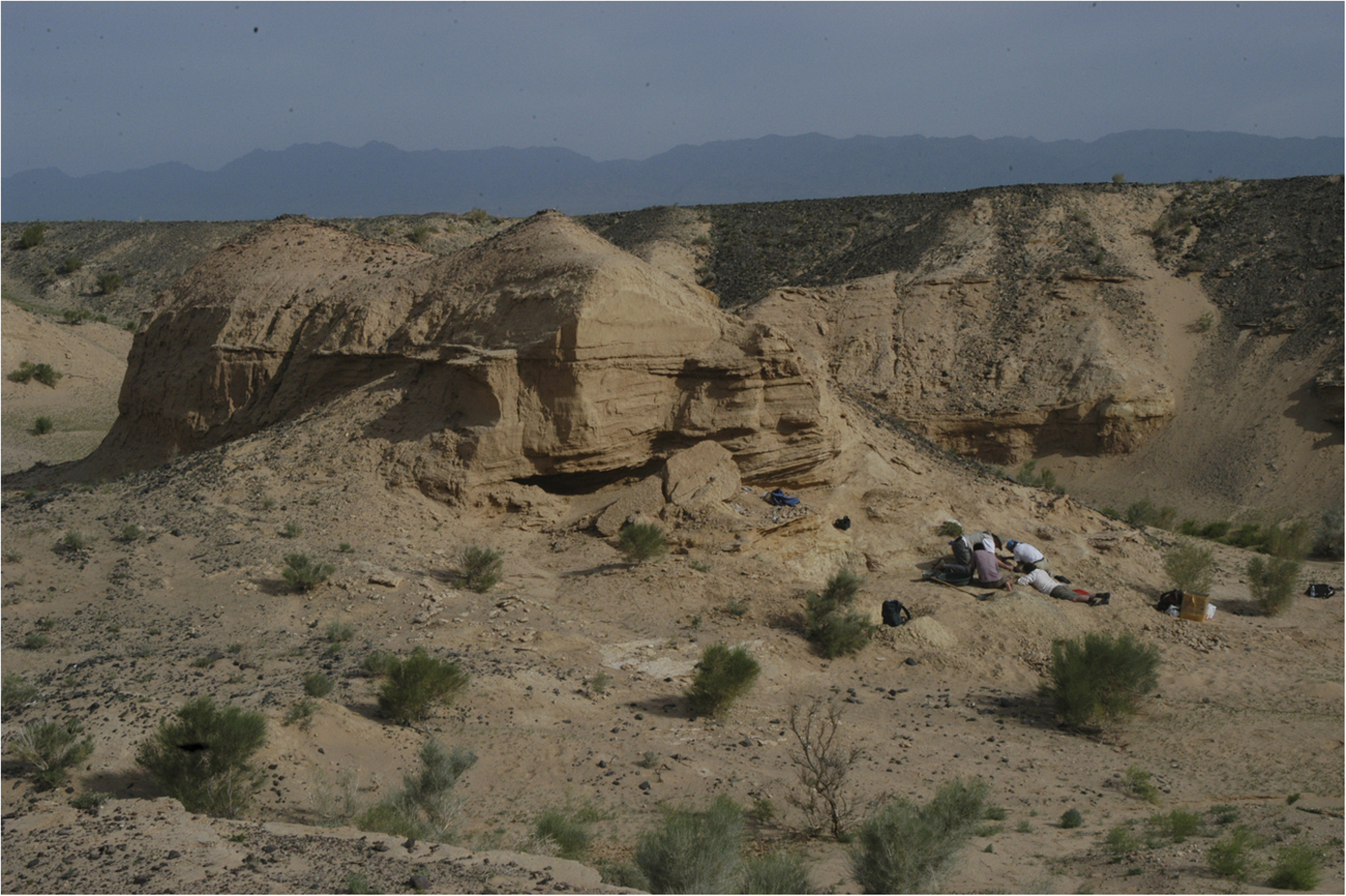
Nemegt Formation
What is the Nemegt Formation in Mongolia?
The Nemegt Formation (also known as Nemegtskaya Svita) is one of the most important dinosaur fossil sites in the world and is located in the southern part of the Mongolian Gobi Desert. This geological formation originated in the Late Cretaceous period, approximately 70 to 66 million years ago, and is named after the Nemegt Basin in which the fossil sites are located.
Geologically speaking, the Nemegt Formation consists mainly of sandstones and mudstones that formed in a completely different climate than the one we know today in the Gobi Desert. During its formation, the area had a humid tropical climate with extensive river deltas and lush vegetation. The region was crisscrossed by a dense network of rivers that transported and deposited large quantities of sediment.
The formation extends over several hundred square kilometers in the Nemegt Basin and is part of a larger geological system encompassing various Cretaceous strata. The characteristic reddish-brown color of the rocks is caused by iron oxide inclusions, making the formation easily recognizable even to the untrained eye.
Particularly remarkable is the extraordinary thickness of the sediment layers, some of which are several hundred meters thick. These enormous deposits were formed by a continuous influx of sediment over millions of years. The different layers of the formation document various phases of the Late Cretaceous period and allow paleontologists to trace the evolution of the dinosaur fauna over long periods.
The Nemegt Formation is not only known for its dinosaur fossils, but also contains remains of mammals, turtles, crocodiles, and other vertebrates from the Late Cretaceous period. This diversity makes it an important archive for understanding the ecosystems shortly before the great mass extinction at the end of the Cretaceous.
Why were so many dinosaurs found in Mongolia?
The exceptional abundance and quality of dinosaur fossils in the Mongolian Gobi Desert is the result of a unique combination of geological and climatic factors. These conditions have made Mongolia one of the most important dinosaur fossil sites in the world.
The most important factor for the excellent fossil preservation was the ideal sedimentation conditions during the Cretaceous period. The numerous river deltas in the region led to rapid and continuous deposition of sand and mud. When dinosaurs died and were buried in these sediments, the covering occurred so quickly that decomposition was halted and the fossilization process was initiated.
The high biodiversity of the Late Cretaceous period in this region was another crucial factor. The humid, tropical climate provided ideal living conditions for a large number of different dinosaur species. From enormous predatory dinosaurs to herbivorous giants and smaller reptiles, the Nemegt Formation was home to one of the most diverse dinosaur ecosystems ever discovered.
Current conditions in the Gobi Desert greatly favor the exposure of fossils. The arid desert landscape with sparse vegetation and low rainfall leads to continuous erosion, constantly bringing new fossils to the surface. Windstorms and rare but heavy rainstorms regularly wash away the top layer of rock, exposing the fossils beneath.
A practical advantage for fossil hunting is the region's low population density. Unlike Europe or other densely populated areas, the Gobi Desert has hardly any cities or intensive agriculture that would hinder excavations. This allows for large-scale and undisturbed research.
Systematic exploration of the region began as early as the 1920s with American expeditions and was later continued by Polish-Mongolian teams. This decades-long, continuous research has resulted in an enormous wealth of knowledge about the dinosaur fauna of Asia.
Additionally, the extreme temperature fluctuations in the desert cause a natural "processing" of the fossils. The alternation between intense heat during the day and freezing temperatures at night leads to rock fracturing, which mechanically exposes fossils without destroying them.
Important dinosaur species from the Nemegt Formation
The Nemegt Formation has produced an impressive diversity of dinosaur species that have revolutionized our understanding of the Late Cretaceous fauna of Asia. These fossils exhibit unique adaptations and evolutionary developments, some of which are found only in Asia.
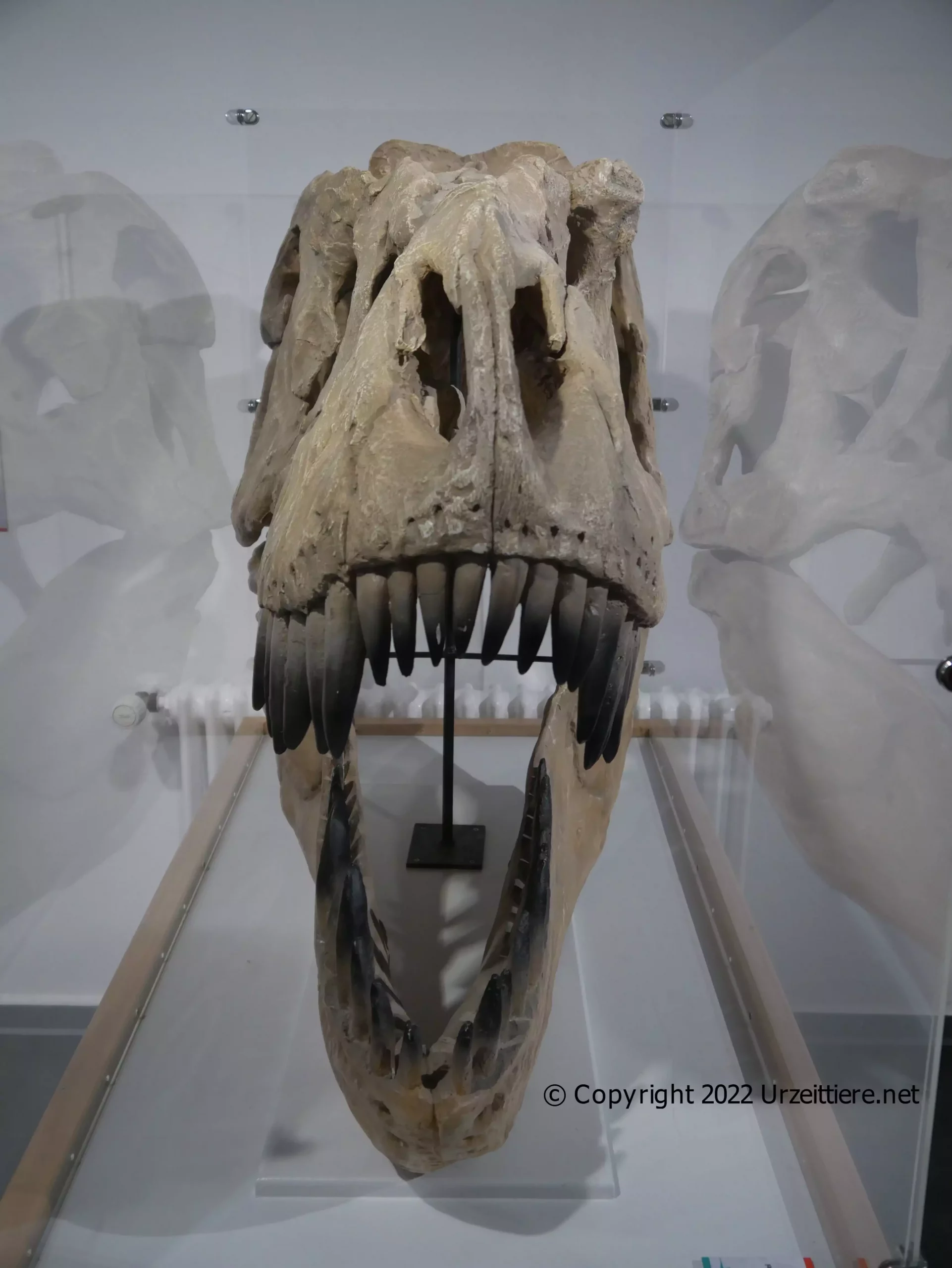
Tarbosaurus bataar is undoubtedly the most famous predatory dinosaur of the formation and is considered an Asian relative of the famous Tyrannosaurus rex. Reaching lengths of up to 12 meters and weighing around 6 tons, it was Tarbosaurus One of the largest land predators of all time. Its fossils are remarkably well-preserved, allowing for detailed studies of its anatomy and behavior. Particularly interesting are the differences from the North American Tyrannosaurus, which provide important insights into the separate evolution of tyrannosauroids on different continents.
Therizinosaurus cheloniformis It represents one of the most enigmatic dinosaurs ever discovered. This giant reached lengths of up to 16 meters and possessed the longest claws of any known animal – up to one meter long. Despite its fearsome appearance, it was Therizinosaurus A herbivore that likely used its enormous claws for pulling up branches and for defense. Its bizarre body shape, with its massive torso, long arms, and small head, makes it one of the most unusual dinosaurs ever.
Deinocheirus mirificus It was long considered the greatest mystery in paleontology. For decades, only the enormous arms of this dinosaur were known; at 2.4 meters long, they are among the largest dinosaur arms ever found. It wasn't until 2014 that complete skeletons were discovered, revealing that Deinocheirus It was an 11-meter-long, humped dinosaur with a duckbill-like head. Its unusual anatomy suggests a semi-aquatic lifestyle.
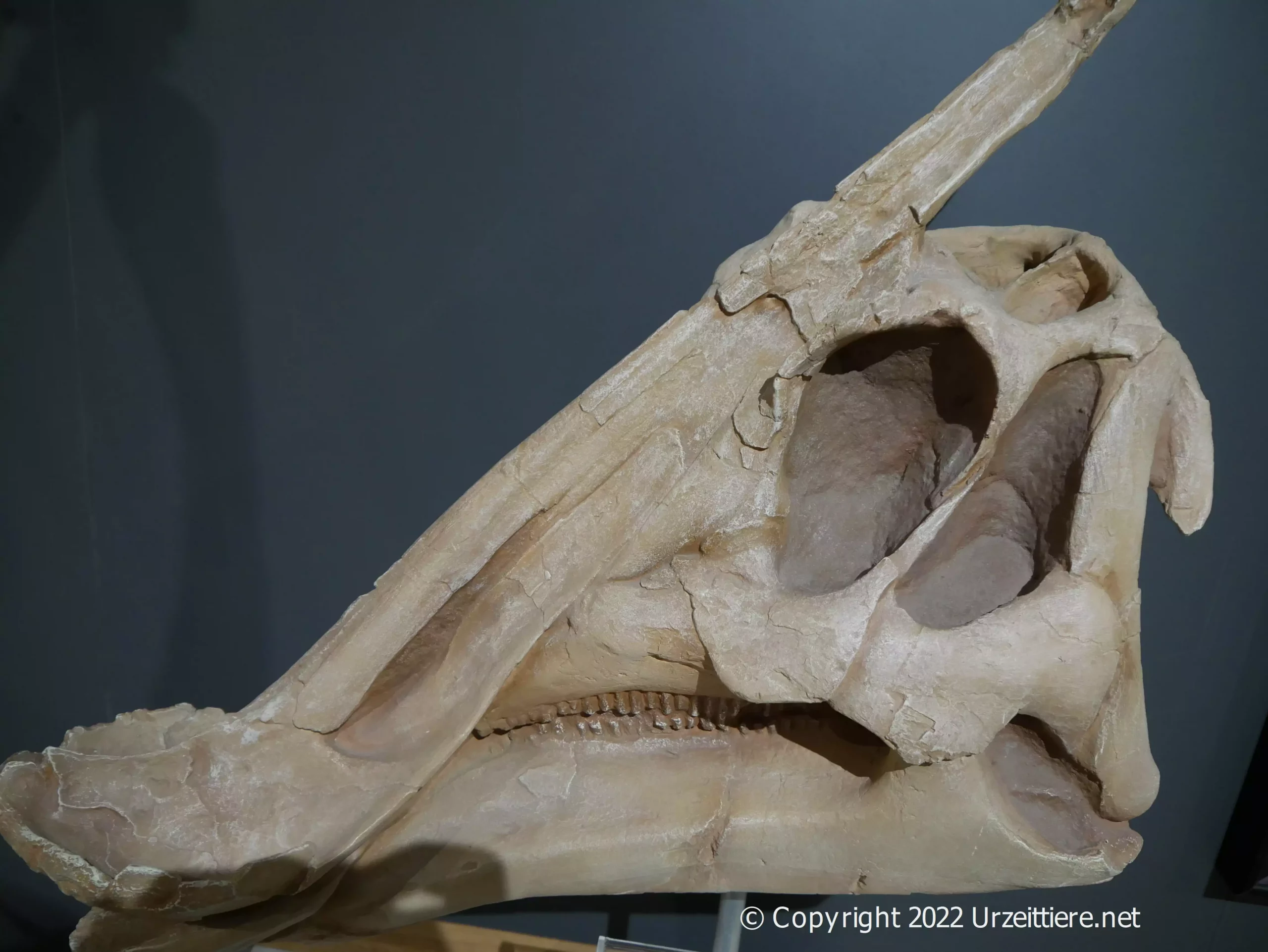
Saurolophus angustirostris This represents the duck-billed dinosaurs of the formation. These hadrosaurs were distinguished by their characteristic, backward-pointing head crest, which likely served for communication and vocalization. Saurolophus fossils are often exceptionally well preserved and have provided important insights into the social behavior and reproduction of hadrosaurs.
The GallimimusSpecies from the Nemegt Formation belong to the ostrich-like dinosaurs (ornithomimids). These fast runners reached speeds of up to 60 km/h and were probably omnivorous, feeding on plants, fruits, and small animals. Their slender legs and toothless beak make them perfect examples of adaptation to a running lifestyle.
Sauropods such as Nemegtosaurus and Opisthocoelicaudia This shows that even the long-necked dinosaurs were still present in Asia during the Late Cretaceous period. These titanosaurs differed significantly from their American relatives and demonstrate the independent evolutionary development of the Asian dinosaur fauna.
Fossil finds and spectacular discoveries
The Nemegt Formation has yielded some of the world's most spectacular and scientifically valuable dinosaur finds. These discoveries have fundamentally changed our understanding of dinosaur evolution and the Late Cretaceous ecosystem.
Particularly noteworthy is the exceptional quality of fossil preservation. Many skeletons from the Nemegt Formation are 80-90% complete – a level of preservation rarely achieved at other dinosaur sites. These complete skeletons allow for detailed anatomical studies and precise reconstructions of the creatures.
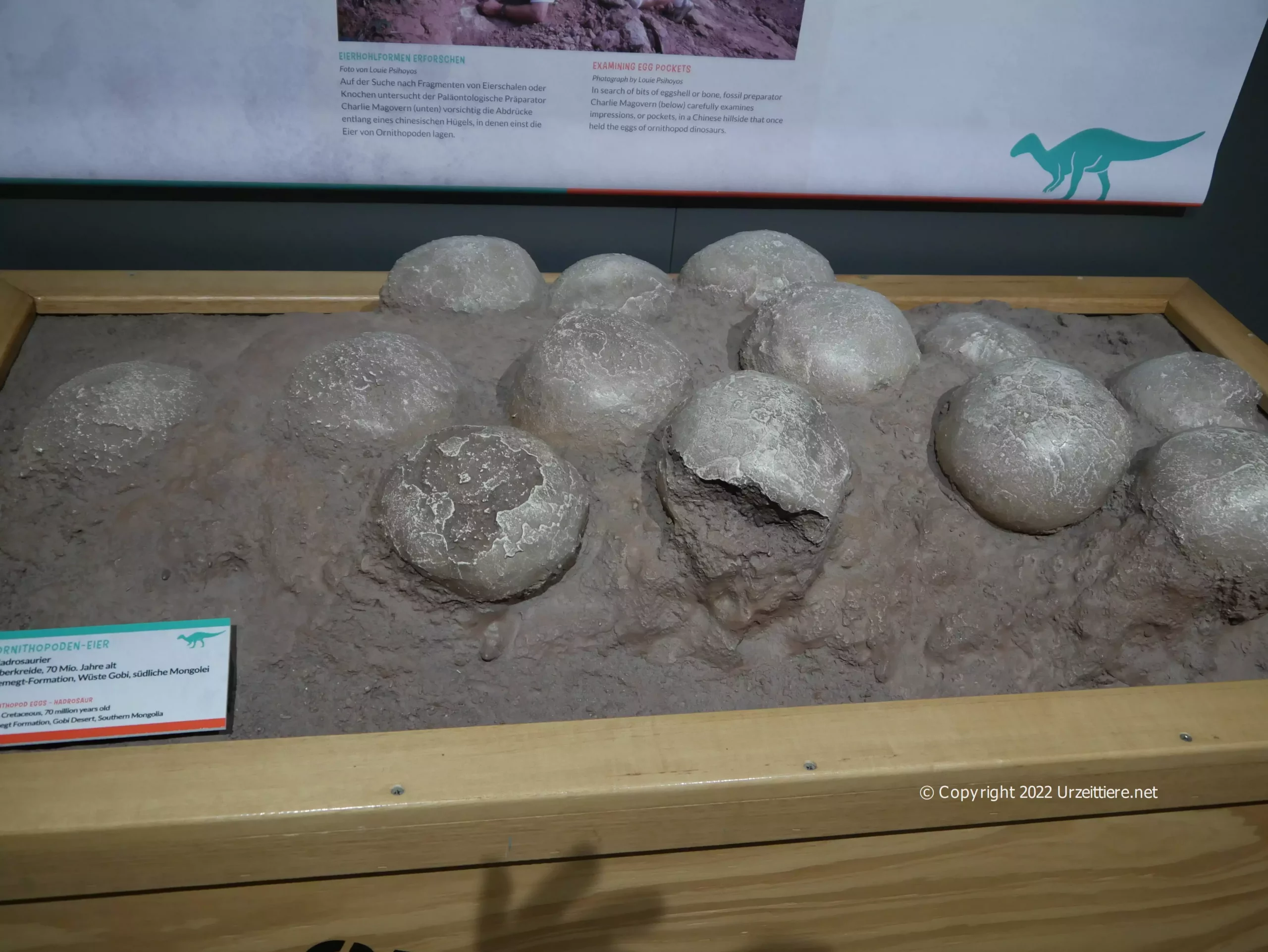
A scientific breakthrough came with the discovery of fossils that provide clues about dinosaur breeding behavior. Several nests containing eggs and young were found, demonstrating that many dinosaur species practiced complex parental care. Particularly revealing were the discovery of adult animals near nests, suggesting that both parents were involved in raising the young.
The formation has also provided important insights into the accompanying fauna of the dinosaurs. Fossils of early mammals, turtles, crocodiles, and various reptiles allow for a complete reconstruction of the Late Cretaceous ecosystem. The finds of primitive mammals, which already show clear adaptations to different ecological niches, are particularly interesting.
In recent years, new excavation techniques and improved analytical methods have led to groundbreaking discoveries. Microscopic examinations of dinosaur bones have revealed tissue structures that allow conclusions to be drawn about the animals' growth rates, metabolism, and even body temperature. DNA analysis, although not possible with such ancient fossils, has provided important phylogenetic insights through protein analysis.
Another significant aspect is the discovery of dinosaur footprints and fossilized plant remains, which together paint a detailed picture of the environmental conditions. These finds show that the Late Cretaceous period in the region was characterized by rich vegetation including ferns, conifers, and early flowering plants.
The latest discoveries have also expanded our understanding of dinosaur evolution in Asia. Several newly discovered species exhibit unique adaptations found only in Asian fauna. These findings have confirmed that the dinosaur faunas of the different continents were already highly differentiated in the Late Cretaceous period.
Particularly spectacular were the discoveries of dinosaur embryos in fossilized eggs, which provide insights into the development of the young. These finds are extremely rare and have yielded important information about the ontogeny of dinosaurs.
The Nemegt Formation in the context of important dinosaur formations worldwide
The Nemegt Formation occupies a special place among the world's dinosaur fossil sites, offering unique insights into the Late Cretaceous fauna of Asia. Compared to other famous formations, it reveals both similarities and distinct differences in its dinosaur fauna.
The Morrison Formation The Morrison Formation in the USA, known for its Jurassic dinosaurs such as Allosaurus and Diplodocus, is about 80 million years older than the Nemegt Formation. While the Morrison Formation documents the heyday of sauropods, the Nemegt Formation shows their late evolution with the titanosaurs. Both formations are rich in complete skeletons, but the Asian finds reveal a distinctly different evolutionary history.
The Hell Creek Formation The North American formation is closer in time to the Nemegt Formation and also documents the Late Cretaceous. Both formations contain tyrannosaurs, but while Hell Creek gave rise to the classic Tyrannosaurus rex, Tarbosaurus bataar evolved in Asia. This parallel evolution demonstrates how similar ecological niches developed on different continents.
The comparison with the older one is particularly interesting. Djadochta Formation in the same region of Mongolia. This formation, known for Velociraptor and Protoceratops, is about 10-15 million years older and shows a different faunal composition. While Djadochta produced smaller dinosaurs and the famous "Fighting Dinosaurs" fossil, the giants of the Late Cretaceous period dominate the Nemegt Formation.
The European dinosaur sites of the late Cretaceous period, such as the Maastricht-FormationThese fossils show a distinctly different fauna than the Asian formations. Europe at this time was an archipelago of islands, which led to the dwarfism of many dinosaur species. In contrast, the Asian mainland allowed for the evolution of giant dinosaurs like Therizinosaurus.
An important aspect of the Nemegt Formation is its significance for understanding dinosaur evolution shortly before the mass extinction. The formation documents one of the last major dinosaur faunas in Earth's history and shows that dinosaurs exhibited high diversity and evolutionary innovation until the end of the Cretaceous period.
The biogeographical connections between Asian and North American dinosaur faunas are particularly evident in the Nemegt Formation. During the Late Cretaceous, a land bridge existed across the Bering Strait, facilitating an exchange between the faunas. This explains the similarities between Tarbosaurus and Tyrannosaurus, as well as between various hadrosaur species on both continents.
Excavations and fossil trade in Mongolia
Systematic exploration of the Nemegt Formation began in the 1940s with Soviet-Mongolian expeditions and was later intensified through Polish-Mongolian collaborations. These international research projects have made Mongolia one of the world's most important paleontological research areas.
Today, various international teams are working in the region, including American, Japanese, Korean, and European expeditions. This collaboration always takes place in close cooperation with Mongolian scientists and the Institute of Paleontology of the Mongolian Academy of Sciences. Modern expeditions utilize advanced technologies such as GPS mapping, 3D scanning, and digital documentation.
A crucial aspect of fossil research in Mongolia is the legal situation. According to Mongolian law, all fossils belong to the Mongolian state and may only be excavated and exported with the appropriate permits. This regulation is intended to safeguard the scientific value of the finds and prevent the illegal fossil trade.
The illegal fossil trade has long been a major problem for Mongolian paleontology. Spectacular cases, such as the return of a Tarbosaurus skeleton from a New York auction in 2012, have attracted international attention and highlighted the importance of protecting cultural heritage. Today, international authorities work closely together to identify and return stolen fossils.
The Mongolian Natural History Museum Ulaanbaatar houses the world's largest collection of fossils from the Nemegt Formation. Modernized with international support, the museum now offers an impressive exhibition of Mongolian dinosaur finds. Particularly spectacular are the fully assembled skeletons of Tarbosaurus, Therizinosaurus, and other Cretaceous giants.
The economic importance of paleontology for Mongolia extends beyond pure science. Paleotourism is becoming increasingly important, and specialized tour operators offer expeditions to the fossil sites. This development creates jobs in the region and raises awareness among the local population about the value of the fossils.
Modern excavation projects adhere to strict scientific standards and prioritize sustainable research. Every find is precisely documented, GPS-referenced, and recorded in international databases. This systematic approach ensures that future generations of scientists can also benefit from the discoveries.
The Gobi Desert today: In the footsteps of the dinosaurs
Today's Gobi Desert offers visitors and researchers unique insights into one of the world's most important dinosaur fossil sites. The barren, rocky landscape with its characteristic reddish-brown rock formations makes the fossil-rich layers of the Nemegt Formation easily recognizable, even to the untrained eye.
Scientific expeditions to the region are now well-organized and safe. Modern expeditions utilize GPS navigation, satellite communication, and are equipped with everything necessary for working in the extreme desert environment. The best time for excavations is from May to September, when temperatures are tolerable and there are no blizzards.
For interested tourists, specialized tour operators offer multi-day expeditions to the famous fossil sites. These tours combine education with adventure and allow visitors to search for fossils themselves – naturally under expert guidance and within the framework of applicable laws.
The extreme weather conditions of the Gobi Desert are both a blessing and a curse for fossil research. On the one hand, continuous erosion and strong winds constantly expose new fossils; on the other hand, these same forces lead to the destruction of unprotected finds. Therefore, the rapid recovery and preservation of fossils is of crucial importance.
Der Klimawandel und zunehmende bergbauliche Aktivitäten in der Region stellen neue Herausforderungen für den Schutz der Fossilstätten dar. Gleichzeitig eröffnen neue Technologien wie Drohnen-Kartierung und Fernerkundung völlig neue Möglichkeiten für die Erforschung bisher unzugänglicher Gebiete der Formation.
Dinosaur finds (selection):
Adasaurus, Alioramus, Anserimimus, Avimimus, Barsboldia, Conchoraptor, Deinocheirus, Elmisaurus, Gallimimus, Gobiraptor, Homalocephale, Mononycus, Nemegtomaia, Nemegtosaurus, Nomingia, Opisthocoelicaudia, Prenocephale, Raptorex, Saurolophus, Tarbosaurus, Tarchia, Therizinosaurus, Zanabazar