
Morrison Formation
What is the Morrison Formation and why is it so important?
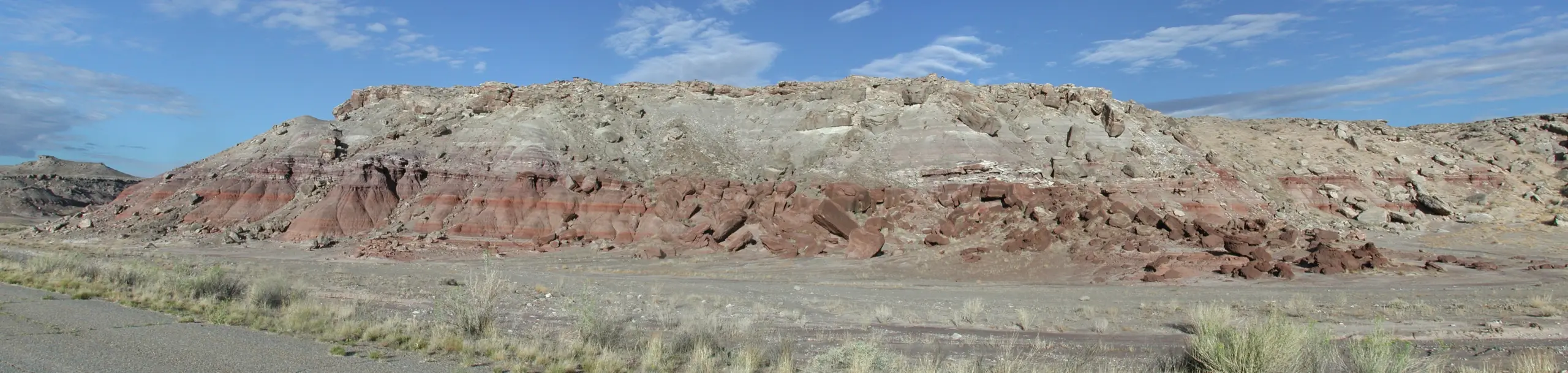
The Morrison Formation is a geological layer of sedimentary rock that formed approximately 156 to 147 million years ago during the Late Jurassic period. This formation extends across several western US states, including Colorado, Utah, Wyoming, Montana, New Mexico, and Oklahoma. With a total area of over 1.5 million square kilometers, it forms one of the largest continuous sedimentary layers in North America.
The Morrison Formation has earned a reputation as the richest site for dinosaur fossils from the Late Jurassic. Scientists have already discovered over 70 different dinosaur species This identifies what makes it a true treasure for paleontology. The extraordinary diversity of the finds ranges from tiny carnivores to the largest land animals that ever lived.
These sediments originated primarily in river plains, floodplains, and former lakes. The unique geological conditions of that era created ideal conditions for fossilization. Rapid sediment deposition covered dead animals and preserved their bones for millions of years. The various layers of the formation document climatic changes and environmental conditions over a period of time of about nine million years.
The scientific significance of the Morrison Formation lies not only in the number of fossils found, but also in their exceptional completeness. Many skeletons are almost entirely preserved, allowing for detailed studies of the dinosaurs' anatomy, behavior, and way of life. This completeness is extremely rare among fossil vertebrates and makes the Morrison Formation a window into the past.
The most famous dinosaur species from the Morrison Formation
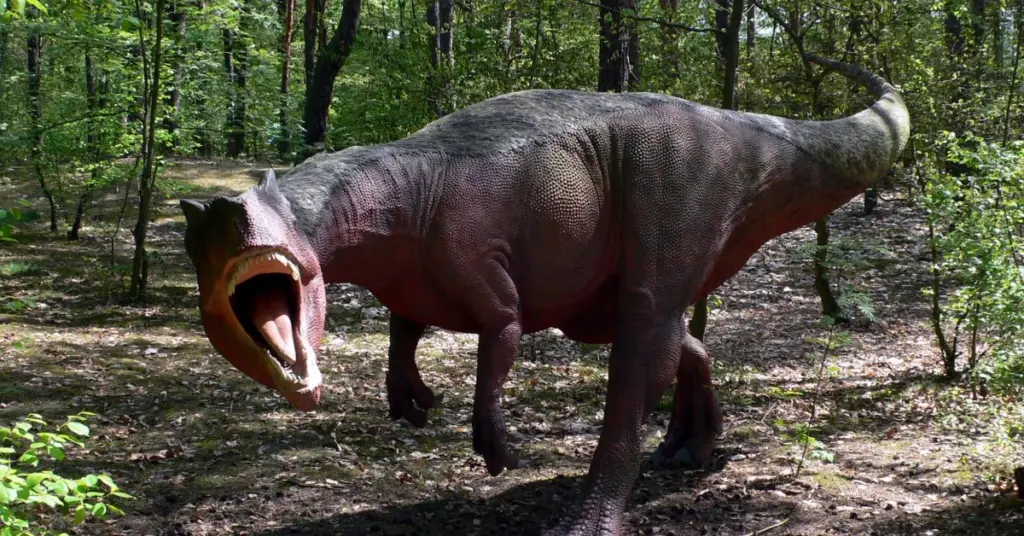
The Morrison Formation is home to an impressive diversity of dinosaur species that represent the ecosystem of the Late Jurassic period. At the top of the food chain was... AllosaurusThe dominant predatory dinosaur of this era. Reaching lengths of up to twelve meters and weighing around two tons, Allosaurus was perfectly adapted to hunting large herbivores. Its powerful hind legs, sharp teeth, and flexible arms with large claws made it a formidable predator. The Morrison Formation has yielded several nearly complete Allosaurus skeletons, including the famous specimen. "Big Al".
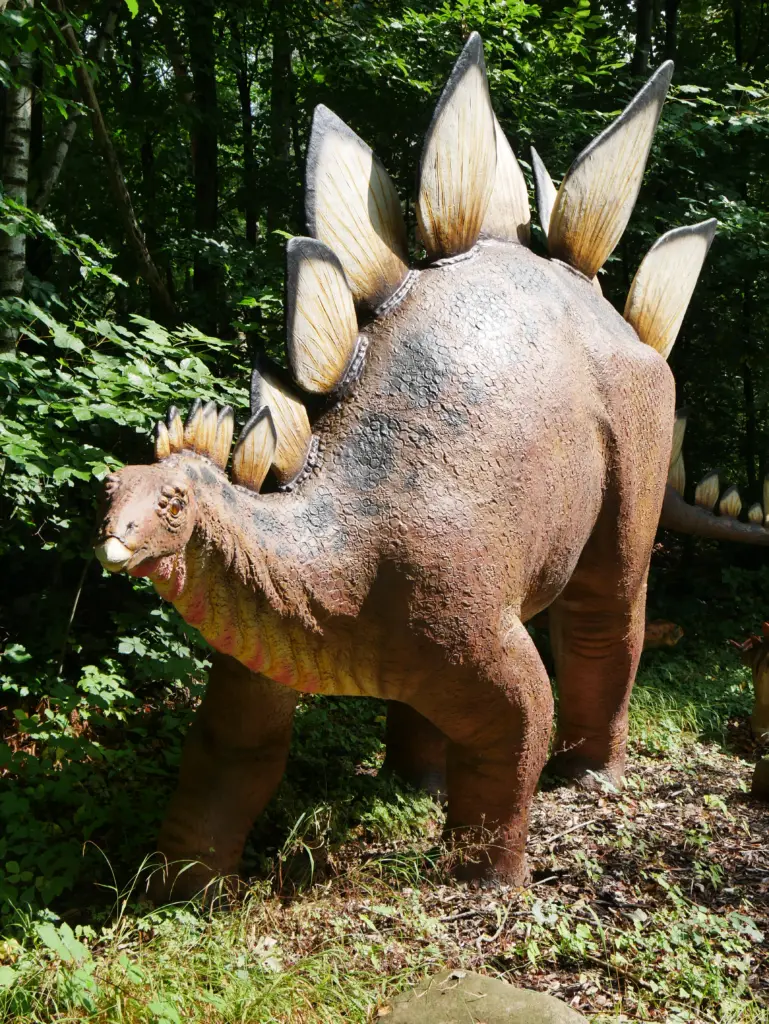
Stegosaurus Stegosaurus is perhaps the most famous dinosaur from the Morrison Formation and is considered an icon of this geological layer. Its characteristic back plates and spiked tail are worldwide symbols of Jurassic dinosaurs. Stegosaurus reached a length of about nine meters and weighed up to five tons. The function of its back plates continues to puzzle scientists – they likely served both for temperature regulation and defense against predators.
Among the giants of the formation, the sauropods stood out. BrachiosaurusWith its characteristic long neck and elongated forelegs, it could reach heights of over twelve meters. These imposing herbivores weighed up to 80 tons and were among the largest land animals of all time. Camarasaurus was another common sauropod of the Morrison Formation, somewhat smaller than Brachiosaurus, but still impressive with a length of up to 23 meters.
The smaller herbivores were preyed upon by ornithopods such as Camptosaurus and Dryosaurus Camptosaurus was a medium-sized dinosaur, about seven meters long, that could walk on both two and four legs. Dryosaurus, on the other hand, was significantly smaller and more agile, with long hind legs that allowed it to escape quickly from predators.
This biodiversity demonstrates the complexity of the Late Jurassic ecosystem. Each species had its specific niche: large sauropods ate leaves from treetops, Stegosaurus fed on lower vegetation, while smaller ornithopods foraged on the ground. Allosaurus utilized this diversity as a food source and helped maintain the balance of the ecosystem.
Important archaeological sites in the Morrison Formation
The Dinosaur National Monument Located on the border between Utah and Colorado, this is the most spectacular fossil site of the Morrison Formation. The famous Bone Wall displays over 1,500 dinosaur bones still embedded in their original positions within the rock. Visitors can look directly at the fossil remains through a glass wall and observe the work of paleontologists. This site was discovered in 1909 by Earl Douglass discovered and has since yielded thousands of fossils of various dinosaur species.
Como Bluff In Wyoming is a historically significant excavation site that was discovered during the famous “Bone Wars” the 1870s were the focus of attention. Here, paleontologists fought Othniel Charles Marsh and Edward Drinker Cope Como Bluff is home to some of the most valuable fossil finds. It yielded the first complete skeletons of Allosaurus, Stegosaurus, and Camarasaurus. New discoveries are still made here regularly, and the site is considered one of the most productive in the entire formation.
The Cleveland-Lloyd Dinosaur Quarry Utah is home to the world's largest known collection of Allosaurus bones. Scientists have unearthed over 12,000 bone fragments there, originating from at least 46 different Allosaurus individuals. This unusual concentration of a predatory dinosaur in one location puzzles researchers and has led to various theories about mass extinctions or communal burials.
Bone Cabin QuarryAlso located in Wyoming, this site owes its name to a cabin built from so many dinosaur bones that early settlers used them as building material. This site is known for its early significant finds and the discovery of several new species. It was also the site of one of the first nearly complete fossils. DiplodocusSkeletons found.
Garden Park Colorado is famous for its sauropod mass graves. In the 1870s, fossil collectors made spectacular finds here of Camarasaurus and other long-necked dinosaurs. The site is located in a picturesque canyon and is still actively explored today. New excavation methods and modern technologies allow scientists to document and analyze even the smallest details of the fossil remains.
What was the environment like during the time of the Morrison Formation?
The climate during the Late Jurassic was significantly warmer and wetter than today. The Morrison Formation developed in a subtropical to semi-arid climate with pronounced seasonal variations between dry and rainy seasons. These climatic conditions created a landscape of extensive alluvial plains, characterized by meandering They were crisscrossed by rivers and contained sporadically occurring lakes.
The vegetation of this time differed fundamentally from today's plant life. Flowering plants had not yet evolved; instead, conifers, ferns, horsetails, and ginkgo trees dominated the landscape. Giant araucarias and other conifers formed extensive forests, while lush fern forests grew in wetter areas. These plants provided the various dinosaur species with a rich food source at different heights.

The rivers of the Morrison period carried large quantities of sediment, which they deposited on the plains. During the rainy season, these rivers swelled into raging torrents, flooding vast areas. In the dry season, they shrank to smaller streams, and the flooded areas dried out. These cyclical floods created ideal conditions for fossilization, as dead animals were quickly covered by sediment and protected from decomposition.
Reconstructions of the ecosystem are based on sediment analyses and fossil finds. The sediments reveal details about the environmental conditions of the time: reddish layers indicate dry periods, while greenish deposits show wetter conditions. Fossil pollen and plant remains help to reconstruct the vegetation.
The regional differences within the Morrison Formation are interesting. The northern areas in Montana and Wyoming were generally humid and were home to dense forests, while the southern regions in New Mexico and Oklahoma were drier and featured more open landscapes with scattered groups of trees. These differences are also reflected in the dinosaur fauna: different species preferred different habitats within the formation.
The historical significance of the Morrison finds for paleontology
The discovery and exploration of the Morrison Formation is inextricably linked to the famous “Bone Wars"connected to the 1870s and 1880s. This period of fierce scientific competition between Othniel Charles Marsh from Yale University and Edward Drinker Cope The Philadelphia Museum had a lasting impact on early paleontology. Both researchers competed to see who could discover and describe the most and most spectacular dinosaur fossils.
Marsh and Cope deployed teams of fossil collectors to search for dinosaur bones in the western American territories. These expeditions led to the discovery and scientific description of numerous dinosaur genera from Morrison fossils, including Allosaurus, Stegosaurus, Diplodocus, and Camarasaurus. While the Bone Wars advanced scientific knowledge, they also resulted in hasty and sometimes incomplete excavations.
The Morrison finds revolutionized our understanding of prehistoric life. Before these discoveries, dinosaurs were only known from fragmentary remains. The complete skeletons from the Morrison Formation enabled, for the first time, detailed reconstructions of the appearance, size, and lifestyle of these ancient animals. These findings fundamentally changed the scientific and public perception of dinosaurs.
The development of modern excavation and conservation techniques is closely linked to the study of the Morrison Formation. Early excavations were often destructive and focused primarily on spectacular finds. Modern paleontologists use precise documentation methods, GPS technology, and digital mapping to accurately locate and contextualize each find. These methods were developed and refined at Morrison sites.
The influence of the Morrison fossils on public awareness of dinosaurs cannot be overstated. The spectacular skeletons from this formation filled museum collections worldwide and sparked public interest in paleontology. Many of the most famous dinosaur depictions in books, films, and museums are based on Morrison fossils.
Important researchers such as Earl Douglass, who the Dinosaur National Monument discovered, and modern scientists such John Horner and Jack McIntosh Their work on Morrison fossils significantly contributed to the study of the formation. Their discoveries and theories continue to shape our understanding of Jurassic dinosaurs.
Where and how can Morrison fossils be discovered today?
Several publicly accessible museums house world-class collections of Morrison fossils. Smithsonian National Museum of Natural History The Dinosaur Hall in Washington, D.C., displays spectacular skeletons of Allosaurus, Stegosaurus, and Diplodocus. Denver Museum of Nature & Science It has one of the world's most extensive Morrison collections and offers interactive exhibitions about the Jurassic period.
The Museum of the Rockies in Montana and the Natural History Museum of Utah Museums in Salt Lake City also showcase outstanding Morrison fossils. These museums offer not only exhibits but also educational programs and workshops for all ages. Many have special areas where visitors can watch paleontologists preparing fossils.
Visitors can visit active excavation sites and explore fossil visitor centers. Dinosaur National Monument offers guided tours to excavation sites and allows visitors to learn more about the work of paleontologists. Butte The National Monument in Wyoming and the Cleveland-Lloyd Dinosaur Quarry in Utah offer similar experiences.
For amateur paleontologists, there are legal ways to search for fossils. Several private ranches in the Morrison area offer guided fossil-hunting tours. Participants can search for fossils under expert guidance and often keep smaller finds. It's important to note that collecting fossils on public land is strictly regulated and requires permits.
Online resources open up new possibilities for digital discovery. Many museums offer virtual tours of their Morrison collections. Digital databases allow interested individuals to study high-resolution images of fossils and read scientific descriptions.
Citizen science programs offer volunteers the opportunity to participate in real research projects. The Museum of the Rockies and other institutions regularly organize volunteer programs where participants can assist with excavations. These programs typically last one to two weeks and teach basic paleontological techniques.
Common misconceptions about the Morrison Formation
A common misconception concerns the dating of different dinosaur species. Tyrannosaurus Rex, one of the most famous dinosaurs, did not live during the Morrison Formation. T-Rex only existed about 80 million years later, during the Late Cretaceous period. This confusion often arises from films and popular media that depict different dinosaur species from different eras together.
The temporal distinction between the Jurassic and Cretaceous periods is crucial for understanding dinosaur evolution. The Morrison Formation represents the end of the Jurassic period.Meanwhile, famous Cretaceous dinosaurs like Triceratops, Parasaurolophus, and Tyrannosaurus Rex are found in completely different geological formations. This temporal separation means that Allosaurus and T-Rex never lived at the same time.
A geographical misconception concerns the spatial extent of the Morrison Formation. Although it represents one of the largest dinosaur fossil sites, it is confined to the western United States and does not extend across all of North America. Dinosaur fossils from other regions of North America come from different geological formations and often from different geological periods.
Many people expect that all excavations will yield complete dinosaur skeletons. In reality, complete skeletons are extremely rare and precious scientific treasures. Most finds consist of individual bones or bone fragments. The exceptional completeness of many Morrison fossils makes this formation so valuable to science.
The idea that fossils can simply be dug out of the ground is far from reality. Fossil preparation is a time-consuming process that can take months or even years. Bones must be carefully exposed, stabilized, and documented. Modern excavation techniques employ fine tools and scientific precision to ensure that each find is optimally utilized and understood.
Image sources:
Featured image: Photo by Michael Overton., CC BY-SA 2.5 https://creativecommons.org/licenses/by-sa/2.5, via Wikimedia Commons