
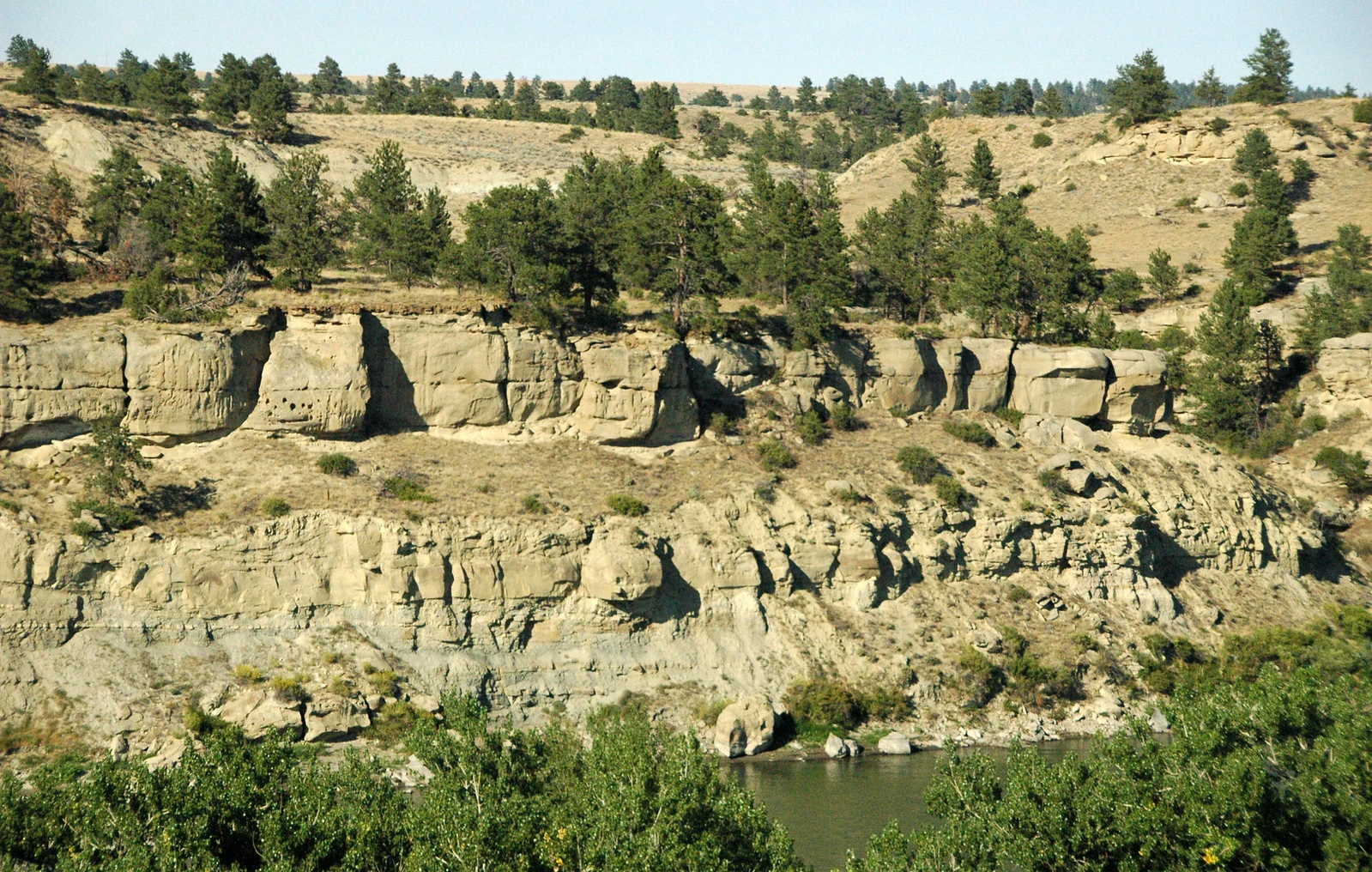
Lance Formation
Lance Formation: Dinosaur fossils from the late Cretaceous period
The Lance Formation is one of the most significant geological formations of the last dinosaur era before the great mass extinction. This rock layer, which extends across large parts of the North American Great Plains, offers us a unique insight into the world of the Late Cretaceous period, approximately 70 to 66 million years ago.
Geographically, the Lance Formation extends primarily across the states of Wyoming, Montana, and parts of North and South Dakota. As a geological time capsule of the Maastrichtian, the final stage of the Cretaceous period, it documents the last millions of years of dinosaur rule on Earth. Its close relationship to the more famous Lance Formation is particularly noteworthy. Hell Creek Formation, with which it is considered a sister formation.
What makes the Lance Formation particularly special, however, is its extraordinary diversity of fossils, especially the spectacular ones. TriceratopsThe finds comprise more than 200 skulls and skeletons. These fossils tell us not only about individual animals, but about entire ecosystems that existed shortly before the end of the dinosaur era. The formation thus represents an indispensable piece of the puzzle for understanding the events that led to the transition between the Cretaceous and Paleogene periods.
What is the Lance Formation? Geological basics
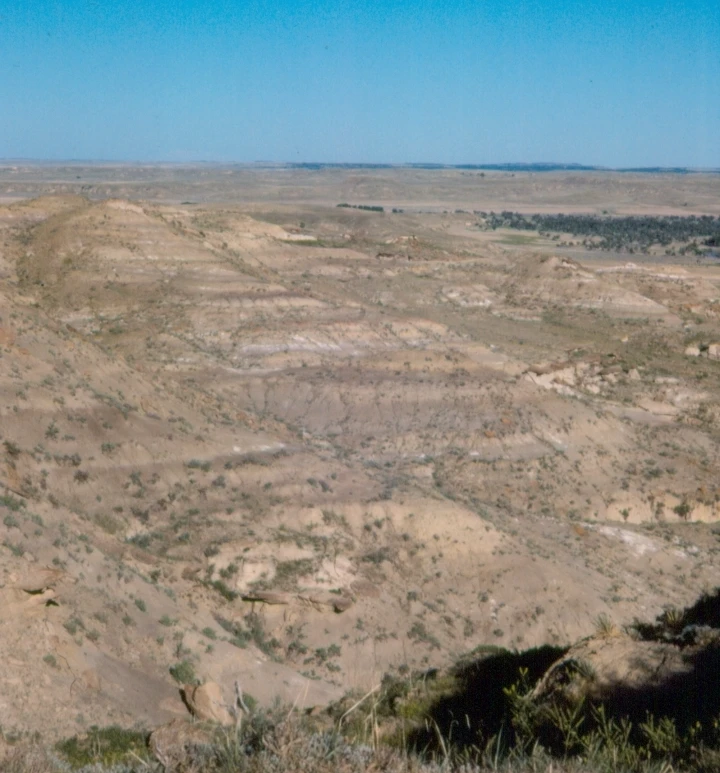
The Lance Formation was created by complex geological processes during the Late Cretaceous period, when North America looked very different than it does today. The area that now characterizes the arid plains of Wyoming and Montana was then a vast floodplain crisscrossed by powerful river systems.
Geological origin and sedimentary layers
Die charakteristische Geologie der Lance Formation zeigt eine faszinierende Wechsellagerung verschiedener Sedimenttypen. Überwiegend handelt es sich um Flussablagerungen, die durch die kontinuierliche Sedimentation in einem ausgedehnten Schwemmland entstanden. Die Schichten bestehen hauptsächlich aus Sandstein und Siltstein, die sich in charakteristischen Abfolgen abwechseln.
Particularly noteworthy are the embedded coal seams, which bear witness to lush subtropical vegetation. These organic deposits formed in swamps and bogs that were regularly flooded by river systems. The alternation between coarse-grained sandstone layers and finer siltstones documents the varying flow velocities of the prehistoric rivers.
The sediments show clear traces of paleosols, i.e., fossil soil horizons, which indicate longer periods of stability. These soils are often rich in plant fossils and provide valuable information about the vegetation of that time.
Geographical extent and main outcrops
The Lance Formation covers an impressive area of several thousand square kilometers. In Wyoming, the most important outcrops are found in the Powder River Basin and the Bighorn Basin. These regions have yielded spectacular dinosaur discoveries for over a century and are considered treasure troves of paleontology.
In the Colorado region of the Denver Basin, the formation exhibits slightly different characteristics, indicating regional variations in depositional conditions. Here, the strata are often more consolidated and show a different faunal composition.
A key difference from the neighboring Hell Creek Formation lies in the somewhat coarser grain size of the sediments and the more frequent inclusion of conglomerates, suggesting more energetic depositional conditions. While both formations represent the same geological era, they exhibit different local environmental conditions.
The characteristic dinosaurs of the Lance Formation
The Lance Formation is world-famous for its extraordinary dinosaur fauna, which gives us a detailed insight into the last million years before the great extinction.
Triceratops: The giant among the ceratopsians
Triceratops ist zweifellos der berühmteste Bewohner der Lance Formation. Mit über 200 gefundenen Schädeln und Skeletten stellt diese Gattung eine der bestdokumentierten Dinosaurier-Gruppen überhaupt dar. Die beeindruckenden dreigehörnten Pflanzenfresser erreichten Längen von bis zu 9 Metern und wogen mehrere Tonnen.
Particularly fascinating is the documented size variation in Triceratops fossils from the Lance Formation. From juvenile specimens with skull lengths of just a few decimeters to enormous adults with skulls exceeding 2.5 meters in length, the entire growth range is represented. This diversity has contributed to the identification of different developmental stages and revolutionized our understanding of ceratopsian biology.
Triceratops prorsus, the type species found in the Lance Formation, exhibits characteristic features such as the massive neck frill with a wavy edge and the three prominent facial horns. However, more recent discoveries have shown that the diversity of species may have been greater than originally thought, as various skull shapes have been discovered that could indicate different species.
Edmontosaurus annectens: The dominant herbivore
Alongside Triceratops, Edmontosaurus annectens dominated the herbivore niche of the Lance Formation. These large hadrosaurs, also known as duck-billed dinosaurs, are documented by exceptionally well-preserved specimens, including mummified fossils with preserved skin impressions.
The Edmontosaurus fossils from the Lance Formation have provided revolutionary insights into the appearance and behavior of these dinosaurs. Skin impressions reveal scaly, reptilian skin with varying textures on different parts of the body. These finds have also provided evidence of crest-like structures on the head, which may have served for communication or mate attractance.

Particularly interesting are indications of herd life and possible migratory behavior. Several specimens were found in relatively close proximity to each other, suggesting that these animals lived in groups and possibly undertook seasonal migrations.
Other important species
The diversity of the Lance Formation extends far beyond the two main species. Ankylosaurus magniventris, the heavily armored herbivore, is documented by several partial skeletons. These Cretaceous "living tanks" exhibited extreme specializations with their characteristic bony plates and tail clubs.
Thescelosaurus, a smaller ornithopod, represents the diversity of medium-sized herbivores. These animals filled an ecological niche between the large hadrosaurs and the smallest herbivores.
Particularly noteworthy are the finds of Champsosaurus, a crocodile-like aquatic reptile frequently found in the river deposits of the Lance Formation. These animals demonstrate that the river systems of the Late Cretaceous period harbored their own specialized fauna.
Famous fossil finds and scientific breakthroughs
Spectacular Triceratops finds
One of the most famous Triceratops finds from the Lance Formation is "Big John," an exceptionally large skull that ranks among the largest ceratopsian skulls ever discovered. Measuring over 2.6 meters in length, this specimen demonstrates the impressive dimensions these animals could reach.
Complete skeletons from Wyoming have fundamentally shaped our understanding of Triceratops anatomy. Particularly valuable are finds showing signs of disease and injuries. Healed fractures and bite wounds provide insights into the harsh lives of these animals and their interactions with predators like Tyrannosaurus rex.
A particularly fascinating aspect is the documented pathologies of Triceratops skulls. Many specimens show signs of infection, injuries from fights with other Triceratops, or predator bites. These findings paint a vivid picture of the struggle for survival in the Late Cretaceous period.
Preservation quality and mummification
The Lance Formation is famous for its exceptional preservation conditions. Several mummified Edmontosaurus specimens have preserved not only bones, but also skin impressions and even traces of soft tissue structures. These rare finds are of inestimable value to paleobiology.
The skin impressions reveal detailed structures such as scales of varying sizes, skin folds, and even hints of color patterns. Preservation of soft tissue in the form of muscle fibers and tendon remnants allows for reconstructions of the biomechanics of these prehistoric giants.
This exceptional preservation is due to the specific environmental conditions: rapid embedding in fine sedimentary deposits, followed by rapid drainage, preserved the organic structures for millions of years.
Rare predatory dinosaur finds
Although herbivores dominate, the Lance Formation has also yielded important remains of predatory dinosaurs. Tyrannosaurus rex remains are less common than in the Hell Creek Formation, but nonetheless significant. Teeth, vertebrae, and limb bones attest to the presence of this apex predator.
Smaller theropods like Troodon are documented by teeth and fragmentary skeletal elements. These intelligent predatory dinosaurs, with their large eyes and sharp teeth, represent a different ecological niche in the predatory dinosaur spectrum of the Late Cretaceous.
Habitat and ecosystem of the Lance Formation
Paleoclimate and environmental conditions
The climate during the deposition of the Lance Formation was significantly warmer than today. Reconstructions suggest a subtropical to warm-temperate climate, without the extreme seasonal temperature fluctuations that characterize these regions today.
The landscape was characterized by extensive river systems with vast floodplains. Mighty river systems meandered through the region, creating a mosaic of diverse habitats. Seasonal floods and droughts dictated the rhythm of this prehistoric ecosystem.
Sediment analyses show evidence of periodic droughts followed by extensive rainy seasons. These climatic fluctuations are reflected in the changing sediment types and fossil preservation.
Plant life of the late Cretaceous period
The vegetation of the Lance Formation was lush and diverse. Conifers still dominated large areas, but flowering plants were already beginning to occupy significant ecological niches. Ferns formed dense undergrowth in wetter areas.
Pollen samples reveal a remarkable diversity of plants that formed the basis of the diet for large herds of herbivores. This high primary production made it possible to feed massive animals like Triceratops and Edmontosaurus.
Coal strata bear witness to extensive swamp forests and bogs, which represented important carbon sinks and contributed to the oxygen enrichment of the atmosphere.
Wildlife and ecological niches
The Lance Formation ecosystem was complex. Large herbivores such as Triceratops and Edmontosaurus formed the base of the food chain. Tyrannosaurus rex acted as the apex predator, while smaller predatory dinosaurs like Troodon occupied specialized niches.
Aquatic species such as Champsosaurus and various turtle species colonized the river systems. Small mammals and early birds were already beginning to explore the ecological niches they would dominate after the dinosaurs became extinct.
The K-Pg boundary in the Lance Formation
Stratigraphic significance of the transition
Die Lance Formation dokumentiert den kritischen Übergang an der Cretaceous-Paläogen-Grenze (K-Pg-Grenze). Die Schichtgrenze zwischen der Lance Formation und der darüber liegenden Fort Union Formation markiert eines der bedeutendsten Ereignisse der Erdgeschichte.
Palynological studies, that is, the analysis of fossil pollen and spores, reveal dramatic changes in vegetation. The abrupt shift from Cretaceous-typical to Paleogene plant communities documents the extent of the ecological upheavals.
Fauna changes are even more dramatic. The last dinosaur fossils are found in the uppermost layers of the Lance Formation, followed by a completely different mammal fauna in the younger deposits.
Evidence of mass extinction
The Lance Formation provides important evidence for the end of the dinosaur era. The last Triceratops and Edmontosaurus fossils are found only a few meters below the K-Pg boundary, suggesting an abrupt end.
Surviving species such as crocodiles, turtles and small mammals are also documented in the younger strata, providing important clues about the selectivity of extinction.
Although the Lance Formation does not have the famous iridium-rich layer of the Hell Creek Formation, geochemical analyses still show anomalies that could be related to the asteroid impact.
Important archaeological sites and current excavations
Significant archaeological sites in Wyoming
Lance Creek in Wyoming is the historical type locality that gave the formation its name. Spectacular dinosaur discoveries were made here as early as the 1900s, sparking scientific interest in the region.
The Powder River Basin has proven to be a particularly productive region. Modern large-scale excavations now utilize high-tech methods such as GPS mapping, 3D scanners, and digital documentation to precisely record and analyze every find.
Private ranches play an important role in fossil collection. Many of the most spectacular finds have been made on private land, which presents both opportunities and challenges for scientific research.
Research institutions and museums
The Black Hills Institute of Geological Research has established itself as a leading institution in the study of the Lance Formation. Its work encompasses field research as well as laboratory analyses and preparation.
The University of Wyoming Geological Museum houses one of the world's most important collections of Lance Formation fossils. Their research continuously contributes to our understanding of the Late Cretaceous period.
Modern excavation techniques have revolutionized fossil collecting. 3D documentation makes it possible to record each find in its geological context, while CT scans reveal details invisible to the naked eye.
Current discoveries and future prospects
The 2020s saw the emergence of new Triceratops variants from the Lance Formation, expanding our understanding of biodiversity. Each new discovery adds further pieces to the puzzle.
DNA research and protein analysis of fossil remains are opening up entirely new possibilities. Although DNA is not preserved after millions of years, protein remains can provide important evolutionary information.
Citizen science and amateur collectors are playing an increasingly important role. Their finds contribute significantly to scientific knowledge, even though commercial fossil collecting is a subject of controversy.
Scientific significance and modern findings
Contribution to dinosaur systematics
The Lance Formation has fundamentally contributed to our understanding of ceratopsian evolution. The diversity of Triceratops fossils allows for detailed studies of species differentiation and the development of this group of dinosaurs.
Growth studies of Triceratops skulls have shown how drastically the skull shape changed during growth. What were previously thought to be different species turned out, in some cases, to be different developmental stages of the same species.
Biomechanical analyses of the characteristic neck frills and horns have revolutionized our understanding of their function. Computer models show that these structures were optimized for both defense and intraspecific communication.
Paleoecological findings
The population dynamics of large herbivores can be reconstructed based on the abundance distribution of different species. The dominance of Triceratops and Edmontosaurus indicates stable, large populations.
Predator-prey relationships are documented through bite marks, injury patterns, and fossil assemblages. This data is incorporated into computer models of prehistoric ecosystems, which simulate the complex interplay of species.
Methodological innovations
CT scans now allow for detailed digital reconstructions without damaging the valuable fossils. This technique has revealed hidden anatomical details and growth structures.
Isotope analyses of teeth and bones provide precise climate reconstructions. The ratio of different oxygen isotopes reveals information about temperatures and precipitation patterns during the Late Cretaceous period.
Frequently Asked Questions
Where can one view Lance Formation fossils? Lance Formation fossils are exhibited in numerous museums worldwide. Particularly noteworthy are the University of Wyoming Geological Museum, the Denver Museum of Nature & Science, and the Museum of the Rockies in Montana. Many of the most spectacular finds can also be seen in international collections.
What is the difference between Lance Formation and Hell Creek Formation? Both formations date from the same period but differ in their sediment composition and geographical location. The Lance Formation exhibits coarser sediments and lies further south, while the Hell Creek Formation is finer and located further north. The faunal composition is similar, but not identical.
Why are Triceratops fossils so common in the Lance Formation? Triceratops was evidently particularly well adapted to the environmental conditions of the Lance Formation. The large number of finds suggests stable, large populations. Additionally, the massive skulls facilitate fossilization.
Are there Tyrannosaurus rex fossils in the Lance Formation? Yes, but Tyrannosaurus rex remains are less common in the Lance Formation than in the Hell Creek Formation. Nevertheless, teeth, vertebrae, and other skeletal elements have been found that attest to the presence of this apex predator.
How old are the fossils of the Lance Formation? The fossils of the Lance Formation are between 70 and 66 million years old and date from the Maastrichtian, the last stage of the Cretaceous period. They document the final million years before the great mass extinction.
Image sources:
Featured image: James St. John CC BY 2.0
Lance Formation: Anky-man, CC BY-SA 3.0 http://creativecommons.org/licenses/by-sa/3.0/, via Wikimedia Commons