
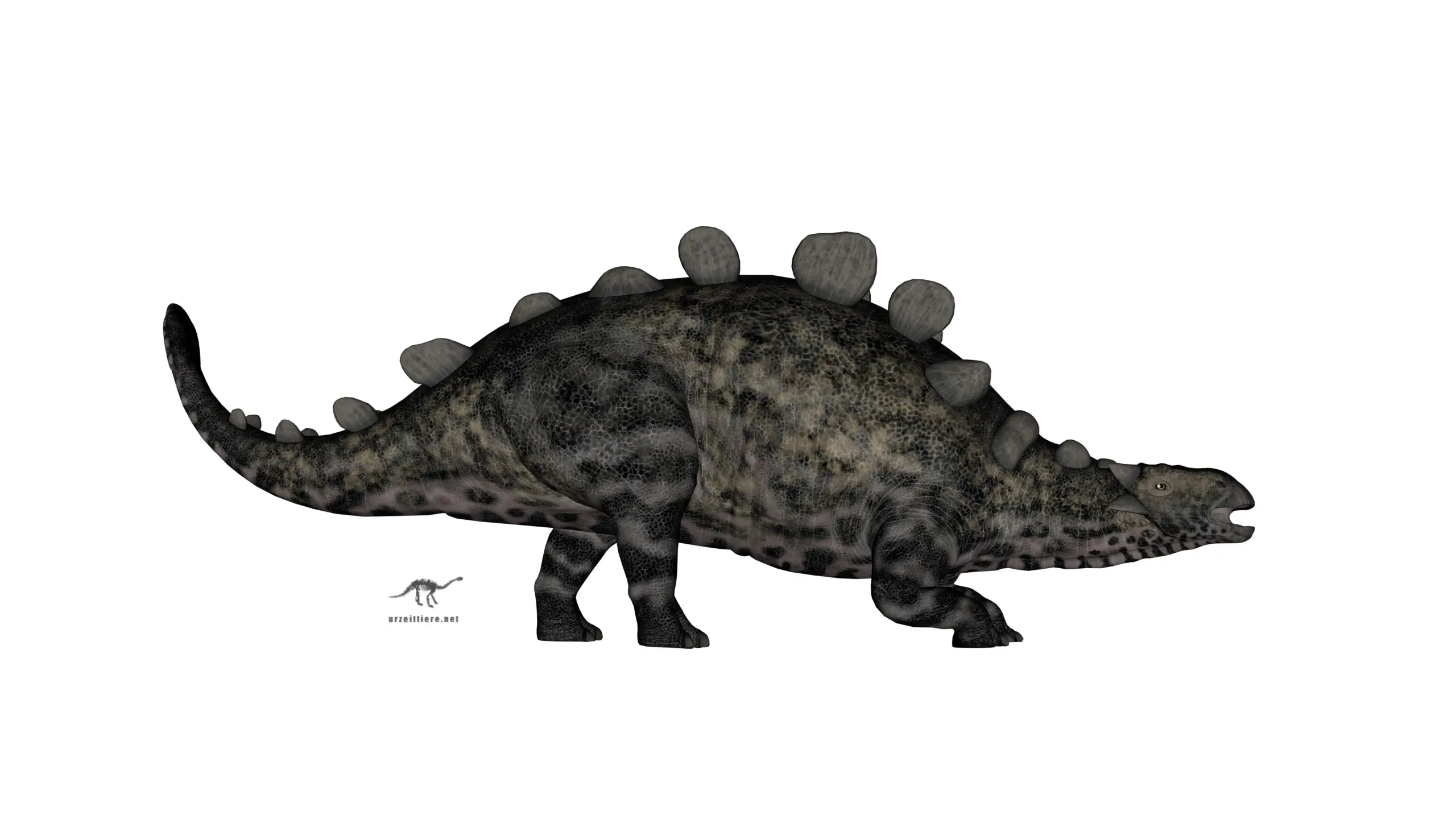
Crichtonsaurus
Crichtonsaurus was an ankylosaur, a type of heavily armored dinosaur that lived in Liaoning Province, China, during the Late Cretaceous Period, about 95 million years ago. Named after author Michael Crichton, it was a quadrupedal herbivore that measured about 4.3 meters long and weighed about 700 kg. To protect it, extensive bony plates called osteoderms were embedded in its skin. Crichtonsaurus had a stocky build, short limbs, and specialized teeth adapted for eating low-growing plants such as ferns and cycads. Although originally classified as a separate genus, recent taxonomic studies have resulted in some specimens being reclassified into other genera. Research on its classification and history is still ongoing in paleontology.
A dinosaur from Jurassic Park
The armored dinosaur known as Crichtonsaurus has a connection to “Jurassic Park” through its name. Although it does not appear in Michael Crichton's novel, this ankylosaur was named after him after it was discovered in China's Liaoning Province in 1999. It appears in the video game Jurassic World Evolution 2, which brought attention to this dinosaur.
Crichtonsaurus bohlini was officially described in 2002 by paleontologist Dong Zhiming. The species name honors the Swedish paleontologist Birger Bohlin. Like other ankylosaurs like Sauropelta Crichtonsaurus had a heavily armored body that served as a defense mechanism against predators.
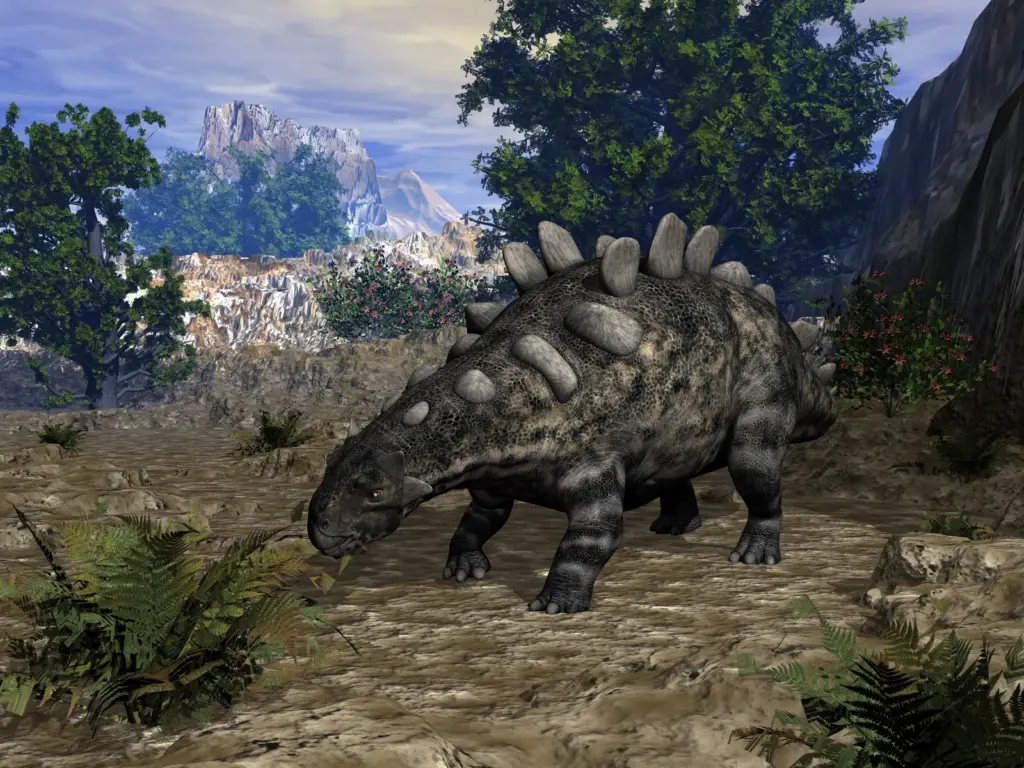
With a length of around 4.3 meters and a weight of around 700 kilograms, this dinosaur is one of the smaller representatives of the Ankylosauridae family. Among its characteristic features were thick armor plates and a club-like tail. It lived in habitats such as forests and grasslands during the Late Cretaceous Period, about 95 million years ago.
As a herbivore, it fed on low-growing plants such as ferns, cycads and conifers. Crichtonsaurus had a broad, robust skull suitable for processing tough plant material. It is believed that these dinosaurs lived in small herds and avoided confrontations with other dinosaur species.
## Physical characteristics and defense mechanisms
Crichtonsaurus was a well-armored herbivorous dinosaur. This four-footed dinosaur was about 4.3 meters long and weighed about 700 kilograms. Like specimens from the Sunjiawan Formation Evidence shows that this species lived in what is now the Chinese province of Liaoning.
He had a stocky build with short upper and lower leg bones and a bird-like, backward-facing pelvis. Among the dinosaur's key defensive features was an extensive set of bone plates, called osteoderms, that were embedded in its skin. Similar to Lurdusaurus Crichtonsaurus' robust body structure may have played a role in its survival.

He also had a protective half ring of armor around his neck and significant armor covering his body. Its dental structure was adapted to a plant-based diet and featured broad, flattened teeth with unique notches near their bases. These teeth were located in a strong skull capable of processing tough plant material. Although there is no confirmed evidence of a tail club in Crichtonsaurus bohlini, the species relied primarily on its body armor for defense.
It moved relatively slowly and may have exhibited herding behavior to increase its chances of survival.
Discovery in ancient China
Crichtonsaurus was discovered in 1999 in Liaoning Province, China, more specifically in the Sunjiawan Formation near Beipiao. The initial research was led by Dong Zhiming and his team from the Institute of Vertebrate Paleontology and Paleoanthropology of the Chinese Academy of Sciences. They named the genus in honor of author Michael Crichton and Swedish paleontologist Birger Bohlin.
Initially only partial Crichtonsaurus skeletons were found, but in 2016 more complete specimens were discovered at the China University of Geosciences, Beijing (CUGB). The specimens have the characteristic features heavily armored ankylosaur that are typical for this group of dinosaurs.
The genus has faced taxonomic challenges, including the reclassification of C. benxiensis as Crichtonpelta. This discovery adds to the extensive paleontological research in China, which includes significant work by the Sino-Soviet expeditions of 1959-1960 and the Sino-Canadian Dinosaur Project.
International collaborations have been critical in expanding our knowledge of Chinese dinosaurs, and ongoing research continues to refine our knowledge of the taxonomy and ecological role of Crichtonsaurus in the Late Cretaceous of Asia.
Life as a prehistoric herbivore
Life as a prehistoric herbivore influenced the evolution of Crichtonsaurus's unique features, including its 4.3 meter body and its adaptations for feeding. This dinosaur, which weighed about 700 kilograms, developed serrated teeth to process abundant plant material during the Late Cretaceous.
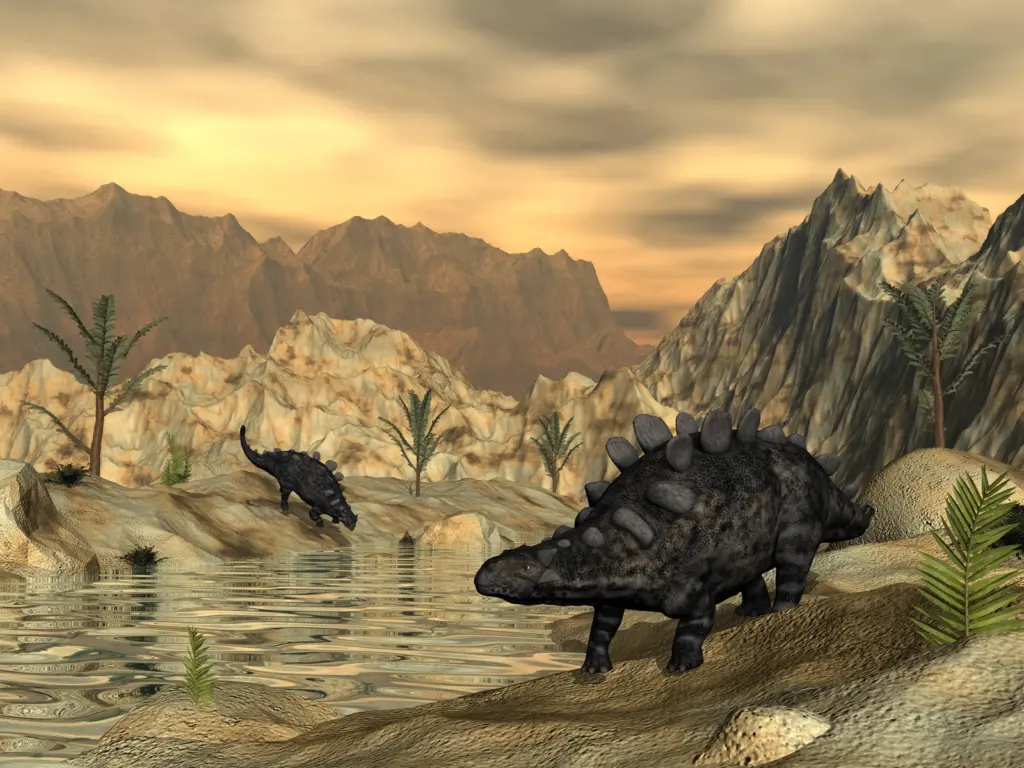
Its short humerus and thigh bones contributed to a stocky posture that allowed it to efficiently consume the low-growing vegetation in the forests and grasslands of what is now ancient China. Similar to Shantungosaurus, Crichtonsaurus played one essential role in its ecosystem and influenced the dynamics of the plant community through its eating habits.
Crichtonsaurus probably formed small herds rather than lived alone, although it generally avoided other dinosaur species. Aside from its social behavior, it had thick protective plates along its back and a strong tail club for defense against predators. Like other ankylosaurs, it used bony osteoderms as armor to protect itself from attacks.
These adaptations were essential to its survival because it occupied a specific ecological niche. A member of the family Ankylosauridae, the characteristics of Crichtonsaurus reflect the evolution of herbivorous traits seen in many dinosaur groups during the Late Cretaceous.
Scientific debates and classifications
The scientific understanding of Crichtonsaurus has been controversial since it was first described by Dong Zhiming in 2002. The type species, C. bohlini, was named in honor of Michael Crichton and Birger Bohlin.
However, subsequent research has cast doubt on its validity. Victoria Arbor was unable to identify any unique features in the holotype in her analysis, leading to its classification as a nomen dubium. The specimen consisted of one left lower jaw with teeth.
The classification problems were further complicated when additional specimens (IVPP V12746 and LPM 101) were initially assigned to C. bohlini, but this assignment was problematic due to the lack of overlapping material.
The complexity increased with the description of a second species, C. benxiensis, which was reclassified as Crichtonpelta by Arbour and Currie in 2015. The presence of multiple ankylosaurid taxa in the Sunjiawan Formation has increased the difficulty of accurately placing the genus within the family Ankylosauridae.
Although it is believed to belong to the subfamily Ankylosaurinae, further discovery and comparative analysis are needed to resolve these classification debates.
Summary
Crichtonsaurus is an armored dinosaur that represents the diversity of ankylosaurs from the Cretaceous period of ancient China. Ongoing research and fossil analyzes expand our scientific understanding of this genus. Its special defensive characteristics and its adaptation to herbivory provide valuable insights into the evolution of dinosaurs. Research on Crichtonsaurus contributes to our knowledge of Asian dinosaur populations and their ecological roles during the Late Cretaceous.
Systematics
| Dinosauria |
| Ornithischia |
| Genasauria |
| Thyrophora |
| Eurypoda |
| Ankylosauria |
Occurrence in time
| chalk |
| Upper Cretaceous |
| Albium |
Happen
| Area | Asia |
| country | China |
| region | Liaoning |
| formation | Sunjiawan |
Image sources:
Skeleton: Gary Todd, CC0, via Wikimedia Commons