Ceratosaurus
Description (physical characteristics)
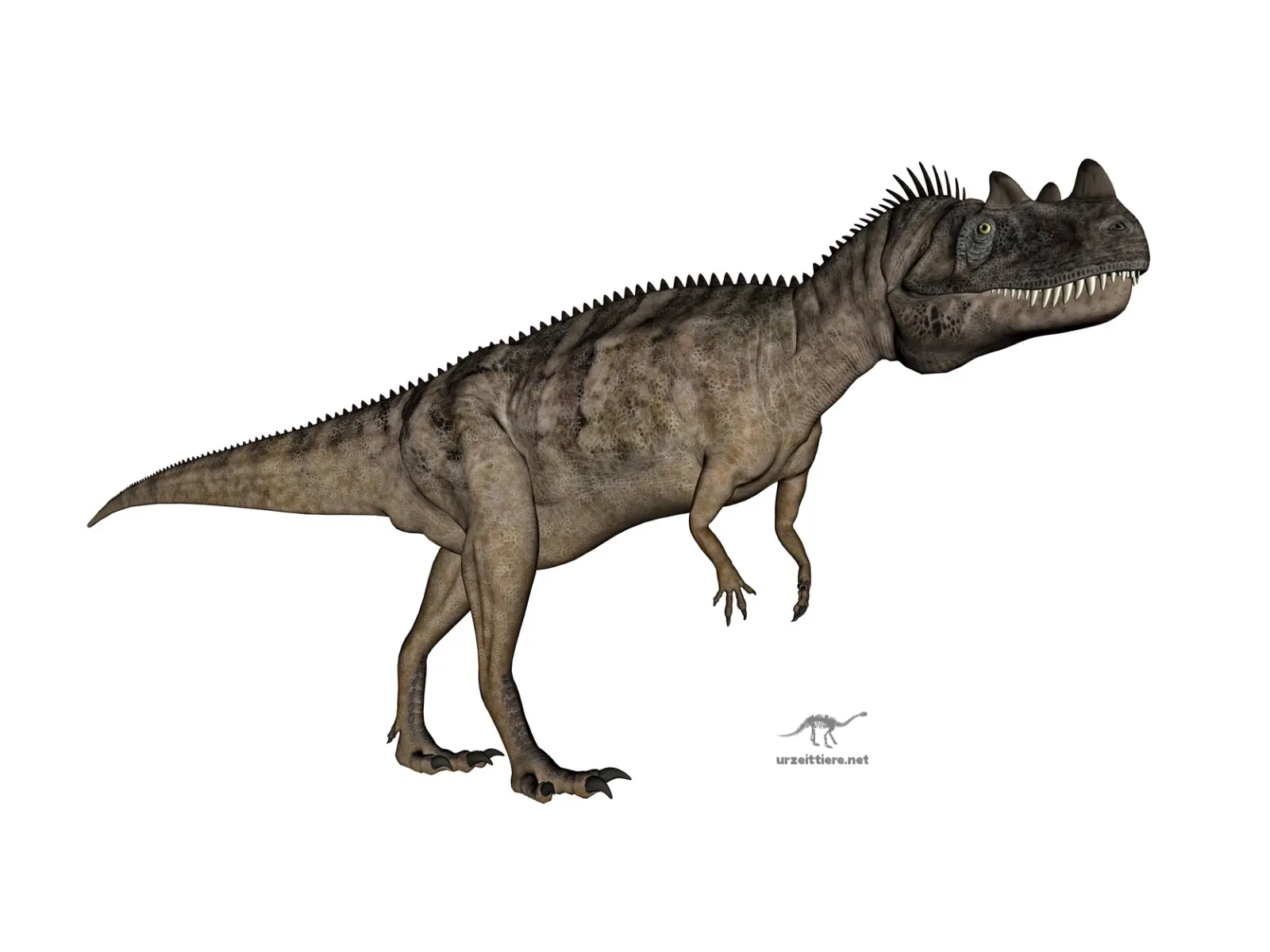
Ceratosaurus reached 5 to 6 meters in length and weighed about 600 kilograms. This carnivorous dinosaur from the Late Jurassic period had several unique physical characteristics that distinguished it from other theropods of its time.
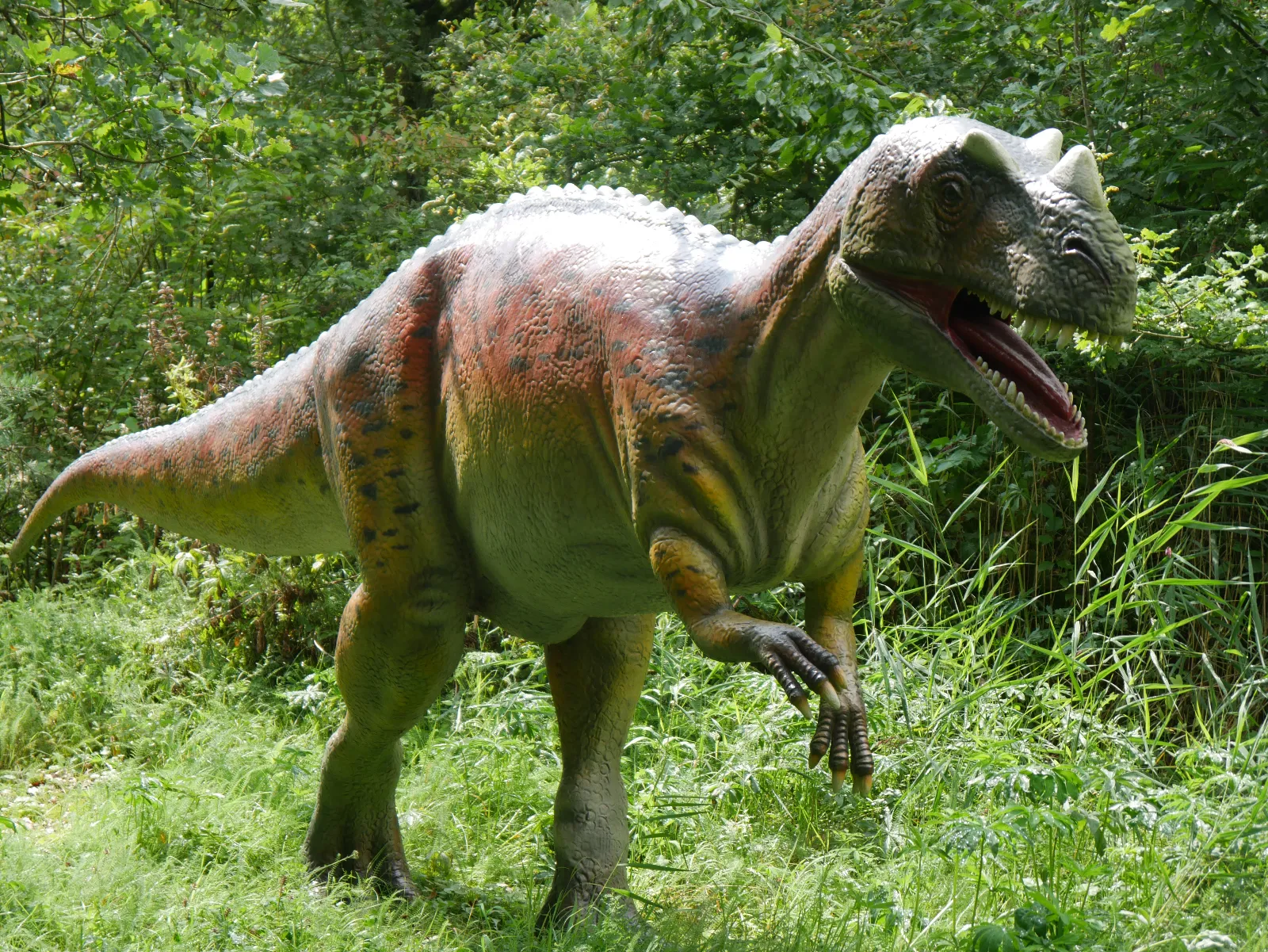
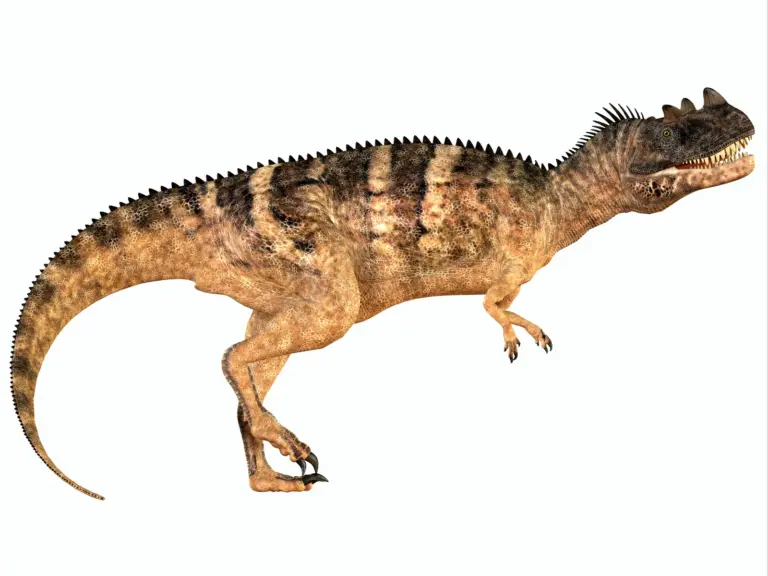
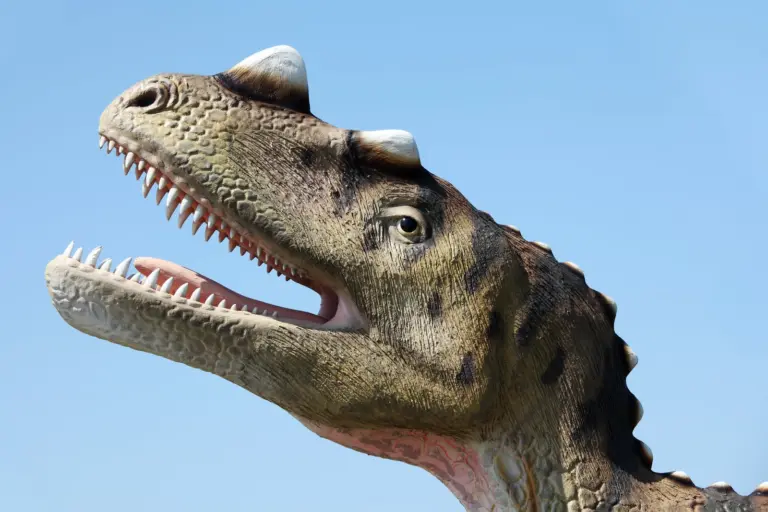
The most striking feature was the prominent nose horn. This bony extension sat on the snout and gave the dinosaur its name. Additional bony ridges ran along the back, giving it a distinctive profile. The skull was long and narrow and housed rows of sharp, blade-like teeth designed for cutting through flesh.
The tail was particularly strong and flexible. This appendage helped the animal maintain balance during rapid movements. The body structure was lighter than that of the Allosaurus, indicating greater speed and agility. The limbs were well muscled, with the powerful hind legs supporting most of the body weight. The forelimbs were shorter, but equipped with sharp claws.
Compared to Allosaurus, Ceratosaurus had a slimmer physique. While Allosaurus could reach a length of 8 to 9 meters, Ceratosaurus remained smaller. This difference in size likely influenced hunting strategies and prey selection. The lighter frame allowed for quicker turns and faster pursuit of smaller prey.
The anatomy of the skull reveals a lot about feeding behavior. The teeth were serrated on both edges, similar to steak knives. This shape allowed for efficient cutting through flesh and skin. The jaw muscles were attached to wide areas of the skull, producing strong biting force despite the narrow head shape.
Discovery and naming of Ceratosaurus
Othniel Charles Marsh first described Ceratosaurus in 1884. Marsh was a prominent American paleontologist who worked during the “Bone Wars” period. He discovered the first specimens in the United States in the rocks of the Morrison Formation.
The name Ceratosaurus comes from Greek. “Keras” means horn and “sauros” means lizard. The name refers directly to the nasal horn that distinguishes this dinosaur from most other theropods.
Fossils were discovered at three main locations. The most complete specimens have been found in North America, particularly in Colorado and Utah. The rocks of the Morrison Formation date from the Late Jurassic period. Further fossils were found in Portugal, extending the known distribution area to Europe. Fossils from Tanzania showed that Ceratosaurus also lived in Africa.
These discoveries allowed scientists to reconstruct the skeleton with reasonable accuracy. The first specimen Marsh found was relatively complete. This helped determine the basic body structure. Later finds from Portugal and Tanzania confirmed that different populations shared similar characteristics.
Each fossil site offered different preservation conditions. The specimens from the Morrison Formation often had excellent bone detail. The Portuguese finds sometimes included several individuals in close proximity. The Tanzanian fossils occurred in different rock types, suggesting different habitat preferences.
Features and anatomy of Ceratosaurus
The skeletal structure shows several adaptations to life as a predator. The vertebrae were sturdy and supported powerful back muscles. Each vertebra was firmly attached to its neighbors, creating a rigid spine. This rigidity efficiently transferred power during running and hunting.
The skull was about 60 centimeters long. Large openings reduced weight without compromising strength. The eye sockets were directed slightly forward, allowing for better depth perception. This characteristic helped in estimating distances when pursuing prey.
The teeth varied in size along the jaw. The front teeth were slightly smaller and more pointed. These grabbed and held the prey.
The teeth further back were larger and blade-shaped. These cut through muscles and tendons. The teeth were up to 10 cm long and had numerous serrations, so that they looked like small saw blades.
The function of the nasal horn is unclear. Some researchers suspect it played a role in recognizing other species. Others believe that it helped in the fight against rivals. The horn has no obvious attachment points for large muscles, so it is unlikely that it served as a weapon. The most likely explanation is still visual representation.
Bony ridges above each eye contributed to its distinctive appearance. These ridges extended from the eye socket to the back of the head. Similar structures in modern animals often indicate visual signals between individuals.
The forelimbs were short in relation to body size. Each hand had four fingers, one of which was shortened. Three fingers bore large, curved claws. These claws were 8 to 10 centimeters long along the outer curve. The arms could grab and hold prey while the jaws delivered deadly bites.
The hind legs were long and strong. The femur was about 60 centimeters long, while the tibia was 55 centimeters long. This ratio suggests good mileage. The foot had three main toes, each ending in a sharp claw. A small fourth toe pointed backwards.
The tail consisted of about 50 vertebrae. Bony rods called chevrons hung beneath each vertebra. These structures protected blood vessels and served as additional attachment points for muscles. The flexibility of the tail allowed quick changes of direction while running.
Compared to Allosaurus, Ceratosaurus had several differences. The skull was proportionally shorter. The nasal horn was unique to Ceratosaurus. The arms were slightly longer in relation to the body size. These differences suggest different hunting methods and ecological roles.
Lifestyle and hunting behavior
The Ceratosaurus was a proven carnivore. Its diet probably consisted of small to medium-sized dinosaurs, juveniles of larger species, and possibly carrion. The tooth structure was more suitable for cutting than crushing, suggesting prey with soft tissue rather than heavy armor.
The long, flexible tail served as a counterweight. As it ran, the dinosaur kept its tail stretched straight back. This position kept the body horizontal and allowed the legs to move freely. The tail could swing from side to side, helping with sharp turns during pursuit.
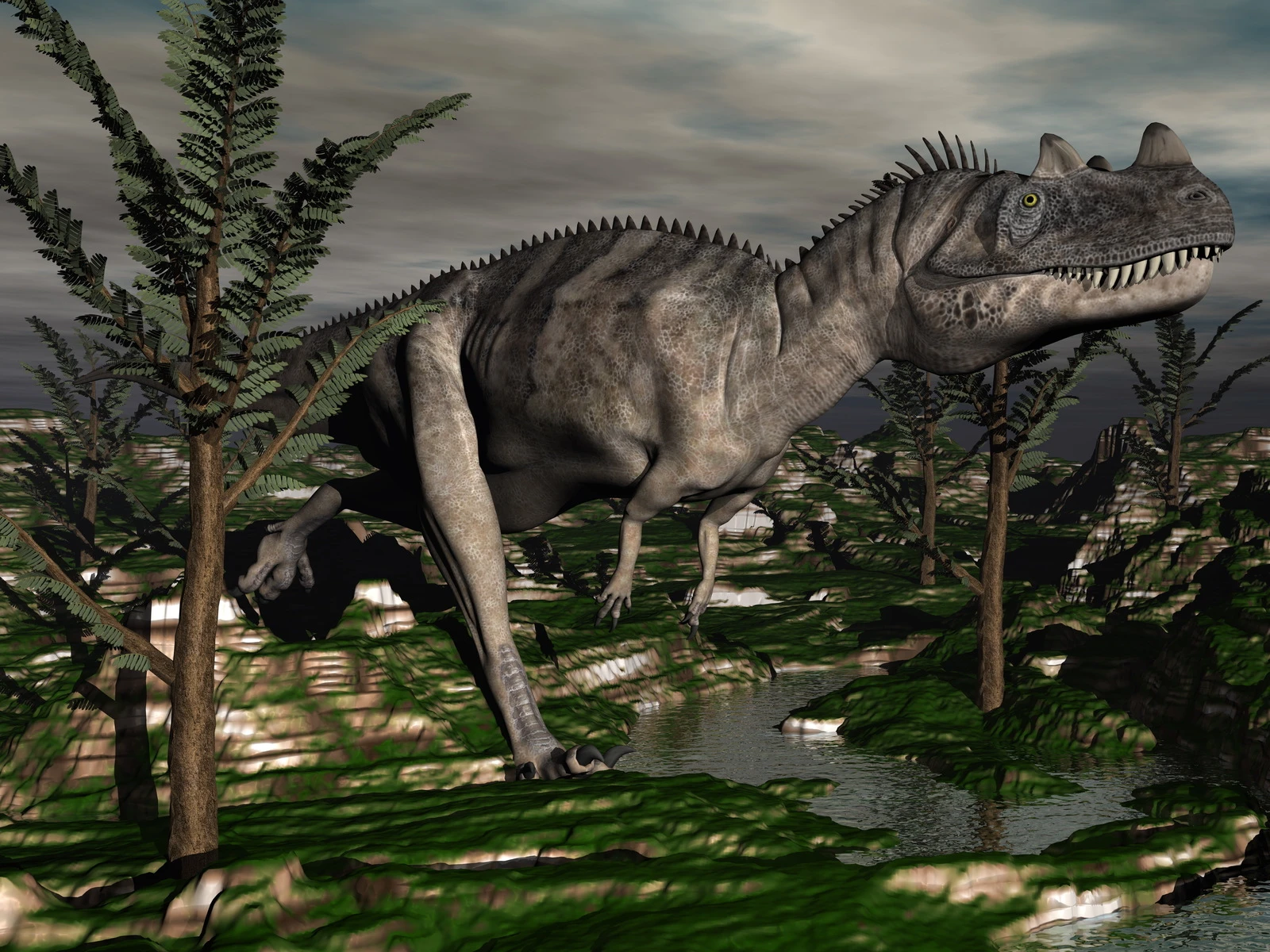
Scientists believe that Ceratosaurus hunted in swampy areas or along river banks. Several fossil sites indicate a connection to ancient waterways. The foot structure was better suited to soft ground than that of some other theropods. The body proportions suggest ambush tactics rather than long distance chases.
The tooth shape and wear patterns indicate cutting attacks. The teeth cut through flesh rather than crushing bone. This method works well for prey with thin skin and minimal protective features. The jaw could be opened wide, allowing large bites.
Analysis of bite force suggests moderate pressure compared to larger predators. Ceratosaurus likely targeted vulnerable areas such as the neck or stomach. Quick, repeated bites weakened the prey through blood loss. The jagged teeth caused wounds that bled profusely.
Examples of prey from the same period include Dryosaurus, a small herbivore up to 3 meters long. Young sauropods may have been a target if they were vulnerable. Fish and other aquatic animals were likely eaten when they were available. Finds from fossil sites show that Ceratosaurus lived alongside a variety of prey species.
The hunting strategy probably involved waiting near water sources. Many animals had to drink regularly in the warm climate.
Ceratosaurus could hide in vegetation and then dart out when prey approached. The relatively light build enabled explosive speed over short distances.
Compared to Allosaurus, Ceratosaurus probably hunted prey of different sizes. Allosaurus attacked larger animals, including adult stegosaurs. Ceratosaurus focused on smaller prey that matched its size and capabilities. This difference reduced direct competition for food.
Habitat during the Jurassic period
The Late Jurassic period spanned from about 153 to 148 million years ago. During this time, Ceratosaurus lived in warm, seasonally variable environments. The Morrison Formation preserved a rich ecosystem that included floodplains, rivers, and isolated lakes.
Climatic conditions were generally warm and humid. Seasonal rainfall led to flooding, which was followed by drier periods. The vegetation was lush and dominated by conifers, ferns and cycads. These plants supported large populations of herbivorous dinosaurs.
Rivers meandered through vast flood plains. During floods, water spread over large areas and created temporary wetlands. As the water receded, it left behind pools and marshy ground. These habitats attracted various animals, including predators such as Ceratosaurus.
Other dinosaurs shared this habitat. The Allosaurus was the largest predator, measuring 8 to 9 meters. The Stegosaurus grazed on low vegetation and was protected by bony plates and spines on the tail. The Diplodocus and other sauropods fed on tree foliage and grew to enormous sizes.
The Morrison Formation ecosystem supported a complex food web. Large herbivores ate enormous amounts of plant material. Medium-sized predators like Ceratosaurus hunted smaller herbivores and juveniles. Smaller predators and scavengers consumed the remains and caught small prey.
Ceratosaurus may have preferred areas near bodies of water. The foot structure was well suited to soft surfaces. Fish and amphibians were probably food sources. Many modern predators focus their hunting on bodies of water where prey animals congregate.
Different fossil sites exhibit slight environmental differences. Some areas had more permanent water. Others experienced longer dry periods. Ceratosaurus fossils from Portugal occur in rocks suggestive of coastal environments. This suggests that the species has adapted to different wetland conditions.
The occurrence of Ceratosaurus in North America, Europe and Africa shows a wide geographical distribution. During the Late Jurassic, sea levels were lower, so land connections existed between the continents. Animals were able to move between regions and thus spread over long distances.
Seasonal changes affected the availability of prey. During the rainy season, young dinosaurs hatched and grew rapidly. These young animals were easy prey. During dry seasons, animals concentrated around dwindling water sources, creating hunting opportunities. Ceratosaurus probably adapted its reproduction and growth to the availability of prey.
Importance and research in science
This dinosaur exhibits features found in both primitive and advanced carnivorous dinosaurs. This combination helps scientists understand how predatory dinosaurs have changed over time.
Modern research methods provide new details about Ceratosaurus. CT scans show the internal structure of the skull without damaging the fossils. These scans provide information about the shape of the brain cavity, the structure of the inner ear and the blood vessel pathways. Three-dimensional models allow researchers to test biomechanics digitally.
The structure of the inner ear gives scientists information about balance and hearing. Ceratosaurus had semicircular canals, similar to modern birds. These structures detect head movements and ensure balance. The shape suggests good balance when running and turning.
Casts of the brain cavity show the relative size and shape of the brain. Ceratosaurus had a typical theropod brain. The regions that control vision and muscle coordination were well developed. The olfactory bulbs were of modest size, indicating an average sense of smell.
Biomechanical simulations test how the skeleton handled stress. Computer models show the distribution of force when biting and running. These studies confirm that the skull could withstand the forces of struggling prey. The legs could withstand running speeds of up to 30 kilometers per hour.
The preservation of fossils varies depending on where they were found. Some specimens exhibit excellent bone detail. Others are only preserved in fragments. Comparing specimens from different locations shows differences within the species. Some individuals were larger, others more robust. These differences are normal within animal populations.
The relationship between Ceratosaurus and other theropods is still being studied. Early analyzes assigned it to the later predators. More recent work suggests that it split off earlier. The nasal horn and other features represent unique evolutionary experiments.
Ceratosaurus has rare skeletal features. The bony ridges on the back are unusual among theropods. The four-fingered hand is more primitive than the three-fingered pattern of later predators. These features show that Ceratosaurus retained its original characteristics while developing new ones.
Research continues to refine the understanding of growth and development. Younger individuals had proportionately larger heads and shorter legs. As they matured, their body proportions changed. This growth pattern is similar to that of modern birds of prey.
Ceratosaurus in popular culture
This dinosaur has appeared in several films and documentaries. In Jurassic Park III, Ceratosaurus was seen in a brief scene. The film showed the animal with correct horn placement but exaggerated size. The BBC series Walking with Dinosaurs presented hunting behavior based on scientific evidence.
Film representations often differ from scientific understanding. Films emphasize drama and action. The real Ceratosaurus probably moved more cautiously. The hunt required patience and good timing rather than constant pursuit. Roaring in movies is a creative invention because the actual sounds are unknown.
Museums around the world display Ceratosaurus skeletons. The American Museum of Natural History houses a complete specimen. European museums display casts based on Portuguese finds. These exhibitions provide visitors with knowledge about the Jurassic ecosystems and the diversity of predatory dinosaurs.
Books and educational materials often contain Ceratosaurus. The distinctive horn makes it visually memorable. Children's books use it to teach about the diversity of dinosaurs. Scientific texts discuss its evolutionary position and anatomical features.
The gap between popular and scientific representations is narrowing. Modern media increasingly consult paleontologists. Documentaries show current research methods and results. This improves the public's understanding of how scientists study extinct animals.
What makes Ceratosaurus unique
Several features distinguish Ceratosaurus from other predatory dinosaurs. The nasal horn stands out as the most striking feature. Few other theropods had such distinctive head decoration. The bony dorsal ridges contributed to its distinctive appearance.
The body was designed for speed and agility. Its lighter construction compared to the Allosaurus meant it could move faster. The flexible tail improved its maneuverability. These characteristics were suitable for hunting in complex terrain such as forests and wetlands.
Its hunting methods differed from those of larger predators. Cereatosaurus hunted smaller, faster prey. Its sharp bite was particularly effective against unprotected animals. By doing this, he reduced competition with larger predators that hunted other prey.
The Cereosaurus represents a transitional form in the evolution of theropods. It retained primitive features such as the four-fingered hand. At the same time, he showed advanced features in leg structure and balance. This combination helps scientists understand how later predators evolved.
Research continues to provide new insights. Improved technologies enable detailed analysis of the existing fossils. New discoveries could expand the known range. Each discovery contributes to knowledge about Jurassic ecosystems.
Interest in Ceratosaurus remains high among scientists and enthusiasts. Its unique appearance attracts attention. Its role in Late Jurassic food webs demonstrates the complexity of the ecosystem. Modern media coverage is introducing new generations to this remarkable predator.
Students and researchers study Ceratosaurus to learn research methods. The fossil record is good but incomplete, providing opportunities for further study. Every question answered leads to new questions. This ongoing process drives paleontology forward.
Understanding Ceratosaurus helps explain the success of predatory dinosaurs. These animals dominated the role of land carnivores for over 160 million years. Studying individual species like Ceratosaurus reveals how they adapted to specific environments and prey.
Ceratosaurus
| scientific name | Ceratosaurus dentisulcatus |
| Estimated size | Length: 6.8 meters Height: Weight: 1 ton |
| geological era | 157.3 – 147.7 million years |
| Locations | Morrison Formation |
| Order | Saurischia |
| Subordination | Theropoda |
Physical characteristics
| anatomy | Bipedal, medium-sized, slim-built predatory dinosaur with a long tail |
| Special features | Prominent nasal horn, two small eye horns and rows of small skin bone plates on the back |
| locomotion | Two-legged |
| Skin texture | Scaly reptile skin covered with osteoderms (skin bone plates). |
| Coloring | Coloring is unknown, there are only speculative reconstructions |
discovery
| Explorer | Madsen & Welles |
| Discovery date | 2000 |
| Meaning of the name | “horned lizard” or “horned lizard” |
| Significant fossil finds | A large part of the skeleton with an incomplete skull. |
In paleontology, the ratio of brain to body size, the so-called Encephalization quotient (EQ), used as a rough guide to relative intelligence.
| Intelligence (EQ) | The EQ is estimated to be typical for medium-sized theropods, i.e. neither particularly high nor particularly low |
| Social behavior | Social behavior is unclear; a more solitary lifestyle is usually assumed |
| Predators | Adults probably had hardly any natural enemies; young animals could have fallen victim to larger theropods such as Allosaurus |