
Bajo de la Carpa Formation
What is the Bajo de la Carpa Formation?
The Bajo de la Carpa Formation is a rock layer in Argentina that is of particular interest to scientists. It was formed approximately 86 to 83 million years ago during the Late Cretaceous period, specifically during the Santonian stage. This formation belongs to the Neuquén Group, a larger geological complex in the Neuquén Province in Patagonia.
Researchers have found numerous dinosaur fossils in these rock layers. The formation consists mainly of sandstones and siltstones, which were formed by ancient rivers and floodplains. These special conditions allowed bones and other remains of dinosaurs to be preserved for millions of years.
The Bajo de la Carpa Formation stretches across much of the Neuquén Province and is part of one of the world's most important dinosaur fossil sites. Patagonia has always been a hotspot for dinosaur finds, but this particular formation stands out. It shows us what the world looked like over 80 million years ago, when giant dinosaurs roamed the subtropical landscapes of South America.
Geological context and history
86 to 83 million years ago, the world looked very different than it does today. Patagonia was then located much closer to the equator and had a warm, humid climate. Large rivers crisscrossed the landscape, creating extensive floodplains. The Bajo de la Carpa Formation was formed in precisely this environment.
The sediments of this formation were transported by rivers and deposited in broad plains. When the rivers overflowed their banks, they spread sand, mud, and other materials over large areas. These regular floods created ideal conditions for the preservation of dinosaur bones. Dead animals were quickly covered by sediment, preventing their bones from rotting or being destroyed by scavengers.
The Andes Mountains were only just beginning to form at this time. These geological processes influenced how sediments were deposited. The uplift of the Andes caused more material to be eroded from the mountains and washed down into the plains. This is how the thick rock layers we know today as the Bajo de la Carpa Formation were formed.
The climate was significantly warmer than today. There were no polar ice caps, and even Antarctica was ice-free. These conditions supported a rich plant life, which in turn could feed large numbers of dinosaurs. Ferns, conifers, and early flowering plants formed dense forests along the rivers.
The depositional cycles alternated between quieter periods with fine sediments and more active phases with coarser materials. These changes created the characteristic layers of the formation, which can be read today like a history book. Each layer tells of different environmental conditions and the various organisms that existed at that time.
Significant dinosaur finds in the Bajo de la Carpa Formation
The most famous find from the Bajo de la Carpa Formation is undoubtedly Carnotaurus sastreiThis carnivorous dinosaur was about eight meters long and weighed an estimated two tons. Its name means "carnivorous bull", which refers to the two distinctive horns above its eyes. These horns made Carnotaurus one of the most unusual predatory dinosaurs ever discovered.
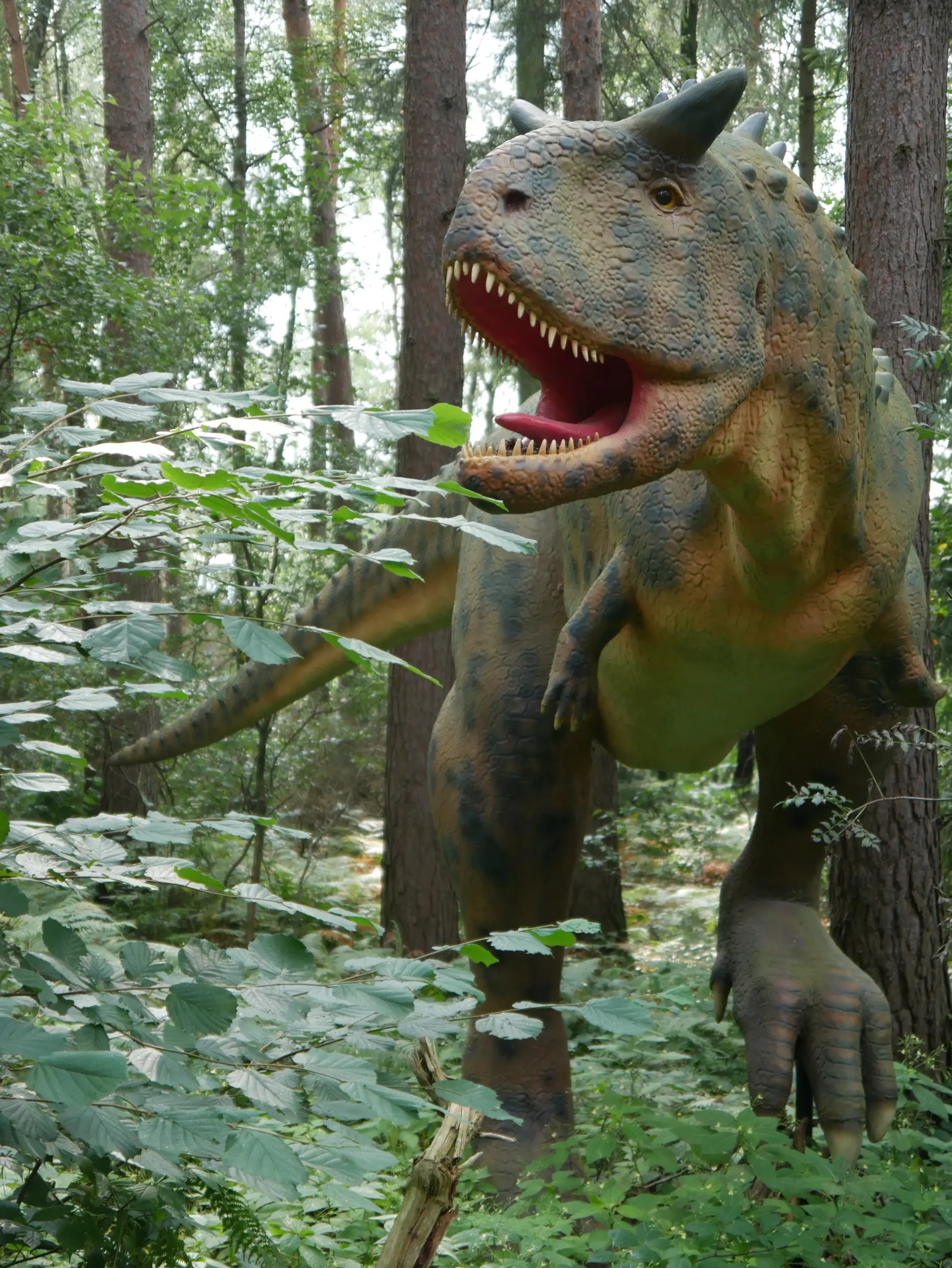
Carnotaurus had extremely short arms, even shorter than those of the famous Tyrannosaurus rex. Its legs, on the other hand, were long and muscular, suggesting it was a fast runner. Scientists estimate it could reach speeds of up to 50 kilometers per hour was able to achieve this. This made him a feared hunter in the Patagonian plains.
Another important find is Gasparinisaura cincosaltensisGasparinisaura, a small herbivorous dinosaur, was significantly smaller than most other dinosaurs of its time, measuring only one meter in length. It belongs to the ornithopods, a group of dinosaurs that could walk on two or four legs. This find is particularly significant because it is one of the southernmost ornithopod fossils discovered in the world.
The formation has also yielded various sauropod remains. These long-necked giants belonged to the group of Titanosaurs, which were particularly diverse in South America. Although complete skeletons are rare, researchers have found enough bones to identify several species. These sauropods were the largest land animals of their time and could reach lengths of over 20 meters.
Besides dinosaurs, other vertebrates were also found. Crocodile-like reptiles lived in the rivers and swamps. These crocodilomorphs were sometimes significantly larger than modern crocodiles and hunted both in water and on land. Their remains demonstrate the diversity of the animal life in the Late Cretaceous period.
Fish, turtles, and other aquatic animals complete the picture. The diversity of the finds shows that the Bajo de la Carpa Formation has preserved a complete ecosystem. From the smallest fish to the largest sauropod, scientists can reconstruct the entire food chain.
Important archaeological sites and excavation areas
The La Bonita site This is one of the most productive locations in the Bajo de la Carpa Formation. Researchers have been working here continuously since the 1980s, making spectacular discoveries. The site is located about 30 kilometers south of the city of Neuquén and is accessible via unpaved roads.
At La Bonita, not only individual bones but also complete skeletons were found. This is particularly valuable in paleontology because it allows scientists to gain a more precise understanding of the anatomy and lifestyle of dinosaurs. A complete skeleton reveals far more than individual bones found in different locations.
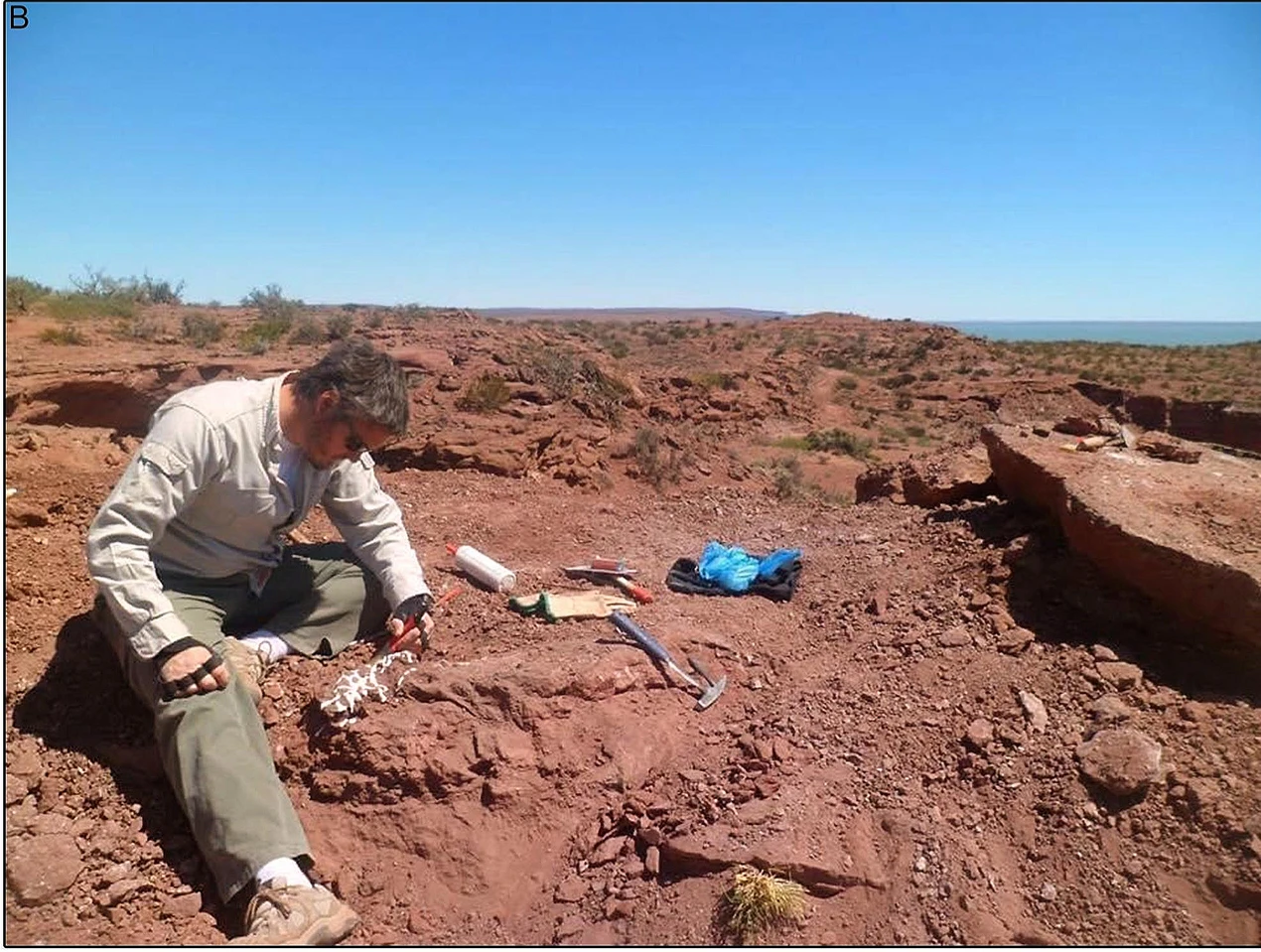
The excavation work is complex and requires a great deal of patience. First, the fossil-bearing strata must be located. Then, layer by layer, the soil is removed, with each find being carefully documented. GPS coordinates, photographs, and detailed drawings help to record the exact position of each bone.
Other important sites are scattered throughout the Neuquén province. Each has its own unique characteristics and contributes to the overall picture. Some sites are particularly rich in theropod remains, while others have yielded mainly sauropods or smaller dinosaurs.
Working at these sites is only possible during certain times of the year. The Patagonian winter is too cold and windy for outdoor excavations. Most expeditions therefore take place in the summer, when temperatures are milder and there is less rainfall.
Comparison with other Argentine dinosaur formations
The Bajo de la Carpa Formation is part of the Neuquén Group, which consists of several successive formations. Each formation represents a different period of the Cretaceous and has its own characteristic dinosaur fauna.
The older Candeleros formationThe area, which formed approximately 100 to 95 million years ago, is known for its large sauropods such as Argentinosaurus. This formation represents a time when South America looked very different and was dominated by other dinosaur species.
The younger one Anacleto FormationThe area that developed after the Bajo de la Carpa Formation yielded other spectacular finds. For example, the giant sauropod Puertasaurus, one of the largest dinosaurs of all time, was found here.
What makes the Bajo de la Carpa Formation special is the diversity of its dinosaur fauna. While other formations are often dominated by one or two groups of dinosaurs, the Bajo de la Carpa Formation exhibits a balanced ecosystem with various carnivores and herbivores.
The preservation of fossils in the Bajo de la Carpa Formation is exceptionally good. This is due to the special depositional conditions, which allowed for rapid embedding and thus good preservation.
Scientific significance and current research
The Bajo de la Carpa Formation helps scientists understand the evolution of dinosaurs in the Southern Hemisphere. GondwanaThe southern supercontinent had its own dinosaur fauna, which differed from that of the northern supercontinent. Laurasia difference.
Modern technologies have revolutionized research. CT scans make it possible to look inside fossils without damaging them. This allows researchers to examine the brain structure of dinosaurs or the arrangement of their bones without destroying the precious material.
Digital reconstructions help us understand how dinosaurs moved. Computer models can show how fast Carnotaurus could run or how sauropods moved their long necks.
International collaboration shapes modern paleontology in Argentina. Teams from different countries work together on excavations, bringing diverse expertise to the table. This cooperation leads to better results and new insights.
Current projects focus on reconstructing the environment of the Late Cretaceous period. By analyzing pollen, seeds, and other plant remains, scientists can reconstruct the climate and vegetation of that time. This information helps to understand the environment in which the dinosaurs lived.
Visiting opportunities and museum presentation
Several museums in the Neuquén province display fossils from the Bajo de la Carpa Formation. Carmen Funes Museum Plaza Huincul presents an impressive collection of Patagonian dinosaurs, including finds from the formation.
Paleontological tourism has developed into an important economic sector in the region. Guided tours to the excavation sites allow visitors to experience the work of paleontologists up close. These tours are particularly interesting during the excavation season when work is actively underway.
The local population benefits from the growing interest in paleontology. Hotels, restaurants, and tour guides have specialized in catering to science tourists. Many locals now work as excavation assistants or museum guides.
Protecting fossil sites is an important task. Illegal fossil collectors threaten scientific work, which is why the sites must be monitored. Public education helps to raise awareness of the value of these scientific treasures.
The Bajo de la Carpa Formation remains one of the most important sources of our knowledge about the dinosaurs of South America. Every new discovery contributes to completing the puzzle of evolution and bringing us closer to the Cretaceous world.
Image sources:
Featured image: JD Porfiri, MA Baiano, DD dos Santos, FA Gianechini, M. Pittman & MC Lamanna, CC BY 4.0 https://creativecommons.org/licenses/by/4.0, via Wikimedia Commons