
Yangchuanosaurus
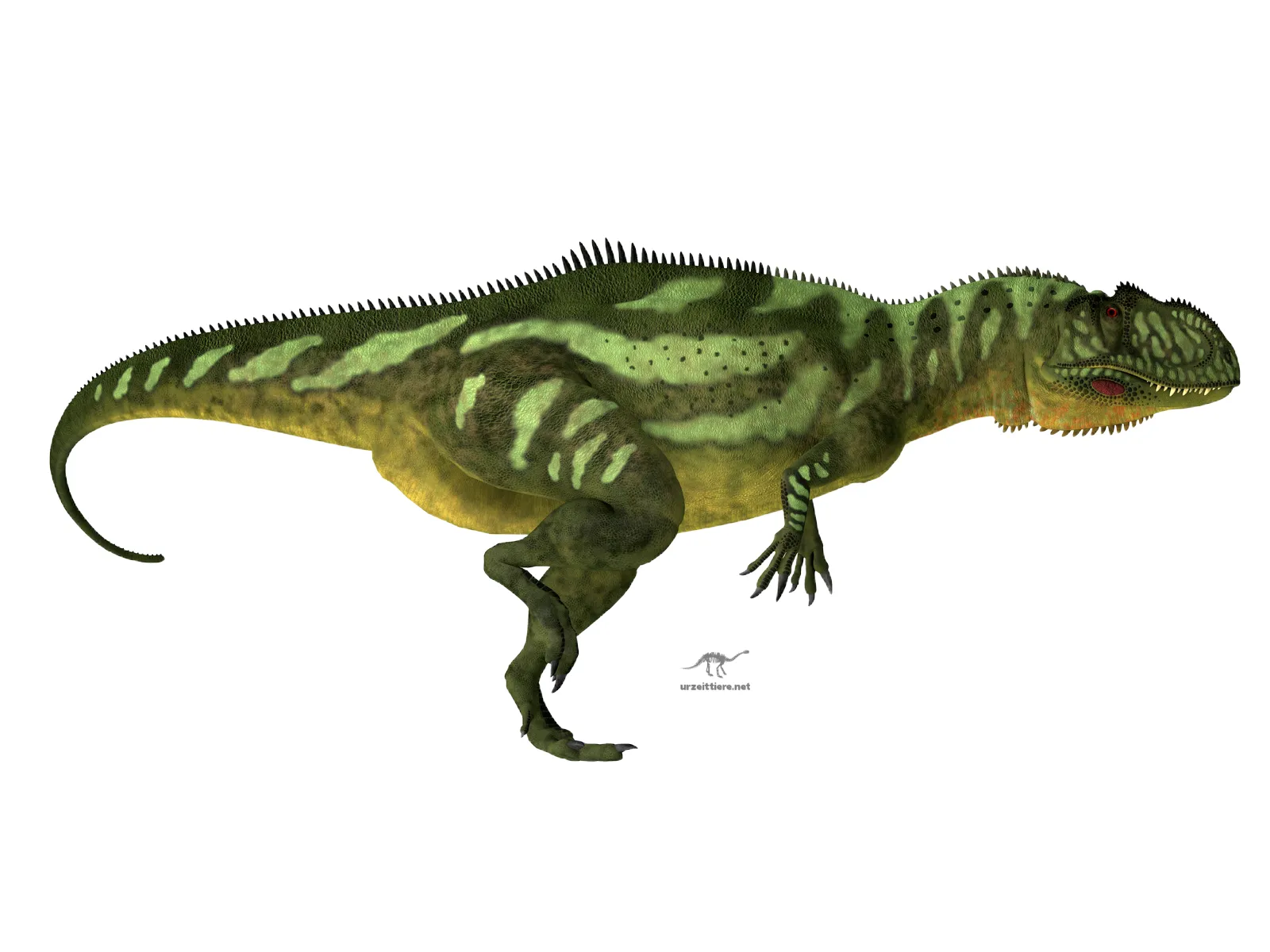
Yangchuanosaurus was a theropod dinosaur that lived in China during the Late Jurassic. It was up to 10.5 meters long.
It is characterized by a skull with bony ridges and horn-like structures. Although he is not as well known as dinosaurs like Tyrannosaurus rex or Velociraptor, Yangchuanosaurus was an important predator in its ecosystem.
Knowledge about this dinosaur is still evolving and further research could provide more insight into its role and characteristics.
| length | 10.5 meters |
| Weight | 2.9 tons |
| locomotion | Two-legged |
| food | Carnivores |
Detailed description and physical characteristics of Yangchuanosaurus
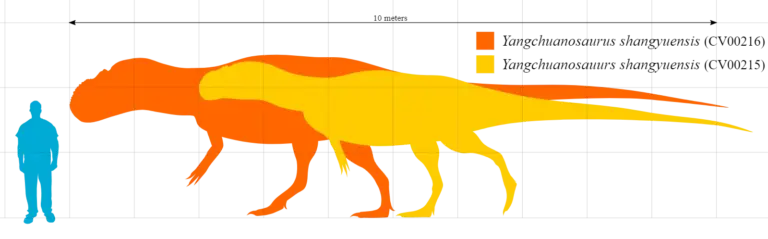
Yangchuanosaurus was a large carnivorous dinosaur from the Jurassic period that lived in what is now China. The type specimen of Yangchuanosaurus shangyouensis was 8 meters long and had a 82 centimeter long skull. Larger specimens that were once known as Yangchuanosaurus magnus identified had skulls up to 1.11 meters long and an estimated total body length of 10.8 meters with an estimated weight of 3.4 tons.
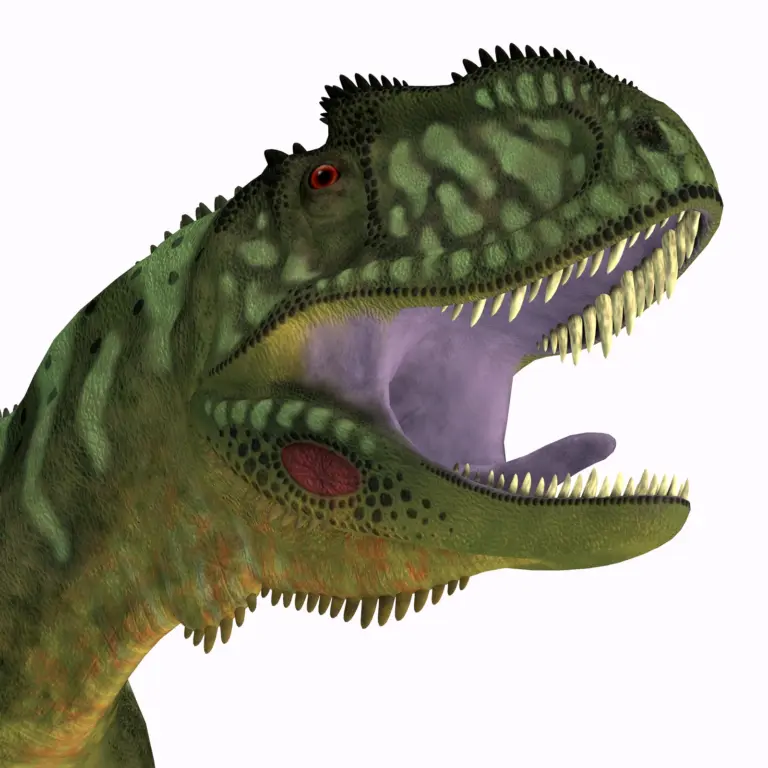
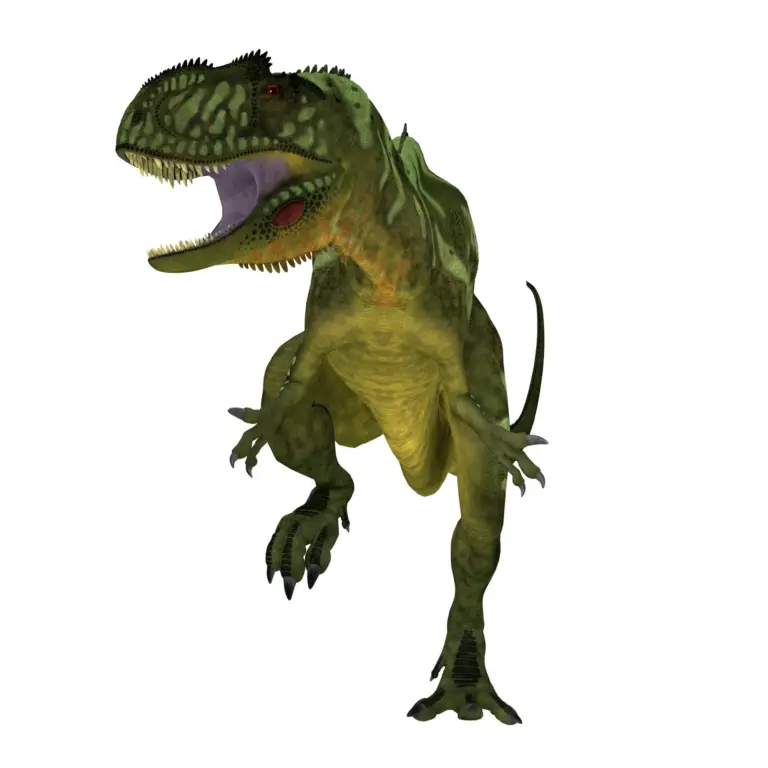
Yangchuanosaurus had several notable physical features. Its skull featured a bony ridge on the nose and several small horn-like structures and crests similar to those of Ceratosaurus. Its powerful legs allowed it to maintain a bipedal stance, while its relatively short arms, robust neck, and large head with powerful jaws and serrated teeth made it an effective predator.
The tail was long and massive, making up about half of its body length, which gave it balance and stability. The first toe of his foot was a small one Dewclaw, while the other three toes supported its weight and were equipped with large claws, enhancing its abilities as a carnivore.
Time frame and discovery of Yangchuanosaurus
In the 1970s, Chinese paleontologists made significant discoveries that led to the identification of the dinosaur genus Yangchuanosaurus. The first specimens were found near Yangchuan in Sichuan Province, China. The discovery was led by Dong Zhiming and his colleagues Chang, Li and Zhou.
In June 1977, a construction worker at the Shangyou Dam discovered the holotype specimen (CV 00215), which was later described by Dong and his team in 1978. This almost complete skeleton, including a skull, was classified as Yangchuanosaurus shangyouensis and was from the Upper Shaximiao Formation in the Yongchuan District in Sichuan unearthed.
These fossils come from the Oxford Stage of the Upper Jurassic, about 161.2 to 157.3 million years ago.
In 1983, Dong, Zhou and Zhang proposed a second species, Y. magnus, based on a larger specimen. However, the validity of this species is still debated among paleontologists.
These finds have highlighted the role of Chinese researchers in expanding our knowledge of Jurassic theropods and their diversity in Asia.
Yangchuanosaurus habitat and ecosystem
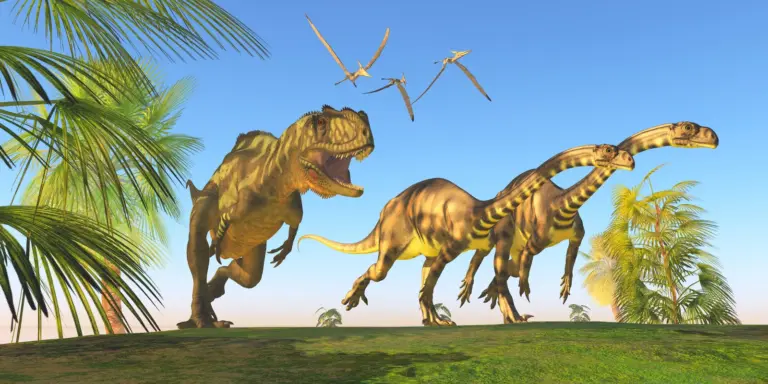
The ecosystem in which Yangchuanosaurus lived included a number of large herbivores. Sauropods such as Mamenchisaurus and Omeisaurus Yangchuanosaurus probably served as their main prey.
In addition, various species of stegosaurs, including Chialingosaurus, Tuojiangosaurus and Chungkingosaurus, contributed to the diversity of available food sources.
This abundance of potential prey supported Yangchuanosaurus in its role as the dominant predator of its ecosystem.
The Yangchuanosaurus fossils found in the upper Shaximiao Formation provide important insights into the paleoenvironment and ecological dynamics of Late Jurassic China.
Scientific classification of Yangchuanosaurus
Yangchuanosaurus was a dominant predator in its Upper Jurassic ecosystem and its scientific classification has been revised several times since its discovery. Two species were initially recognized: Y. shangyouensis and Y. magnus. However, recent studies suggest that this may actually be a single species, with differences due to individual variation or different growth stages.
The genus name, which is derived from the Yongchuan locality, has been debated among taxonomists. In a study by Carrano et al. from 2012, Yangchuanosaurus was classified as the most original member of the family Metriacanthosauridae and the only member not belonging to the subfamily Metriacanthosaurinae.
In 2019, the FOrscher Rauhut and Pol Yangchuanosaurus hepingensis belonged to the genus Yangchuanosaurus, while they classified Yangchuanosaurus zigongensis as an independent member of the family Metriacanthosauridae. Further research in 2024 identified Saurophaganax as a sister taxon to Y. shangyouensis.
Also in 2024, Rauhut and colleagues, in their description of the dinosaur Alpkarakush, retained both Y. shangyouensis and Yangchuanosaurus hepingensis within Yangchuanosaurus, but classified Yangchuanosaurus zigongensis as a basal tetanuran with an uncertain classification.
These ongoing revisions highlight the complexity of dinosaur taxonomy and the need for further research to improve our understanding of these prehistoric creatures.
conclusion
Yangchuanosaurus was a major predator from the Late Jurassic period in what is now China. He was known for his size and distinctive skull features. As an apex predator, it played a crucial role in its ecosystem. Its taxonomic history is complex, and its classification is continually updated through ongoing research. This dinosaur illustrates the evolving nature of paleontological research, where new discoveries continue to expand our understanding of life in prehistoric times.
Image sources:
Size comparison: User:Slate Weasel, Public domain, via Wikimedia Commons
Systematics
| Dinosauria |
| Saurischia |
| Eusaurischia |
| Theropoda |
| Neotheropoda |
| Averostra |
| Tetanurae |
| Orionides |
| Avetheropoda |
| Carnosauria |
| Allosauroidea |
| Metriacanthosauridae |
Occurrence in time
| Law |
| Upper Jurassic |
| Oxfordium |
Happen
| Area | Asia |
| country | China |
| region | Sichuan |
| formation | Upper Shaximiao |