
Plateosaurus
Swabian lindworm
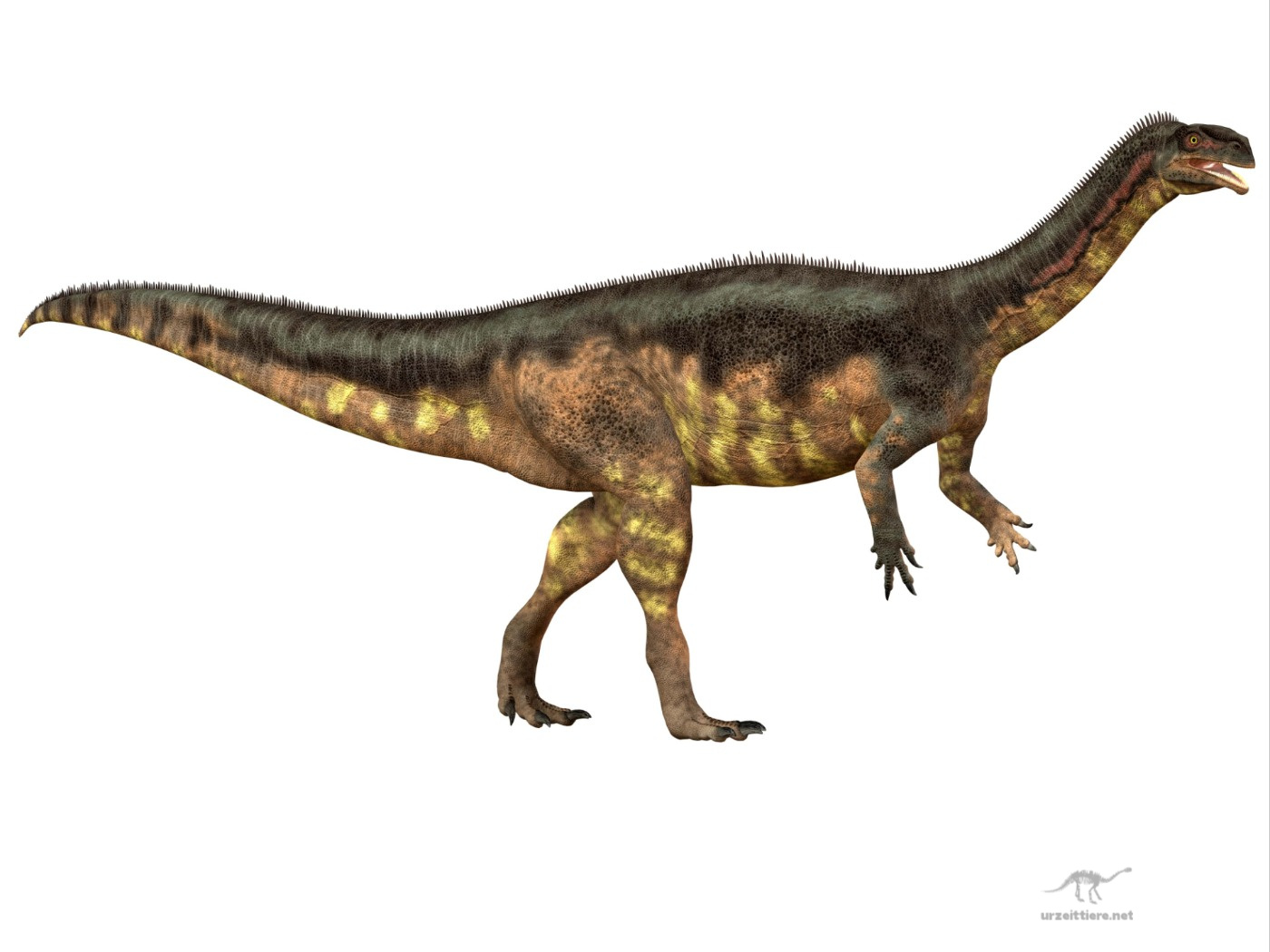
Plateosaurus was among the first dinosaurs to grow relatively large. Some specimens were up to 10 meters long. He was a massive dinosaur with stocky and thick bones. Its hind legs were more powerfully developed than its front legs, which were also strong. Plateosaurus could stand up on its hind legs, for example to reach higher hanging food. Its mode of locomotion is called digitigrade (toe-walking). So he was a fast two-legged runner. But he was also able to move on all fours.
| Profile | Plateosaurus |
|---|---|
| epoch | Upper Triassic 217.4 to 201.3 million years |
| Order | Lizard-pelvis dinosaur (Saurischia) |
| Subordination | Sauropodomorpha |
| Family | Plateosauridae |
| group | |
| genus | Plateosaurus |
| Art | P. engelhardti (P. trossingensis) , P. gracilis, P. longiceps |
| Height | |
| length | 4.8 to 10 meters |
| Weight | 600 kg to 4 tons |
| Locations | Central Europe |
Plateosaurus had a long and flexible neck. The small skull contained flat teeth with serrated edges at the front and back.
It lived in Europe during the late Triassic period, approximately 229 million to 200 million years ago.
Plateosaurs were representative of the prosauropods. The giant sauropods of later epochs could have descended from this group.
No fossils of plateosaurs are known from the Early Jurassic (200 million to 176 million years ago). Instead, the “real” large sauropods appear during this period.
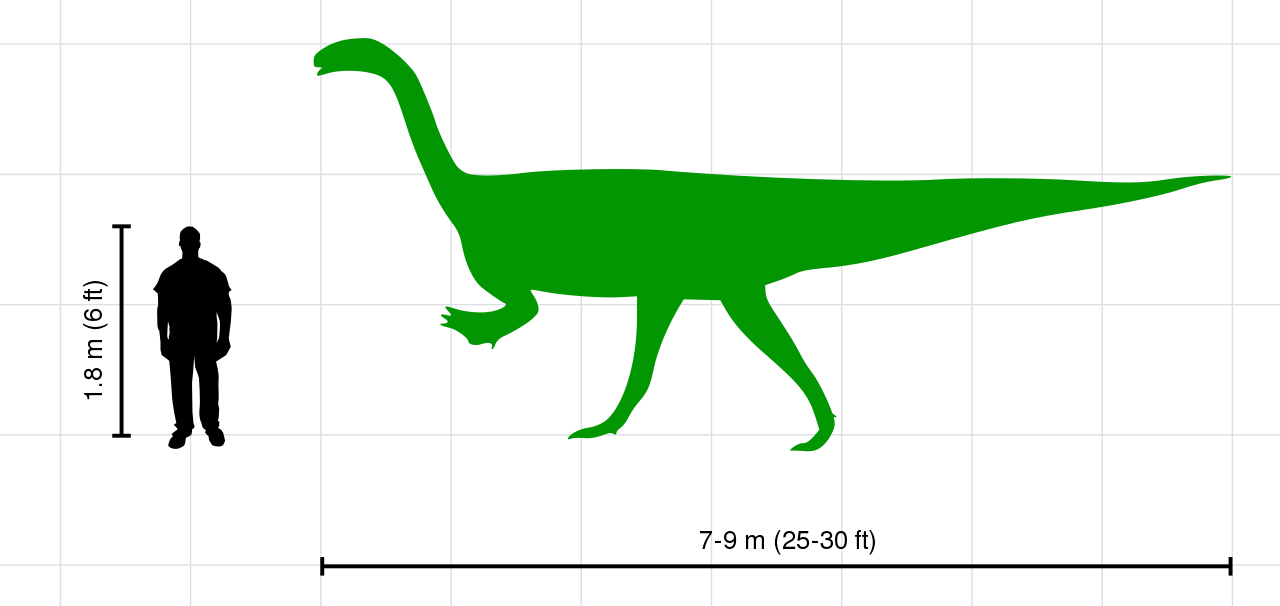
Plateosaurus was one of the first known large herbivores.
Plateosaurus is among the most common dinosaur fossils found in Europe. More than 50 locations are known in Europe. To date, more than 100 individuals have been excavated.
It was discovered in 1834 by Johann Friedrich Engelhardt and was first described and named in 1837 by the German paleontologist Hermann von Meyer (Plateosaurus engelhardti). In German: “Broadway Lizard”
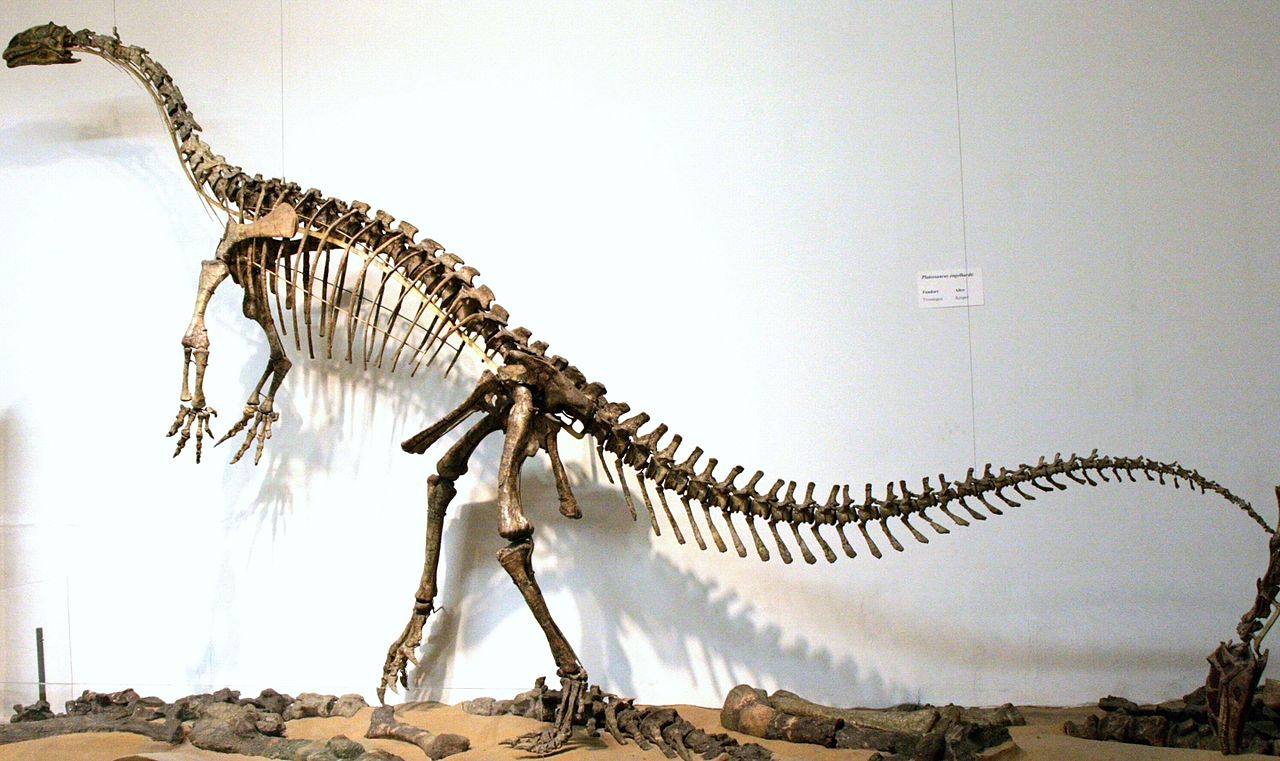
To attach to high-hanging vegetation such as: B. To get to needle plants or cyclades, he could stand up on his hind legs.
His sharp teeth probably allowed him to easily tear the tough leaves from the plants.
Because of the tough plant material that Plateosaurus ate, paleontologists suspect that it swallowed small stones called gastroliths. These chewing stomach stones helped him break down the food.
He had hands with 5 fingers and a large thumb claw. This may have been used for defense or to obtain food.
ENVIRONMENT
He lived in a dry, almost desert-like climate in what is now Europe.
Based on the locations of the fossils, it is assumed that Plateosaurus lived in herds. It probably migrated seasonally across the landscape in search of food.
Image sources: Dropzink, modified my FunkMonk and Dinoguy2Vector version byGYassineMrabetTalk✉ This W3C-unspecified vector image was created with Inkscape., CC BY 3.0 https://creativecommons.org/licenses/by/3.0, via Wikimedia Commons
Plateosaurus skeleton: FunkMonk, CC BY-SA 3.0 https://creativecommons.org/licenses/by-sa/3.0, via Wikimedia Commons