Mononycus
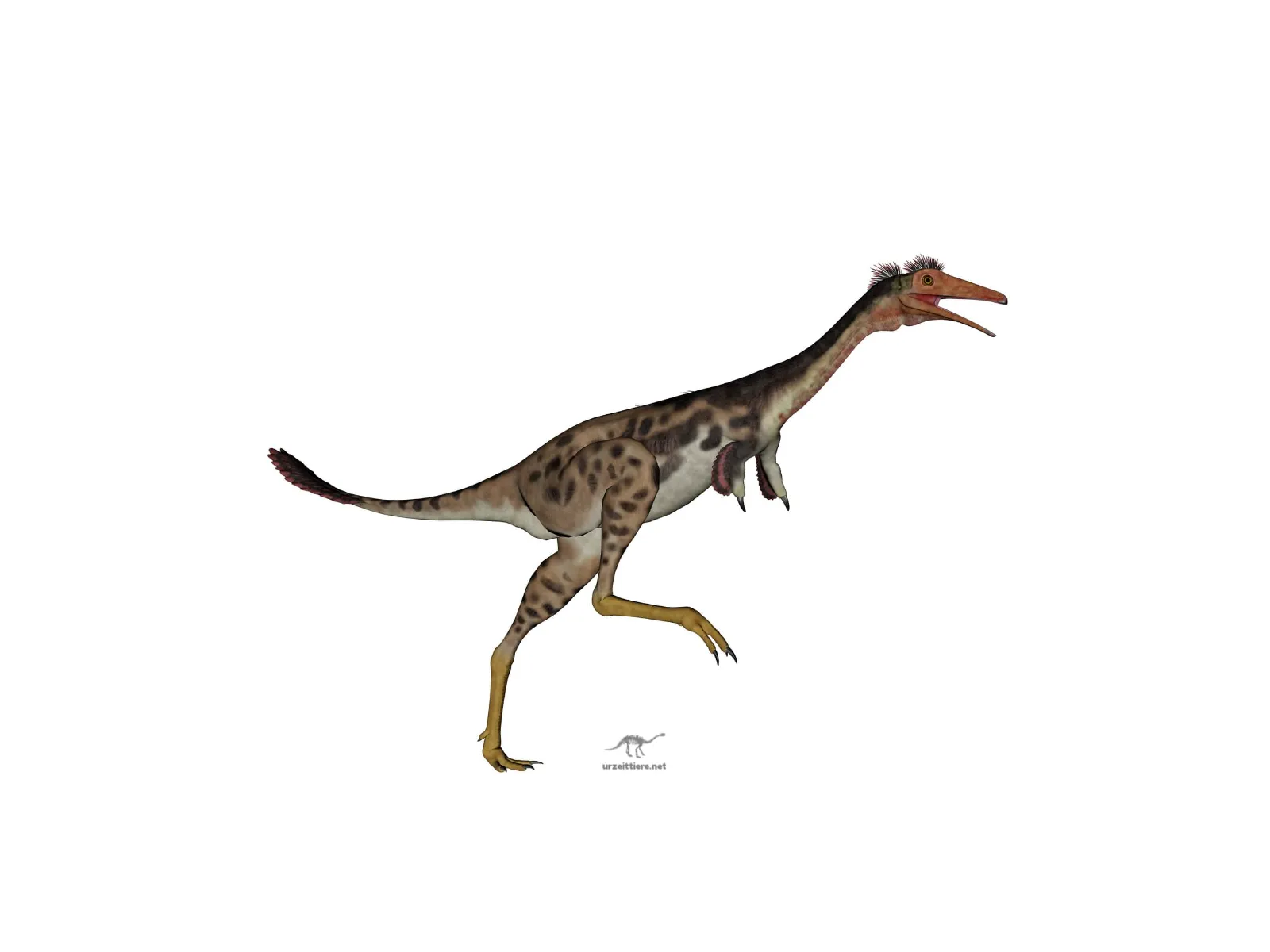
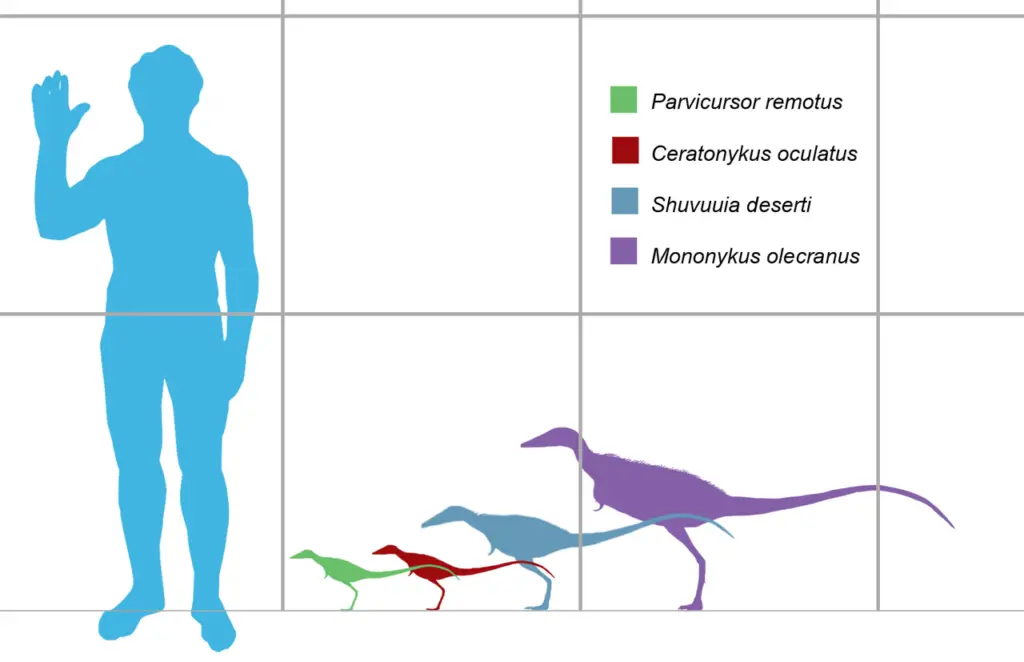
Mononykus was a theropod dinosaur that lived in what is now the Gobi Desert of Mongolia during the Late Cretaceous Period, about 70 million years ago. This dinosaur was about 1 meter tall and weighed about 3.5 kilograms. Its most distinctive feature was a single large claw on each forelimb, reflected in its name "Mononykus", which means "Single claw" means.
Researchers have found evidence that Mononykus had adaptations for feeding on insects. These adaptations included a streamlined skull with reduced teeth and a beak-like snout.
The skeletal structure of Mononykus, which included fused wrist bones and a keeled sternum, has provided important insights into the evolutionary relationship between dinosaurs and modern birds. Further studies of Mononykus have revealed complex patterns of adaptation and survival throughout its evolutionary history.
Encounter with the one-clawed desert dweller
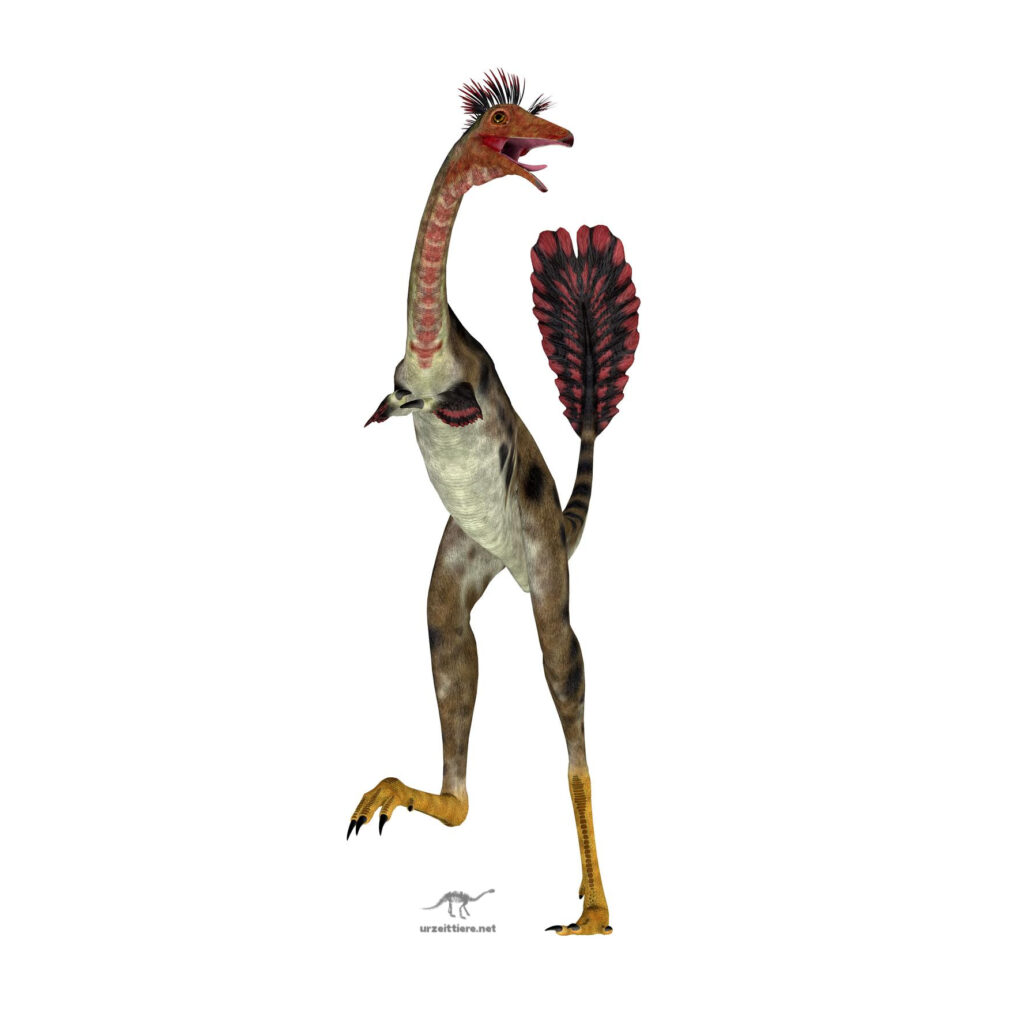
Mononykus was a dinosaur that lived in what is now Mongolia and China about 70 million years ago. He was about one meter tall and weighed about 3.5 kilograms. This dinosaur is characterized by its forelimbs, which had a single large claw, 7.5 centimeters long, on each hand. The main pattern of this species, known as MPC-D 107/6, was discovered by scientists in Mongolia's Gobi Desert in 1987.
Mononykus had long, slender legs that were well suited for fast runs across desert terrain. There is evidence that it is nocturnal, i.e. nocturnal was.
He had highly developed sensory abilities, including excellent hearing similar to that of an owl, allowing him to detect insects in places such as termite mounds or under tree trunks. Its forward-facing eyes provided good depth perception, and its narrow, toothless beak was adapted for eating insects.
Mononykus likely had feathers, which may have helped it maintain its body temperature in the extreme desert climate.
Life in the Late Cretaceous
During the Late Cretaceous Period, which stretched from 83.6 to 66 million years ago, Mononycus inhabited the deserts of what is now Mongolia and China. He lived with predators like Velociraptor together. This dinosaur was part of the diverse fauna of the Late Cretaceous and occupied a unique ecological niche from 81 to 68 million years ago, as shown by its abundance in the fossil record. Mononykus developed specific adaptations that distinguished him from other theropods of his time.
Unlike its carnivorous relatives, it likely had specialized feeding behavior, using its single claw to break open termite mounds, similar to modern anteaters. The discovery of important fossils during joint paleontological expeditions helped scientists better understand its behavior and adaptations.
Theropoda such as Mononycus played a crucial role in the ecosystem, highlighting the diversity and complexity of dinosaur life during the Late Cretaceous. This hypothesis is supported by fossil finds in the Bayankhongor and Ömnögovi regions of Mongolia, where the first specimens were discovered in 1923. These fossils were initially overlooked, but their importance was recognized 70 years later.
In 1993, scientists Perle, Norell, Chiappe and Clark officially named and described Mononykus, highlighting its remarkable properties.
Physical characteristics and adaptations
Mononykus was a theropod dinosaur with distinctive physical adaptations that distinguished it from other members of its group. It was about 1 to 1.2 meters long and weighed about 3.5 kilograms. His body was a mixture dinosaur and bird-like features on.
One of the most striking features of Mononycus was its specialized forelegs. Each forelimb had a 7.5 centimeter long claw and the carpal bones were fused together in a similar way to today's birds. Its skeletal structure included a keeled sternum and long, thin hind legs, which probably enabled fast running. The fossil remains were discovered in the Gobi Desert in Mongolia.
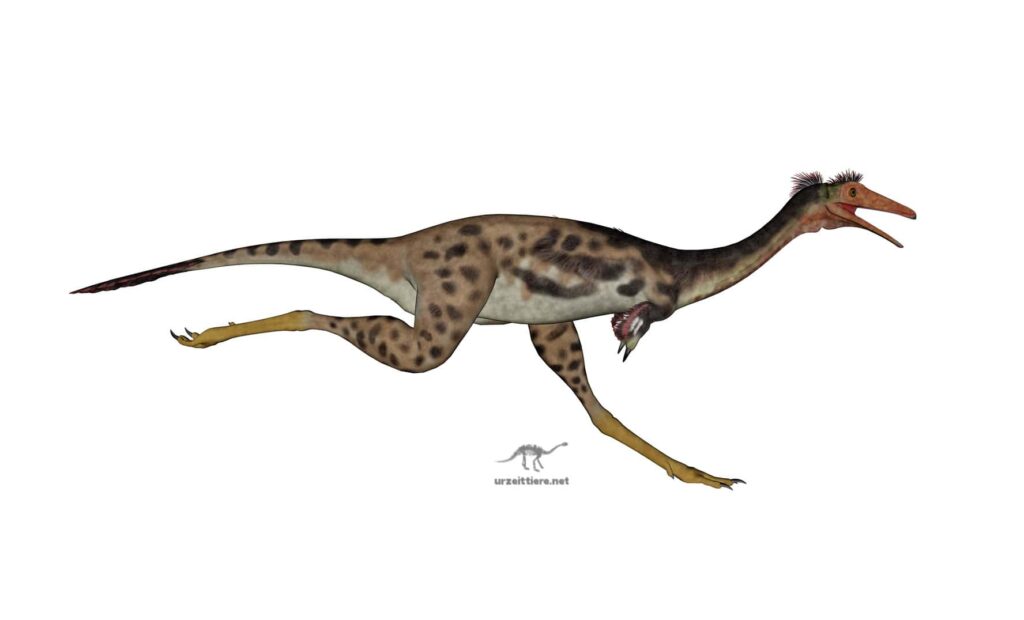
The skull was small and lightly built, with reduced teeth. The inner ear structure was similar to that of barn owls, suggesting advanced hearing abilities. Mononykus had anatomical features similar to modern anteaters and pangolins, highlighting its adaptations to specialized feeding behavior.
In addition, feathers similar to those of its relative Shuvuuia, along with a triangular pubic bone, suggest that it was adapted to a specific ecological niche, which may have included insectivorous feeding and burrowing activities.
Hunting and feeding habits
Mononycus had a specialized insectivorous diet that focused primarily on termites and other colony-forming insects. Its anatomical features, such as reduced teeth and a beak-like mouth, along with highly specialized forelimbs and a single large functional claw, suggest an adaptation that allowed it to reach and consume small prey, particularly those living in underground colonies.
The dinosaur's hunting strategy was efficient, as shown by its physical characteristics. Its long, slender legs enabled rapid movement over large areas, while its specialized arms were suitable for breaking open termite mounds and insect nests. In its natural environment it is known to have fed primarily on large insect eggs.
The large eyes suggest that Mononykus hunted at night, which helped it avoid larger predators while searching for food. In addition, the interlocking vertebrae stiffened the spine and thus supported its feeding behavior.
Mononycus occupied a specific ecological niche that distinguished it from other theropods and illustrates the diversity of feeding strategies among dinosaurs in the same environment.
Discovery in the Gobi Desert
In 1994, under the leadership of Michael J. Novacek of the American Museum of Natural History, a significant paleontological discovery was made at the Ukhaa Tolgod site in Mongolia's Gobi Desert. This expedition discovered one of the richest fossil deposits, using satellite imagery to effectively navigate and locate fossil deposits in the difficult desert terrain. The team took advantage multispectral image analysisto identify promising archaeological sites in the vast desert landscape.
Working with the Mongolian Academy of Sciences, the expedition team discovered six Mononycus skeletons, including what is believed to be the first known skull or a significant portion of it. The use of advanced imaging technologies in analyzing these fossils was crucial to reconstructing the skeletal structures without damaging them.
These fossils, which date back about 80 million years to the Cretaceous period, were found along with Velociraptor remains and dinosaur embryos. The finds provided important insights into the evolutionary transition from dinosaurs to birds.
Mononykus, a member of the family Alvarezsauridae, exhibited distinct bird-like features, such as: b. Prokinesis. Although studies suggest that alvarezsaurids did not evolve directly with birds but rather in parallel, the discovery of Mononykus and related species such as Shuvuuia deserti has greatly expanded our knowledge of the evolutionary relationship between birds and dinosaurs.
Family ties and related species
Mononykus belonged to the family Alvarezsauridae, which also includes related species such as Shuvuuia and Parvicursor. These species are characterized by their specialized forelimbs and a single large claw.
Mononycus can be identified by its triangular pubic bone and the specific proportions of the toe bones. It belongs to the subfamily Parvicursorinae and the tribe Mononykini, within the broader classifications of Maniraptoriformes and Maniraptora. Recent advances in paleontological methods have helped correct previous misconceptions about its appearance.
Mononycus exhibited bird-like features, such as fused wrist bones and a keeled sternum, underscoring its evolutionary connection to modern birds. This connection is further supported by the presence of feathers in related species such as Shuvuuia.
Mononykus belongs to the taxonomic groups Dinosauria, Saurischia and Theropoda, which identifies it as an important transitional form in the evolution of theropod dinosaurs. The name Mononykus, what “Single Claw” was assigned in 1993 by the researchers Perle, Norell, Chiappe and Clark, with Mononykus olecranus being the designated type species.
Unique skeletal structure
The dinosaur Mononycus was characterized by its special skeletal features, particularly its unique forelimbs. Each arm was short but powerful, with a single large claw supported by similarly sized bones: the phalanges, ulna, and humerus. This configuration is similar to that of modern burrowing animals. The dinosaur squeezed its body against the desert surface to effectively dig for prey.
The body of Mononykus was streamlined, with a keeled sternum that probably bore feathers. Its lightweight skeleton contained specialized vertebrae for greater flexibility. Similar to that large eye sockets of Compsognathus, Mononykus had large, forward-facing eyes and hearing abilities similar to those of modern owls. The reduced teeth and beak-like snout suggest that Mononykus fed primarily on insects.
The hind legs of Mononykus were long and slender, which was suitable for fast running and efficient long-distance travel. Its elongated tail helped it maintain balance while moving.
These adaptations suggest that Mononykus evolved to occupy a specific ecological niche, perhaps as nocturnal, burrowing insectivore.
Scientific significance and scope
Since its discovery in Mongolia's Gobi Desert in 1987, Mononykus has significantly expanded scientists' understanding of bird evolution and dinosaur diversity. Originally named Mononychus in 1993 before being renamed, this fossil, along with related specimens such as Shuvuuia, has provided strong evidence for the evolutionary connection between dinosaurs and birds while challenging previous views on the morphology of early birds. A significant finding of the studies was that the specimen Prokinesis skull adjustments which indicates an advanced stage in the evolutionary process of birds.
The significance of this discovery goes beyond its initial impact. Ongoing research on Mononykus and other alvarezsaurids has helped clarify the complex evolutionary relationships between dinosaurs and birds.
The identification of HaplocheirusSollers added 63 million years to the fossil record of alvarezsaurids and contributed significantly to the understanding that these creatures evolved in parallel with birds and not directly descended from them.
The distinctive features of Mononykus, such as its unique single-clawed forelimbs and evidence of feathers, have contributed significantly to paleontologists' understanding of theropod diversity. These findings expand our knowledge of dinosaur evolution and provide important insights into the evolution of specialized feeding strategies and the presence of feathers in non-avian dinosaurs.
Conclusion
By studying Mononykus, scientists have gained a deeper understanding of theropod diversity and evolution. This dinosaur is characterized by its specialized forelimbs, unique skeletal structure, and adaptations to desert environments, which provide important insights into Late Cretaceous ecosystems. Research into its hunting methods, its evolutionary relationship to modern birds, and its ecological niche underscores the importance of Mononykus in the field of paleontology.
Systematics
| Dinosauria |
| Saurischia |
| Eusaurischia |
| Theropoda |
| Neotheropoda |
| Averostra |
| Tetanurae |
| Orionides |
| Avetheropoda |
| Coelurosauria |
| Tyrannoraptora |
| Maniraptoriformes |
| Maniraptora |
| Alvarezsauroidea |
| Alvarezsauridae |
| Parvicursorinae |
| Monokini |
Occurrence in time
| chalk |
| Upper Cretaceous |
| early Maastrichtian |
Happen
| Area | Asia |
| country | Mongolia |
| region | Ömnögovi |
| formation | Nemegt |
| length | 1.25 meters |
| Weight | 3.5 kilograms |
| locomotion | Four-legged |
| food | Carnivores |
Image sources:
Size comparison: Matthew Martyniuk, CC BY-SA 4.0, via Wikimedia Commons