Massospondylus
“Longer vortex”
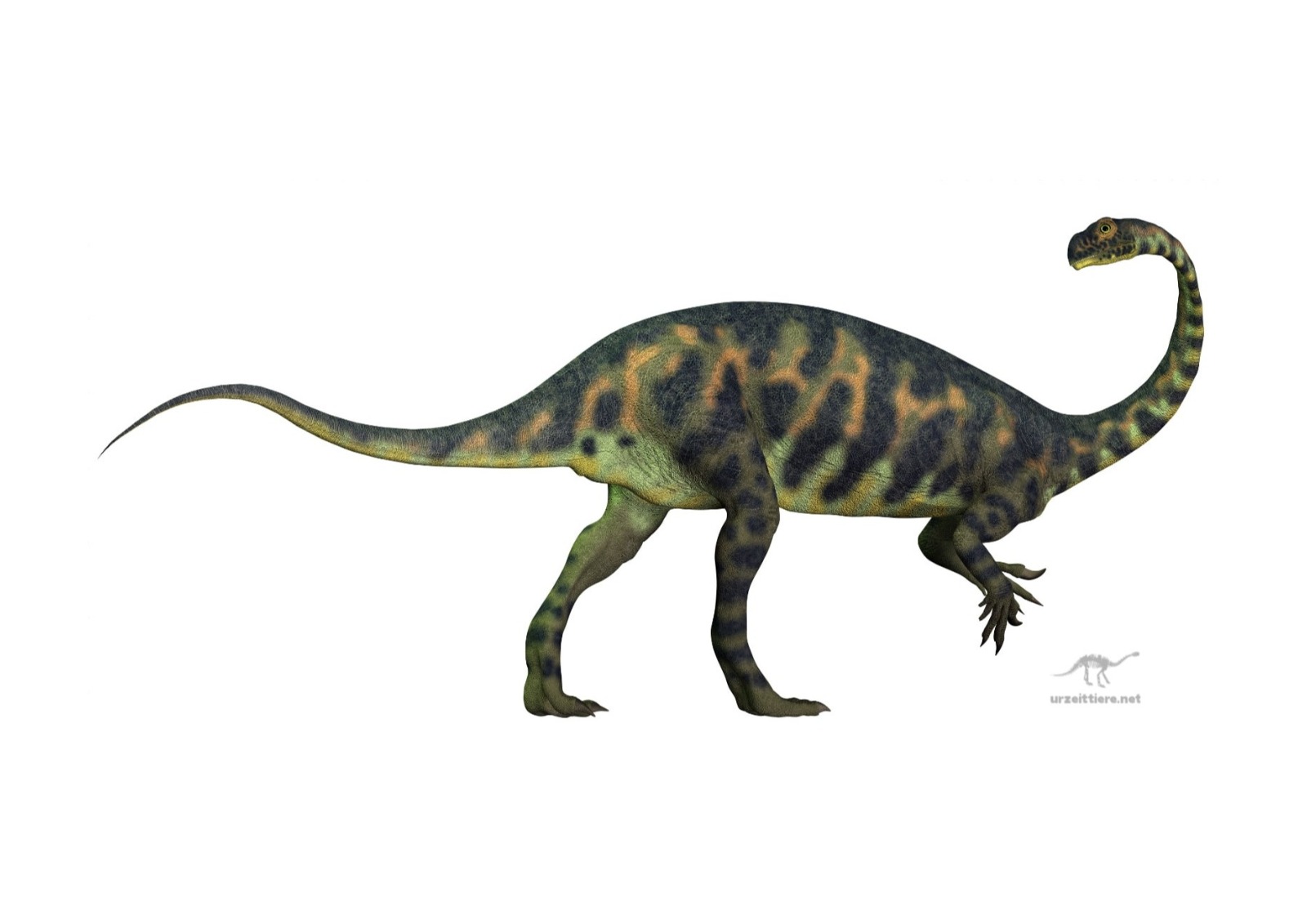
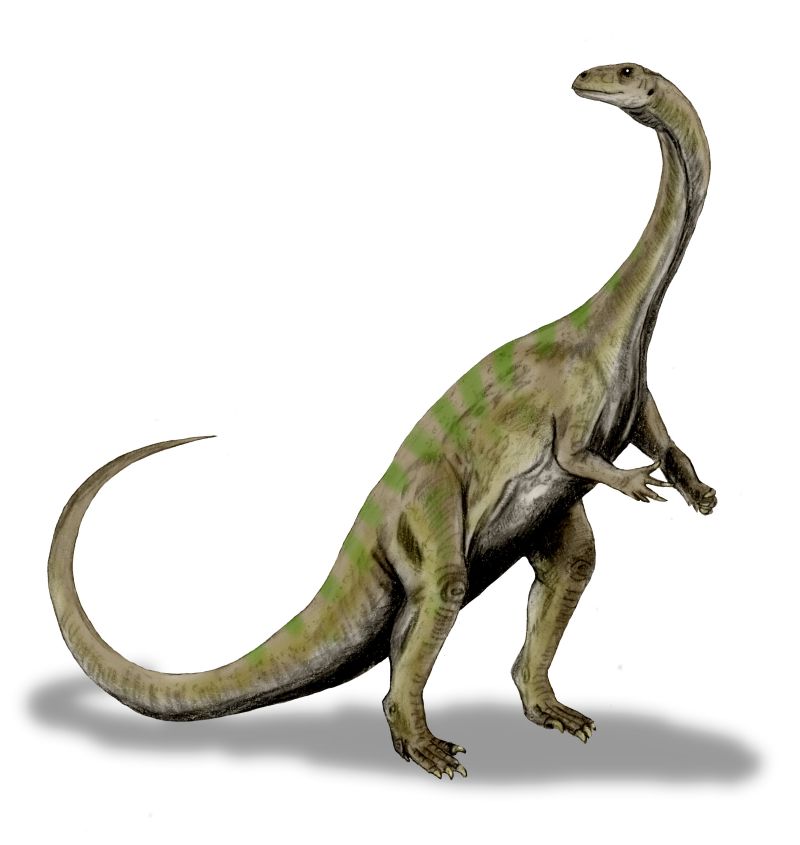
For a long time, Massospondylus was depicted as a 4-footed dinosaur. But a 2007 anatomical study found that Massospondylus was a typical sauropodomorph dinosaur that moved on two legs.
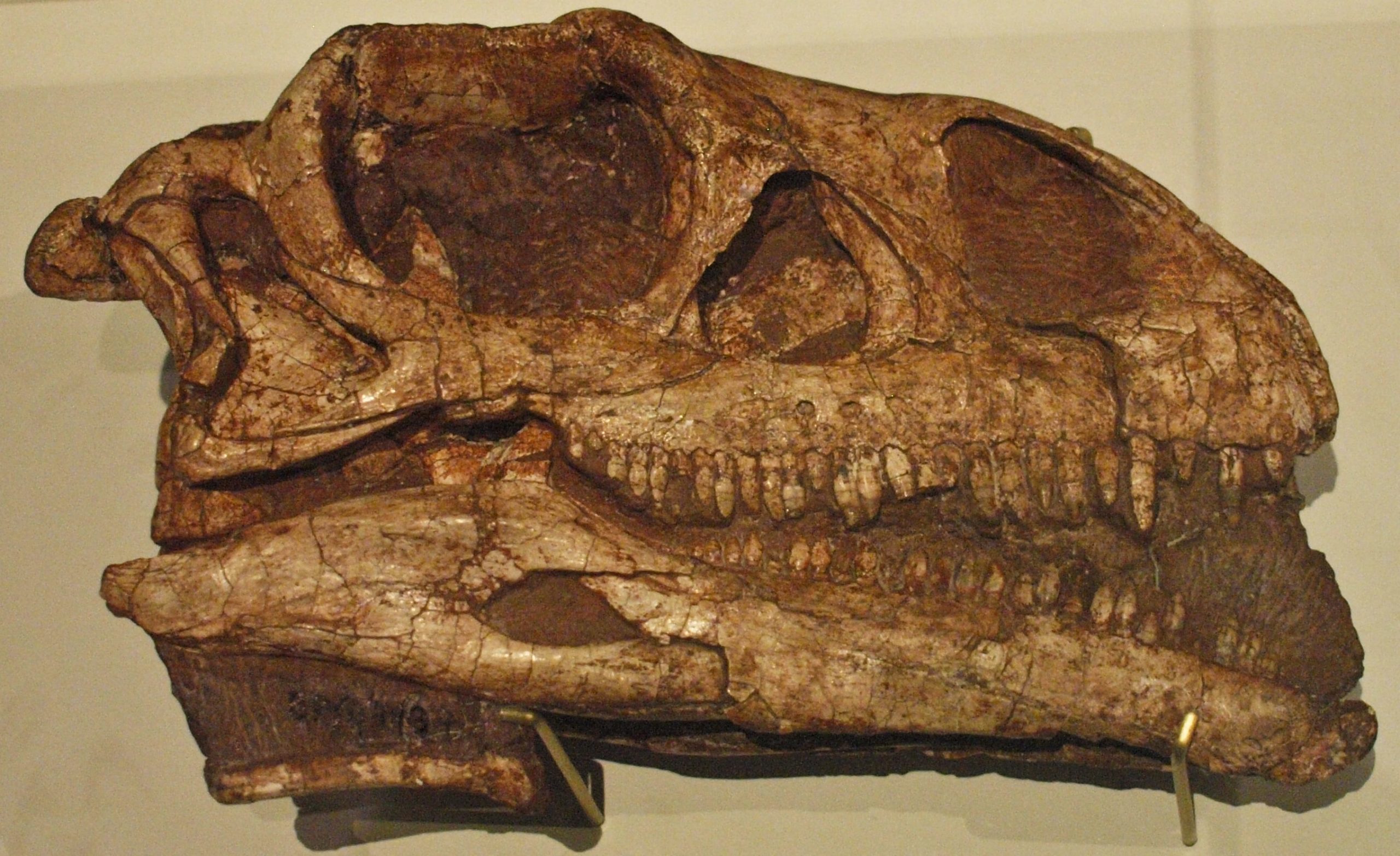
His skeleton is similar to that of Plateosaurus, but overall it is lighter in construction. In particular, the skull is proportionally smaller than that of Plateosaurus.
The dinosaur was 4-6 meters long and had a long neck and tail. Its head was relatively small, typical of herbivorous dinosaurs. Overall, he had a slim body.
His hands were short and wide and had 5 fingers. The fourth and fifth fingers, however, were significantly shorter and thinner than the others, giving them an asymmetrical appearance. The thumb was the longest finger of all and ended in a strong sickle-shaped claw. He probably used these for defense or used them to eat.
The feet also had 5 toes, although the fifth was too short to touch the ground.
It had leaf-shaped and relatively long teeth. The teeth in the lower jaw had a constant length, but those in the upper jaw decreased in size from front to back.
14 to 22 teeth were found on each side in the upper jaw and 26 in the lower jaw.
No signs of wear could be detected on the teeth, which leads to the conclusion that they often fell out and were replaced with new ones. The different heights of the teeth also support this theory.
Many original sauropodomorphs had jaws for ingesting and short-term food accumulation. In Massospondylus, small openings containing blood vessels were found on the surface of the upper and lower jaws. This finding suggests that Massospondylus also had jaws.
Although Massospondylus was probably a herbivore, experts speculate whether it might have been omnivorous like other early sauropodomorphs.
| Profile | Massospondylus |
|---|---|
| epoch | Lower Jurassic, 201.3 to 182.7 million years ago |
| Order | Saurischia |
| Subordination | Sauropodomorpha |
| Family | Massospondylidae |
| group | |
| genus | Massospondylus |
| Art | Massospondylus carinatus Owen, 1854 Massospondylus kaalae Barrett, 2009 |
| Height | 1 meter |
| length | 4 to 5 meters |
| Weight | up to over 200 kilograms |
| Locations | South Africa, Lesotho, Zimbabwe (Karoo Supergroup) |
Growth of Massospondylus
Today, researchers have access to well-preserved and prepared Massospondylus skeletons of both young animals and adults.
In addition, about 20 years ago, 5 fossilized embryos were recovered from dinosaur eggs in the Golden Gate Highlands National Park in South Africa. These have recently been freed from minerals and fossilized eggshells using delicate precision work.
The body proportions of a newly hatched Massospondylus differed significantly from those of an adult animal. It had a horizontal neck, a relatively heavy head and immature limb proportions. Researchers therefore assume that it walked on all fours shortly after hatching.
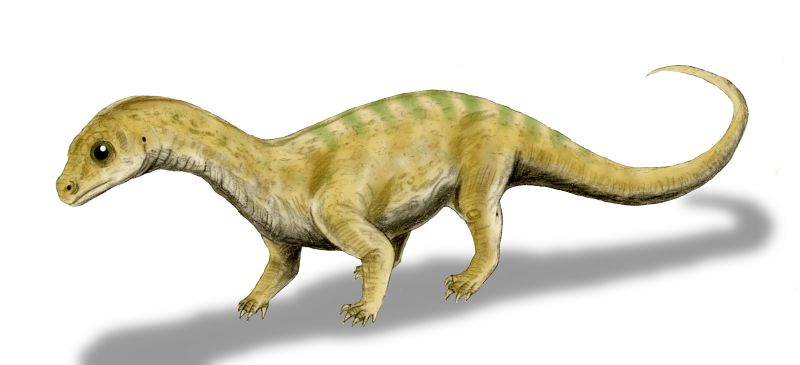
The researchers were unable to detect any teeth on the embryos. As a result, the thesis of parental care was developed. If this assumption is really correct, it would be the oldest evidence of parental care.
As it continued to grow, the neck probably grew faster than the head and forelimbs, leading to a change in body type.
It is believed that Massospondylus continued to grow steadily throughout its life.
It probably took 15 years for a Massospondylus to mature and develop from a quadruped to a biped.
History of discovery
The first fossils of Massospondylus were described in 1854 by paleontologist Sir Richard Owen. They were discovered a year earlier by a surveyor (Joseph Millard Orpen) on a farm in the Drakensberg near Harrismith in South Africa.
But Owen didn't realize that they were the fossils of a dinosaur. He thought they were the remains of a large extinct carnivorous reptile.
Image sources: Post image Massospondylus: ©urzeittiere.net
Size comparison: Matt Martyniuk Dinoguy2, CC BY-SA 3.0 https://creativecommons.org/licenses/by-sa/3.0, via Wikimedia Commons
Skull: CaptMondo, CC BY-SA 3.0 https://creativecommons.org/licenses/by-sa/3.0, via Wikimedia Commons
Massospondylus Baby: Nobu Tamura (http://spinops.blogspot.com), CC BY 3.0 https://creativecommons.org/licenses/by/3.0, via Wikimedia Commons
Massospondylus Biped: Nobu Tamura (http://spinops.blogspot.com), CC BY 3.0 https://creativecommons.org/licenses/by/3.0, via Wikimedia Commons