

Mapusaurus
When people talk about the gigantic predatory dinosaurs of the Cretaceous period, the name often comes up Mapusaurus - a gigantic theropod, which left its mark on the arid landscapes of Argentina. The name Mapusaurus, which literally means “Earth Lizard“means, reflects the massive size and reflects the earthen origins of this creature.
Discovered in Neuquén Province, Argentina, counts Mapusaurus among the largest meat-eating dinosaurs that have ever existed.
The discovery of Mapusaurus roseae, as the species is officially called, was the result of years of research led by Prof. Rodolfo Coria and Dr. Philip Currie. These experts not only unearthed the bones of this giant, but also gained important insights about him way of life, its relationships with other dinosaurs and its significant Contributions to paleontology won.
In this article we discover the world of Mapusaurus: From his anatomy and its appearance to its history of discovery to its systematics and the fascinating Features that make it unique.
Facts about Mapusaurus in a nutshell
Mapusaurus
| scientific name | Mapusaurus roseae |
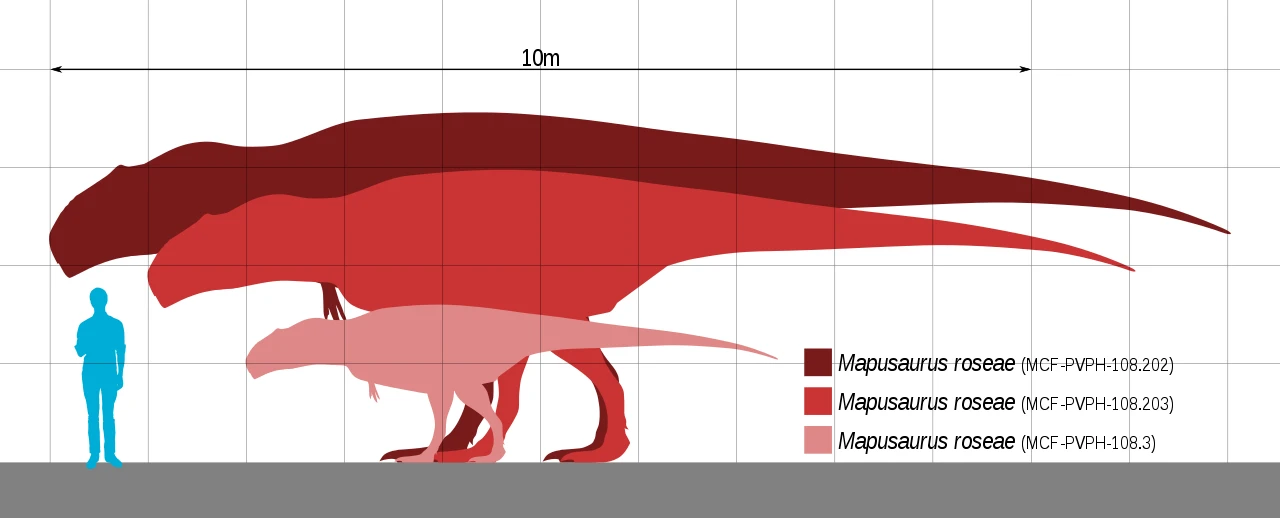
| Estimated size | Length: 12.2 meters Height: 2.3 meters Weight: 7 tons |
| geological era | Upper Cretaceous |
| Locations | Huincul |
| Order | Saurischia |
| Subordination | Theropoda |
Physical characteristics
| anatomy | Very large, bipedal carnivore with a deep but narrow skull and short arms |
| Special features | No noticeable spines, feathers or horns; The razor-sharp teeth are striking |
| locomotion | Two-legged |
| Skin texture | Not directly known, probably scaly like other large theropods |
| Coloring | Unknown; no fossil evidence of color |
discovery
| Explorer | Coria & Currie |
| Discovery date | 2006 |
| Meaning of the name | “Mapusaurus” means “earth reptile”, derived from the Mapuche word “Mapu” (“from the earth”) |
| Significant fossil finds | At least 9 individuals. |
In paleontology, the ratio of brain to body size, the so-called Encephalization quotient (EQ), used as a rough guide to relative intelligence.
| Intelligence (EQ) | Probably similar to other large theropods, i.e. low to moderate (EQ approx. 0.5) |
| Social behavior | Mapusaurus probably lived in groups (note: several individuals were found together) |
| Predators | As a top predator, probably no natural enemies, possibly competition from other large theropods |
Physique and appearance
Mapusaurus roseae was an imposing theropod with a impressive size. It reached lengths of up to 12.6 meters and a height of approximately 3.5 meters on the hips. The estimated weight of this giant was around 8 tons, although some sources give a slightly lower weight of around 3 tons.
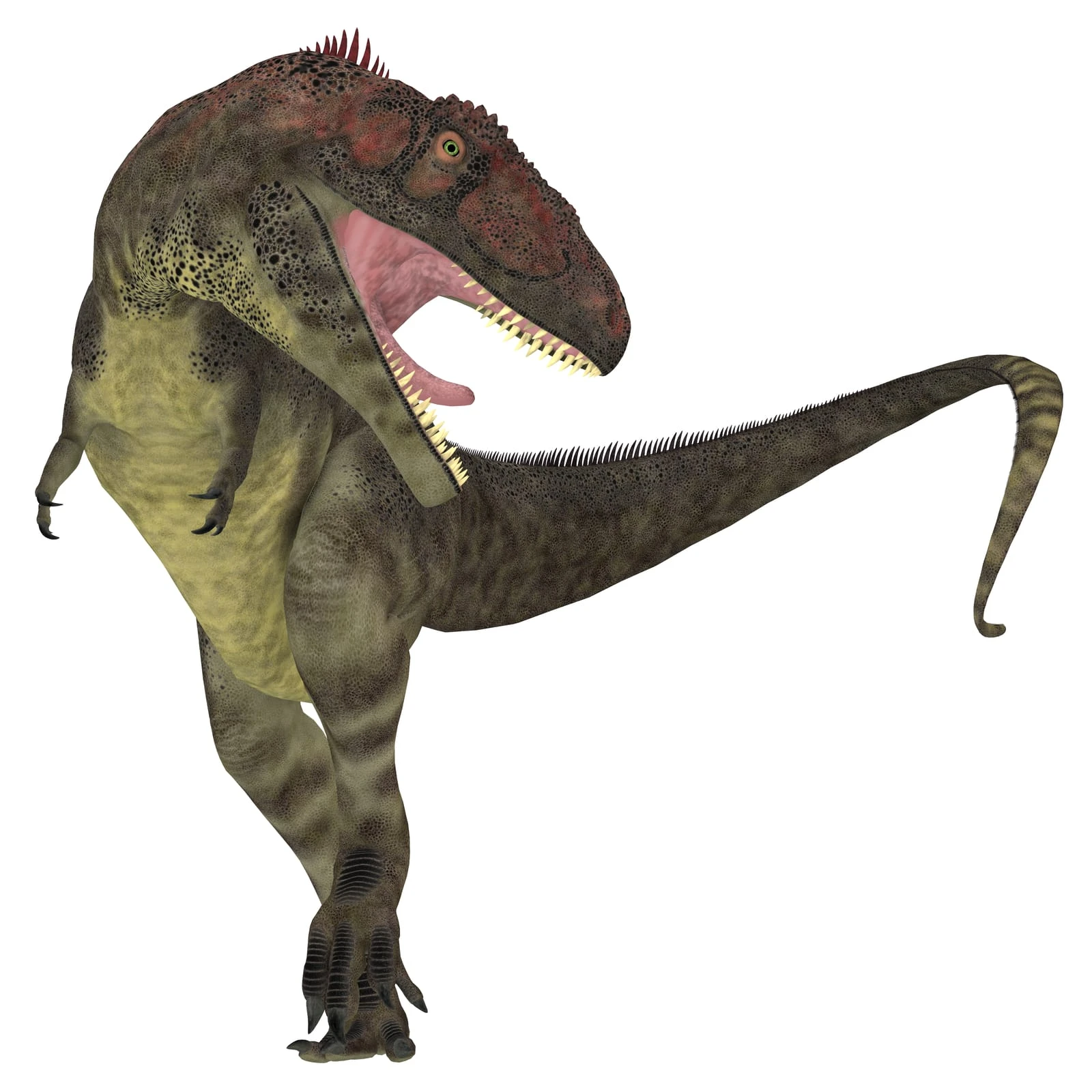
The skull of Mapusaurus was deep and relatively narrow, equipped with powerful, serrated teeth, which were ideal for cutting meat. This Teeth, typical of many theropods, were specialized in eating pieces of meat from their prey to divide efficiently.
His physique was through one strong body characterized by relatively short arms and long, strong legs was supported. The long leg structure suggests that the Mapusaurus was a capable runner, with a speed of about 28-34 mph (45-55 km/h).
Another striking feature of Mapusaurus was his deep chest, his athletic constitution underlined. Compared to other carnosaurs, like the Giganotosaurus, showed Mapusaurus some unique features that distinguished him from his relatives. While Giganotosaurus also belonged to the Carcharodontosauridae, it is often considered a sister taxon of Mapusaurus considered because both share a common evolutionary ancestry.
Discovery and discovery history
The discovery of the Mapusaurus roseae marks one of the most important paleontological finds of the last decades. The first fossils were uncovered in Argentina's Neuquén Province, specifically in the Huincul Formation, a region near Cañadón del Gato. This formation belongs to the Upper Cretaceous and is known for its numerous dinosaur fossils, which have given scientists profound insights into the diverse fauna make this era possible.
Between 1997 and 2001, an Argentine-Canadian research team led by paleontologists Rodolfo Coria and Philip Currie conducted the excavations that led to the discovery of Mapusaurus led. These joint efforts not only unearthed the remains of a single specimen, but yielded a extensive bone storage to light, which includes at least seven individuals of different ages.
An outstanding feature of the find is the concentration of bones, which suggests that Mapusaurus possibly one social predator was. These discoveries support the theory that theropods like Mapusaurus hunted in groups. The individuals of different ages found provide important insights into the development, social behavior and hunting strategies of these impressive predators.
Systematics and relationships
Mapusaurus roseae is systematically included in the family Carcharodontosauridae classified, a group of large, carnivorous theropods that lived during the Cretaceous period. A detailed phylogenetic analysis conducted by Coria and Currie shows that Mapusaurus a close relationship to others Carcharodontosaurids like that Giganotosaurus, its possible sister taxon, as well Tyrannotitan and Acrocanthosaurus has.
The only known species within the genus Mapusaurus is Mapusaurus roseae. This species is characterized by several morphological features that clearly distinguish it from other large predatory dinosaurs.
Skull construction and adaptations
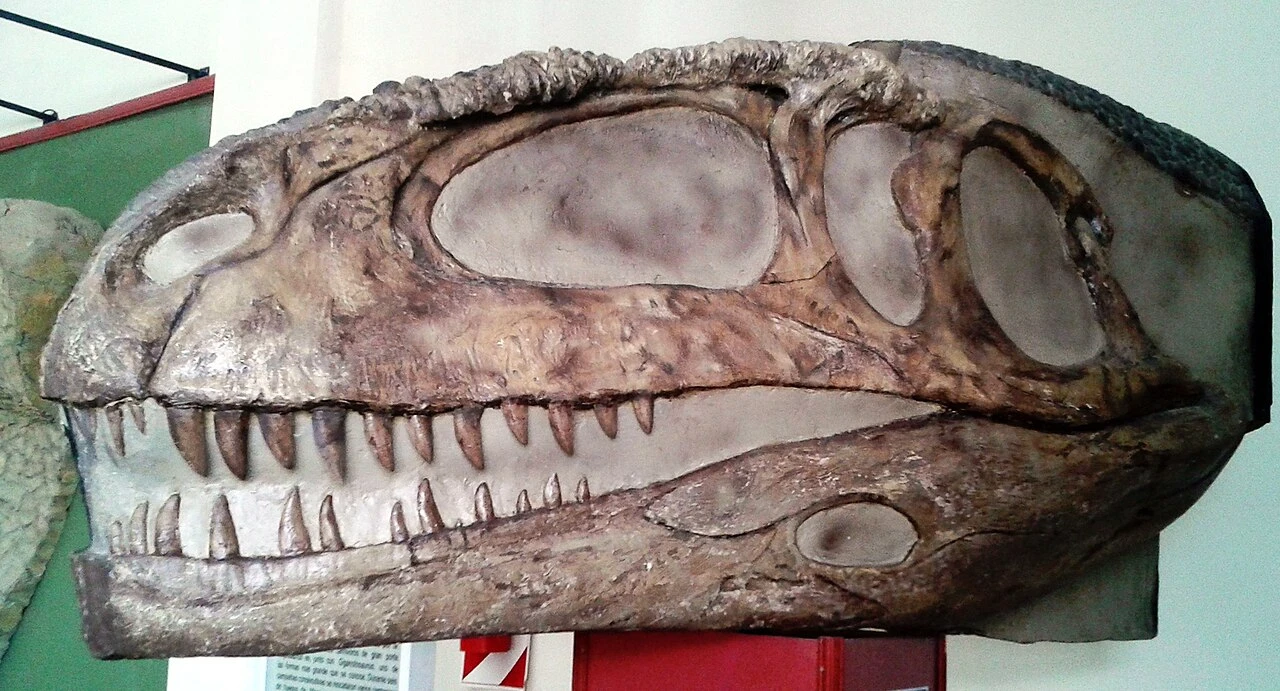
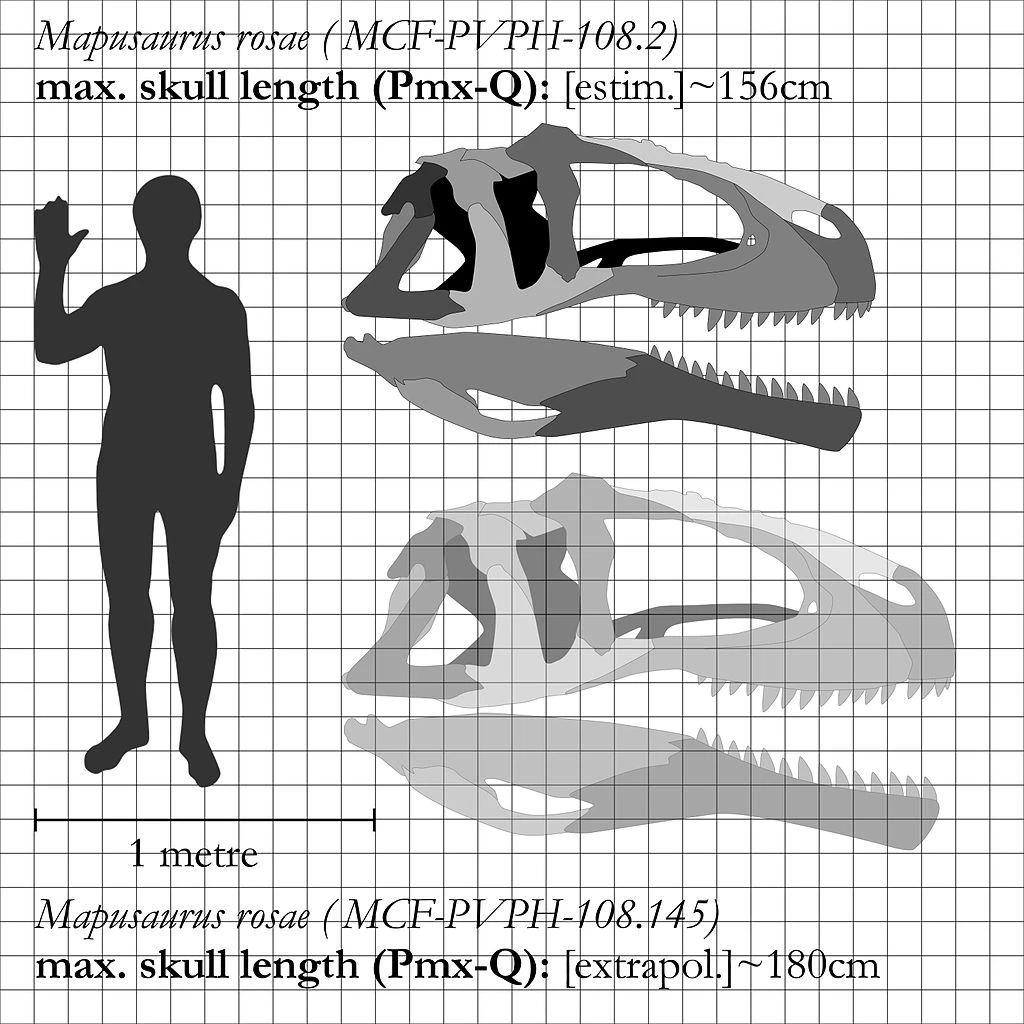
A special feature of the dinosaur Mapusaurus is the structure of his skull, especially that Nasal bones. In Mapusaurus, these bones are thick and not fused together. Towards the front, i.e. towards the snout, they become narrower where they meet other skull bones.
Even the big one Pit in the upper jaw (antorbital fossa) is striking because it is much larger than in other carnivorous dinosaurs. At the same time that is Window in the upper jaw (maxillary fenestra) smaller. Another feature is the wide bone bar between these two openings.
Comparison with other theropods
Compared to large predatory dinosaurs like the Tyrannosaurus rex he points out Mapusaurus significant differences in teeth and jaw structure. While Tyrannosaurus rex through massive, D-shaped teeth and is known to have a robust jaw structure Mapusaurus slender, serrated teeth designed specifically for the Cut up of meat are optimized.
In addition, it stands out Mapusaurus by flatter and wider jawbones as well as by the specific arrangement of its jaw fenestrae, a feature that distinguishes it from other theropods in its family.
Lifestyle and behavior
Mapusaurus roseae was a pronounced carnivore and probably an active hunter who is out hunting large prey animals had specialized. The discovery of bone beds containing the remains of at least seven individuals different ages included, strongly suggests a group hunt. This Finds, particularly from the Huincul Formation in Neuquén Province, Argentina, suggest that Mapusaurus lived and hunted in groups, which was unique Social behavior among the theropods.
The spoils of Mapusaurus probably consisted of large sauropods, who lived in the same area. Dinosaurs like that Argentinosaurus, one of the largest known land animals, could have been potential prey.
The fact that the Mapusaurus possibly hunting in groups would enable him to do so massive prey animals to kill successfully.
Evidence of a dangerous and challenging life from Mapusaurus provide the numerous Injuries, which were found on the bones. These injuries show that these animals were often involved in conflicts, be it the hunting, in defending their territory or at intra-species disputes. These findings underline the robust and adaptable Nature of Mapusaurus in his surroundings.
Meaning and special features
Mapusaurus roseae is one of the largest known land predators that has ever existed. His enormous dimensions, with lengths of up to 12.6 meters and a weight of up to 8 tons, make it one of the most impressive theropods in the world Cretaceous period.
The location of the Mapusaurus in the Huincul Formation in Neuquén Province, Argentina is from special importance for the paleontology of South America. This formation has produced a variety of fossils that Insights into the diverse fauna and flora of the region during the late Cretan period.
The discovery of Mapusaurus and other dinosaurs in this region has increased our knowledge of them Ecosystems and the evolution of dinosaurs in South America significantly expanded.
The name "Mapusaurus“ is a homage to the Mapuche culture, who lives in the region where the fossils were found. The name literally means “earth lizard” and reflects the connection between the dinosaur and the land in which it lived.
In addition, the name was also chosen as a recognition of the supporter of the excavations decisive for the discovery and research of Mapusaurus contributed.
Summary
Mapusaurus roseae is an impressive testimony to the diversity and Size of theropods that lived during the Cretaceous period. Because of his huge stature, his specialized physique and which provides clues to possible behavior as a pack hunter Mapusaurus valuable information about the ecosystems and that Social behavior the dinosaurs of South America.
Its close relationship with other carcharodontosaurids such as Giganotosaurus as well as his potential role as hunter large sauropods like the Argentinosaurus making it one of the most remarkable dinosaurs ever discovered.
If you would like to find out more about other fascinating dinosaurs, use our Dino filter. There you will find a comprehensive database that sorts dinosaurs based on various criteria and thus enriches your journey through the world of prehistoric animals. Let the fascinating past inspire and discover the secrets that the dinosaurs left us.
Image sources
Size comparison: User:Slate Weasel, Public domain, via Wikimedia Commons
Reconstruction of the skull of Mapusaurus roseae: Neloadino, CC BY-SA 4.0, via Wikimedia Commons
Mapusaurus roseae skull reconstruction of the largest known specimen: Ornitholestes, CC BY 3.0, via Wikimedia Commons