Gorgosaurus
Gorgosaurus libratus – The impetuous lizard
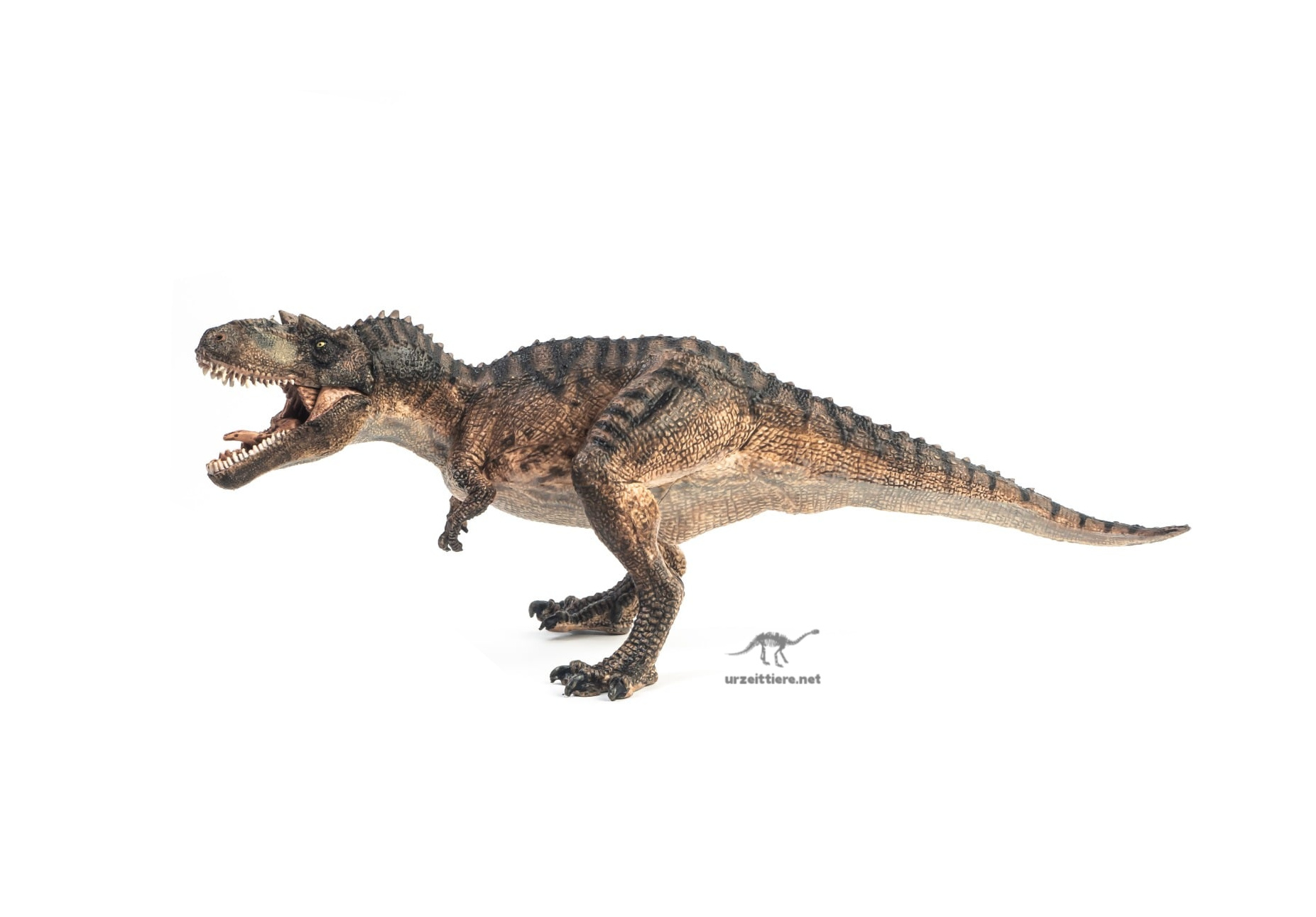
Gorgosaurus libratus is a species of dinosaur found in Alberta, Canada, named by Lawrence Lambe in 1914. The name Gorgosaurus comes from Greek and means “impetuous lizard”.
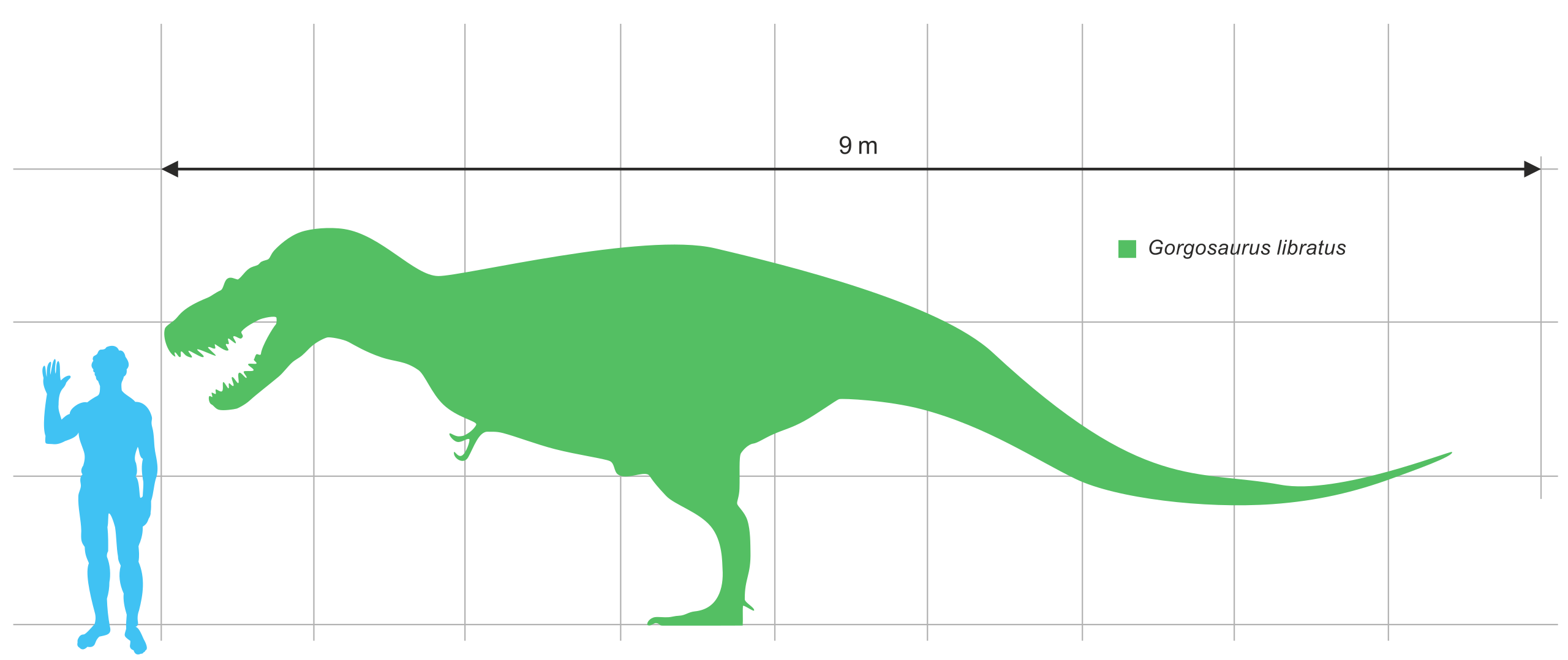
It is a bipedal carnivore weighing up to 2400 kg and 8-9 m long. It is proven to have lived 76.6 to 72 million years ago.
| Profile | Gorgosaurus |
|---|---|
| epoch | Late Cretaceous, about 76.4 to 72 million years ago |
| Order | Lizard-pelvis dinosaur (Saurischia) |
| Subordination | Theropoda |
| Family | Tyrannosauroidea |
| group | Albertosaurinae |
| genus | Gorgosaurus |
| Art | Gorgosaurus libratus |
| Height | 3.8 meters |
| length | 8 – 9 meters |
| Weight | 2.5 tons |
| Locations | Canada |
Physical characteristics
Gorgosaurus libratus is a member of the family Tyrannosauridae. G. libratus lived in what is now North America during the Late Cretaceous period, which ended about 65 million years ago. This dino has a number of features not found in other tyrannosaurs, such as the shape of its skull and its small, almost tiny arms that ended in just two fingers.
Its skull, like other tyrannosaurids, was large compared to its body size.
ontogenesis
Gorgosaurus spent the first half of its life in the juvenile phase. As a juvenile, his height was only about 70% of his adult height. Over the next 4 years he grew to his maximum size, gaining around 110 kg per year. This growth rate is similar to that of Albertosaurus. Compared to other tyrannosaurids, such as Daspletosaurus and Tyrannosaurus However, this growth rate is slower.
According to a 2012 scientific paper, Gorgosaurus was able to exert a bite force of around 42,000 Newtons.
For comparison: a lion develops a bite force of around 3,380 Newtons per square centimeter.
Based on these bite forces, scientists suspect that they probably didn't break bones as often as other large theropods like Tyrannosaurus rex.
It's more likely that they ignored the bones and focused on the flesh of their prey.
A narrower muzzle indicates a weaker bite force.
Habitat
At the time Gorgosaurus lived, North America was divided in half by an inlet called the Western Interior Seaway.
The climate was subtropical but had periodic dry spells. These dry periods led to a lack of food, which in turn led to mass extinctions of large herds of dinosaurs.
The vegetation in its habitat consisted of higher plants such as conifers. Ferns, tree ferns and angiosperms formed the low vegetation.
This lush vegetation was the food source for huge herds of ceratopsids and equally large groups of saurolophines and lambeosaurine hadrosaurs.
What did Gorgosaurus eat?
The idea of niche partitioning applies to both carnivores and herbivores.
Gorgosaurus probably specialized in hunting different types of prey than its larger and stronger cousins, the Tyrannosauridae.
Next to Gorgosaurus lived the stronger and more powerful Daspletosaurus (Daspletosaurus torosus) – “fearsome lizard”.
This dinosaur was up to 1,000 kilograms heavier than Gorgosaurus.
It probably hunted larger horned dinosaurs. The lighter and faster tyrannosaurs such as Albertosaurus and Gorgosaurus specialized in small hadrosaurs and pachycephalosaurs.
Different features between Gorgosaurus and Albertosaurus
The genera Gorgosaurus and Albertosaurus are two genera of tyrannosaurids and are often compared to each other. This is due to the striking similarities of their skulls and skeletons, as well as the fact that the two genera coexisted at the same time and place.
Gorgosaurus libratus belongs to the family Tyrannosauridae and is known from the Late Cretaceous of North America. He is known from many partial and complete skeletons, including one of the largest known tyrannosaurid skulls.
The name Gorgosaurus means “boisterous lizard,” while libratus is Latin for “smooth” or “polished.”
Albertosaurus is also a member of this family.
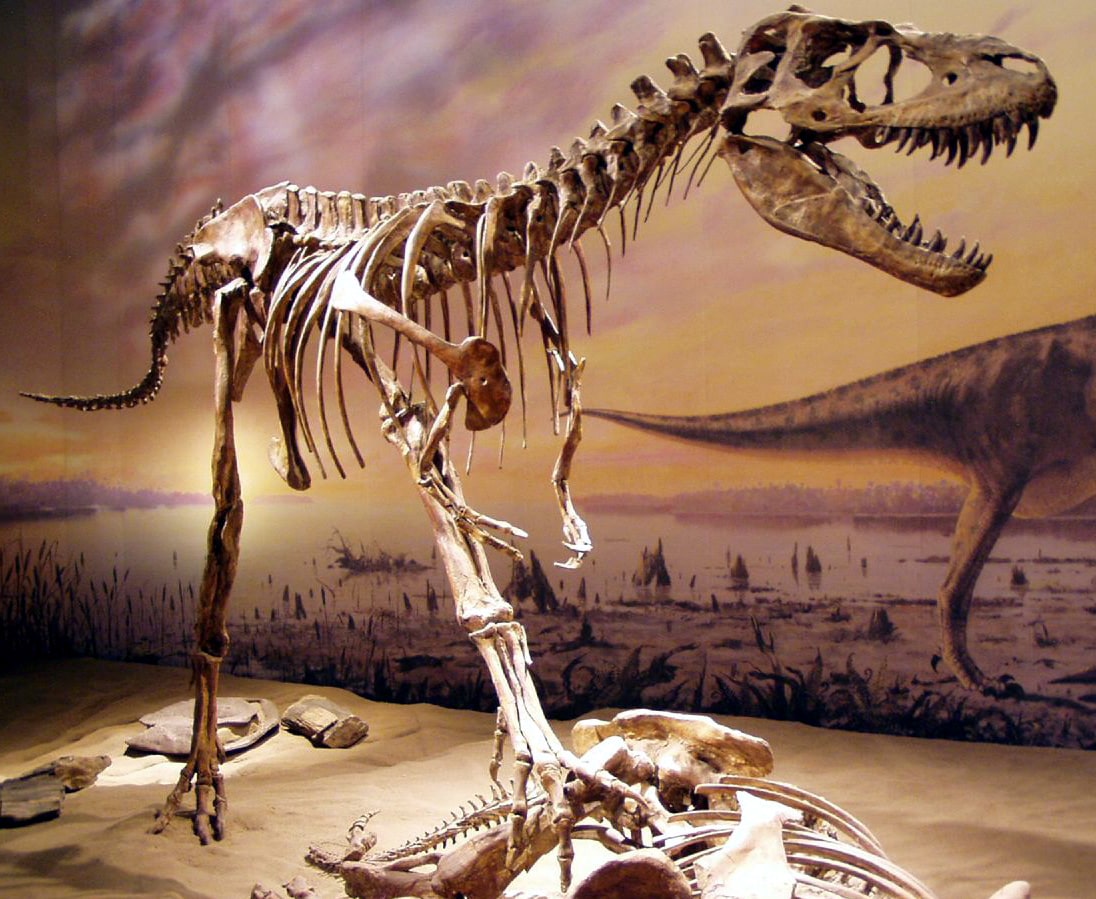
It appears that Gorgosaurus has slightly longer legs than Albertosaurus.
The size, shape and jaw length of the skull were also different. Albertosaurus had a slightly smaller skull. Its snout, on the other hand, was slightly shorter and stronger, which may have allowed this dinosaur to bite more forcefully.
Comparing the length of the hind limb bones of G. libratus and Albertosaurus, scientists conclude that this dinosaur may have had a slightly longer stride.
The smaller size of the Gorgosaurus specimens compared to the largest Albertosaurus fossils suggests that Gorgosaurus may have been more maneuverable and slightly faster. Its top speed was probably around 30 miles per hour.
In the summary
- Albertosaurus (A. sarcophagus) – it was slightly larger and had a stronger bite.
- Gorgosaurus (G. libratus) – it was smaller, but more maneuverable and also a little faster.
Image sources: Cover image: ©Julian Johnson, CC BY-SA 2.0 https://creativecommons.org/licenses/by-sa/2.0/
Size comparison: User:Dinoguy2, CC BY-SA 3.0 https://creativecommons.org/licenses/by-sa/3.0, via Wikimedia Commons
Skeleton: Sebastian Bergmann from Siegburg, Germany, CC BY-SA 2.0 https://creativecommons.org/licenses/by-sa/2.0, via Wikimedia Commons

