
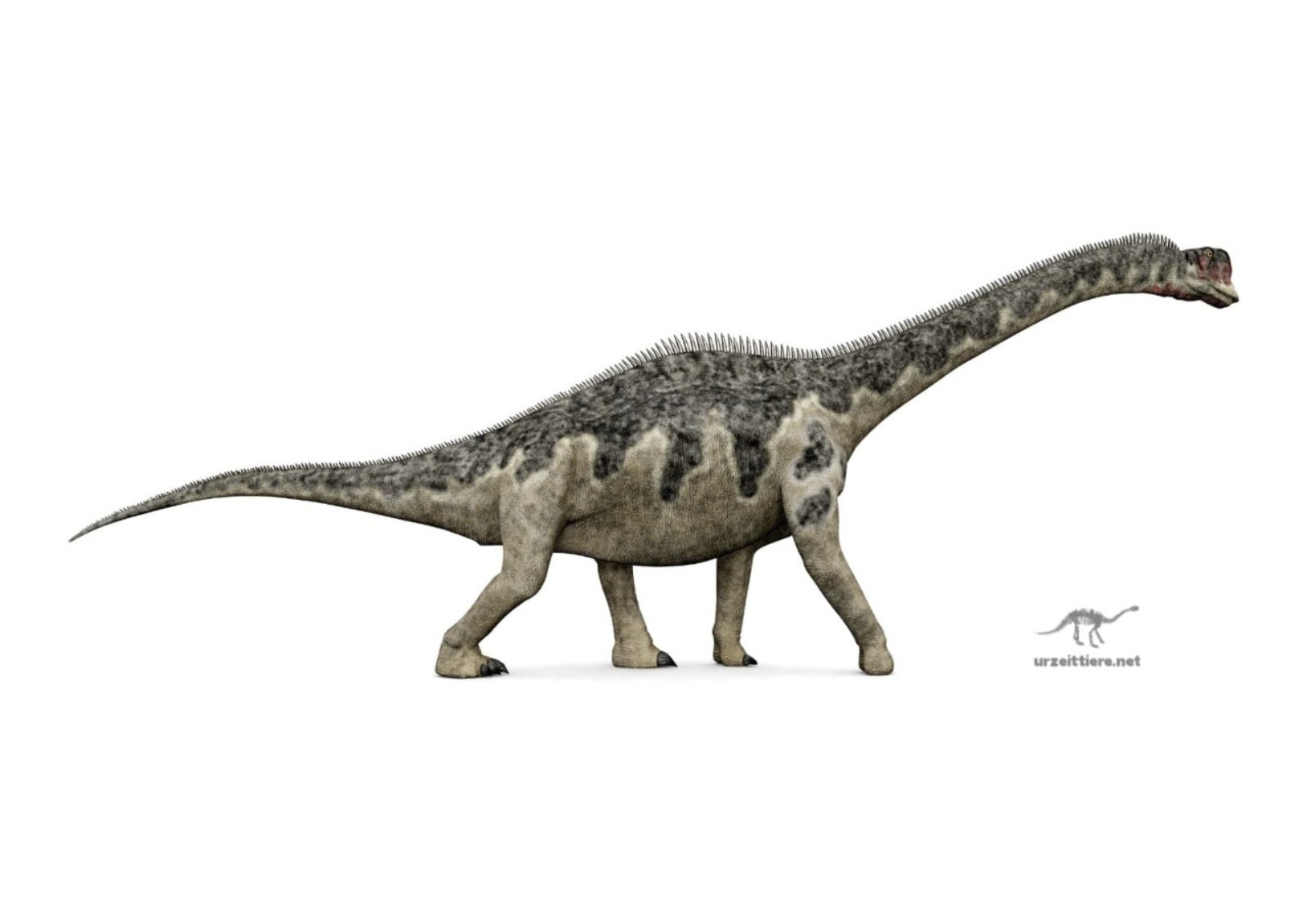
Europasaurus

Europasaurus the dwarf sauropod
Europasaurus was a small dinosaur from the sauropod family that lived in northern Germany during the Late Jurassic (Middle Kimmeridgian, about 154 million years ago). It was seen as an example of insular dwarfism that resulted from the isolation of a sauropod population on an island in the Lower Saxony Basin.
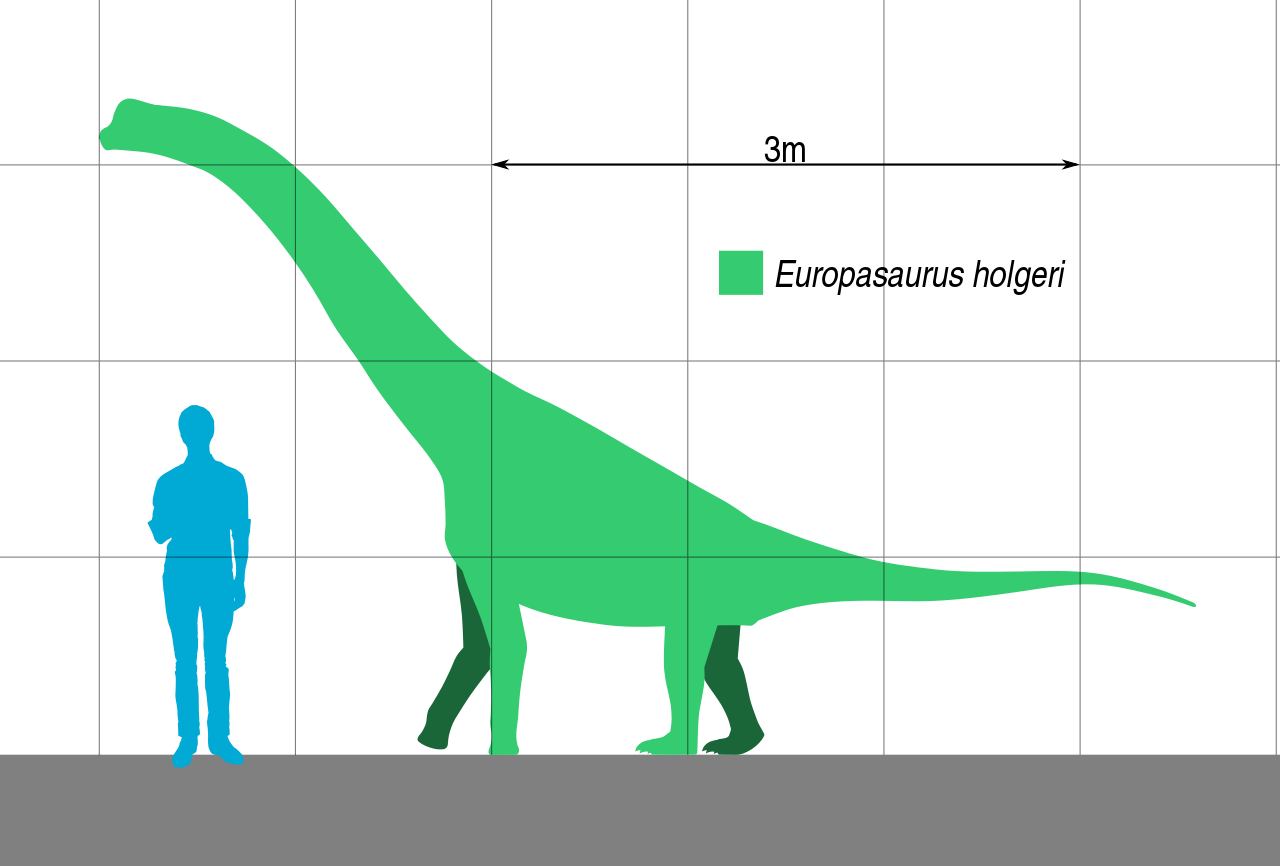
In fact, it was a very small sauropod, measuring only 6.2 m as an adult.
| Profile | Europasaurus |
|---|---|
| epoch | Upper Jurassic (Middle Kimmeridgian) approx. 154.7 million years |
| Order | Lizard-pelvis dinosaur (Saurischia) |
| Subordination | Sauropoda |
| Family | Macronaria |
| group | Camarasauromorpha |
| genus | Europasaurus |
| Art | Europasaurus holgeri |
| Height | 2 meters |
| length | 8 meters |
| Weight | 1 ton |
| Locations | Northern Germany, (Langenberg limestone quarry near Göttingerode) |
Habitat of Europasaurus
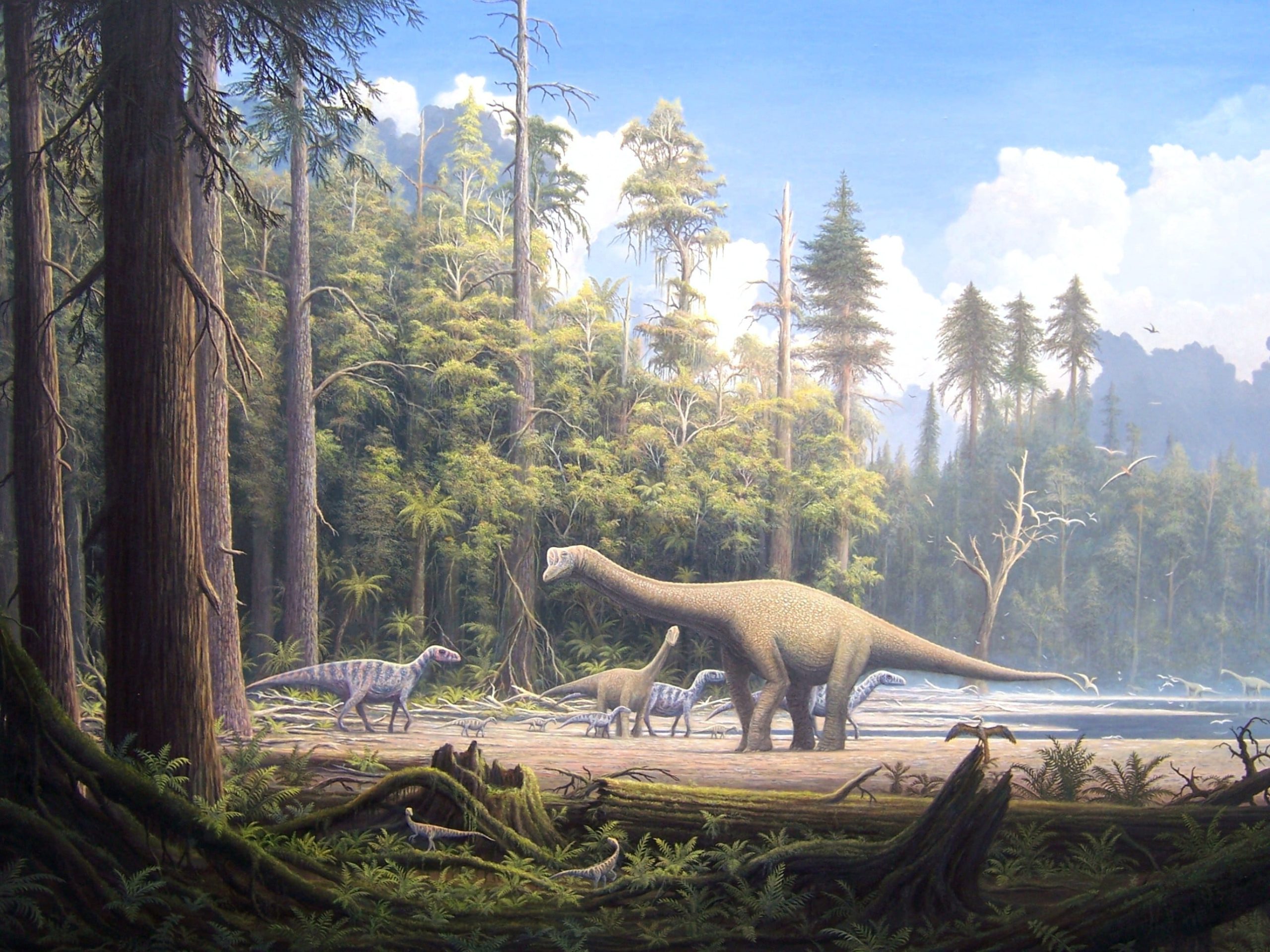
Europasaurus' habitat was a subtropical island. The island was located in the Tethys Sea 150 million years ago. It was about 100,000 km² in size and its climate was warm and humid.
Nevertheless, the island was not covered by dense rainforest, but by meadows, forests and rivers. The vegetation was dominated by horsetails. So the local climate was warmer than today. There were trees there such as primitive conifers, an abundance of ferns and some flowering plants.
Why was Europasaurus so small?
What is certain is that Europasaurus evolved from larger sauropod ancestors. These gigantic sauropods roamed mainland Europe during the Middle to Late Jurassic Period.
While the average sauropod (12 meters) was 40 to 50 feet (15 meters) long, Europasaurus was only 20 feet (6 meters) long. (For comparison, Europasaurus is about the same size as Littlefoot in the award-winning film The Land Before Time. Littlefoot was a young brontosaurus).
Europasaurus is a dwarf sauropod
Like other island dwarfs, Europasaurus was smaller than its mainland ancestors - a trait called "island dwarfism" that is still observed today in island-dwelling bird species, mammals, and even fish.
The “island archipelago” model has been proposed as an explanation for the presence of so many dwarf sauropod species in a relatively small region.
Europasaurus is one of the best examples of this phenomenon, as its bone structure suggests that dwarfing was caused by its slower growth rate compared to that of its giant relatives, rather than by cessation of growth at an early age.
Histological analyzes of several Europasaurus specimens have revealed that Europasaurus is a unique dwarf species and not a juvenile of an existing taxon such as Camarasaurus.
The reptile's small size was therefore an evolutionary adaptation to the limited resources of its habitat on the island.
Europasaurus evolved its small size due to a largely reduced growth rate and thus increased in size more slowly than larger mainland relatives.
Discovery of Europasaurus
In 1998, a single sauropod tooth was discovered by private fossil collector Holger Lüdtke in Germany.
This discovery turned out to be a huge find as the quarry in question contained elements from more than 10 individuals. In 1999, a team of scientists began excavations at the quarry.
Further excavations were carried out in 2001 and 2002, uncovering more than 40 skeletons belonging to individuals of different ages.
Some of the fossils were partially articulated, including some juvenile individuals, allowing scientists to make informed estimates about what the individual would have looked like when alive. However, not all remains from the site were of the same species.
With this latest discovery, “Europasaurus holgeri” could be the smallest sauropod dinosaur found to date.
Image sources: Europasaurus ©urzeittiere.net
Size comparison: Slate Weasel, CC0, via Wikimedia Commons
Europasaurus holgeri Scene: Gerhard Boeggemann, CC BY-SA 2.5 https://creativecommons.org/licenses/by-sa/2.5, via Wikimedia Commons