
Beipiaosaurus

Beipiaosaurus – “The Lizard of Beipia”
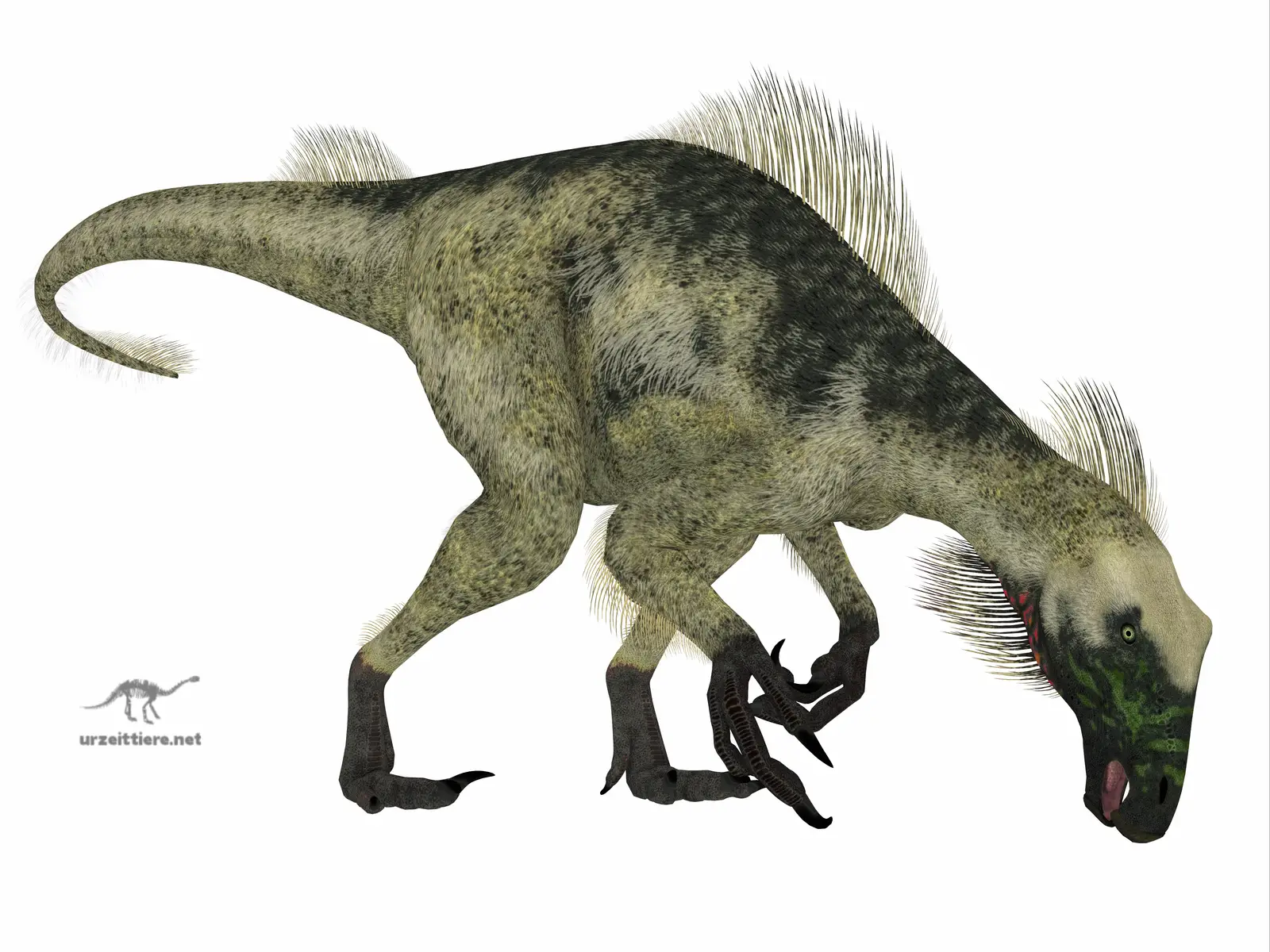
Beipiaosaurus got its species name inexpectus because it had some surprising features.
While late therizinosaurs had all four toes well developed and therefore in contact with the ground, the inner toes of Beipiaosaurus were underdeveloped.
But the most outstanding feature was the presence of two different types of feathers. Firstly, it had a dense layer of down, which probably covered the entire body and probably served as thermal insulation.
A second type of feather, larger and longer, protruded up through this layer of down. These feathers were between 10 and 15 cm long and were not suitable for flying. Their quills resemble those of a porcupine.
| Profile | Beipiaosaurus |
|---|---|
| epoch | Lower Cretaceous 125 million years ago |
| Order | Lizard-pelvis dinosaur (Saurischia) |
| Subordination | Theropoda |
| Family | Coelurosauria |
| group | Therizinosauria |
| genus | Beipiaosaurus |
| Art | Beipiaosaurus inexpectus |
| Height | 0.9 meters |
| length | 2.2 meters |
| Weight | 45 to 90 kg |
| Locations | Yixian Formation, Liaoning Province, China |
EBFF
These springs are known in specialist circles as EBFF.
- elongated broad filamentous feathers
The exact function of the EBFFs is not known, but they are incorrectly shaped to be flight feathers.
These long feathers probably had no practical purpose. They served more for show purposes, for example during courtship. Similar to today's peacocks.
Die EBFFs konzentrieren sich auf Kopf, Hals und Schwanz des Beipiaosaurus.
Areas where modern birds are more likely to display flight feathers.
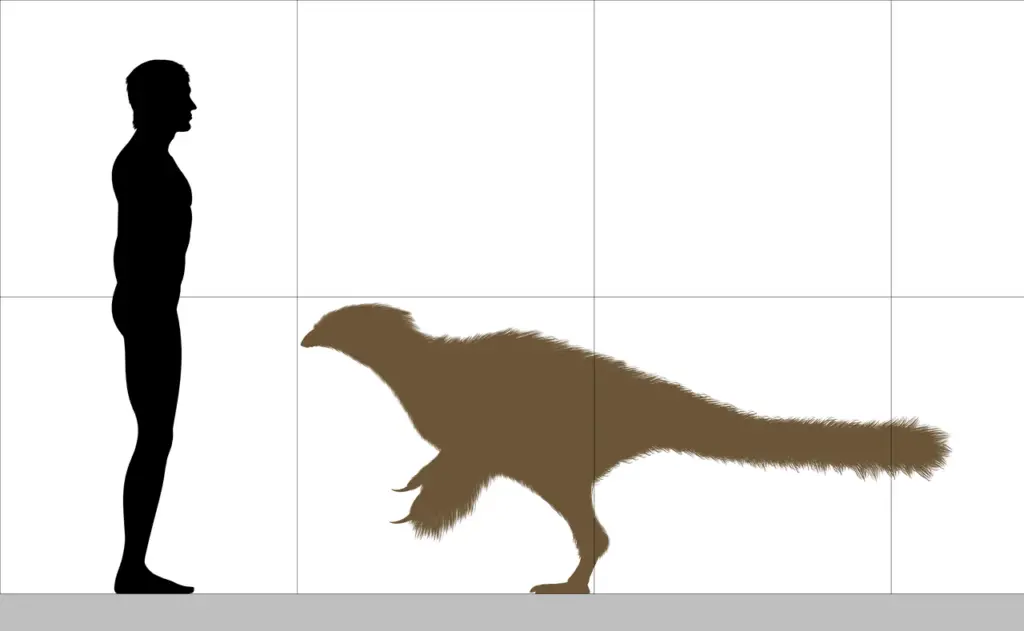
For many years, Beipiaosaurus held the title of the largest known feathered dinosaur. It was 2.2 m long. However, it lost this title in 2012 Yutyrannus was excavated and described.
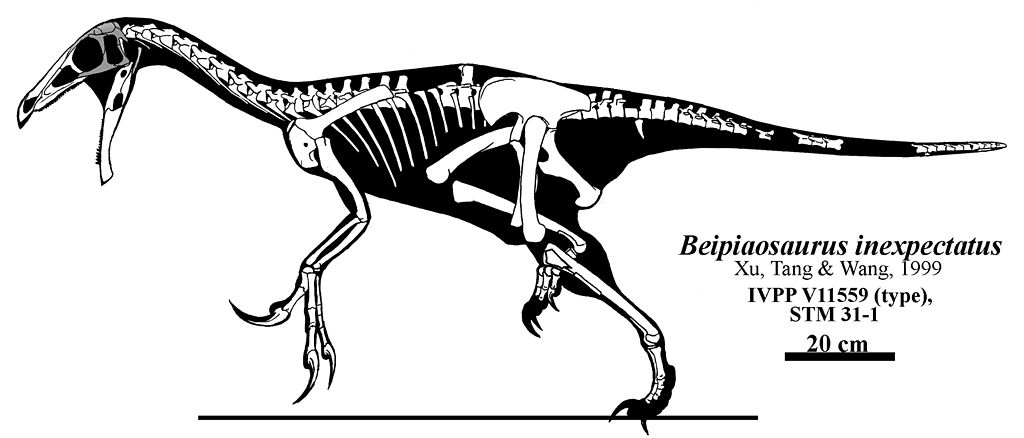
In 1996, the first remains of Beipiaosaurus were found and formally described in 1999. These three specimens are known to contain numerous impressions of feather structures. Using these prints, scientists are even able to determine the colors of the feathering. This turned out to be brownish.
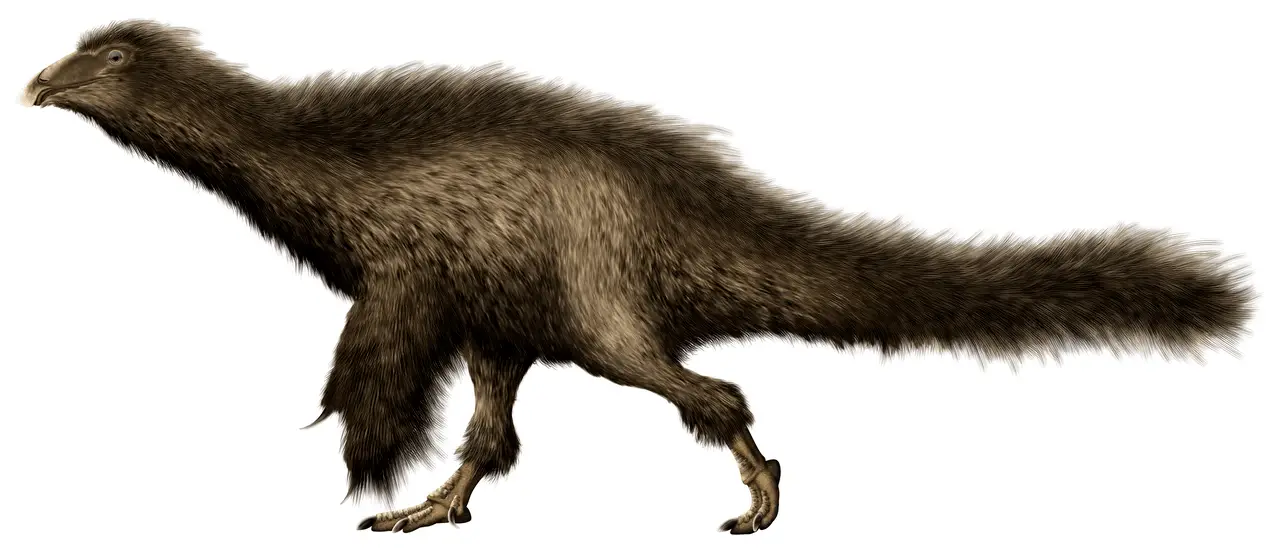
Image sources:
Jaime A. Headden (User:Qilong), CC BY 3.0 https://creativecommons.org/licenses/by/3.0, via Wikimedia Commons
PaleoNeolitic, CC0, via Wikimedia Commons
PaleoNeolitic, CC BY 4.0 https://creativecommons.org/licenses/by/4.0, via Wikimedia Commons