
Zalmoxes
Zalmoxes: The dwarf dinosaur from Transylvania
Physical characteristics of Zalmoxes
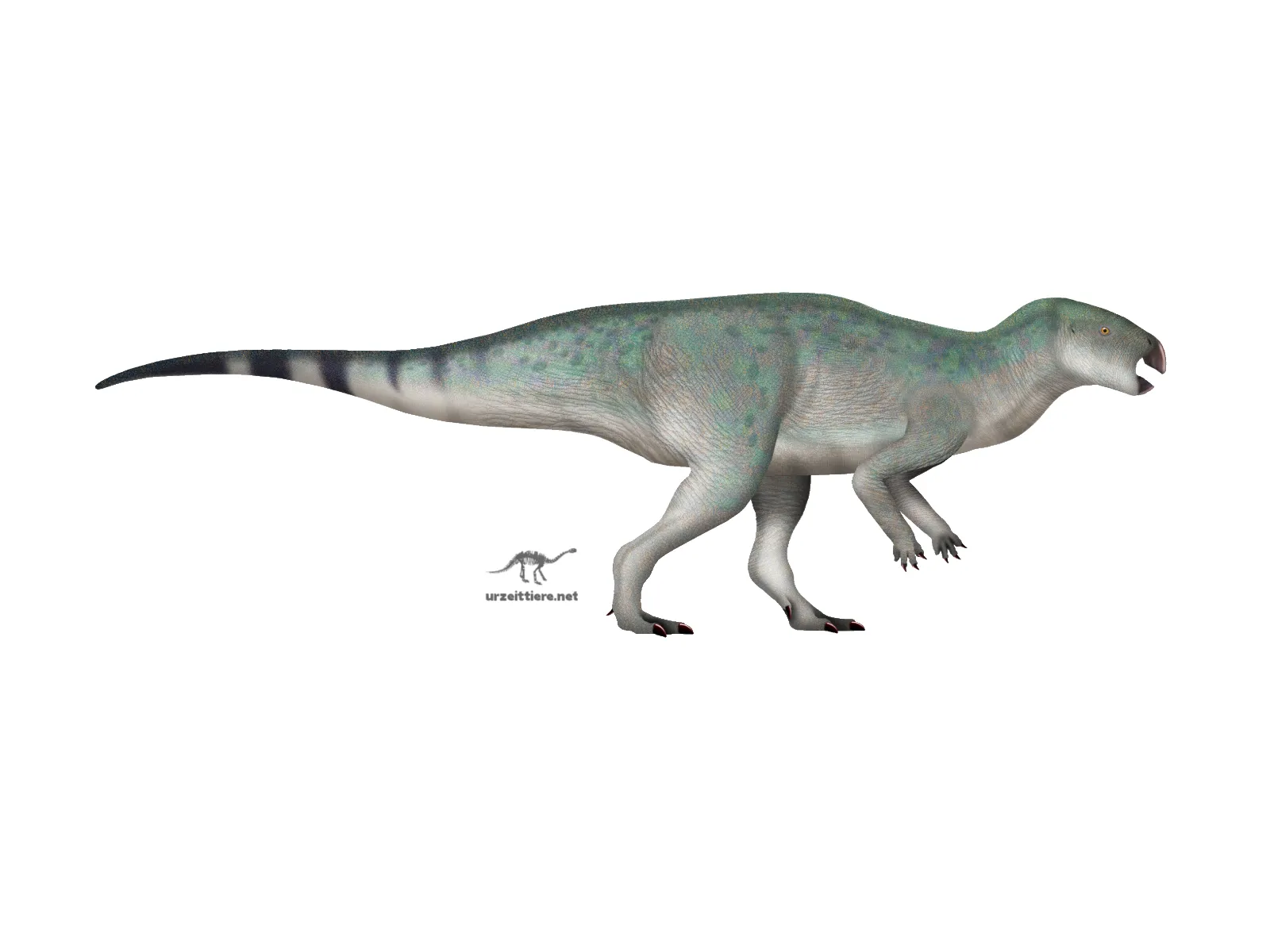
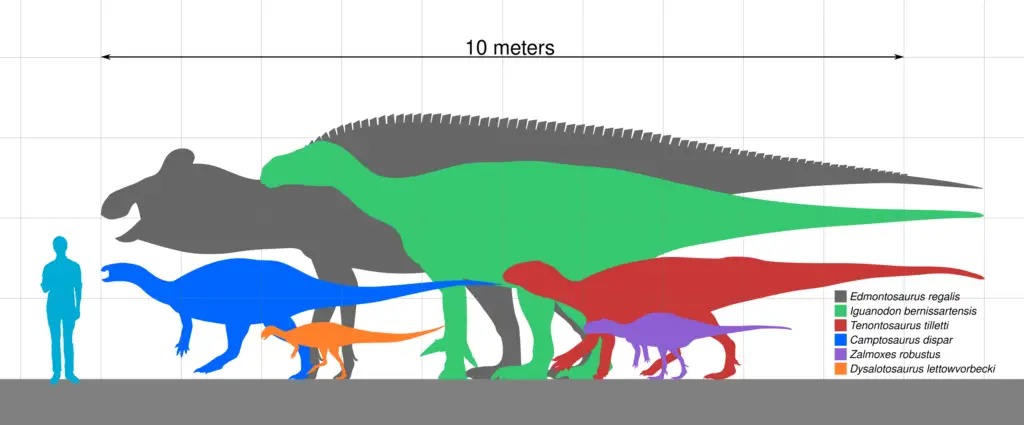
Zalmoxes, a member of the Ornithopoda group, stands out as a unique species of dinosaur due to its small size compared to its relatives. This dinosaur exhibited dwarfism, a characteristic that distinguishes it from other ornithopods. The skeletal structure of Zalmoxes provides valuable information about its appearance and adaptations.
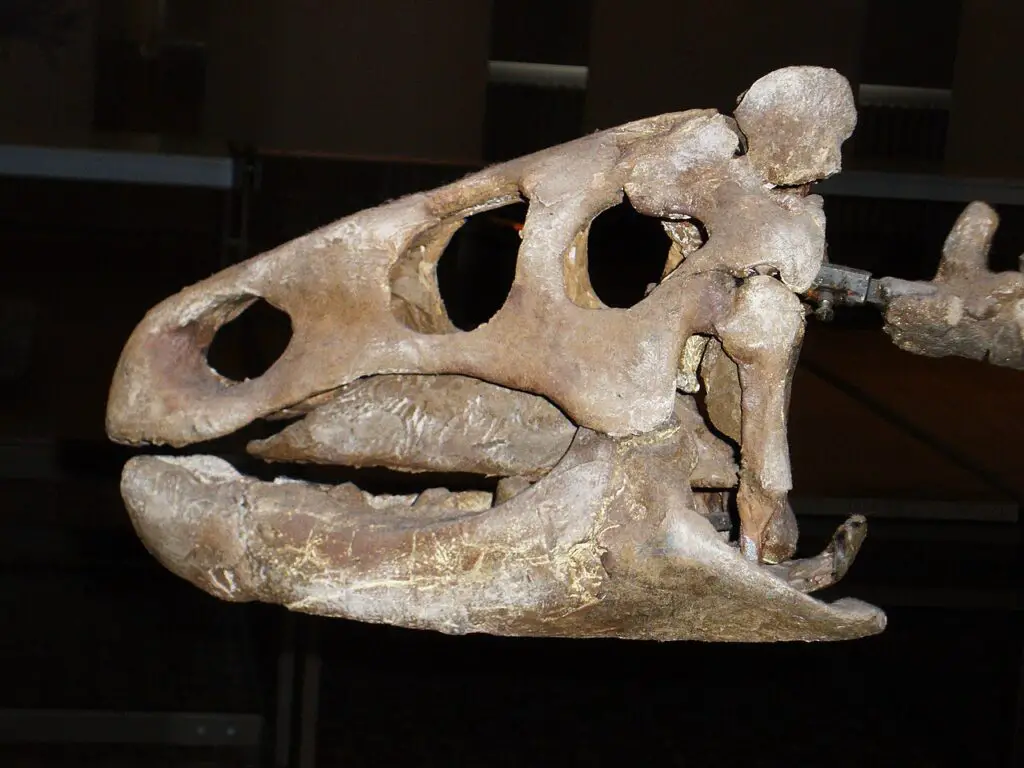
The skull of Zalmoxes had a characteristic shape with a short and deep structure. Its limbs were proportionately shorter than those of its larger ornithopod relatives, an adaptation likely related to its island habitat. Zalmoxes' tail was moderately long and helped it balance its body while moving.
One of Zalmoxes' most notable features was his dentition adjustments. This dinosaur's teeth were specialized for its diet and had a special structure that allowed efficient processing of plant material. These features of the teeth provide information about Zalmoxes' feeding habits and ecological role in its environment.
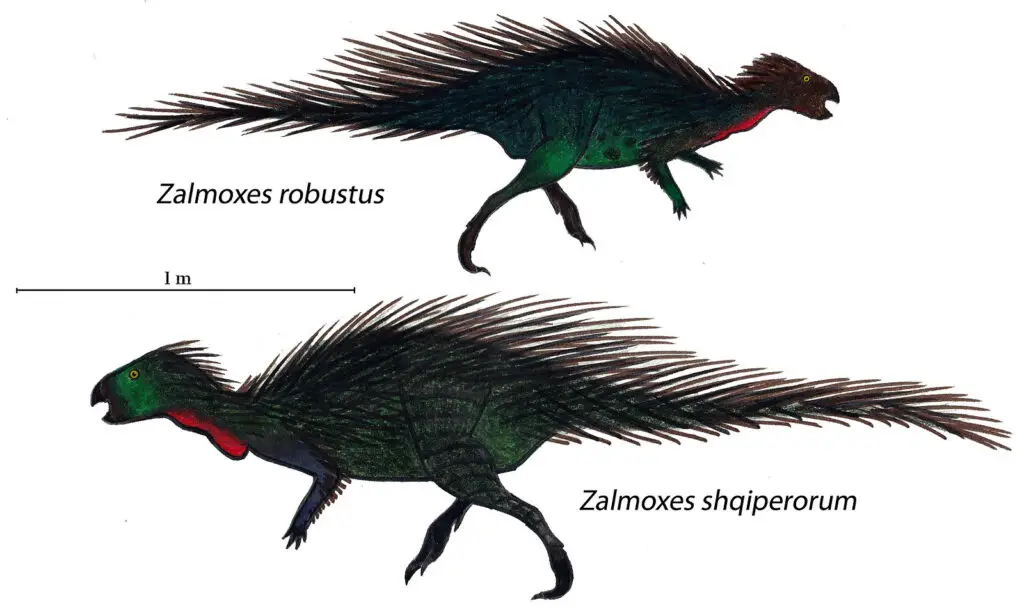
Two species of Zalmoxes have been identified: Zalmoxes robustus and Zalmoxes shqiperorum. These species shared many characteristics but differed in certain anatomical details, reflecting the diversity within this genus.
The Island of Hațeg: The Isolated World of the Zalmoxes
Zalmoxes inhabited Hațeg Island during the Late Cretaceous. This island, located in what is now Transylvania, Romania, was part of the European archipelago. The isolation of Hațeg Island created a unique ecosystem that influenced the development of its inhabitants, including the Zalmoxes.
The Late Cretaceous paleogeography of this region was characterized by a series of islands surrounded by shallow seas. This geographical isolation played a crucial role in the evolution of the animals that lived there, including zalmoxes.
The climate on Hațeg Island at Zalmoxes' time was probably warm and humid, favoring diverse plant life. The island's flora included various plant species that served as potential food sources for herbivorous dinosaurs such as Zalmoxes.
The fauna of Hațeg Island was diverse despite its limited size. Zalmoxes shared its habitat with other dinosaurs, including sauropods, theropods and other ornithopods. This diverse ecosystem created a complex web of interactions that influenced the development and behavior of zalmoxes.
The Island Rule (Foster's rule (English: Foster's rule)), a principle of biogeography, explains the tendency for large animals on islands to become smaller and small animals to become larger. This phenomenon directly affected the evolution of Zalmoxes, causing it to be smaller compared to its mainland relatives.
Diet and feeding habits of Zalmoxes
The tooth structure of Zalmoxes provides information about its diet and eating habits. This dinosaur's teeth were adapted for processing plant material, indicating a herbivorous diet. The specific arrangement and shape of the teeth shows that Zalmoxes was able to efficiently crush tough plant matter.
Zalmoxes' potential food sources included various plants that grew on Hațeg Island during the Late Cretaceous. These included, for example, ferns, cycads and early flowering plants. The island's diverse plant life provided a number of opportunities for herbivorous dinosaurs such as Zalmoxes.
Compared to other related ornithopods, Zalmoxes had some specialized adaptations in diet. These adaptations allowed it to effectively use the available plant resources on the island, potentially reducing competition with other herbivores in its ecosystem.
Discovery and paleontological history of Zalmoxes
The discovery of Zalmoxes is closely linked to the work of Franz Nopcsa, a pioneering paleontologist who made a significant contribution to the study of dinosaurs in Transylvania. Nopcsa's work in the early 20th century laid the foundation for our understanding of zalmoxes and other dinosaurs from the Hațeg Basin.
The history of Zalmoxes begins in 1899, when paleontologist Franz Nopcsa first named the species Mochlodon robustum, based on fossil remains found in Romania. However, Nopcsa himself reclassified the species in 1915 and renamed it Rhabdodon robustum. This classification remained in place for 75 years until George Olshevsky made a minor correction to the name in 1990, changing it to Rhabdodon robustus.
The most significant reclassification came in 2003, when paleontologists realized that these fossils constituted a separate genus. They named this new genus Zalmoxes, with the type species being Zalmoxes robustus. The genus name Zalmoxes refers to Zalmoxis, an important deity in Dacian mythology, and provides a connection between the ancient dinosaur and the cultural history of the region where it was discovered.
Evolutionary significance of Zalmoxes
The evolution of Zalmoxes is closely linked to the phenomenon of island dwarfism. This evolutionary trend, in which large animals become smaller in island environments, played a crucial role in shaping the characteristics of Zalmoxes. The limited resources and lack of large predators on Hațeg Island likely contributed to the smaller size of Zalmoxes compared to its mainland relatives.
Within the Ornithopoda group, Zalmoxes occupies a special evolutionary position. It belongs to the family Rhabdodontidae, a group of ornithopoda dinosaurs known mainly from Europe. The study of Zalmoxes and its relatives sheds light on the diversity and evolution of the Ornithopoda during the Late Cretaceous.
The existence of Zalmoxes on Hațeg Island provides valuable information about the evolution of dinosaurs in isolated environments. This dinosaur's unique features, such as its small size and specialized dental adaptations, show how isolation can lead to the evolution of different traits in response to local environmental conditions.
Phylogenetic analyzes place Zalmoxes, along with other European ornithopods, in the family Rhabdodontidae. This classification helps scientists understand the relationships between different ornithopod species and the patterns of dinosaur evolution and distribution in Europe during the Late Cretaceous.
Zalmoxes in modern scientific research
Current research on Zalmoxes continues to provide new insights into this unique dinosaur. Paleontologists use advanced techniques to study Zalmoxes fossils, including CT scans and 3D modeling. These methods allow detailed analysis of bone structure and provide new information about the anatomy and growth patterns of Zalmoxes.
Ongoing studies focus on various aspects of Zalmoxes' biology, including its growth rates, population dynamics, and ecological interactions. This research contributes to our broader understanding of dinosaur biology and ecosystems in Late Cretaceous Europe.
Zalmoxes plays an important role in educational programs and museum exhibitions that focus on dinosaur diversity and evolution. Exhibits of fossils and reconstructions of Zalmoxes illustrate concepts such as island dwarfism and the diversity of ornithopod dinosaurs.
The study of Zalmoxes continues to benefit from advances in paleontological techniques. Methods such as stable isotope analysis are being applied to Zalmoxes fossils to gain insights into its diet and habitat. These modern scientific approaches improve our understanding of this ancient dwarf dinosaur and its world.
conclusion
Zalmoxes, the dwarf dinosaur from Transylvania, offers a glimpse into the world of Late Cretaceous island ecosystems. Its distinctive characteristics, including its small size and specialized adaptations, reflect the strong influence of the island environment on evolution. As research continues, Zalmoxes remains an important topic for understanding dinosaur diversity, island biogeography, and the complex history of life on Earth.
Systematics
| Dinosauria |
| Ornithischia |
| Genasauria |
| Neornithischia |
| Cerapoda |
| Ornithopoda |
| Iguanodontia |
| Rhabdodontomorpha |
| Rhabdodontidae |
Occurrence in time
| chalk |
| Upper Cretaceous |
| Maastrichtian |
Happen
| Area | Europe |
| country | Romania |
| region | Transylvania |
| formation | Sanpetru formation |
Image sources
Skeleton: Ghedoghedo, CC BY-SA 3.0, via Wikimedia Commons
Skull: Ghedoghedo, CC BY-SA 3.0, via Wikimedia Commons
Comparison Zalmoxes robustus / shqiperorum: Danny Cicchetti, CC BY-SA 3.0, via Wikimedia Commons
Size comparison: User:Slate Weasel, Public domain, via Wikimedia Commons
Featured image: UnexpectedDinoLesson, CC BY-SA 4.0, via Wikimedia Commons