
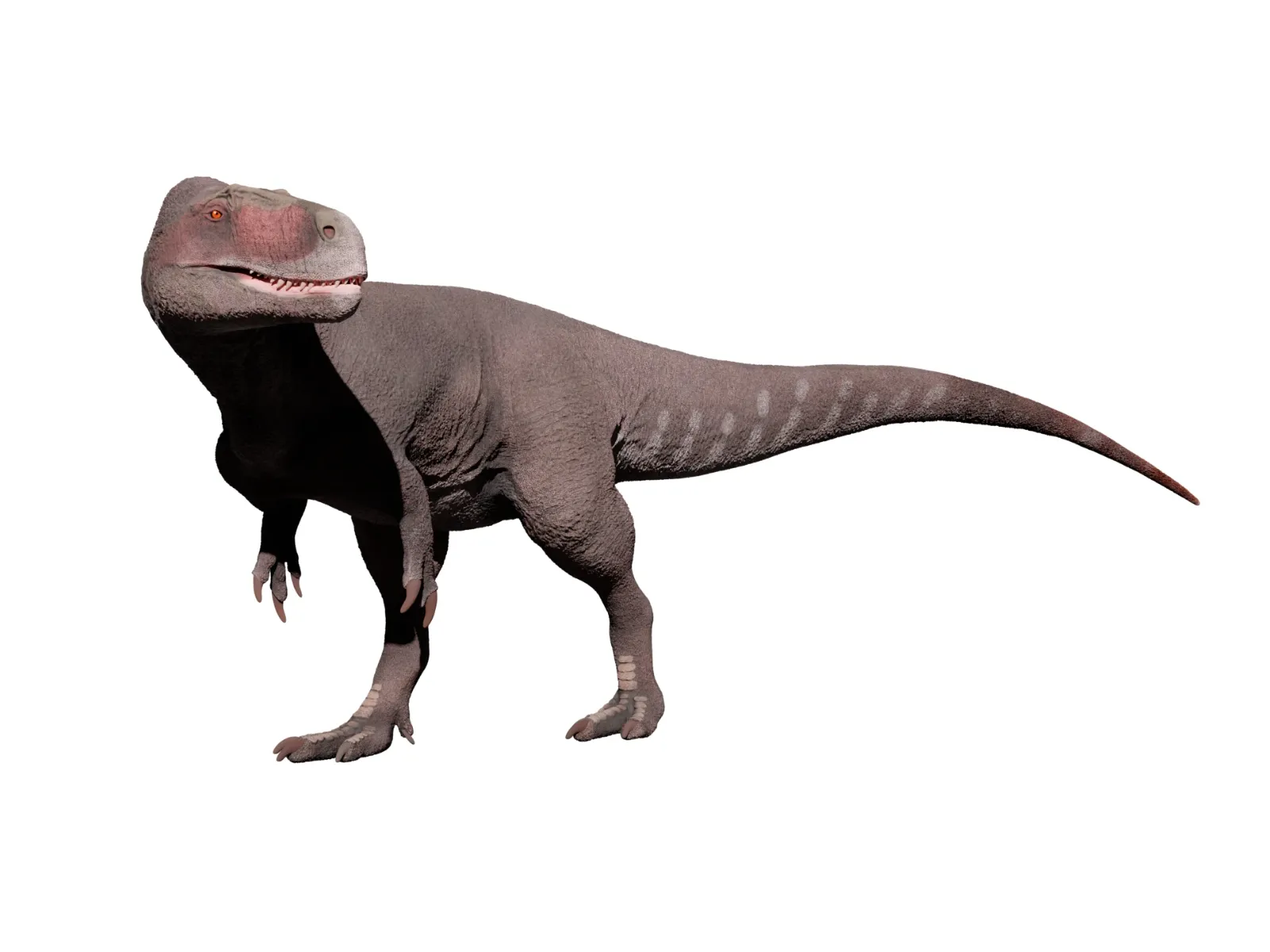
Wiehenvenator
If you think of the gigantic creatures from prehistoric times, is Wiehenvenator albati one of the most fascinating discoveries in Central Europe. The discovery of this theropod dinosaur shows how much we know about life around 165 million years ago Middle Jurassic can learn. This dinosaur, discovered in the quarries of the Wiehengebirge near Minden, Germany, has a name meaning “Albats’ Wiehengebirgsjäger,” honoring its finder, Friedrich Albat.
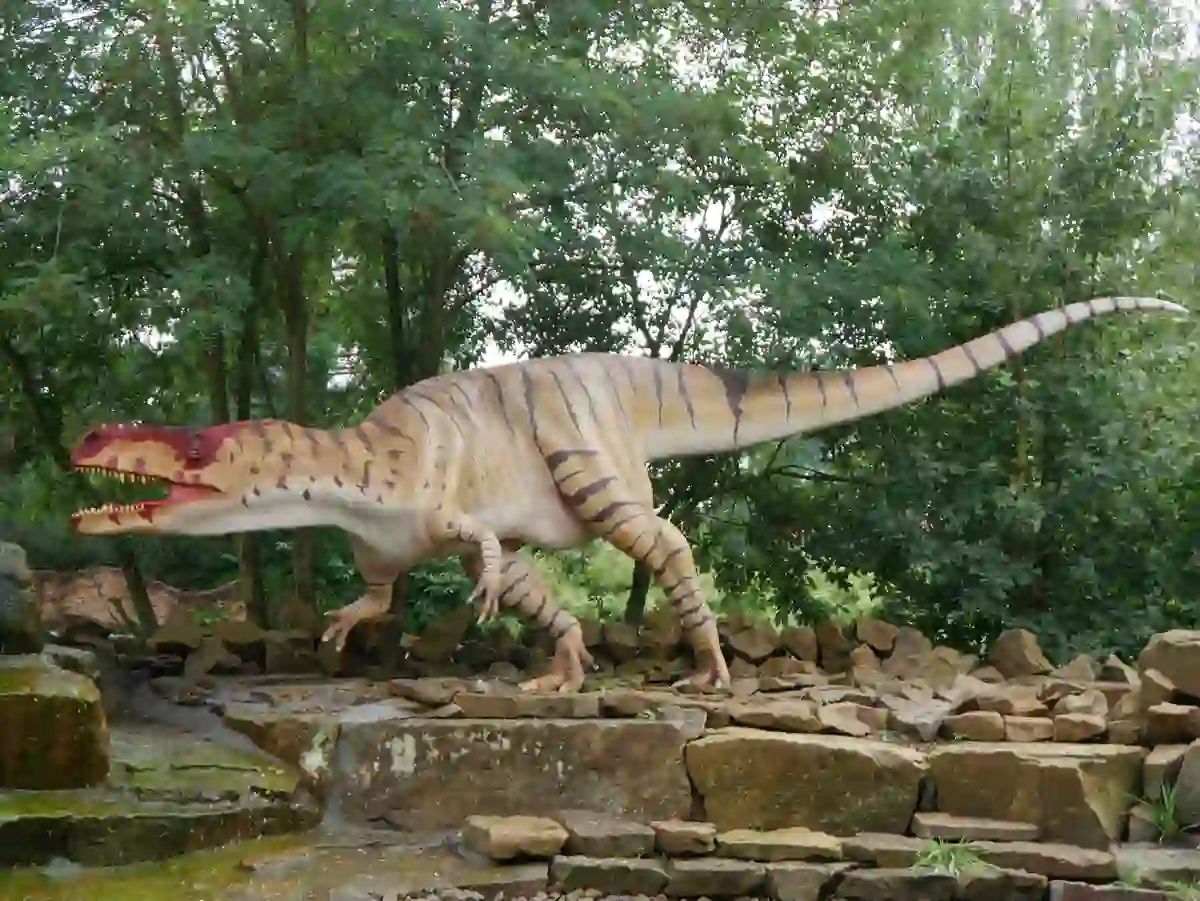
In the LWL Museum of Natural History In Münster you can admire a life-size model of the Wiehenvenator, which is based on the fossils: skull parts, teeth and fragments of its vertebrae and ribs, which were uncovered in 1998 by experts from the Westphalia-Lippe Regional Association. As a megalosaurid, Wiehenvenator is not only an important fossil, but also a Transcript for the evolutionary diversity of life on Earth.
Facts about Wiehenvenator briefly summarized
Wiehenvenator
| scientific name | Wiehenvenator albati |
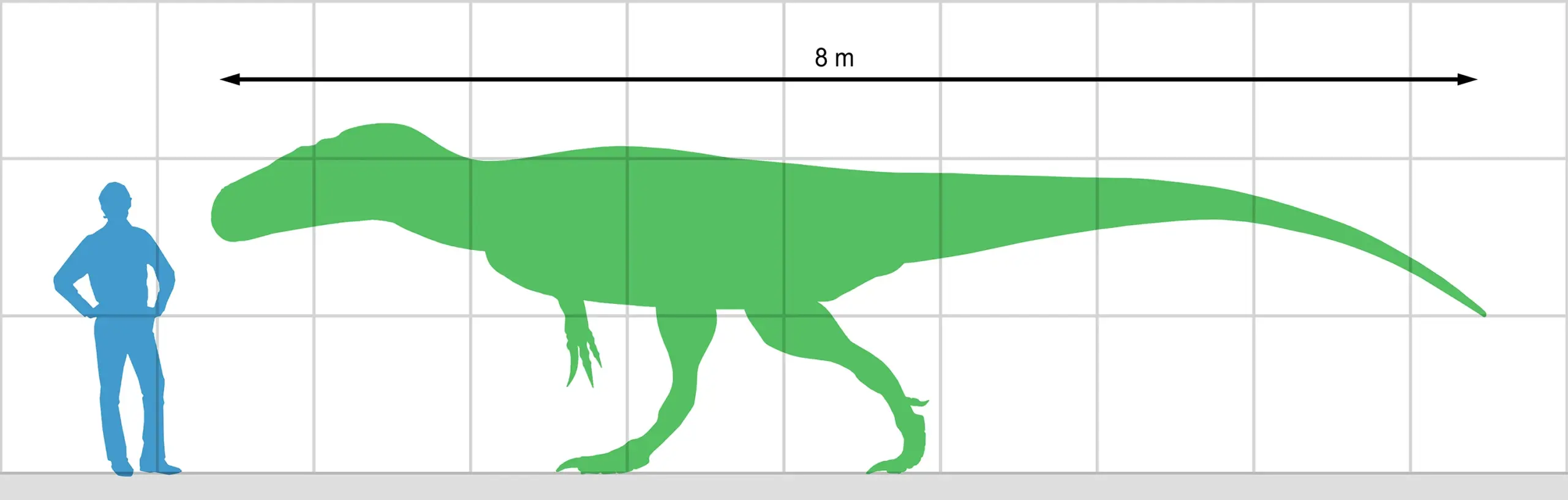
| Estimated size | Length: 8.3 meters Height: 2 meters Weight: 1.6 tons |
| geological era | Middle Jurassic |
| Locations | Ornate tone |
| Order | Saurischia |
| Subordination | Theropoda |
Physical characteristics
| anatomy | Very powerfully built, large two-legged predatory dinosaur, about 8 meters long and over 2 meters high |
| Special features | Große, gebogene Zähne, ähnlich wie bei Torvosaurus; keine auffälligen Stacheln, Federn oder Hörner bekannt |
| locomotion | Two-legged |
| Skin texture | Presumably scaly, as there is no evidence of feathers or other structures |
| Coloring | Unknown; no fossil evidence of color remains |
discovery
| Explorer | Rauhut, Hübner, Lanser |
| Discovery date | 2016 |
| Meaning of the name | Hunters of the Wiehengebirge or Wiehengebirgsjäger |
| Significant fossil finds | Partial skeleton with fragmentary skull. |
In paleontology, the ratio of brain to body size, the so-called Encephalization quotient (EQ), used as a rough guide to relative intelligence.
| Intelligence (EQ) | Not directly known, probably similar to other large theropods (low to moderate) |
| Social behavior | Unknown, probably solitary like many large predatory dinosaurs |
| Predators | As a top predator, it probably has no natural enemies in adulthood |
Anatomy and peculiarities of Wiehenvenator
Skull and dental features
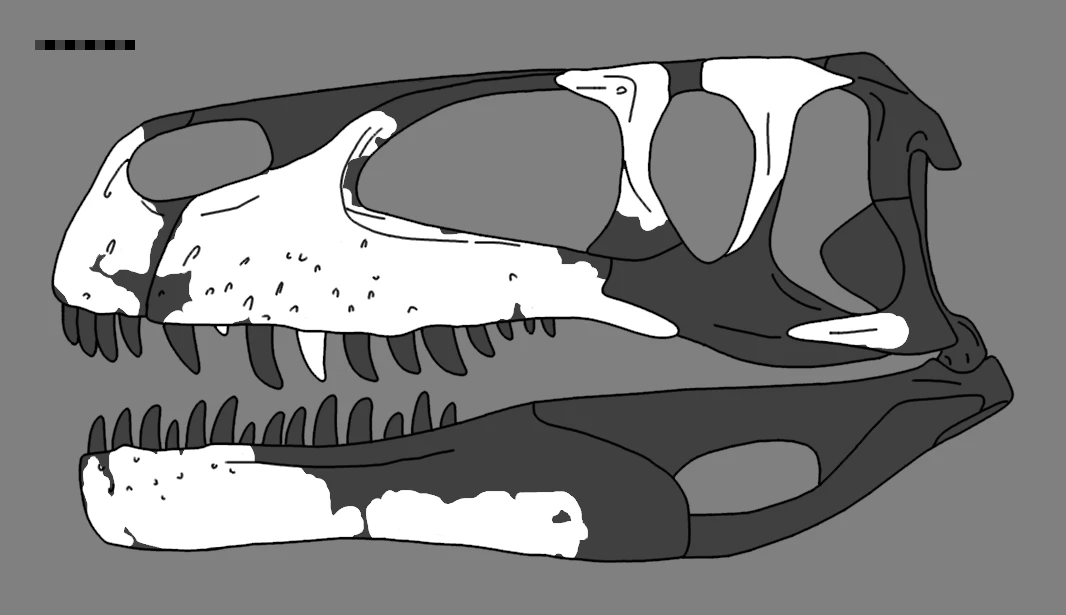
Wiehenvenator albati is characterized by some remarkable anatomical features that make it one of the most fascinating predatory dinosaurs of its time. One of the most striking features is its teeth. This large, curved teeth can grow up to 13 centimeters long, making them almost as big as bananas. The Wiehenvenator's teeth are strongly recurved (curved) and have a special structure. The Tooth root area accounts for more than two-thirds of the total tooth length, which is typical for many theropods. These teeth were ideal for catching and killing prey because their sharp, serrated edges and powerful root a effective weapon represented.
Comparison with other theropods
Compared to other large theropods such as Torvosaurus and Tyrannosaurus rex The Wiehenvenator shows some unique, but also some common features. How Torvosaurus, with which he is similar in size and build, Wiehenvenator had one impressive jaw structure and teeth designed for hunting and killing large prey. In contrast to Tyrannosaurus rex, who lived in North America, was Wiehenvenator, however smaller, but still one of the largest predatory dinosaurs in Europe.
Incomplete skeleton: what bones were found?
Sorry; Unfortunately, this section contains various anatomical terms. Where possible, I used the German name.
The skeleton of Wiehenvenator is unfortunately incomplete, but the bones found provide interesting insights into its anatomy. The type specimen includes parts of the skull, including the right premaxilla (maxilla), maxilla (upper jaw), lacrimal bone, postorbital bone and possibly the anterior branch of the right Quadratojugals.
In addition, parts of the right lower jaw (Mandibula), six teeth, three caudal vertebrae, a pair of fused middle segments of the posterior Gastralia, a complete rib and four rib fragments, a finger bone, both fibulae, a right talus bone and a right heel bone were found. All of these bones are considered to belong to a single individual. These bone finds allow paleontologists to estimate the size and age of the Wiehenvenator and determine its placement within the theropod family.
The histological analysis of the fibulae (calibs) shows that the holotype specimen was at least in its ninth year, but the actual age at death could be over ten years have lain.
Discovery and naming
The 1998 find
The story of Wiehenvenator albati begins in 1998, when the geologist Friedrich Albat, who was working on behalf of the LWL Museum of Natural History, worked in an abandoned quarry Wiehen Mountains came across fossils near Minden, Westphalia. This discovery took place in the Ornate Ton Formation instead, a geological formation made up of mudstone, sandstone and a characteristic layer of carbonate concretions. The geological structure of the region and the site plays an important role in the preservation of fossils and their scientific study.
Nickname: “Monster of Minden”
The dinosaur quickly gained attention and was given the informal nickname “Monsters of Minden”, which emphasized its size and importance. This name was coined by the enthusiasm of the public and scientists. The media reports, including from the German edition of National Geographic, contributed to speculation about the possible size of the dinosaur. Some of this speculation suggested that Wiehenvenator could be one of the largest theropods of all.
Scientific name
The official scientific naming was only given after a detailed analysis of the fossils by the paleontologists Oliver Rauhut, Tom Hübner and Klaus-Peter Lanser. The name Wiehenvenator albati is a homage to him Location – das Wiehen Mountains – und den Geologen Friedrich Albat, der diesen Theropoden entdeckte. Die Untersuchung und Präparation der fossilen Überreste stellten die Wissenschaftler vor erhebliche Herausforderungen.
Many of the bones found were in poor condition and threatened to disintegrate when removed from the rock. In order to protect the fossils, it was decided to first store them carefully Protective covers to pack. The preparation later took place in the laboratories of the LWL Museum of Natural History, where the bones were analyzed and preserved to provide the basis for the scientific description of this new genus and species.
Geological background and habitat
Paleogeography: Germany was covered by shallow seas at that time
During the Middle Jurassic, in which Wiehenvenator albati lived, the paleogeography of Germany looked very different than it does today. The area now known as Northern Germany, including the Region around Minden, war damals von shallow seas covered. These seas formed a multitude of islands and archipelagos that... unique habitat created for a variety of species.
Island habitat
Wiehenvenator lived on one of these islands, which is formed by the flat Jurassic seas were separated from each other. These islands offered one demarcated habitat, which influenced the evolution and adaptation of the animals living there. The islands were from coral reefs and mangrove forests, which is a rich and diverse ecosystem supported. These isolated habitats promoted the diversification of fauna, including predatory dinosaurs such as Wiehenvenator.
Significance for the development of predatory dinosaurs in the Jurassic
The Jurassic period, particularly the Middle Jurassic, was a period in which Predatory dinosaurs played an important role in the ecosystems. The island habitats and shallow seas created an environment in which these theropods could evolve and adapt. Wiehenvenator, as one of the largest predatory dinosaur his time in Central Europe, played a central role as apex predator in its ecosystem. Its size and adaptations to the island habitat allowed it to be a dominant position in the food chain. The geological conditions and paleogeography of the Jurassic period thus contributed significantly to the evolution and diversification of predatory dinosaurs, and Wiehenvenator is one outstanding example for this development.
Paleoecology and lifestyle
Diet: carnivore (meat eater)
Wiehenvenator albati was an outspoken carnivore. His diet consisted mainly of other animals, which was due to his sharp, curved teeth and the clawed forelegs are underlined. These adjustments enabled him to to hunt effectively and to kill his prey. The teeth, up to 13 centimeters long, were ideal for tearing flesh and breaking bones. This made Wiehenvenator an efficient hunter in its ecosystem.
Presumed way of life on islands, competition and coexistence with other predatory dinosaurs
The way of life of Wiehenvenators on the islands of the Middle Jurassic was characterized by a mixture of competition and coexistence with other predatory dinosaurs and animals. The islands where he lived were Part of an archipelago, which was separated by shallow seas. This isolated habitats led to a unique fauna in which Wiehenvenator acted as one of the top predators. It can be assumed that Wiehenvenator competed with other predatory dinosaurs and predators that lived on these islands. However, there are none direct fossil finds, which provide evidence of coexistence with other large theropods in this specific area. The fact that Wiehenvenator is a dominant position in its ecosystem, however, suggests that it played a central role in the food chain and may have regulated other smaller predatory dinosaurs and prey.
Role in the Middle Jurassic ecosystem
Wiehenvenator albati played a central role in the Middle Jurassic ecosystem. As an apex predator, it controlled the population dynamics of its prey and maintained it the balance maintained in the ecosystem. Its presence had a significant impact on the evolution and adaptation of other animals in its habitat.
The marine environment and islands on which Wiehenvenator lived provided one rich diversity of habitats, from mangrove forests to coral reefs. This diversity supported a wide range of species, from fish and reptiles to other dinosaurs. Wiehenvenator was an integral part of this complex ecosystem, and its role as a hunter and predator was crucial to maintaining the ecological balance.
Importance for research
Classification in the group of Megalosauridae
Wiehenvenator albati is a significant discovery for paleontology, especially in the context of the theropod family. The phylogenetic analysis has shown that Wiehenvenator is part of the group Megalosauridae, more specifically the subfamily Megalosaurinae. It becomes a sister taxon to the genus Torvosaurus identified from the Late Jurassic, providing new insights into the evolution and diversification of megalosaurids in the Jurassic.
Evidence for the evolution of large predatory dinosaurs in the Jurassic
The discovery of Wiehenvenator provides valuable clues to the evolution of large predatory dinosaurs in the Middle Jurassic. That Wiehenvenator and Torvosaurus closely related but lived in different time periods shows that the megalosaurids played an important role as apex predators over a longer period of time. This highlights the importance of the Jurassic as a period in which theropods evolved and adapted to their Environments adapted.
Significance of the find for knowledge of the dinosaur fauna of Europe
The discovery of the Wiehenvenator significantly expanded our knowledge of the dinosaur fauna of Europe in the Middle Jurassic. Before this discovery, information about large predatory dinosaurs in Europe was from this period begrenzt. Wiehenvenator fills a gap in our understanding of the ecological landscape of Europe during the Jurassic and shows that large and diverse theropods also existed in this part of the world. This find has also advanced research into the biogeographical distribution of dinosaurs in Europe and raised new questions about the migration and isolation of dinosaur populations.
Conclusion
Wiehenvenator albati, also known as the “Monsters of Minden“, is undoubtedly one fascinating discovery, which significantly improved our understanding of the Middle Jurassic dinosaur fauna deepened and enriched. As a member of the family Megalosauridae and one of the largest predatory dinosaurs in Europe from this period, Wiehenvenator essential insights into the evolution and adaptability of theropods. His discovery in the Wiehengebirge near Minden proved to be crucial for paleontological research. Subsequent detailed analysis revealed that this dinosaur was a Significant of the food chain was – an apex predator on the Islands of the Jurassic Sea. With an estimated height of eight to nine meters and its specific anatomical features, including its large, curved teeth, Wiehenvenator impressively shows how complex and diverse the dinosaurs of this era were.
For everyone who continues to live out their curiosity and others impressive dinosaurs If you want to discover it, it's worth taking a look at our interactive dinosaur filter below https://urzeittiere.net/Dino filter/. Immerse yourself in the wondrous world the dinosaurs and learn more about these extraordinary creatures that once ruled the earth.
Image sources:
Size comparison: Scott Hartman, Carol Abraczinskas, Simão Mateus, Christophe Hendrickx, Octávio Mateus, CC BY 4.0, via Wikimedia Commons
Skull of Wiehenvenator: IJReid, CC BY 4.0, via Wikimedia Commons