
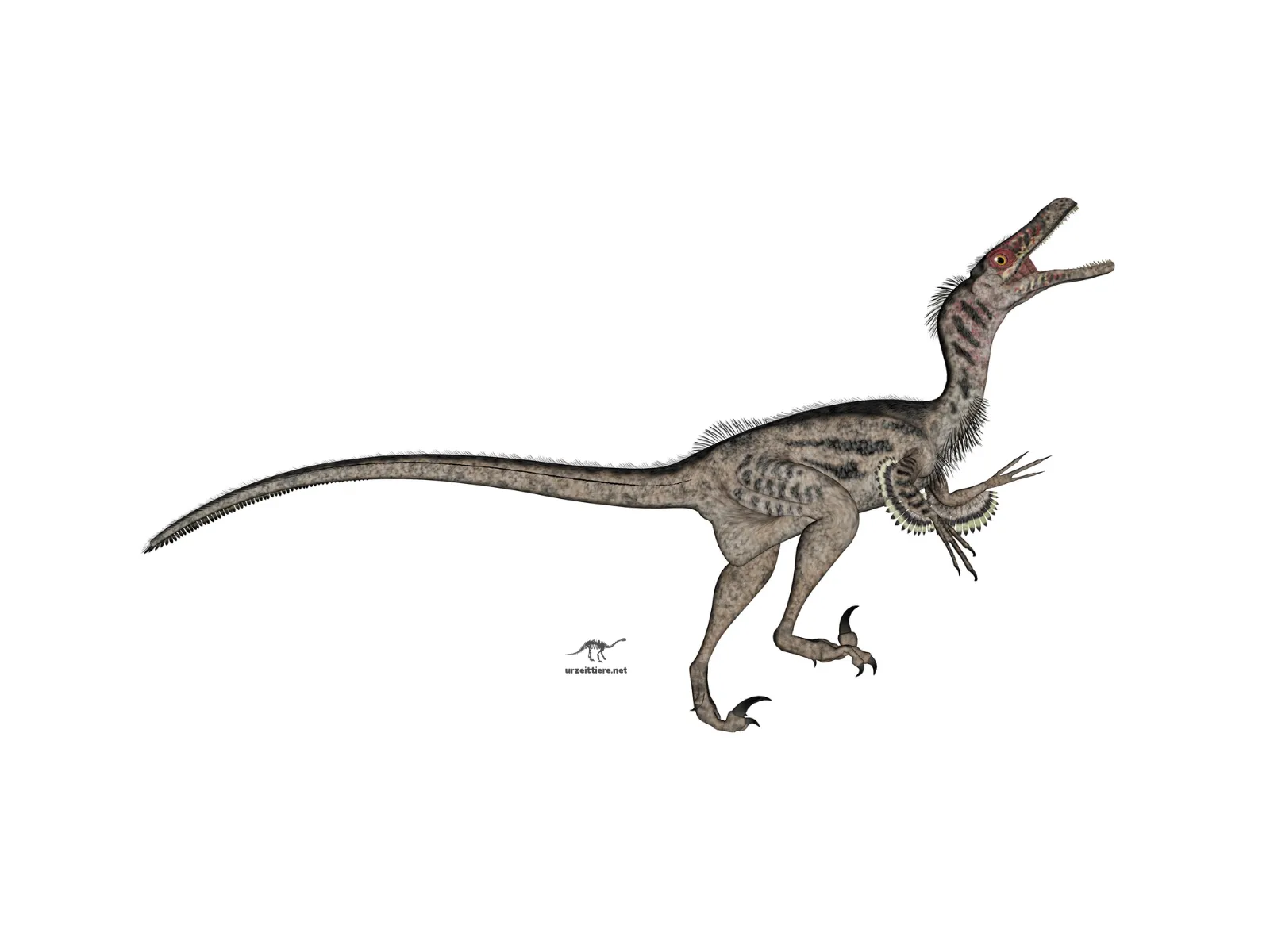
Velociraptor profile: Everything about the true size and hunting style

“Swift Robber”
Historical background
The discovery of the velociraptor is closely linked to the early 20th century expeditions to Mongolia's Gobi Desert.
In 1922, an American Museum of Natural History expedition led by Henry Fairfield Osborn led to an important discovery. Held on August 11, 1923 Peter Kaisen During this expedition, the first known fossils of the Velociraptor were discovered, including a crushed but complete skull and one of the large claws of the second toe, as well as foot bone fragments.
Osborn first scientifically described the velociraptor in 1924. He named the new species Velociraptor mongoliensis. The name Velociraptor comes from the Latin words velox (quickly) and raptor (predator), which indicates the animal's fast and hunting nature.
The species epithet mongoliensis refers to Mongolia, where the fossils were found.
Interestingly, Osborn had previously used the name “Ovoraptor djadochtari” in a press article. However, since this name has not been published in a scientific journal, it is considered Noun nudum and has no priority over the name Velociraptor.
Since their discovery, the Velociraptor fossils have sparked much scientific study and debate, particularly regarding their feathers and behavior. The discovery of feather attachments on a well-preserved forearm bone in 2007 confirmed that velociraptors had feathers, greatly changing our view of these dinosaurs.
It belongs to the family Dromaeosauridae. This is a family of small to medium-sized bird-like dinosaurs. Velociraptor was a small dinosaur within this family. An adult velociraptor was about 2 m long and only about half a meter tall, comparable to the size of a wolf or turkey.
In later years, additional velociraptor fossils were found in the Gobi Desert, which stretches across parts of northern China and southern Mongolia. The species Velociraptor mongoliensis was discovered in the Djadochta (Djadokhta) Formation. This is located in the Mongolian province of Ömnögovi.
Velociraptor profile: Everything about the true size and hunting style
| scientific name | Velociraptor mongoliensis |
| Estimated size | Length: 2.65 meters Height: 0.6 meters Weight: 38 kilograms |
| geological era | Upper Cretaceous |
| Locations | Djadokhta, Barun Goyot |
| Order | Saurischia |
| Subordination | Theropoda |
Physical characteristics
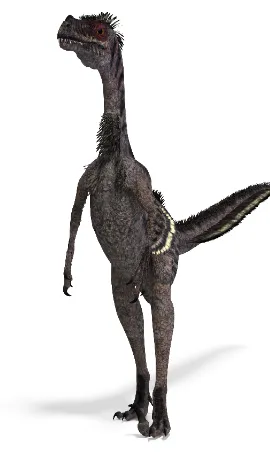
| anatomy | Bipedal, slender, feathered carnivore about 2 m long with sickle-shaped claw |
| Special features | Large, curved sickle claw on the second toe and feathers |
| locomotion | Two-legged |
| Skin texture | Feathered, with proven quills on the arms |
| Coloring | Unknown; probably bird-like, speculation about camouflage or courtship colors |
discovery
| Explorer | Osborn |
| Discovery date | 1924 |
| Meaning of the name | The name “Velociraptor” comes from the Latin words “velox” meaning “fast” and “raptor” meaning “robber”. |
| Significant fossil finds | At least several individuals (skulls and skeletons). |
In paleontology, the ratio of brain to body size, the so-called Encephalization quotient (EQ), used as a rough guide to relative intelligence.
| Intelligence (EQ) | Relatively high EQ, probably more intelligent than many other dinosaurs |
| Social behavior | Probably solitary, possibly hunting occasionally in small groups |
| Predators | Larger predatory dinosaurs, direct evidence is missing; Scavengers may have used carcasses |
Velociraptor: Facts about the 'Swift Thief'
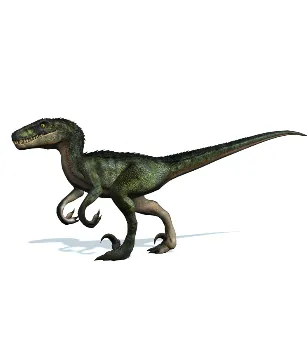
Velociraptors were small and fast. A sickle-shaped claw on the second toe of each foot made it a dangerous predator. It was one of the most bird-like dinosaurs ever discovered. Velociraptor possessed a special bone in its wrists that allowed it to move its hand sideways in a flapping motion and hold its arm against its body, as birds do.
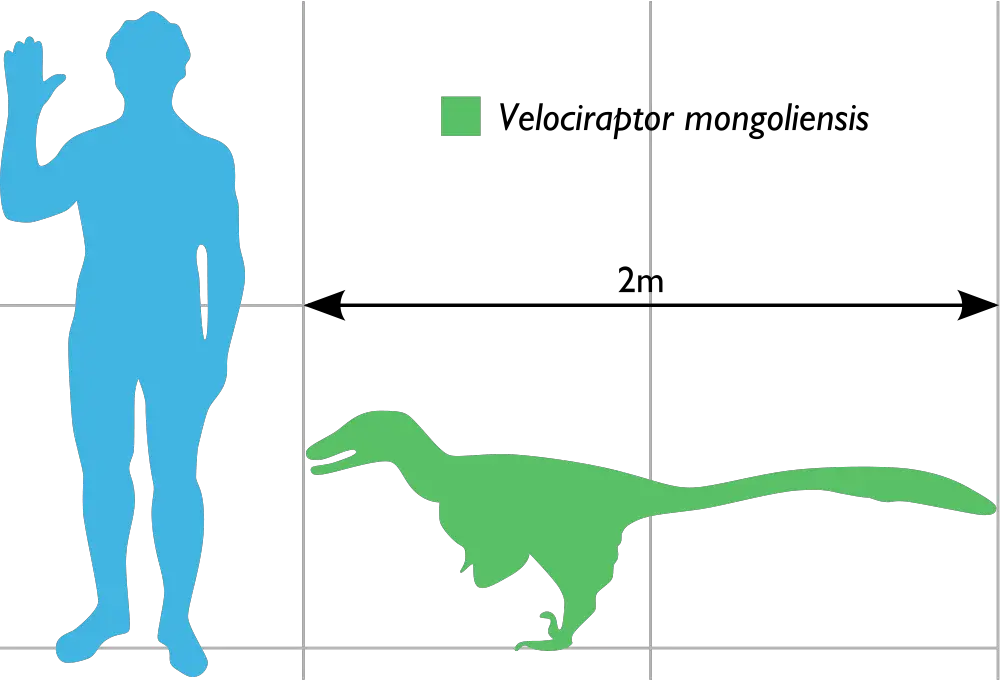
Velociraptor became famous from the “Jurassic Park” films. However, scientists now believe that in reality he didn't look anything like what he was portrayed in the films. Neither the appearance nor the size match the fossils found. The makers of the Jurassic Park films modeled it more on the Deinonychus antirrhopus.
Velociraptor had feathers
An exciting aspect of the Velociraptor is that these dinosaurs had feathers.
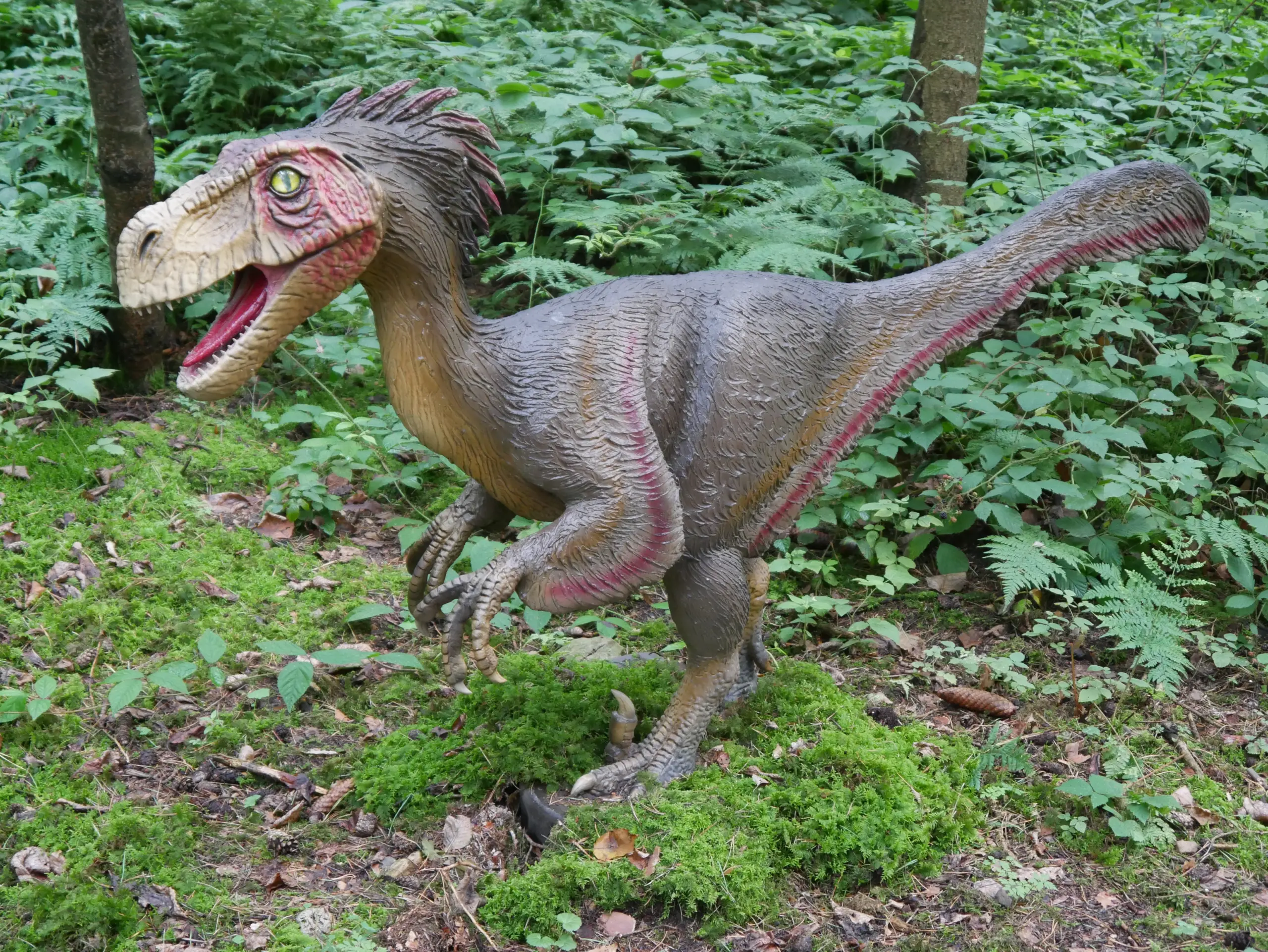
In 2007, paleontologists discovered so-called on a well-preserved forearm Feather buds. These are the places where bird feathers are anchored to the bone. Because of this, scientists concluded that Velociraptor had feathers. However, its arms were too short in relation to its body to be able to fly or glide.
The meaning of feathers
Although the velociraptor's arms were too short compared to its body to fly or glide, scientists suspect that the feathers served to regulate body temperature, protect young, or even for courtship.
Perhaps the feathers also helped with communication and the expression of feelings.
Bird-like features
There is now a strong consensus among paleontologists that today's birds descended from dinosaurs. The greatest similarities are with the theropod family, a family of three-toed dinosaurs that also includes Tyrannosaurus Rex and Velociraptor.
Similarities:
- Joint ankle
- swivel wrists
- Clavicle (fork bone)
- toes pointing forward
- Feather dress
wishbone
In birds, the clavicles are fused together to form a V-shaped bone, the wishbone (furcula). The wishbone holds the two shoulder joints apart like a tension spring when flying.
Wishbones were first detected in theropod dinosaurs; This is also the case with Velociraptor.
This is where the assumption comes from that the ancestors of Velociraptor could fly.
anatomy
Velociraptor had a relatively large skull with a long, narrow and flat snout that made up approximately 60% of its total skull length.
He had 13 to 15 teeth in his upper jaw and 14 to 15 in his lower jaw. The teeth were serrated and more pronounced on the back edge than on the front and were relatively widely spaced.
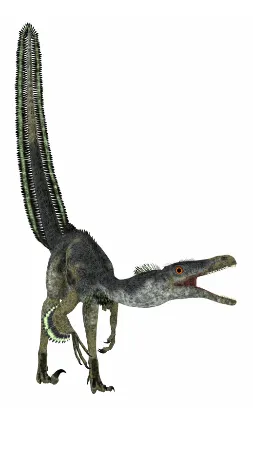
The bones of his tail were fused together and inflexible. He probably used his tail to keep his balance while running or jumping.
The deadly claws
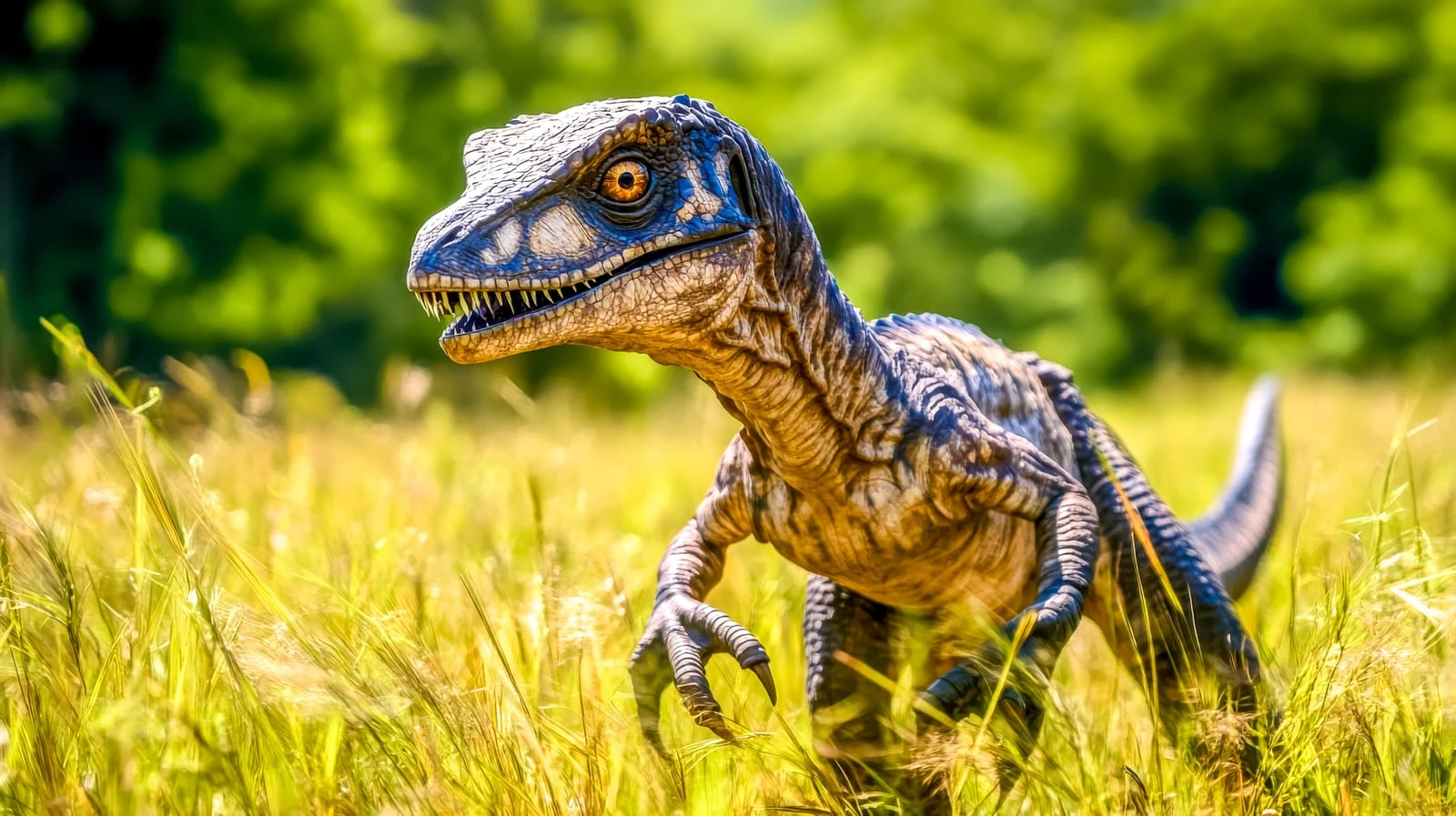
One of the most striking features of the Velociraptor is its large, curved claws. The claws on the hind feet in particular, so-called sickle claws, were very large and sharp.
He had a large sickle-shaped claw on the second toe of each foot. While running, he kept that toe off the ground. Velociraptor used them as hooks to prevent its prey from escaping; as can be observed in modern birds of prey. It was originally thought that Velociraptor used these claws to slash its prey. But scientists now believe that the dinosaur used them to pierce and pin down its prey, much like falcons do.
Those claws that go up to seven centimeters long were, Velociraptor probably used it to capture and kill prey. They were shaped to be deployed in a side-to-side motion, making Velociraptor an effective hunter.
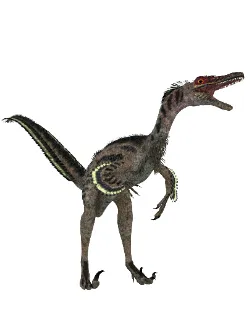
Velociraptor also had 3 curved claws on its forelimbs, which were used to grasp and hold prey. The combination of fast movements, sharp claws and intelligent hunting strategies made Velociraptor one of the most dangerous predators of its time.
The diet of the velociraptor
Velociraptors had a diverse and adaptable diet, which was an important part of their survival strategy. Contrary to the portrayal of them as pure hunters who hunted only live prey, scientific studies show that velociraptors also ate carrion.
They often attacked dead animals like Protoceratops on, making their ecological role more complex than that of a simple predator.
Their diet included a wide range of animals, from small to medium-sized dinosaurs to other animals. Velociraptors were opportunists and used every opportunity to find food.
This adaptability was likely crucial to their survival in the diverse environments of the Late Cretaceous. Not only did they rely on hunting, but they could also profit from carcasses, showing their ability to adapt to different ecological conditions.
Isotope analyzes of Velociraptor fossils have shown that there were differences in diet between juveniles and adults. Unlike modern animals with social hunting behavior in which adults bring food to their young, research suggests that young velociraptors sought their own, usually smaller, prey.
That could mean velociraptors did not have such sophisticated social hunting behavior, as often shown.
Their forward-facing eyes provided excellent spatial vision, ideal for hunting live prey. At the same time, the ability to eat carrion shows that velociraptors were flexible and adaptable in obtaining food. This combination made the Velociraptor an efficient and survivable predator in its ecosystem.
Fighting Dinosaurss
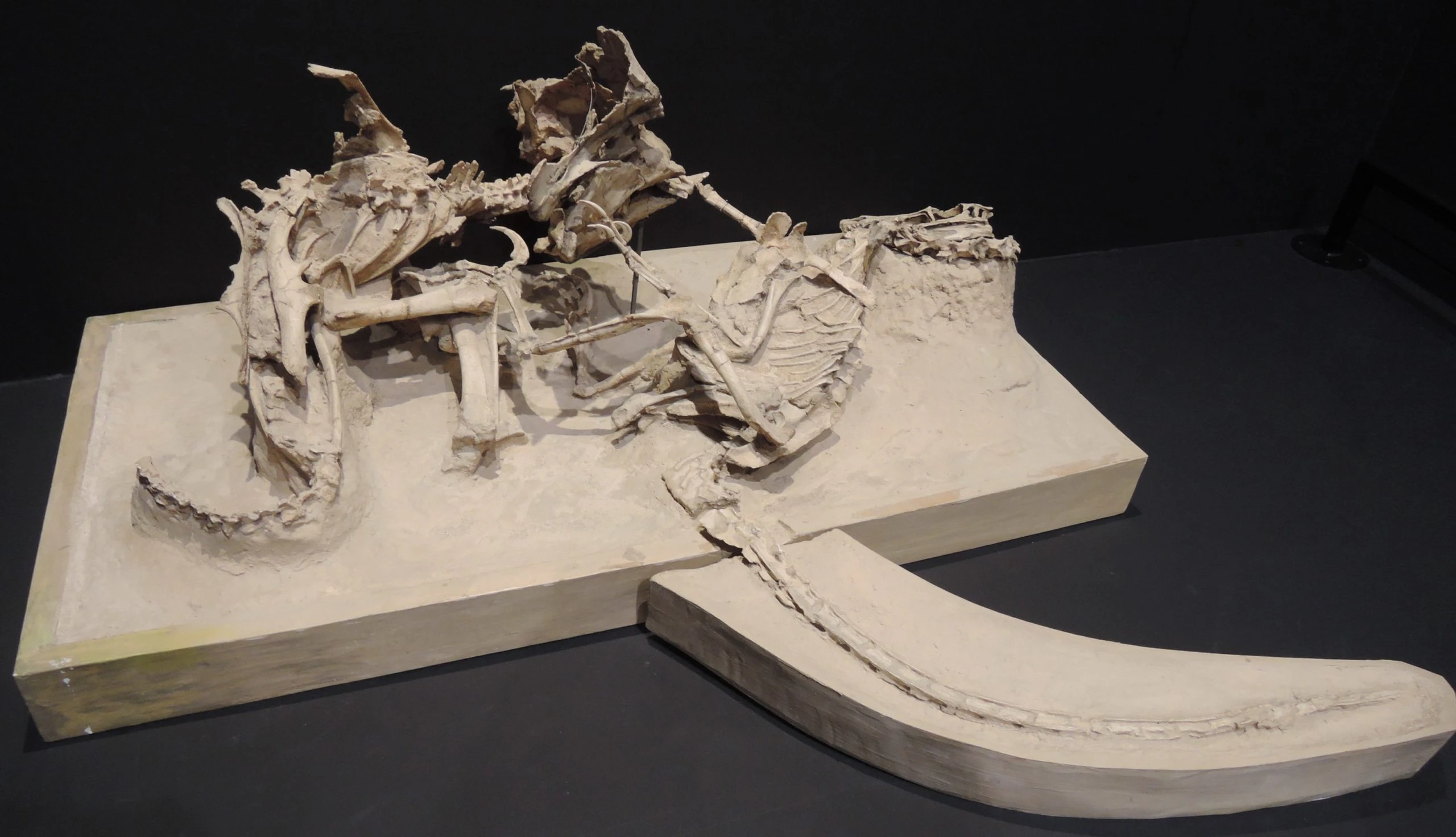
Velociraptor was a carnivore. Its prey was probably mostly reptiles, amphibians, insects, small dinosaurs and also small mammals.
In 1971, a Polish-Mongolian paleontological team discovered a famous fossil:
“Fighting Dinosaurs”
This fossil clearly shows that a velociraptor had driven one of its foot claws into the neck of the Protoceratops. The Protoceratops, on the other hand, bit the Velociraptor's arm and probably broke it in the process.
Scientists believe it was unusual for velociraptors to hunt such large prey. Most predators do not attack prey that are more than 50% of their own body mass. This velociraptor was probably starving or just “young and stupid.”
Scavenger?
However, in 2008, researchers found Protoceratops fossils that had traces of Velociraptor teeth. Velociraptor is believed to have eaten carrion from Protoceratops.
Researchers also assume that this carcass no longer contained much meat, which led to the bite marks in the bones.
A large pterosaur bone was found in the guts of a Velociraptor fossil in 2012. It had a wingspan of about 2 meters. Paleontologists believe it is unlikely that the Velociraptor killed the pterosaur. Rather, he plundered the carcass.
hunting
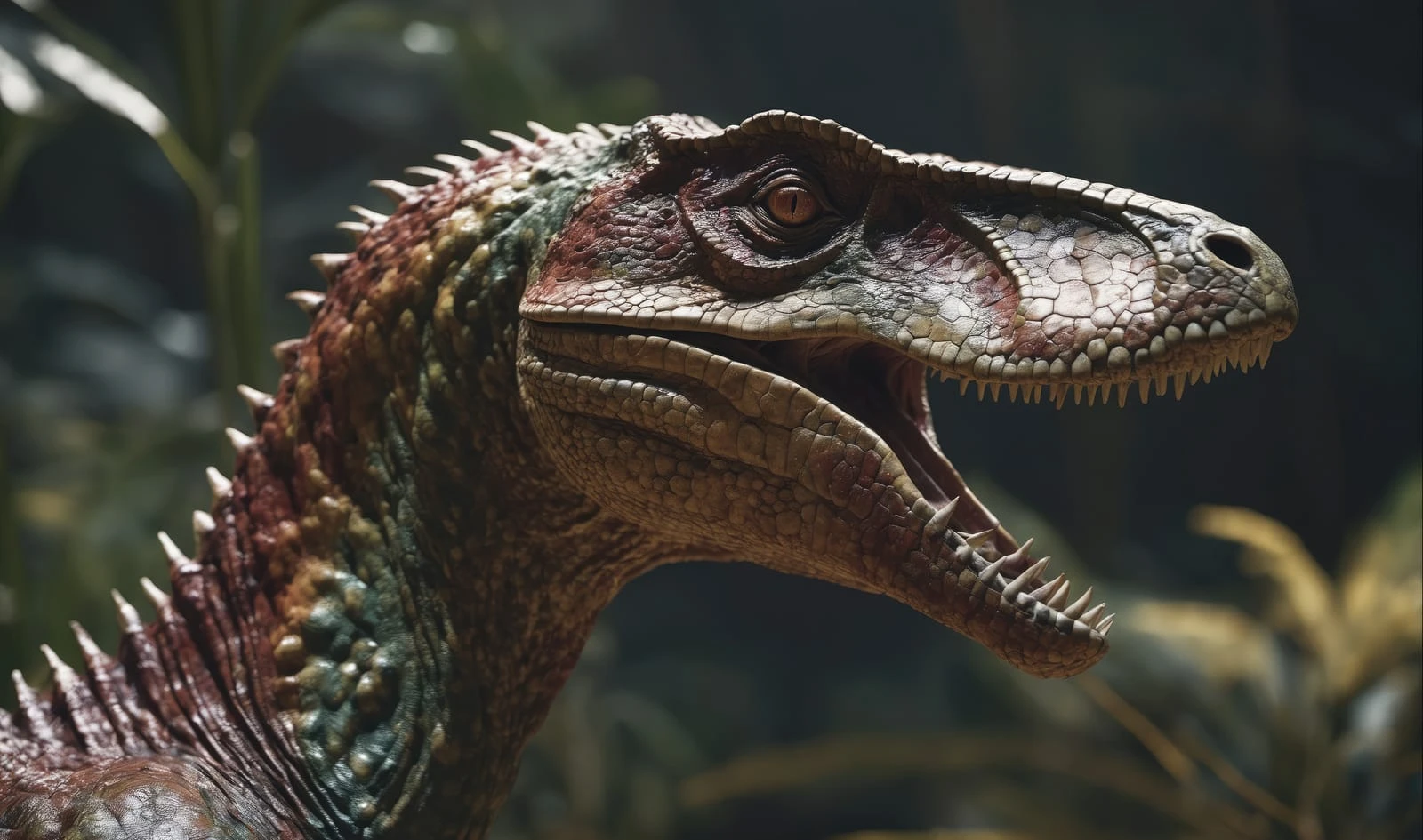
Velociraptors were effective hunters. They had muscular legs and long shins, which enabled them to take large strides and accelerate to speeds of 40 km/h.
After analyzing the skull, researchers realized that the dinosaur must have had a large olfactory bulb. He therefore had an excellent sense of smell.
Why velociraptors are among the most misunderstood dinosaurs
In the movie Jurassic Park, the velociraptors chased the children in threes.
However, there is no scientific evidence that Velociraptor was a pack hunter.
A 2007 study examining teeth of Deinonychus (a relative of Velociraptor) found that juveniles ate a different diet than adults. However, food diversity is atypical for pack hunters.
Velociraptor was probably a nocturnal predator. He had a wide sclerotial ring that was wide enough to let in a lot of light. A prerequisite for a longer focal length and therefore greater vision in the dark.
Velociraptor in modern entertainment
Velociraptor has a unique status in modern entertainment, particularly through its portrayal in films and books. Michael Crichton's novel Jurassic Park and Steven Spielberg's film series based on it put the velociraptor in the spotlight and made it one of the most recognizable dinosaurs. Although these depictions are often dramatized and artistically interpreted, they have sparked interest in dinosaurs and paleontology among many people.
In the films, the velociraptor is often shown to be intelligent, social, and extremely dangerous, based in part on scientific findings. However, these representations have also led to misunderstandings and myths that science is trying to correct. Nevertheless, the velociraptor has become a cultural symbol that inspires fascination and fear at the same time.
There are also many toys, models and other merchandise depicting the Velociraptor. These products, often developed in collaboration with paleontologists, help spread knowledge about these fascinating creatures and promote interest in paleontology. They also serve as educational tools to educate children and adults about science and the history of dinosaurs.
Image sources:
Vraptor-scale.png: Matt Martyniukderivative work: Serenthia, CC BY 2.5 https://creativecommons.org/licenses/by/2.5, via Wikimedia Commons
Jens Lallensack, CC BY-SA 4.0 https://creativecommons.org/licenses/by-sa/4.0, via Wikimedia Commons
Fighting dinosaurs: Yuya Tamai from Gifu, Japan, CC BY 2.0, via Wikimedia Commons